Peter Thiel on Monopoly
Peter Thiel argues that the best companies do not win by battling rivals in crowded markets but by becoming so differentiated that they effectively escape competition and earn monopoly-like profits.
- Thiel thinks founders should aim for monopoly, not head-to-head competition.
- His core reason is economic: intense competition drives profits away and turns companies into commodities.
- For him, monopoly means being uniquely differentiated, not just being big.
- He distinguishes innovative monopolies that reward new value from bad monopolies tied to protection or stagnation.
- The practical path is to start with a small market, dominate it, and expand outward.

“I think that, um, all, if you're a founder or entrepreneur, what you want to aim for is monopoly. You want to aim to build a company that is one-of-a-kind, uh, and that it's so far, um, differentiated from the competition that it's not even competing.”Stanford University lecture on Zero to One, 2014 · 1:35
Monopoly is the goal because competition is the trap
Thiel’s basic claim is blunt: founders should not treat business as a noble contest with many similar rivals. He thinks the usual story people tell about business is backwards, because the real objective is to get out of direct competition and build a company with no close substitute.123
That is why he repeatedly says successful businesses are monopolies in some form, while weaker businesses remain stuck in crowded markets. In his framing, competition is not proof of health; it is often a sign that many firms are doing nearly the same thing and therefore struggling to keep profits.4
What he means by monopoly: a company that is truly one of a kind
Thiel is not using monopoly mainly as a legal or political label. He is describing a business that is so different from alternatives that it stands alone in what it offers customers.678
That is why he connects monopoly to uniqueness and originality. A great company is built around something new, different, and hard to copy, rather than being the next version of an already crowded category.910
This also explains his contrast between capitalism and competition. In his view, capitalism works best when a company creates value and can keep some of the gains from what it created, instead of immediately having all surplus competed away.1112
“I think that, um, all, if you're a founder or entrepreneur, what you want to aim for is monopoly. You want to aim to build a company that is one-of-a-kind, uh, and that it's so far, um, differentiated from the competition that it's not even competing.”Stanford University lecture on Zero to One, 2014 · full transcript →
Why monopoly matters: it is the reward for real innovation
Thiel’s defense of monopoly is mostly a defense of innovation. He argues that monopoly profits are what you earn when you build something genuinely new and valuable, rather than merely joining an existing race with many lookalikes.1312
This is why he links monopoly to asking contrarian questions. The founder’s task is to find a hidden opportunity, build the company nobody else is building, and create something that would not exist otherwise.1415
He also distinguishes this from stale or protected dominance. The monopolies he praises are the ones that come from differentiation and invention, not from simply being shielded from challenge.13

“…monopolies are good because they are the reward you get for innovating…”FreedomFest debate with John Mackey, 2013 · full transcript →
How to build one: start small, dominate, then expand
Thiel does not think startups become monopolies by attacking giant markets from day one. His advice is almost the opposite: begin with a small market where you can become dominant, then move outward in concentric circles.17
His examples follow the same pattern: a narrow initial beachhead, clear superiority there, and expansion only after winning that first domain. This fits his broader idea that startups should aim to be singular in a specific place before they try to be broad.177
The practical implication is that a huge market slide in a pitch deck can be a bad sign. If the company cannot explain the small market it can fully own first, it likely has not found the differentiation that creates monopoly power.17
Monopoly is also a mindset: think independently, not mimetically
Thiel’s monopoly idea is tied to his broader criticism of imitation and conformity. If everyone is copying everyone else, they will all pile into the same opportunities, creating crowd behavior and fierce rivalry instead of original businesses.618
That is why he treats independent thinking as a business advantage. The opposite of competition, in his framing, is not laziness or passivity but individualism: seeing something others do not and building around it with conviction.1918
So monopoly is not just a market outcome. It begins with a founder willing to pursue an unpopular truth and create a company that is meaningfully different from what already exists.2015
“…the opposite of competition I want to suggest is individualism…”FreedomFest debate with John Mackey, 2013 · full transcript →
Thiel on monopoly, in his own words
“…successful businesses are monopolies of one sort or another.”
“If you want to succeed in business as a founder, early investor, early employee, as an entrepreneur, you always aim for monopoly.”
“…monopolies are good because they are the reward you get for innovating…”
Where to watch
 Peter Thiel on Competition and Monopoly: Capitalism Needs Differentiation2013 · 43 min · full transcriptBest single discussion of why Thiel thinks monopoly is the right goal and how he separates innovative monopolies from bad ones.
 Peter Thiel on Monopoly and Competition: Why Great Businesses Avoid Rivalry2014 · 23 min · full transcriptClear, compact explanation of why business success comes from escaping competition rather than embracing it.
 Peter Thiel on Zero to One: Why Startups Must Be Different2014 · 77 min · full transcriptStrong practical version of the argument, with startup examples and the logic of small-market entry and expansion.
 Peter Thiel on Zero to One: Why Progress Means Doing New Things2014 · 18 min · full transcriptUseful overview of the Zero to One framework that ties monopoly to singularity, secrets, and non-imitation.
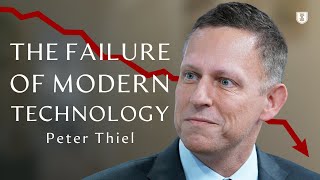 Peter Thiel on Technological Stagnation: The Failure of Modern Technology2014 · 36 min · full transcriptShows how the monopoly idea fits Thiel’s broader view that originality requires courage and contrarian thinking.
Questions people ask
- How did Peter Thiel decide to invest in Facebook?
- How does Peter Thiel decide what to work on?
- What did Peter Thiel say about competition and happy companies?
- What did Peter Thiel say about starting a startup with a small market?
- What does Peter Thiel think business is really about?
- What does Peter Thiel mean by being a first mover versus a last mover?
Sources
Every quote above, word for word from the transcripts. Numbers match the text.
“…most people think that business is about competition, whereas I think business is about getting away from competition.”
“I think from the inside, the goal of every company should be to achieve a monopoly.”
“If you want to succeed in business as a founder, early investor, early employee, as an entrepreneur, you always aim for monopoly.”
“…successful businesses are monopolies of one sort or another.”
“…every great company is one of a kind…”
“You want to aim to build a company that is one-of-a-kind…”
“I think that, um, all, if you're a founder or entrepreneur, what you want to aim for is monopoly. You want to aim to build a company that is one-of-a-kind, uh, and that it's so far, um, differentiated from the competition that it's not even competing.”
“You do not want to start the one hundredth online pet food company or the five thousandth restaurant in San Francisco.”
“One of the critical things in starting businesses is this need to do something new, different, fresh, strange.”
“I believe that capitalism and competition are antonyms.”
“The key thing when you start a new technology business is to create something that has value to other people and then to capture some fraction of the value you create.”
“…monopolies are good because they are the reward you get for innovating…”
“What great company is nobody building?”
“What great company is nobody starting?”
“And so again, was the great a good if you're trying to create a monopoly, you can define a monopoly as having a large market share. And so how do you get a large market share as a start up? Because every start up necessarily starts very small. The answer is that you have to start with a small market. Facebook started with Harvard. PayPal started with eBay power sellers. These are themselves quite small markets. Amazon started with books, so not that big a market either. And you sort of and then you can then ideally, can build the market out in concentric circles. When I see a PowerPoint presentation in a pitch where it starts with, this is a market that's measured in hundreds of billions or trillions of dollars, that's very bad because it means you will never get to a large share of the market.”
“…tell me something that's true that nobody agrees with you on.”
“…the opposite of competition I want to suggest is individualism…”
“…courage is in far shorter supply than genius…”
How this guide was made: drafted with AI from the full transcripts of the recordings cited, then checked: every quotation must match a transcript word for word and be the speaker's own words, and an independent review gates accuracy. Methodology and corrections.