Malcolm Gladwell on Broken Windows Policing
Gladwell now argues that Broken Windows went wrong when it became broad, aggressive enforcement; he favors selective, place-aware policing and more caution in police encounters.
- Gladwell says he was wrong to treat New York’s crime drop as a settled vindication of Broken Windows policing
- He now thinks the key is selective, thoughtful use of police power, not indiscriminate stop-and-frisk
- He points to the post-Floyd drop in stop-and-frisk and continued crime decline as the turning point in his thinking
- His broader view is that police mistakes grow when officers rush stranger encounters instead of slowing them down
- He also stresses that crime is deeply shaped by place and context, which supports targeted responses over blanket enforcement
Gladwell changed his mind because the original story was too neat
Gladwell’s original account linked New York’s falling crime to Broken Windows policing, but he now says that account was too confident and too final. He has said he told the story as if the debate were finished, and later came to see that this certainty was a mistake12.
That shift matters because his revised position is not a small tweak. He now presents his newer view as a real reconsideration of what actually drove the change in crime and what police tactics can be justified by the results32.
What he rejects: turning Broken Windows into broad stop-and-frisk
Gladwell’s criticism is aimed at the version of Broken Windows that became wide, routine, and indiscriminate. He says he was wrong to endorse the logic that led to stop-and-frisk, because the policy’s defenders treated aggressive enforcement as if it were the necessary price of public safety34.
His newer position is that whatever useful insight existed in the original theory was stretched too far. When the practical result is constant intrusion and mass suspicion, he thinks the costs outrun the benefits42.
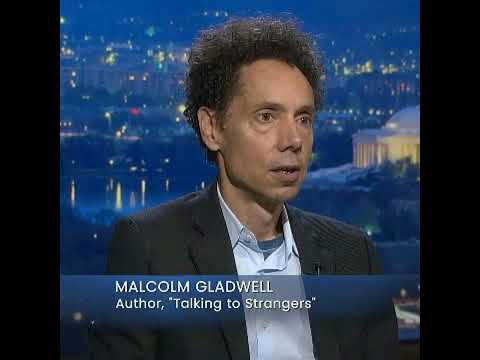
“…the cost of that insight is too high…”C-SPAN Q&A, September 2019 · full transcript →
What he still believes: policing works best when it is selective and thoughtful
Gladwell does not argue that policing is irrelevant or that disorder never matters. What he now emphasizes is a narrower idea: effective policing depends on the intelligent, thoughtful, and selective application of police authority rather than blanket enforcement5.
That fits his larger way of thinking about social problems. He repeatedly argues that outcomes depend on context, small concentrations of risk, and where problems cluster, not on treating whole populations as equally suspect65.
Why place matters more than a generalized crackdown
A major part of Gladwell’s framework is that crime is rooted in place more than the individual. That pushes him away from policing models built on sweeping contact and toward responses aimed at hotspots, contexts, and specific patterns of disorder6.
This is one reason his revised view sits uneasily with classic Broken Windows as it was practiced in New York. If crime is concentrated, then the smartest response is not to spread police pressure everywhere, but to match interventions to the places and situations where harm is actually concentrated65.
His broader lesson is humility in police encounters with strangers
Gladwell’s thinking about Broken Windows also connects to his work on police encounters. He argues that people are not very good at reading strangers, and that officers often make dangerous mistakes when they move too quickly from uncertainty to force78.
In his view, better policing means slowing encounters down, adding time, and resisting snap judgments. That is the opposite of a style of policing that treats constant stops and rapid escalation as signs of effectiveness911.
So the practical takeaway from his revision is not simply fewer stops. It is a different posture: more caution, more humility, and more patience when authority meets ambiguity112.
Gladwell on broken windows policing, in his own words
“…the cost of that insight is too high…”
Where to watch
 Malcolm Gladwell on Broken Windows: Why He Was Wrong2024 · 17 min · full transcriptHis clearest direct rethink of Broken Windows, including why he believes the old story was wrong.
 Malcolm Gladwell on Revenge of the Tipping Point: Reconsidering the Story2024 · 72 min · full transcriptUseful for understanding his willingness to revisit his own earlier certainty about policing.
 Malcolm Gladwell on Talking to Strangers: Why Encounters Go Wrong2019 · 159 min · full transcriptShows how his ideas about police encounters, time, and escalation reshape what good policing should look like.
 Malcolm Gladwell on Talking to Strangers: Trust, Error, and Tragedy2019 · 57 min · full transcriptA focused explanation of misunderstanding, caution, and humility in encounters between police and strangers.
 Malcolm Gladwell on Crime Hotspots: Why Place Beats the Individual2025 · 53 min · full transcriptBest for his place-based view of crime, which supports targeted policing over broad crackdowns.
Questions people ask
- Why does Malcolm Gladwell say people need to slow down when dealing with strangers?
- Why does Malcolm Gladwell think writers should admit uncertainty?
- What did Malcolm Gladwell say about state capacity and preparing for pandemics?
- What did Malcolm Gladwell say about the future of pandemic defense?
- Why did Malcolm Gladwell say poop testing was important in COVID?
- What did Malcolm Gladwell say about changing minds over time?
Sources
Every quote above, word for word from the transcripts. Numbers match the text.
“I told a story about how crime fell in New York, and I told the story like the story was over.”
“I've tried to be, I mean, I realize when I look back at my younger self, I was way too certain about the ideas that I was putting forth. And I thought that if you wanted to win over an audience, you had to communicate certainty. And now I realize that's actually backwards, that you're more willing, you're more capable of winning over an audience when you admit to the uncertainty and the fragility of your position. People want that. They like that, they appreciate that spirit far more. And people are much more likely, I think, to be suspicious of someone who seems falsely certain.”
“This is what I believe happened now…”
“…the cost of that insight is too high…”
“…the intelligent and thoughtful and selective application of police authority…”
“Criminology is rooted in place more than the individual.”
“…we're not very good at talking to strangers…”
“I wanted to write about because if you break that exchange down moment by moment, you see multiple failures of understanding…”
“…what your job is is to add seconds into the encounter…”
“I want people to have, when I end, a call for caution and humility…”
How this guide was made: drafted with AI from the full transcripts of the recordings cited, then checked: every quotation must match a transcript word for word and be the speaker's own words, and an independent review gates accuracy. Methodology and corrections.