Malcolm Gladwell on Teams & Culture
Malcolm Gladwell sees teams and culture as shaped less by individual talent than by the larger overstory—place, rituals, norms, and narratives—that silently directs behavior.
- Culture is a powerful force that shapes how teams behave and perform.
- His key idea is the overstory: the larger narrative above daily work that guides behavior.
- Context often matters more than individual traits, just as outcomes are rooted in place and setting.
- Strong teams need rituals and shared stories, especially when remote work weakens informal cultural transmission.
- Leaders improve culture by being humble, resisting overconfidence, and treating people as individuals rather than averages.
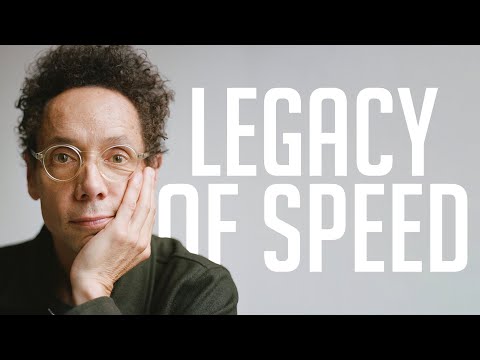
“We're doing it for the ordinary athlete who wants to get out and have fun in this.”Rich Roll Podcast interview, 2023 · 12:22
Teams are products of culture, not just collections of talent
Gladwell’s basic view is that you cannot understand how a team works by looking only at the people on it. He argues that organizations with similar people can produce very different results because culture exerts a real force on behavior, learning, and performance.
That fits a broader pattern in his thinking: outcomes are often rooted in context more than in personal traits alone. When he says that criminology is rooted in place more than the individual, he is making the same kind of argument he applies to organizations: settings shape what people do, and leaders ignore that at their peril1.
Leaders build culture through signals, pacing, and human judgment
For Gladwell, culture is not built only through slogans. It is built through repeated signals about what the group values, how fast it moves, and what kind of judgment it rewards. Even a simple instruction to slow down can be a cultural cue about thoughtfulness, restraint, and how decisions should be made3.
He also argues that many modern institutions fail when they treat every problem like a puzzle with a single standardized answer. Harder situations are mysteries, which require judgment, interpretation, and sensitivity to human variation rather than rigid rules45.
That is why he favors more individualized approaches. In his view, effective institutions are increasingly in the business of providing personalized solutions, and they have to learn to treat people as individuals. Applied to teams, that means culture is strongest when it creates a shared story without pretending every person should be managed in exactly the same way67.
Humility makes team culture smarter
Gladwell is skeptical of leaders who think expertise alone gives them control. He argues that overconfidence is a common flaw of experts, and that in moments of stress what people need most is not brilliance without limits but intelligence paired with humility89.
That matters for culture because overconfident leaders create brittle teams. Humble leaders are more likely to ask better questions, listen to people who know the work closely, and keep their own psychological blind spots in check10.
His broader warning is that people like to pretend they are more in control than they really are. Strong cultures respect complexity instead of flattening it, which makes teams more adaptive and less self-deceived.
Design teams for participation and fit, not just elite winners
Gladwell repeatedly argues against systems built only for the top few performers. In sports, he says structures designed for elites often discourage ordinary participants, even though those ordinary participants are the ones who sustain the whole enterprise1314.
That principle carries directly into teams and culture. A healthy team is not one that celebrates only its stars; it is one whose design gives meaningful roles, motivation, and dignity to the people lower down the depth chart too.
He makes a similar point about education and institutions more broadly: fit matters, and brand prestige can distort judgment. Teams work better when leaders ask where someone can thrive, not just who looks best by status markers or rankings16.
“We're doing it for the ordinary athlete who wants to get out and have fun in this.”Rich Roll Podcast interview, 2023 · full transcript →
Remote work raises the cost of transmitting culture
Gladwell warns that changed working environments can weaken culture when they remove the easiest channels through which people absorb it. If culture lives in stories, rituals, and ambient signals, then less shared physical life means fewer opportunities for new members to pick up the overstory by osmosis.
His answer is not nostalgia for old offices so much as intentionality. When a team cannot rely on place to carry culture automatically, leaders have to become much more deliberate about creating shared narratives, recurring rituals, and visible norms that tell people what kind of community they are part of2.

“Slow down; it's fine to slow down, right?”FranklinCovey On Leadership podcast, 2000 · full transcript →
Gladwell on teams & culture, in his own words
“Slow down; it's fine to slow down, right?”
Where to watch
 Malcolm Gladwell on Organizational Culture: How Overstories Shape Teams2000 · 37 min · full transcriptBest single discussion of overstory, rituals, and why organizational culture shapes team behavior.
 Malcolm Gladwell on Success and Humility: Lessons From Outliers2009 · 58 min · full transcriptShows why humility and resistance to overconfidence are essential for healthy team culture.
 Malcolm Gladwell on Government as Mystery-Solving: A More Human State2018 · 38 min · full transcriptExplains why modern organizations need judgment and individualized treatment instead of one-size-fits-all systems.
 Malcolm Gladwell on Sports and Competition: Reimagining Who Sports Serve2023 · 116 min · full transcriptApplies Gladwell’s thinking to team design: build for participation and development, not just elite outcomes.
 Malcolm Gladwell on Crime Hotspots: Why Place Beats the Individual2025 · 53 min · full transcriptGives the broader context-first lens behind his view that place and setting shape behavior.
Questions people ask
- What did Malcolm Gladwell say about kids' sports and competition?
- Why does Malcolm Gladwell think college rankings are damaging?
- What did Malcolm Gladwell say governments need to do to become more human?
- What does Malcolm Gladwell think about luck and control?
- What does Malcolm Gladwell think makes people interesting?
Sources
Every quote above, word for word from the transcripts. Numbers match the text.
“Criminology is rooted in place more than the individual.”
“The story is always longer than we realize.”
“Slow down; it's fine to slow down, right?”
“…the Cuban Missile Crisis was a puzzle, and a puzzle is a problem caused by a lack of information.”
“…a mystery is a problem caused by too much information.”
“They are now in the business of providing individualized, personalized solutions and not group solutions.”
“…governments are going to have to learn how to treat people as individuals.”
“…in times of crisis, we want our leaders to be smart, but, we want—but what we want is our leader to be humble.”
“…overconfidence, it turns out, is—psychologists tell us—is the most common kind of flaw of experts.”
“…the task of the leader or the expert is to keep that psychological problem in check…”
“Kids sports must look and be structured completely differently from elite sports.”
“We're doing it for the ordinary athlete who wants to get out and have fun in this.”
“I had a conversation last night with a friend who was trying to figure out where to send her daughter to school. And she said, well, she really should go to, I think, some college in Boulder. UC, Boulder. Probably. 'Cause she's outdoorsy, she likes to hang. Well, when I suggested that to my daughter, she burst into tears 'cause her daughter wants to go to a school that other people think is a good school for her. It's so weirdly detached that objectively this is a place where she would be happy. And yet she doesn't wanna go there because the world tells her that you have to go to a place that's ranked one through 25. And schools being brands, and these brands have a lot of power and resonance in a way that is really damaging.”
How this guide was made: drafted with AI from the full transcripts of the recordings cited, then checked: every quotation must match a transcript word for word and be the speaker's own words, and an independent review gates accuracy. Methodology and corrections.
