Malcolm Gladwell on Education
Malcolm Gladwell sees education as a problem of fit, opportunity, and development rather than prestige, ranking, or early sorting.
- Education works best when it matches individuals, not averages.
- Prestige is often overrated; students should choose places that genuinely fit how they want to learn and live.
- Achievement grows from opportunity and sustained practice, not talent alone.
- Early hyper-competition can damage development and push out late bloomers or ordinary participants.
- Schools should leave room for failure, humility, and broader definitions of success.

“They are now in the business of providing individualized, personalized solutions and not group solutions.”World Governments Summit speech, 2018 · 25:22
Education should be personalized, not built around averages
Gladwell’s broad argument is that many modern institutions still act as if human problems are simple and uniform. In his view, education is not like that. It works better when adults stop treating students as interchangeable members of a group and start treating them as individuals with different needs, motivations, and contexts123.
That idea pushes against one-size-fits-all schooling and against policies that rely too heavily on broad averages. If education is a human, complex domain, then judgment, fit, and responsiveness matter more than static systems that assume the same solution works for everyone234.
“They are now in the business of providing individualized, personalized solutions and not group solutions.”World Governments Summit speech, 2018 · full transcript →
Opportunity matters as much as talent
Gladwell is famous for arguing that success is not simply the reward for innate ability. He repeatedly says that luck, timing, and access to opportunity shape who advances. Applied to education, that means schools should be less obsessed with identifying the already-gifted and more concerned with creating the conditions in which many more students can develop5.
His practice-based view of expertise leads in the same direction. High achievement comes after sustained, structured effort, and early access to that effort creates compounding advantages. In education, this means that resources, time, and opportunities to practice are not side issues; they are central to who gets to become excellent789.
Prestige is a poor guide to learning
Gladwell is skeptical of the way elite schools function as brands. He thinks too many families chase status instead of asking where a student will actually thrive, explore, and get a meaningful education. The right school, in his view, is not the most prestigious one, but the one that truly fits the student’s goals and temperament101112.
This is part of a larger attack on exclusivity for its own sake. When education is treated as a ranking contest, students can end up choosing social approval over genuine growth. Gladwell’s alternative is practical and student-centered: choose the place where learning and exploration are most likely, not the place with the strongest halo1011.
Early competition often distorts education
Gladwell repeatedly warns against sorting young people too aggressively, too early. He thinks overly competitive environments in adolescence can be harmful because they confuse development with final judgment. In both sports and schooling, systems built around elite selection can discourage the many in order to reward the few131415.
What he prefers instead is a structure that keeps more people engaged for longer. His argument about youth sports maps neatly onto education: institutions should be designed for ordinary participants and late bloomers, not just for early stars. A healthier system values inclusion, development, and staying power over premature winner-take-all sorting161718.
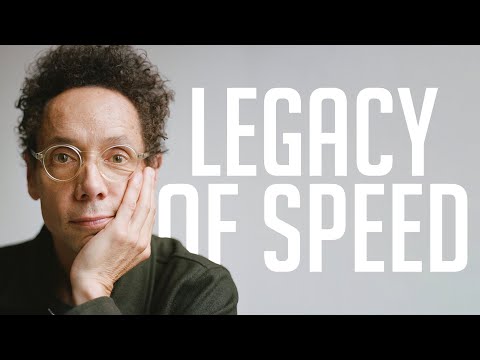
“Kids sports must look and be structured completely differently from elite sports.”Rich Roll Podcast interview, 2023 · full transcript →
Good education leaves room for humility, failure, and broader success
Gladwell distrusts systems that act too certain about who will succeed. He argues that experts are often overconfident and that human outcomes are more complex than they appear. In education, that implies caution about rigid rankings, confident predictions, and simplistic measures of teacher or student quality before enough real experience has accumulated1920.
He also favors a broader idea of success. Money and top rank are not the only worthwhile outcomes, and being second-best or making mistakes can still be productive. Schools should therefore allow students to try, fail, adjust, and grow rather than steering everyone toward narrow definitions of excellence from the start2223.
This view fits his larger belief that conversation and curiosity matter. Education is not only about sorting or certifying people; it is also about drawing out what people know and helping them become interesting versions of themselves through the right questions and environments2425.
Gladwell on education, in his own words
“They are now in the business of providing individualized, personalized solutions and not group solutions.”
“…governments are going to have to learn how to treat people as individuals.”
“You want the kid to go to Harvard who genuinely believes that he or she can get an education there that they can't get anywhere else.”
“I think that overly competitive environments at too early an age are really deeply problematic.”
“Kids sports must look and be structured completely differently from elite sports.”
Where to watch
 Malcolm Gladwell on Government as Mystery-Solving: A More Human State2018 · 38 min · full transcriptBest single explanation of why education should focus on individual fit instead of group averages.
 Malcolm Gladwell on Merit and Mediocrity: Make Room for Average2016 · 91 min · full transcriptStrongest critique of elite-school prestige and the pressure to choose status over educational fit.
 Malcolm Gladwell on Success and Opportunity: The Ideas Behind Outliers2008 · 15 min · full transcriptExplains why opportunity, timing, and practice shape achievement more than talent alone.
 Malcolm Gladwell on Sports and Competition: Reimagining Who Sports Serve2023 · 116 min · full transcriptShows how Gladwell thinks youth systems should be designed for development and inclusion, with clear implications for schooling.
 Malcolm Gladwell on Talking to Strangers: Trust, Bias, and Judgment2019 · 60 min · full transcriptUseful for his view that schools should let students fail productively and define success more broadly.
 Malcolm Gladwell on Success and Humility: Lessons From Outliers2009 · 58 min · full transcriptAdds his emphasis on humility and the limits of confident expert judgment in evaluating people.
Questions people ask
- What did Malcolm Gladwell say about early childhood development and the age of three?
- What did Malcolm Gladwell say about kids' sports and competition?
- What did Malcolm Gladwell say about luck and success in Outliers?
- What is Malcolm Gladwell's 10,000-hour rule?
- Why does Malcolm Gladwell think college rankings are damaging?
- What did Malcolm Gladwell say governments need to do to become more human?
Sources
Every quote above, word for word from the transcripts. Numbers match the text.
“…a mystery is a problem caused by too much information.”
“They are now in the business of providing individualized, personalized solutions and not group solutions.”
“…governments are going to have to learn how to treat people as individuals.”
“Surround us, we're going to have to simultaneously raise the sophistication of our social gifts in government. Governments are going to have to learn how to treat people as individuals. They're gonna have to learn how to reassure people who are frightened, and they're going to have to learn how to motivate people to change their lives in meaningful ways. That is the challenge that I think all governments around the world are going to face over the next generation. They're going to have to find a way to be more human. Thank you so much.”
“…luck is a huge theme in this book.”
“…expertise is reached only after a minimum of 10,000 hours of practice…”
“The first in a cohort to reach 10,000 hours has a huge advantage.”
“You look at a whole range of cognitively complex activities. Time and time again, we see that expertise is reached only after a minimum of 10,000 hours of practice, and that roughly translates to 10 years of doing something. And I do this actually now with anyone who's good at something, and I could do it with you right now. I just asked people, all right, in your career, what was the point that you started to feel comfortable in your role? And it's always 10 years. It's always 10 years. And I'm sure if we did the math with you right now, it would come out to, no, you're right, you're right, you're right. And so, this magic number of 10,000 hours—what that says is the first in a cohort to reach 10,000 hours has a huge advantage.”
“You want the kid to go to Harvard who genuinely believes that he or she can get an education there that they can't get anywhere else.”
“If you want your 17 year old to explore the world, send your 17 year old to a place where the world can be explored.”
“I had a conversation last night with a friend who was trying to figure out where to send her daughter to school. And she said, well, she really should go to, I think, some college in Boulder. UC, Boulder. Probably. 'Cause she's outdoorsy, she likes to hang. Well, when I suggested that to my daughter, she burst into tears 'cause her daughter wants to go to a school that other people think is a good school for her. It's so weirdly detached that objectively this is a place where she would be happy. And yet she doesn't wanna go there because the world tells her that you have to go to a place that's ranked one through 25. And schools being brands, and these brands have a lot of power and resonance in a way that is really damaging.”
“I think that overly competitive environments at too early an age are really deeply problematic.”
“Kids sports must look and be structured completely differently from elite sports.”
“The stupidity with which we conduct any kind of competition among pre-adults drives me to distraction.”
“We're doing it for the ordinary athlete who wants to get out and have fun in this.”
“So your 20th runner matters as much as your first runner. Now, that changes the psychological makeup of the sport dramatically. Right now, if I'm the 20th best runner at a high school, what's my motivation for joining the cross country team? It's zero, I don't count, I don't even score in meets, I'm way, way behind the first person. But now under this system, the 20th person, we are as passionately interested in how well they run as we are in the first. And the the fact that we have to get away I think at earlier levels of sports at all levels, we can't impose adult models of hyper competitiveness on kids.”
“…the people who were the absolute best at the age of in their teen a they're teenagers remained in the world of running.”
“…overconfidence, it turns out, is—psychologists tell us—is the most common kind of flaw of experts.”
“…the task of the leader or the expert is to keep that psychological problem in check…”
“I don't measure my success in terms of much money I make.”
“…in times of crisis, we want our leaders to be smart, but, we want—but what we want is our leader to be humble.”
“What we do is we start conversations…”
“Um, the, the amazing thing is that, and I—this is one of my kind of rules of conduct, um, I think everyone's interesting. I really honestly seriously believe that, that when people are talking about the things that they know well and do well, they are almost always interesting. Um, uh, and if they're not, it's generally your fault because you're not asking the right questions or you haven't made them comfortable or you haven't—and not their fault. Um, and I once I learned that lesson, um, my journalism came, became a lot easier.”
How this guide was made: drafted with AI from the full transcripts of the recordings cited, then checked: every quotation must match a transcript word for word and be the speaker's own words, and an independent review gates accuracy. Methodology and corrections.


