Malcolm Gladwell on Ethics & Integrity
Malcolm Gladwell treats ethics and responsibility as questions of judgment: we must hold people accountable for real harms, but also examine the systems, assumptions, and rushed encounters that produce those harms.
- Responsibility is often misassigned when we rush to judge strangers.
- He favors clear moral accountability for preventable harm, as in drunk driving.
- He thinks institutions often create ethical failure by forcing bad judgments.
- Trust is necessary for society, but it also makes deception and abuse hard to see.
- Stories matter morally because concrete narratives can change behavior better than abstractions.
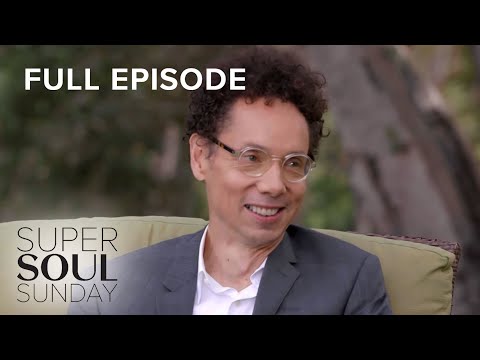
“WHEN YOU SENT THIS OFF TO YOUR PUBLISHER AND YOU HAD DONE THE FINAL PAGE AND BROUGHT US ALL THE WAY BACK AROUND TO SANDRA BLAND, YOUR DEEPEST HOPE FOR THE BOOK WAS... THAT WE WOULD ALL ACKNOWLEDGE OUR COMPLICITY IN THE DEATH OF SANDRA BLAND. THAT THAT WASN'T ABOUT A ROGUE COP AND A STUPID SMALL TOWN AND WHAT HAVE YOU. IT WAS ABOUT THAT WE HAVE INSTITUTIONALIZED WAYS OF DEALING WITH STRANGERS THAT MAKE NO SENSE. WE HAVE ASKED POLICE OFFICERS, REQUIRED THEM, FORCED THEM, PUSHED THEM TO MAKING JUDGMENTS ABOUT PEOPLE THAT SHOULDN'T BE MADE.”Super Soul Sunday, 2019 · 39:39
Ethics begins with humility about how poorly we judge strangers
Gladwell’s starting point is that people are unreliable interpreters of other people, especially when they have little context. He says humans are not especially good at reading strangers, and he wants that realization to produce caution and humility rather than certainty.12
That matters ethically because blame often rests on confidence in first impressions: who seemed threatening, truthful, calm, deceptive, or guilty. Gladwell argues those judgments are frequently built on faulty assumptions about demeanor and visible emotion, which means moral condemnation can be based on misunderstanding.345
He shifts responsibility from lone villains to the systems that force bad decisions
In cases like Sandra Bland, Gladwell does not deny individual agency, but he resists reducing tragedy to one bad actor. He argues that the deeper problem is that society has built institutional ways of dealing with strangers that push police into making judgments they should not be making in the first place.67
His practical moral recommendation is simple: slow encounters down. When someone has power over a stranger, responsibility includes creating more time, more room for interpretation, and fewer instant conclusions, because escalation thrives on speed.89
This broadens ethics from personal intention to design. A system can be morally defective when it rewards haste, suspicion, and overconfidence, even before any one person acts cruelly.86
“WHEN YOU SENT THIS OFF TO YOUR PUBLISHER AND YOU HAD DONE THE FINAL PAGE AND BROUGHT US ALL THE WAY BACK AROUND TO SANDRA BLAND, YOUR DEEPEST HOPE FOR THE BOOK WAS... THAT WE WOULD ALL ACKNOWLEDGE OUR COMPLICITY IN THE DEATH OF SANDRA BLAND. THAT THAT WASN'T ABOUT A ROGUE COP AND A STUPID SMALL TOWN AND WHAT HAVE YOU. IT WAS ABOUT THAT WE HAVE INSTITUTIONALIZED WAYS OF DEALING WITH STRANGERS THAT MAKE NO SENSE. WE HAVE ASKED POLICE OFFICERS, REQUIRED THEM, FORCED THEM, PUSHED THEM TO MAKING JUDGMENTS ABOUT PEOPLE THAT SHOULDN'T BE MADE.”Super Soul Sunday, 2019 · full transcript →
Some harms should be named as crimes, not softened as accidents
Gladwell is equally clear that humility about judgment should not become moral evasiveness. In his discussion of drunk driving, he argues that American culture once used language like accident to avoid confronting culpability, even when someone chose to drink, drive, and kill.1011
His point is that public language shapes responsibility. When a drunk driver is treated as unlucky rather than blameworthy, society weakens its own moral standards and obscures the fact that preventable harm was caused by a choice.1112
That is why he stresses a harder moral frame: the drunk driver is not simply caught in tragic circumstances but is a criminal. Ethical seriousness sometimes requires refusing the comforting vocabulary that lets people escape responsibility.1213

“The man who careens down Peachtree is not a victim. He’s a criminal.”Revisionist History podcast episode, 2021 · full transcript →
Trust is morally necessary, even though it makes us vulnerable
Gladwell does not think the answer to deception is permanent suspicion. He argues that people are conditioned to assume others are telling the truth, and that this default is socially useful even if it leaves us open to frauds, abusers, and con artists.1415
This creates a difficult ethical tension. A trusting society is more humane and functional, but the same trust helps people like Bernie Madoff or Larry Nassar hide in ordinary life, sometimes in plain sight.161715
So responsibility is shared in a limited sense: not because victims or bystanders are guilty, but because normal, adaptive trust can be exploited. Gladwell’s lesson is not to abolish trust but to recognize its costs and to build institutions that do not depend on perfect lie detection.51518
Ethical judgment must account for how situations change people
Gladwell’s treatment of the Minnesota Starvation Experiment highlights another side of responsibility: behavior cannot be understood apart from conditions. Hunger changed mood, obsession, self-control, and identity, showing how dramatically circumstances can reshape what people do and who they seem to be.1920
That is one reason research ethics matter so much to him. He emphasizes both the scientific ambition of the experiment and the fact that such a study could not be run today, which underscores how moral standards have changed around consent, risk, and what investigators may ask of subjects.2122
The larger implication is that ethics should be less abstract and more attentive to context. Before assigning responsibility, we need to ask what pressures, deprivations, or institutional demands were acting on the person in front of us.1922

“Could Ancel Keys do that experiment today? Not a chance.”Revisionist History episode, 2022 · full transcript →
Stories change moral behavior when they make responsibility concrete
Gladwell sees narrative as part of ethical life because people often change through concrete examples, not abstract principles. He points to the power of specific stories to move action in a way general arguments often cannot.23
That helps explain his method across these topics. Rather than offering a theory of ethics in formal terms, he tells stories that force a reconsideration of blame, trust, cruelty, complicity, and judgment. He also believes the strongest storytelling leaves room for the audience to do moral work themselves.24
Applied to everyday life, his view suggests a practical discipline: explain clearly, ask more questions, and use real human cases to test your moral assumptions. Responsibility becomes easier to see when the story is properly told.252624
Gladwell on ethics & integrity, in his own words
“The man who careens down Peachtree is not a victim. He’s a criminal.”
“Could Ancel Keys do that experiment today? Not a chance.”
“I wanted to write about because if you break that exchange down moment by moment, you see multiple failures of understanding…”
Where to watch
 Malcolm Gladwell on Talking to Strangers: Trust, Error, and Tragedy2019 · 57 min · full transcriptBest overview of his ethics of strangers, institutional blame, and the need for caution and humility.
 Malcolm Gladwell on Drunk Driving: The Stories We Called Accidents2021 · 35 min · full transcriptShows his clearest argument for firm moral accountability and why language can hide responsibility.
 Malcolm Gladwell on the Starvation Experiment: Science, Hunger, Ethics2022 · 30 min · full transcriptExplores research ethics and how extreme conditions complicate judgments about behavior.
 Malcolm Gladwell on Talking to Strangers: Why Trust Goes Wrong2019 · 42 min · full transcriptStrong on trust, transparency, and why misreading people creates ethical failure.
 Malcolm Gladwell on Truth and Deception: Why We Miss the Signs2019 · 71 min · full transcriptBest for his view that deception succeeds because trust is adaptive and lies often hide in plain sight.
Questions people ask
- What did Malcolm Gladwell say about why drunk driving used to be called an accident?
- What did Malcolm Gladwell say was the deepest hope of Talking to Strangers?
- What is Malcolm Gladwell's main idea in Talking to Strangers?
- Why does Malcolm Gladwell say people need to slow down when dealing with strangers?
- What did Malcolm Gladwell say about why people miss signs of abuse or deception?
- Why does Malcolm Gladwell think trust can be a good thing, even when it leads to fraud?
Sources
Every quote above, word for word from the transcripts. Numbers match the text.
“…we're not very good at talking to strangers…”
“I want people to have, when I end, a call for caution and humility…”
“YEAH. SO WHAT I WANTED TO DO WITH THE BOOK IS TO SYSTEMATICALLY BREAK DOWN THE FAULTY ASSUMPTIONS THAT LEAD ENCOUNTERS BETWEEN STRANGERS TO GO AWRY. SO I MEET YOU FOR THE FIRST TIME. ALL WE KNOW ABOUT EACH OTHER IS WHAT WE CAN SEE ABOUT EACH OTHER. WE START TO HAVE A CONVERSATION. SOMETIMES THAT GOES WELL. SOMETIMES IT GOES HORRIBLY WRONG. BUT WE'RE MAKING JUDGMENTS ALL THE TIME... THE WHOLE TIME. ...BASED ON OUR OWN UNCONSCIOUS BIASES AND CONSCIOUS, CORRECT? EXACTLY. I'LL GIVE YOU ONE OF THE ONES THAT I SPENT A LOT OF TIME ON, IS WHAT I CALL THE ASSUMPTION OF TRANSPARENCY, WHICH IS, WHEN I SEE YOU, I OBSERVE YOUR DEMEANOR, YOUR FACE, YOUR EXPRESSIONS, YOUR EMOTIONS, YOUR BODY LANGUAGE, AND I DRAW CONCLUSIONS ABOUT THAT.”
“…we should be good at that and we're not…”
“…we are pretty bad at discerning when someone's trying to deceive us…”
“WHEN YOU SENT THIS OFF TO YOUR PUBLISHER AND YOU HAD DONE THE FINAL PAGE AND BROUGHT US ALL THE WAY BACK AROUND TO SANDRA BLAND, YOUR DEEPEST HOPE FOR THE BOOK WAS... THAT WE WOULD ALL ACKNOWLEDGE OUR COMPLICITY IN THE DEATH OF SANDRA BLAND. THAT THAT WASN'T ABOUT A ROGUE COP AND A STUPID SMALL TOWN AND WHAT HAVE YOU. IT WAS ABOUT THAT WE HAVE INSTITUTIONALIZED WAYS OF DEALING WITH STRANGERS THAT MAKE NO SENSE. WE HAVE ASKED POLICE OFFICERS, REQUIRED THEM, FORCED THEM, PUSHED THEM TO MAKING JUDGMENTS ABOUT PEOPLE THAT SHOULDN'T BE MADE.”
“I wanted to write about because if you break that exchange down moment by moment, you see multiple failures of understanding…”
“…what your job is is to add seconds into the encounter…”
“He—so even on the level I try and identify in the book all of the different ways—and this is when I come back to the case at the end of the book—I go through this in more detail, all the different ways in which he completely misunderstands her. And one of them is, he doesn't understand the meaning of lighting a cigarette in a moment of tension, and that's, you know, still more evidence why you need, if you're a cop or anyone dealing with a stranger, you need to slow down and not jump to any conclusions because there's so much you can miss. What it seemed to me when I listened to it initially, and then I listened to it again in your audiobook, there's a thing that happens with police officers, and I've never been a police officer, but I was a security guard for a brief period of…”
“It was an accident, wasn’t it?”
“No, they're not saying that. They're saying you absolutely are impaired, it's just that we're not going to hold you responsible for it. Barron: Yeah, it's weird. I thought it was weird, but it was so commonplace and I'm glad you mention the word “accident.” Why if you go and drink too much, and you willingly go in your car when you know you're not supposed to and you crash into someone or something and there's damage and hopefully not death, that's still called an accident. It was called an accident in the 1930s, and it's still too often called an accident although people now try to get us to use a different word. The other phrase, “wrong place at the wrong time”—all these notions that, well, just if that person hadn't been crossing the street. Sure, the driver was drunk, but if they hadn't been out so late at night and crossing the street, this wouldn't have happened.”
“The man who careens down Peachtree is not a victim. He’s a criminal.”
“The judge relents. Suspends Norman’s sentence. Lets him go free–and we have, in place of the morally revolutionary moment in Dorothy Parker’s original script, just another 1937 ending. Where a man drives blind drunk and hits… a tree. Where the law makes a half-hearted attempt to hold him accountable. Only to give up in the face of the celebrity wife saying she can save him. And where the drunk driver faces no consequences for his behavior. Except a bit of fleeting humiliation. And then he commits suicide–only it’s not an act of shame and moral defeat. It’s the ultimate sacrifice for the woman he loves.”
“WE ARE CONDITIONED BY EVOLUTION TO BASICALLY ASSUME THAT EVERYONE IS TELLING THE TRUTH…”
“They just assume everyone's honest. Turns out that's a really good way to make a lot of money, right? The people who are sitting in their home like so paranoid that their money is under a mattress, those people don't make any money, right? So, it's like it's weirdly adaptive to be taken in by Madoff. It's, you know, it’s a sign that you are someone who's generally trusting. Mm-hmm. It's probably a positive thing.”
“…the way you hide secrets is in plain sight…”
“Anyone who's in the gymnastics world of, of around Penn State knew Larry Nassar, but they didn't really know him. And Michigan State—yeah, Michigan State, man—they didn't really know him, and that, you know, partly because we have powerful mechanisms of denial, probably because, you know, if you are a pedophile, you spend a lot of time trying to obscure your behavior from people, but partly because what we're talking about, like people have many, many different dimensions and it takes—it took a very long time for some of those parents to come around to the idea that this man was—took actually finding 37,000 images on his hard drive for many of them to come around to the notion that he might.”
“…the cost of that insight is too high…”
“What happens to people . . . when for months on end you deny them . . . food?”
“The men called themselves the guinea pigs.”
“Human misery and want are qualities of life which properly bring an emotional response, but starvation is quantitative . . .and must be met with quantitative answers.”
“Could Ancel Keys do that experiment today? Not a chance.”
“I don't think she stops if it's just an abstract thing…”
“…the greatest stories are the ones where your role as the Storyteller is min—it’s at its absolute minimum…”
“Questions and learn. And my whole childhood was spent listening to my father meet random strangers, figure out what areas they knew more about than he did, and him asking them questions. I thought that was normal. I discovered later that that's not normal, but um, so I had a kind of model of this kind of extreme, and a lot of it was grounded in—he had no insecurities about declaring himself ignorant in an area, right? Have a problem with that? It's like, "Oh, I don't know anything about that," right? Even on things he knew a lot about, if he met a theologian he wouldn't even pretend to know more about them than the Bible. He just knew, you know. Or gardening, if he thought that, you know, more about delphiniums than he did, all ears, let's go. Um, it's a kind of extreme version of—he was a kind of—he had a kind of radical curiosity. Again, I don't think I can match that, but it's a really powerful model to be given as a kid.”
“The point of Monopoly is to amass as many properties as you can and put everyone else bankrupt, right? You don't explain the game before you explain the point, right? Like, people would start without doing—and I would read the Parker Brothers instructions and I would say, "Why didn't you tell me what the point is in the first sentence?" You were speaking my love language. This would drive me to—this day, this drives me nuts. Explain it properly, right? So I think that was where my career as a journalist was born. Huh. I was like, I grew up in a household where 60% of the members of our house, my household, could not explain the simplest thing to anybody.”
How this guide was made: drafted with AI from the full transcripts of the recordings cited, then checked: every quotation must match a transcript word for word and be the speaker's own words, and an independent review gates accuracy. Methodology and corrections.

