Malcolm Gladwell on Talking to Strangers: Trust, Error, and Tragedy
What Gladwell talks about
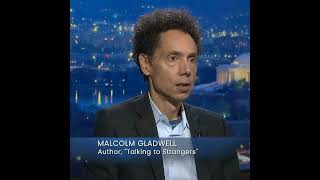
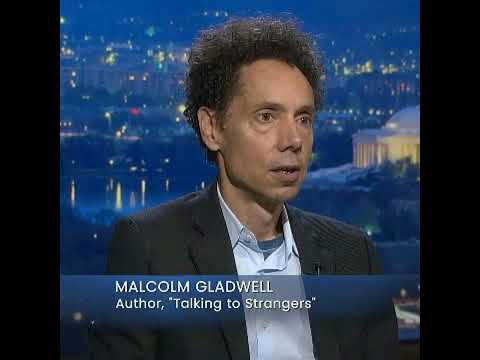
Malcolm Gladwell discussed his book Talking to Strangers in this C-SPAN Q&A at a book festival in October 2019, focusing on trust, misjudgment, and cases including Sandra Bland.
Also known as: "Talking to Strangers" (C-SPAN); Malcolm Gladwell on Talking to Strangers; C-SPAN Q&A.
Malcolm Gladwell explains the central premise of *Talking to Strangers*: people are often bad at understanding strangers, and that failure can have serious consequences. He uses cases like Sandra Bland, Bernie Madoff, Jerry Sandusky, and Khalid Sheikh Mohammed to show how miscommunication, overconfidence, and missed warning signs play out in real life.
He argues that many institutions default to trust, and that this is usually necessary for society to function. But he also shows how that same tendency can cause people to overlook danger, especially when the evidence is vague or the context is hard to read.
Gladwell says the book is meant to promote caution and humility, not paranoia. He wants readers to slow down, question easy assumptions, and think about how systems can be designed to handle the limits of human judgment.
Gladwell is interviewed in a C-SPAN Q&A with an interviewer and brief audience-style prompts.
In his words
“We're not very good at talking to strangers”
“I wanted to write about because if you break that exchange down moment by moment, you see multiple failures of understanding”
“We default to truth”
“The cost of that insight is too high”
“I want people to have, when I end, a call for caution and humility”
Key points
- The book's core idea is that humans are not very good at talking to strangers.
- The Sandra Bland case shows how a routine traffic stop can unravel through mutual misunderstanding.
- Gladwell argues that many institutions default to truth, which makes social life possible but also leaves us vulnerable to deception.
- He uses Bernie Madoff to illustrate how trust can be exploited until doubts become overwhelming.
- He says the Penn State and Michigan State cases reveal different thresholds for acting on vague or explicit allegations.
- He links the book to Me Too by stressing how slowly people often accept abuse claims, even when warning signs exist.
- On interrogation, he argues that coercion may distort memory and reduce the value of the information it produces.
Full transcript: Malcolm Gladwell, C-SPAN Q&A on Talking to Strangers (2019)
This week, journalist, social commentator, and best-selling author Malcolm Gladwell discusses his most recent book, *Talking to Strangers*. He writes about how people tend to make judgments, often inaccurately, about people we don't know, and about the consequences that can have on social order. Here is our conversation from September 2019. Malcolm Gladwell's book number six out this week, *Talking to Strangers*. Uh, what is the premise of this book, your latest book? Uh, the premise of this latest book is that, um, we're not very good at talking to strangers. Um, I was struck by how many of the kind of contemporary high-profile controversies
that we find ourselves in come down to the same problem: that two people who didn't know each other very well attempt to communicate and fail, um, or attempt to understand each other and fail. Bernie Madoff, people, all kinds of people had conversations with Bernie Madoff and never understood who he was. The Jerry Sandusky case at Penn State, the Brock Turner sexual assault case at Stanford a few years back, these are failed, um, communications. Uh, and the one that really, uh, the book starts and ends with, and the signature case I'm concerned with, is the Sandra Bland case, which is one of those high-profile, um, encounters between African-Americans
and law enforcement that was, excuse me, so much in the news a few years ago, um, which was a conversation between a young black man, young black woman, and a police officer who pulls her over, and the conversation goes off the rails, um, and I wondered why is it, why is it that we fail in these, these conversations with strangers? And that's where the book comes from. Each one of your books has explored an aspect of human communication. What is it about this topic that you keep coming back to it? Why is it so important to you? I don't know, you know. I just think it's endlessly—no one loves a transcript more
than me. Um, and I, I, um, am sort of keenly interested in how people express themselves and how they succeed and fail at that, and, um, I'm one of those people who, if someone is articulate, I'm, I'm all in. I find myself, so I had a, I, I, one of the people who interviewed me when I was on my—did a little press tour of England and I was interviewed by the actor Russell Brand, who has a podcast, a very popular podcast in England, and I never met him before, knew, I only knew him from the movies, and he starts to talk and I realize he's one of those astonishingly
articulate people and I was just kind of so in awe. And my whole time trying to figure out why, how is it this man has so—has so—has so commanded my attention? And his choice of words was, I was, I, I was having difficulty answering his questions because I was so focused on, like, thinking about, "Oh my goodness, I can't believe the brilliant way he phrased that." And then I would be like, "Oh, I have to answer." Um, so there's, I don't know, I'm just drawn to that, um, that whole aspect of, of, um, of human nature. For our conversation, we've actually pulled some clips that help to illustrate some of the things you talk about in the book, and I want to start with the Sandra Bland story, and, uh, this is a, this a very available video if people want to watch the entire thing.
But we have just a small clip. Let's watch and then we'll come back and talk a little bit more about it. You okay? I'm waiting on you. You—this is your job. I'm waiting on you. Whatever you want me to—oh, you seem very irritated. I am. I really am 'cause I feel like it's—PA—what I'm getting a ticket for. I was getting out of your way. You were speeding up telling me, so I move over and you stop me. You mind putting out your cigarette? Please don't mind. I'm in my car. Why? I have to put out my cigarette? Well, you can step on out now. I don't have to step out of my car? Step out of the car. Step out of the car. No, you don't have the right—Step out of the car. Don't touch me. Get out of the car. Don't touch
me. I'm not under arrest. You don't have the right to take—You are under arrest. I'm under arrest for what? 257 count FM. Drag you out of here. So you going—you threat to drag me out of my own car? Get out of the car. I will light you up. Get out now. Wow. Get out of the car for a failure to signal? You doing all of this for—Get over there. That, uh, that interaction ended in tragedy. How? Three days later she's, she's imprisoned because for resisting arrest, and then three days later she hangs herself in her cell. Um, you know, a tragic and unexpected result, but the whole—that exchange that we saw, which, by the way,
goes on and on and on and on, we—when saw a small snippet of it, um, is, uh, that was the kind of—when I first saw that online, that was when I realized what I wanted to write about because if you break that exchange down moment by moment, you see multiple failures of understanding, of empathy, of a million things. So just for example, in the, in the, in the segment we just saw, she lights a cigarette, and we know—we now know that Sandra Bland was someone who had struggled with emotional problems. Um, she had a failed suicide attempt a few months earlier. Um, she's upset and she
Also has several thousand dollars in outstanding traffic fines. So, being pulled over by a police officer is consequential for her. This has happened before. She's deeply in debt because of it, and so she's upset when she gets pulled over, and she lights a cigarette to calm her nerves the way that many smokers will tell you—that's why they smoke, right? To kind of calm down. So, she's trying to stay under control and, in an unconscious way, I think trying to signal to the police officer, "I don't want this to go awry. I'm trying to calm down." And he won't let her, and he sees her lighting a cigarette as an act of defying, right? It's sort of F and throughout, if—
You watch the entire videotape, you're constantly... you see the two of them are talking entirely past each other, and that he is reading her disquiet and distress as, um, as, as evidence of something sinister, as evidence of her being dangerous or malicious or crim—you know, criminal in some way. It's this kind of, um, epic misunderstanding, and I wanted to kind of, so the course of the book, I sort of try to break it down, and then by reference to other stories try and come to an understanding of how it is a very, very, very straightforward conversation can end in tragedy. So you—
Write of this that you had been thinking about these concepts for a while and that you watched this video countless times, and you kept finding yourself getting angrier and angrier. Mine's a process question. So, uh, it's been six years since you've produced a book, you've got ideas terminating in your head, what was it about this that crystallized, "Yes, this is the topic I want to explore"? Well, I had been, um, uh, kind of drawn to all of those encounters—problematic encounters between African-Americans and police officers, you know, beginning with Ferguson. And because they all seem to be about, to me, to be extraordinarily multi-layered. On one hand, they were—
Deeply personal. They were about police officers confronting someone and something going, you know, something going wrong, someone getting shot, someone. But on the other hand, so Ferguson's a really excellent example, you know, when the Department of Justice report comes out on Ferguson, there are two reports. One report is about the actual conduct of the police officer and what happened between the officer and Michael Brown, and that report explains why the officer is not being indicted on civil rights charges because it's unclear that he did anything that was in, um, sort of obvious violation of the law. The other, uh, second Department of Justice report, which is perhaps more—
Important, was one about the Ferguson Police Department and pointed out that the police department had been essentially a predatory force on the African-American community of Ferguson. They had been essentially using their power, power and authority to levy fines on as many different people as they could in order to fill the city's coffers. The city was running itself on tickets, and so cops were encouraged to write tickets for everything, and the list of when you see the kinds of things the police force have been engaged in over the previous couple of years, your jaw drops. You're like, this is a town where the African-American community was so completely alienated from the police force because of the way the police—
Force was behaving. And that's the context for Ferguson. So, really, you have a—if you only look at the encounter, you miss the real story. The real story is what happened before: years and years and years of the police force essentially using the black community like an ATM, um, in a way that no police force is supposed to do. Uh, and that—that... so, one—it's funny, one of the DOJ reports was exculpatory, and the other was—was such a kind of devastating critique of what had happened in Ferguson, and they sat side by side. And in order to understand Ferguson, you have to read both. Um, that struck me as—
Incredibly interesting, that, um, because I think we have a tendency sometimes when we look at these kinds of encounters to only do the first look—the personal look—to look at the interaction between the cop and the—and think we can settle the issue if we can figure out exactly what happened in that interaction. But that the Ferguson reminds us that no, no, no, that's just the beginning of your job. You then have to take a step back and say, well, what were the environmental conditions that surrounded and predated that encounter? And I wanted to do something like that with Sandra Bland, um, only go even broader and start pulling in, you know, Made Off and Amandin—
Noox and all the other cases I talk about as a way of shedding light on that, um, encounter. You spent three years, you write, on this project, and, uh, if you look at the extensive notes that you have in the back—lots of documents read, never met a transcript you don't like—and, uh, lots of travel and lots of interviews. It—it's, I guess, people wonder who follow you with the really limitless vignettes or examples, case studies that you could bring to bear on a topic. How do you end up selecting the ones that say, yes, this helps me with this point? Yeah, well, I mean, there is no procedure; there's—it's an art. Sometimes you're successful at it, sometimes you're not successful at it. Um, you look for—I like to tell a variety of—
Stories just to remind people what the stakes are, you know? If you, if every story I told in this book was a story of an encounter between a young African-American and a police officer, then people would think, oh, Malcolm's just talking about—when he says he writes a book about talking to strangers, he's just talking about interaction between police officers and black people. Um, I don't want that. I don't want this to be—I don't want to give people reason to pigeonhole this. I'm trying to say something that's actually quite broad about the way all of us, um, uh, talk to strangers. And I, you know, it's funny that I honestly don't believe—I think that many of us could have made the same—
Mistakes that that police officer in that video made, that Brian Inia made, I don't think he's unusually inept or incompetent or biased. I think he's a police officer who was inexperienced and over his head and jumped to some conclusions he didn't—but you know, we all do that. That's the point of the book, that unless just that we're making our mistakes in far lower stakes situations. We're not police officers with guns stopping people in the street, right? When I screw up in my understanding of a stranger, what's the consequence? Someone doesn't like me, or I feel uncomfortable. No one's dead. So that's the—I think that's an important thing to
keep in mind that I'm, um, this book is really meant to be to make us all complicit in, um, in some of these, um, uh, uh, tragedies. One of the concepts that you say that we all do is that we default to truth. What does that mean? So this is an idea that comes from a psychologist named Tim LaVine, who, um, whose work I rely on a lot in Talking to Strangers. And he was trying to understand, um, why it is a puzzle that's that has, has obsessed psychologists for a long time: Why are human beings so bad at detecting deception? This has been studied a million different ways, but basically my ability to tell whether you're lying to me is scarcely better
than chance. Um, we're terrible at it, almost all of us, with a few small exceptions. And that's puzzling because you would think we would be good at it, right? You would think that would be something that evolution would have selected for. And his explanation is that evolution does not select for the ability to detect lies. It selects for the opposite. It selects for people who are willing to believe, implicitly believe, what they're told because if you do that, if you trust, um, if you default to truth, as he says, then your life is so much easier. You can start companies, you can form groups, you can, you know, you can send your kids out to school not worry. You
can—there's a million things you can do if you believe what people tell you. You can go into a store, and you can buy—go to a grocery store and buy a hundred items and be satisfied that the bill they give you at the end is accurate, right? Like, which is sort of an extraordinary thing. There are a hundred opportunities in your shopping cart for someone to cheat you, but how often do you see—do you see someone in a grocery store say, "Wait a minute, I don't believe it's $119," right? The only time I've ever seen anyone do this, actually, is my—this tangent: My father, who was a mathematician and had a gift for doing sums in his head, would count along with the checkout person and only if they
undercharged him would he correct them. Now, this is in the day before barcode scanners, but I remember being a little kid and I would just see him looking, he—and then he would say, "Actually, I owe you an extra 75 cents," and he would fish it out. But he wasn't doing it because he mistrusted; he was for him it was a kind of power trick. But, um, but the point is that LaVine's point is that the reason we're able to do this as human beings, build these fabulous working societies, is that we trust, right? Implicitly and automatically. And so if you understand that, you realize that there's a cost of that. And this is his argument: The cost is that we will be, um, we will occasionally be deceived. We're
not good at spotting the scam artist, and that is the—you know, that's why Madoff exists. It's not because Madoff is some kind of genius; it's because if you set out to systematically lie, people will get away with it, at least in the short term. They're not going to catch you, right? We're not—we're not thinking, "Is this guy lying to me?" No, we're thinking, "Oh, he's got great returns, here's a million dollars." That's the way we operate. Well, speaking of Bernie Madoff, uh, dipping into CP's video archive, we have a video of someone who also is in your book, Henry Maropoulos. Um, let's listen to what he has to say to the SEC after Bernie Madoff gift-wrapped and delivered the largest Ponzi scheme in history to them
and somehow they couldn't be bothered to conduct a thorough and proper investigation because they were too busy on matters of higher priority. If a $50 billion Ponzi scheme doesn't make the SEC's priority list, then I want to know who sets their priorities. You call him a holy fool? Yes. So he is Maropoulos. He's not the only one, but he's almost the only person who saw the truth in Bernie Madoff 10 years before Madoff was finally busted. Maropoulos was going to the SEC saying, "This guy's running a massive Ponzi scheme," and nobody would listen to him. So he is a rare example of someone who does not default to truth, and I refer to people like him as holy
fools, which is a—a term, a Russian term, to describe, um, the kind of the—the crazy person who nonetheless has access to truth that none of us see. So the child who's not constrained by social convention and pointing out the truth, the kid who says, "The emperor has no clothes," is a holy fool, right? Um, now, Maropoulos is fascinating because the question arises, well, do we want to be like Maropoulos? Maropoulos could see a fraud that the rest of us could not see. He had insight that the rest of us did not have. Do we want to be like Maropoulos? Would our society be better if there were more Maropoulos? And I say no, that you don't want to be like
Maropis, because Maropis is — and he will tell you this — I sat down with him, we talked about it. He's someone who is extraordinarily suspicious and paranoid. He thinks there's a scandal under every rock. He goes around the world every day of his life filled with a great fear that he's being scammed. He goes to the doctor and he lectures the doctor on, you know, all the ways, "Don't do this to me, don't do this to me. I am, you know, I'm aware of all your tricks." And he, in fact, was so paranoid that after he, um, after Moff was finally busted, Mopis came to believe that Moff was going to send a hitman to kill him. And then he became convinced that the
SEC was going to send a squad of attackers to break into his house and steal his files. And he stayed up all night with a gun trained at the front door of his house. I mean, you don't want to live like that, right? I mean, there is a cost to having that kind of insight, and that's Levine's point: that insight—the cost of that insight is too high. You don't—you don't, you know, you are much better off, um, uh, being gullible or at least being, believe def-ating to truth, being people who implicitly believe, because liars like Madoff are rare, and although we'll get cheated once in a while, it's not the end of the world. And I actually think that's profoundly wise. But should we be better at listening when someone is saying the sky is
falling? Well, it depends. I mean, the unknown question with Maropis is how many times does he say there's a fraud and there isn't one? So just a few weeks ago, actually, he came out with an announcement that he thought that General Electric was engaged in one of the largest accounting scandals of all time, and it seems—I don't know yet, story hasn't played out yet—but lots, lots of people just shrugged and said, "No, I think you're, you're off the mark in this case." So I don't know. Um, you know, certainly we would do well to—we shouldn't ignore them, but we have to understand the difference in the way that most of us are calibrated and that this—it's a good—it's probably a good
thing to be trustworthy, or certainly one should not take from the Madoff scandal, I think, the conclusion that the financial industry needs to be even more heavily regulated. Um, if you reduce everyone in a complex industry to a state of suspicion and paranoia, then you destroy the thing you're trying to save, right? Our next example from your book is a very different kind, and it's from Michigan State and Penn State: the Jerry Sanduski scandal and Dr. Nasser. Uh, let's watch the video and we'll come back and talk about that. He was coming to me with a concern because, you know, and I guess in his words, somebody had talked to him
about, um, inappropriate behavior in the shower. Mhm. So, and you told him we were it, say? Yeah, I told him that I, you know, it didn't happen, and, uh, you know, there wasn't, in my mind, there wasn't inappropriate behavior. Well, the court said differently, and he's now serving a long prison sentence. Uh, what should we take away from this and also the Michigan State situation? Yeah, so I have a chapter on the Sanduski case, and what interests me about the Sanduski case
is not Sanduski himself, but rather what the prosecutors did after they convicted Sanduski. They went after the leadership of Penn State for a failure, um, to—to, uh, act earlier on, uh, to prevent Sanduski's misbehavior, um, which I think is absurd. And I said, go through chapter and verse why the prosecution was asking people in positions of leadership to do things that they should not do. That is essentially what the charge. So the president of Penn State was forced to resign and is still, ten years later—almost ten years later—
fighting, um, a legal battle to stay out of jail. Uh, the athletic director and the vice president of Penn State both were convicted and were sent to jail as a result of the scandal. In my mind, they did absolutely nothing wrong, um, except that they did what human beings do, which is they defaulted to truth. They were presented with, um, incredibly vague, uh, uh, questions about Jerry Sanduski, and they chose to interpret them in the way that was most favorable to Sanduski. They defaulted to the truth when it came to this man who was in their employ. They said, you know what? I don't really know what that is. It sounds like, you know, maybe
he's engaging in mildly inappropriate behavior or has boundary issues. Let's just say you can't take showers at the Penn State facility anymore. That's—that decision landed them all, um, either in prison or, um, on the verge of going to prison. Um, if you examine the case closely, what you discover is that this is a classic example of the kind of thing that, as human beings, we are inclined to shrug off. Like Levine's point is that when you default to the truth, you believe in the truthfulness of what you were told until the doubts rise to a level so high that you can no longer, uh, continue, abide by that original position. So there's a high bar. So you see that
with Moff. Lots and lots and lots of people on Wall Street had doubts about Madoff, but the doubts just didn't reach the point where they were willing to take the enormous step to say he's a Ponzi schemer. Um, with Sanduski, there were all these kinds of whispers, and he was seen showering with young boys, but what was seen was incredibly vague. And even the football coach who spotted Sanduski in the shower that night told a medical doctor who was a friend of his family about what he had seen. And even the doctor who has a legal duty to report child abuse didn't report it. Why? Because it was too vague. He was like, "I couldn't figure out what he saw. It looked a little weird. He was little..."
Upset by it, but he, and then the—then that same coach waits six weeks and tells Joe Paterno, the coach at Penn State, who then tells the leadership the next day. And their response is, "Well, if this was so pressing, why'd you wait so long to tell us?" And he doesn't actually say he saw a sexual act being committed; he saw something that just made him feel weird. And they're like, "What? What do we do with that?" Right? They default to the truth. That's what we do as human beings, and the absolute last thing we want to do is to tell people in positions of running major institutions that they should start being paranoid about all of their employees. You cannot run an effective intellectual commity.
Community. If you are deeply suspicious of every act of, you know, inexplicable behavior or mildly inexplicable behavior by your employees, you can't do that. Nor can you, by the way, just in the same way that you can't run a regulatory agency if every single, even mildly, um, uh, even mild digression from the absolute straight and narrow triggers a massive investigation. What you do is you act when there is an overwhelming amount of evidence. There was not an overwhelming amount of evidence in that case, and it's very easy, in hindsight, I think, to get on your high horse and say these people should have been truth tellers. It should have seen.
Into the heart of Jerry Sanduski. Well, guess what? Pedophiles go to extraordinary lengths to hide what's in their heart. You had to be working on this during the whole time of the Me Too, uh, revelations. How did that—which is not pedophilia, of course, but improper sexual, uh, relationships and advances—how did that figure into your thinking about this? That's interesting. You know, uh, so the problem, I mean, a good analogy and a good way of discussing this is to make reference to the other case you're talking about, the Larry Nassar case, which is a much more straightforward case than Jerry Sanduski, where, you know, here was a doctor at Michigan State who
was treating young gymnasts and he was sexually abusing them repeatedly over and over again, sometimes in the presence of their parents, and, uh, it took 15 years for him to be brought to justice, um, not because people in positions—in the case of Michigan State, unlike Penn State, people in positions of authority were being told quite explicitly that wrongdoing was happening, and they chose to either disbelieve it or shrug or look away. Um, there I think some of the leadership absolutely does belong in jail. There was the condition of there being overwhelming evidence was met, I think, in the case of Michigan State. What's fascinating about that, though, in
the context of Me Too, is how long it takes people, even parents of children who are being abused, to take the charge seriously. In other words, it takes years and years and years and years and years for people who are intimately connected to these victims to kind of, um, accept the fact that something as heinous as, um, a sexual crime has occurred. And that, to me, is the same lesson. It's a lesson that runs throughout Me Too, that, you know, this kind of behavior has been going on for, I mean, millennia, but in our society, it's been going on for as long as women
have been in the workforce or women have been—it's taken until now for us to take it seriously. You know, the Bill Cosby or a better example would be, um, uh, would be Harvey Weinstein. It was, you know, I live in New York, I know people in the film industry. You know, it's been an open secret for years and years that he was doing—unconscious—his behavior around women was unconscionable. I mean, I'd heard people talk about it. Ten years ago, the New York Times, five or six or seven years ago, tried to do a story on it but just couldn't get people to speak on the record. I mean, there is nothing—this wasn't something that popped up in
2018. This was an open secret in these worlds for a decade or more, but it takes an extraordinary long time for people to come to grips with this, of the enormity of this crime and to kind of find a way to do something about it. And that's, to me, the sort of lesson. A last, uh, I think example from this, because our time evolves really, evaporates quickly, is actually, uh, another person that's in the news right now: Khalid Sheikh Mohammed. Uh, his military court judge has just set his trial date for January 2021. Um, let's watch a piece of video and help us understand how he fits into what you're talking about here. I've felt
with 13 or 14 of the worst ones, right? Uh, KSM, uh, Zeda Ramsey, B Thaba, um, Al Nashiri, the CLE bomber. Um, I dealt with a lot, and none of them refused to identify what they had done. I mean, so it wasn't a matter—we weren't looking for confessions because confessions won't stop attacks. What stops attacks is actionable intelligence, and the way that you could get the actionable intelligence dealt with is by, to get through these enhanced interrogations, get them working with you so that you can use social influence after that to get the information that you want. One of the lead interrogators of
KSM. Yes, yes, who I talked to at length as well, um, and who, uh, I found, I mean, genuinely interesting and fascinating person who was asked to do an extraordinarily difficult job, um, which was to interrogate some of the most hardened terrorists, um, in the world. And what he was doing is a very good example of—he had to talk to STR, right? I mean, it's a—it's a tech—the enhanced interrogation post-9/11 is a textbook example of what my book is about, which is the difficulty of seeing the truth or truly understanding what someone, what a stranger, um, is saying or telling you. Um, in his case, he, you know, he's quite open.
About it, resorted to some, uh, well, enhance or other, say, extreme measures to try and facilitate the communication with the, with the, with the stranger, with the terrorist. And the question I raise in the chapter is, um, what happens when you do that? So, faced with the same problem that all of these case studies I've talked about are faced with, which is you have someone who you don't fully understand and you are tasked with getting the truth out of them, finding the truth. And we see how Brian City, the police officer, botches it with Sandra Bland; he totally misunderstands what she's about. Um, uh, and we see that in the other examples. So, in this case,
Though the added element is that there was coercion—physical coercion and emotional coercion—was added into the mix to try and enhance the truth discovery process. And in that chapter, the point of it is to say that's not without its cost either. The issue with using physical coercion to get someone to talk is that, in using coercion, you change their memories, so you affect the information you're getting. Now, the crucial question—and it's impossible to answer with certainty—but the crucial question is: so then, is the cost of coercion worth its benefits?
So I can definitely make you talk if I waterboard you. Like, right now, you would talk. But is it in the act of waterboarding that I affect your ability to remember what you did, what there is to talk about? In other words, do I harm the conversation in the process of trying to facilitate the conversation? So you have this trade-off. And is it a good one? And that's a question that I don't think the proponents of—well, the proponents of enhanced interrogation answered that question very differently than the opponents of it. And, uh, I, my
The feeling in my conclusion in the book is that I tend to side with the opponents. I tend to believe that the costs of coercion are really high—higher than we realize. And I talk at length to a psychiatrist who studied this very question, and he, I think, he's quite convincing that you're in really uncharted territory. You don't know what to make of the information that you retrieve through physical coercion because it's so compromised by that act of coercion. So just being able to skim the surface of your numerous case studies in here brings it all full circle. So what do you want readers to understand about your thinking and what they should be thinking about in?
Their discussions with strangers. I want people to have, when I end, a call for caution and humility. I want people to slow down, to understand that the task of getting to know a stranger is very, very difficult. It cannot be done quickly or easily; that some of the things you do to speed it up make the problem worse, and that we need to design systems that account for that weakness. So, the last part of the book is really all about policing and law enforcement strategies, and what does law enforcement look like if you take the task of talking to strangers seriously? And the answer is police.
Behave in a very different way, and they're far more selective in, um, uh, in how they use the sort of the most proactive tools of law enforcement. Um, the lesson of Sandra Bland is not that the police officer needs to be a better conversationalist when he stopped people; it's that he shouldn't have stopped her. That you only stop someone when there is an overwhelming reason to believe that some possibly criminal thing might be taking place. And he had not—he had nothing. All he had was that he drove up behind her and she didn't use a turning signal, and that's not—and that she was a black woman without estate plates. Those are not, those are not sufficient reasons to set in motion a potentially dangerous.
Conversation: Why did, um, you exclude from your book the way that most people interact with strangers in our society today, and that's social media? Oh, I have no interest in social media. Really? Well, I do in a sense. I use it. But does the world really need another book about social media? I just sort of thought, you know, of course that's important, I suppose, but then there are lots of books that talk about it. It's really unnecessary for me to weigh in. I think you have to, when you're writing a book, I think you have to ask yourself the question: Where can I best contribute to this conversation? And I don't think I contribute when I just duplicate a thousand other books that have been written about Twitter in the last year and a half. This—it's been interesting preparing for this this week.
As your books debuted, watching the reaction in, uh, many of the conventional media critics, uh, Los Angeles Times is one of those who loved it. Wrote: "At a time when the world feels intractably polarized, a book examining the varying ways we misinterpret or fail to communicate with one another could not feel more necessary." Some on the other side, uh, I was interested in the graphic in the New York Times, which I—the business section, which, I know, you saw. Maybe we can show it to our audience. Um, it basically said, "Gladwell is turning to dark topics and wondering whether or not, uh, your readers will respond." Are you turning darker in your thinking about the world? No, I don't.
I think—I don't think, I mean, this book is not dark in the sense that it is trying to make the world a better place and trying to answer the ask the question: what can we do differently to make sure that people like Sandra Bland don't have the same fate? Or that, you know, I have a long chapter on the Brock Turner case at Stanford that's all about how can we prevent sexual abuse cases like that in the future. Those are dark topics, but the goal of the examination is positive. It's trying to make the world work a little better. So I don't know whether… but I do think readers in these days are—these are sort of dark times. I think people are
perfectly, um, happy to, um, talk about spies and frauds and, uh, and police shootings and things like that. When you started to dive into the Stanford rape case, were you surprised at the statistics on alcohol abuse on American campuses? Yes. So I wanted to write about sexual abuse as a classic example of campus sexual abuse cases. Many of them don't follow the trajectory of violent rapes of stranger rapes. They're about people meeting at a party under relatively benign circumstances, have a conversation, and then something goes wrong, right? They start out in a very different way. And so I thought this would be an excellent thing to include.
In my book, and I began to go to campuses and talk to people who have studied this issue, and I discovered to my surprise that they really only wanted to talk about alcohol. And that to people who are—who many people, not all of them, but many people who study this problem, they really feel that they're dealing with drinking is—this is the—at the core of this is the abuse of alcohol on campuses and the consequences of drunkenness. And that you can't talk about sexual abuse without talking about drunkenness. And I—they came to convince me of that. And the Stanford rape case is a story about two very, very drunk
people who are who meet on a dance floor. And in the case of Brock Turner, his drunkenness contributes very heavily to him engaging in criminal behavior. And in the case of his victim, her drunkenness contributes very greatly to the fact that she was victimized, right? So you have—and I think it's impossible to talk about how do we prevent this in the future without asking the question: how do we prevent people from being so drunk that on the one hand they greatly increase their chances of being a criminal, on the other hand, they greatly increase their chances of being a victim? I—I want to just, for the audience, put some statistics from the National Institute of Alcohol Abuse
and Alcoholism. It says that drinking by college students, ages 18 to 24, contributes to an estimated 1,500 student deaths every year. In addition, there are estimated 696,000 assaults by students who have been drinking and 97,000 annual cases of sexual assault on campuses. I mean, these numbers are astonishing. And I think many people of our generation—and I'm going to lump myself with them, although I think I suspect you're much younger than I am—we forget because, when we were of college age, drinking was quite different. It has
changed quite dramatically over the last generation. You know, the amount of hard alcohol is way up, and, of course, hard liquor gets you drunker, more seriously, and far more quickly. The amount of binge drinking is way up, and also, most importantly, the amount of drinking by women is way up. So that's a—whereas in my generation, it would be unheard of for a woman to match a man drink for drink in a social setting, that is now much closer to the norm. And that has profound consequences for drunkenness because, for a variety of physiological reasons, of course, women do not process alcohol as efficiently as men do, and they get
much drunker on the same amount. So we have this—this is a—these numbers you told me are—they're astonishing, and there's a kind of—I am struck by the absence of a meaningful conversation in this country about how dangerous drinking patterns are. And two, I'm struck by the fact that—and I quote this in the book—that when you talk to young people, people in college, they don't see this link between sexual abuse and their drinking. They see them as being disconnected. And that is madness. Absolute madness. You've been exploring a number of these topics as well in your podcast Revisionist History, which is now in its fourth season. We just finished four seasons—just four
seasons. So, uh, I want to play a clip from one of your podcasts, which is actually on one of the chapters of the book, and let people get a sense of how you do that. Let's listen. Tensions rose, coming to a head on February 24th, 1996. That afternoon, three Armanos SAR CAT planes took off for the Florida Straits. As they neared the Cuban coastline, two Cuban Air Force MiG fighter jets shot down two of the planes out of the sky, killing all four people aboard. The response to the attack was immediate. The United States Security Council passed a resolution denouncing the Cuban government. A grave President Clinton held a press conference: "Ladies and gentlemen, have just been briefed by the National Security Advisor on the shooting down today, in broad daylight, two American civilian airplanes by Cuban military aircraft."
So, what a podcast, and this is also going to be your audiobook. It allows you to do—as we've been doing today—put real video and audio into the subject matter. How does that enhance the experience for your intended audience? Yeah, so we did—well, I'll speak first to the audiobook. So I've been doing this podcast for four years, and I've learned a lot about how different storytelling is in the podcast form. It's much more
Emotionally immediate and, um, the idea that you can hear — once you can hear someone's voice in your ears, I feel they can, they're summoned in a much more kind of visceral way than simply reading about them on the page. And that was, wasn't obvious to me when I started that that's the way it would be. But, you know, with a podcast, you can move someone to tears, um, whereas it's hard — easily — whereas it's quite hard to do on the page. I mean, it's not impossible, but it's much harder to do in print. But in just by people are, I think, are so emotionally connected to, um, the things that come in that channel. Um, so when it came
time to doing the audiobook for Talking to Strangers, because so much of the material in the book is so emotional, we decided to make the audiobook like a podcast. So what we just listened to was a clip of one of the chapters of my audiobook, and, you know, you heard that little clip from Bill Clinton. Well, throughout the book, you almost, you know, if I'm interviewing someone, you hear the person I'm interviewing. When we're, when I'm describing what happened to Sandra Bland, you hear that tape we just saw of Sandra Bland and Brian sitting. When Brianna does his deposition at the end of the book, we—I come back to the case and I walk through his deposition that he gives explaining his behavior that day. You hear it in his voice, right? I had the
tape of the deposition. All of that means that the experience, I think, is just a lot more powerful. Um, and people who have listened to the—it's funny—people who have listened to the audiobook and read the book, it's a small number, but there are some that tell me that it almost feels like two different books, that you're just, you're drawn to very different things and your reactions are very different. Do you have, um, more fun working on the podcast than you do the labor of writing a book? Yeah, because a podcast you can do really goofy things. I mean, I do goofy things in the podcast that I wouldn't — you couldn't. I have a podcast episode on the difference of, on the two hutzpahs, you know: Israeli hutzpah and American hutzpah, and they have different meanings and different
pronunciations. I mean, it's a lark. You could—I'm never going to write that in a book. I mean, there's a kind of playfulness that comes with the podcast, um, uh, format that's not really available in serious non-fiction. Looking up the numbers, there are now 750,000 different podcasts and 30 million episodes that people can avail themselves of. How do you see this whole podcasting market shaking out over time? Well, uh, the vast majority of those podcasts, um, don't earn any income for the creator and don't really have many listeners. So the tail—we're talking about a phenomenon that has a very, very
long tail, much like the book business does. Only it's longer because the cost of producing a podcast is even smaller than the cost of producing a book. So anytime you have an industry where the costs of entry are essentially zero, you're going to have a very, very long tail. You're going to have tons and tons and tons and tons of entrants that don't have to shake out because, you know, it's like people do podcasts for all kinds of reasons, and maybe having listeners and making money is not central to a lot of those people in the long, in the long tail. Um, the issue is about the small number of podcasts that command a decent amount of
viewers. Um, the issue is: are those numbers going to grow? Will we—you know, a podcast like Joe Rogan's podcast has—I have no, many, I'm assuming he gets, let's say, five million downloads per episode. Um, are we in the next 20 years, will there be, you know, five times as many podcasts with five million downloads a day, or will it—or will someone like Joe Rogan go from five million to 20 million? I mean, that's the interesting thing: what happens to the growth at the far end of the tail? The sheer number of podcasts, I don't think, is terribly meaningful. Your partner in the podcast is Jacob Weisberg, someone you've had a long relationship with, and in
fact, in a sidebar to one of the reviews, it was mentioned that you felt that he was a game-changer for you in your journalism career. Can you talk a little bit about your relationship with him and what each of you brings to the table? Yes. So Jacob was, when I first moved to Washington, DC in 1985, Jacob answered an ad to be a roommate in my house on Adams Mill Road in unpleasant. And so I met him for the first time. He was, at that point, taking a year off. He’s taking his, uh, year off from school. He was, uh, took a break between his junior and senior years interning at The New Republic, and he introduced me to people at The New Republic, and I began to freelance there. So he was the one who
got me my start in journalism, um, and he—we remained close friends ever since. And, um, he has been running, for many years, he ran The Slate Group, so Slate magazine, and then all of the podcasts associated with Slate as part of The Washington Post Company's digital arm. And so he's quite a—he's the—he both has extraordinary editorial sense, but he also, unlike me, knows how to run a business. So he and I started this podcast company called Pushkin, um, and he's the CEO, and I am—I am arm candy. Um, he does all of the kind of serious heavy lifting, and I, um, well, I produce my
Podcast for it, but I, I'm, you know, I'm a name on the masthead. I'm not a, uh, but there is no one in the world I'm happier to defer to than Jacob Wibberg. Do you also have a cat named Pushkin or did you—no, I have many things called Pushkin. I have—why is that? I had a dog growing up. We had a dog called Pushkin, and then subsequently we named all our dogs after Russians: Spasí Tolstoy, um, and, uh, then I called—then, yes, and then I, um, I used to call my apartment Pushkin. And then your apartment had a name? I, well, sure. I'm English, so in England—and I come, I'm the son of an Englishman who named everything in his
life. He named his dogs, his garden carts, his rototiller, his cars. So it's second nature for me to give things names, um, and then people loved to name Pushkin so much that they petitioned that, that we would call our new company Pushkin. So there's a lot of Pushkin going around. Who was he for people that don't know? Pushkin was a, a brilliant, uh, maybe the most famous literary figure in Russian history after Tolstoy—or even Russians are love him. He's sort of a late 19th century poet, writer, intellectual, um, and, uh, he, uh, was part black, which is, as I am, so he's a kind of wonderful, um, role
model. This is going to be our last, uh, dip into our archives, uh, and with a bit of apologies, this is the earliest clip that we have of you in our video archive. I wanted to show you and folks watching a little bit of this from 1996. Oh my goodness. I want to show our viewers your piece in this. It's called *Black Like Them: A Personal History.* Uh, what is this about? Uh, well, my piece was about this, a very good example actually of what I was talking about. My piece is about West Indians, um, and in particular, my family, which is half West Indian, and it talks about what, uh, the success of West Indians in America and asks the question: What does the success of West Indians mean, uh, tell us about racism? So I, I wanted to show that not because the clip was particularly poignant, but, uh, times of change, times have
changed. But as a, as a bit to talk about your parents just a little bit more, because in your acknowledgments you tell us two things: first of all, that your mother taught you how to write and that you lost your father as this book was being produced. Would you talk about the contributions that each of them has made to you as a person? Oh, uh, well, my, um, my parents, they are on the surface very different. My father was a mathematician, a kind of a rational, um, physically fearless, uh, go-getter. And my mother is was a family therapist, uh, and she is a much more kind of, um, uh,
contemplative, soulful, uh, type. But in some ways they're very similar, and I, um, they are, uh, they—they were both very independent-minded and they're, um, uh, self-sufficient. And, uh, I had, uh, my father in particular and my mother as well had a—my father had a great sense of mischief, um, and I, I have in—I have inherited his sense of mischief. He never took either himself or the world that seriously, and he, um, he liked, he was playful in the way he thought about ideas. And, and I like, I think at my best,
I am playful about ideas, or at least I try to be, um. So that's from my father. That's sort of my father's principal contribution. Um, and my mother has given, you know, she's a writer. She's an extraordinarily, um, she speaks in perfectly beautiful, perfectly formed sentences that I have admired since as long as I have understood speech, um. So, uh, they have both helped me be who I am. Do you find yourself doing, as you described in the beginning, listening to how she says things rather than listening to what she says? Well, she has great economy. My mother speaks, uh, she doesn't say much, so she expresses. So I do marvel at it, but it, you know, there's—it’s not like there's, with Russell BR, there was like an enormous outpouring of words to to
kind of analyze. With my mother there would be like a sentence and a half. Well, while we're talking about how things change, first of all, where do you do most of your writing? Or do you write in your afore-mentioned apartment most of the time? No, I'm a coffee shop habitué. So, uh, one thing that has changed over the course of your writing career is your celebrity. You've got six, uh, books, five of them bestsellers, longtime bestsellers. You always do extensive speaking tours, top-10 podcasts, um, so when you travel, people must recognize you. Um, you also made a lot of money, I guess, with bestselling books over the years. So how have those two things—celebrity and wealth—changed your life? Well, I mean, I don't worry about money anymore, I suppose. That's, but I
never really did. So, um, and celebrity I don't really—I mean, celebrity is an odd word. Brad Pitt is a celebrity, um, I'm not a celebrity. So if Brad Pitt were to walk down the street, people would mob him. I don't get mobbed when I walk down the street. What happens to me is somebody will say, "Hey, I love your podcast." I keep walking. Or they will say, you know, at the most, someone might stop me and say, "Can I take a picture?" But it's always—it's not in the kind of celebrity awe thing. It's like I'm familiar to them. It's like I'm a. So I think of celebrity as someone who
is up there, whereas people who talk to me are relating to me as a peer. It's like, I've heard you, I've read all your books, I've heard you on your podcast. You're like, it's almost like you're in my life. And they call me Malcolm, and they act like they've known me forever, and they sort of have. So it's a very—it's not a—it's an odd thing. It doesn't feel like fame; it feels like familiarity, if that makes any sense. Does it feel like a good life? Yeah, I get no complaints. So if we look across the millions of people that you reach through these three major areas—podcasting, speeches, books, and the like—what do you want your body of work to do for
society? Just encourage people to look at things a little differently. I always say, I'm—I don't really need—I'm not trying to persuade people of something; I'm just trying to encourage them to step out of their mindset for a moment. Like, just consider the problem from this perspective. You can go back to your old way of thinking at the end, but just pause for a moment while you read this chapter and/or listen to this podcast and imagine what it would be like to think about this very familiar issue in a different way, the way someone else does. And that, I think—that is something I try to do in my own life.
And I think that any kind of art improves the world when it encourages people to adopt different perspectives, even if it's only fleetingly. That's part of what I think makes us better human beings. Thank you for spending an hour with us today. Appreciate your time. Thank you so much. Thanks for listening to C-SPAN's Q&A. Subscribe wherever you get your podcast, and you'll never miss an episode. And while you're there, please take a minute to rate and review us. You can also send us an email at podcast@c-span.org with your questions, comments, or ideas. Your feedback is welcome.
From YouTube captions, lightly punctuated for readability. Timestamps link to the video above. Errors are possible.
Cite this recording
Malcolm Gladwell, “C-SPAN Q&A on Talking to Strangers (2019)”, Book festival / live event, October 2019. Transcript and video: Thinkers Archive, https://thinkersarchive.com/malcolm-gladwell/talking-to-strangers-cspan-2019/
Quoting a passage? Link to its exact moment: every timestamp above has its own anchor (for example https://thinkersarchive.com/malcolm-gladwell/talking-to-strangers-cspan-2019/#t-132).