Charlie Munger on Bitcoin And Crypto
Charlie Munger saw Bitcoin and crypto as speculative, gambling-like assets he would not own, and he treated staying away as the rational response.
- He did not invest in crypto and said he would not buy it.
- He viewed crypto as a form of speculation closer to gambling than investing.
- He thought many people believe in things because they want them to be true, not because the case is sound.
- His practical advice was to give such temptations a wide berth.
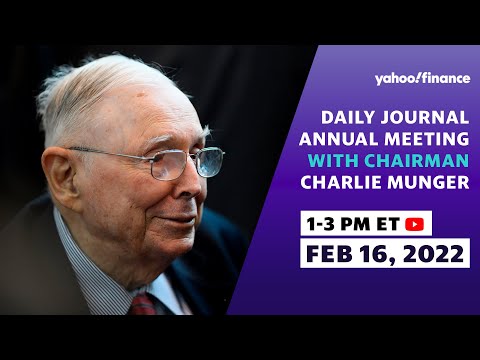
Munger’s bottom line: do not own it
Munger’s position on Bitcoin and crypto was not ambiguous. He said he did not invest in crypto, and he also said he would never buy it.12
At the same time, he did not present crypto as a candidate for clever trading or shorting. His stance was simple avoidance rather than participation on either side.2
“I certainly did not invest in crypto.”Daily Journal annual meeting, 2021 · full transcript →
He saw crypto as speculation, not productive investing
A central idea in Munger’s worldview is that good investing is rare, demanding, and tied to situations you truly understand. He said real opportunities are very hard and rare, and that there are only a few times in a lifetime when you know you have something that will work wonderfully.34
That framework pushes him away from assets that look more like wagering than ownership. His line about wanting to be the house, not the punter, shows how strongly he disliked gambling-like behavior in markets, and he applied that hostility directly to crypto.5
This fits his broader view that most people should not act as if they have special market insight. For many investors, he thought even trying to pick securities is a mistake, which makes enthusiasm for highly speculative crypto look even less defensible in his framework.7
Why he thought smart people get drawn in anyway
Munger often explained bad financial decisions through psychology. He said people tend to believe what they wish were true, and he pointed to denial as a dominant force in human error.89
Applied to crypto, that means the attraction is not just analytical but emotional. People may be drawn by stories of easy wealth, novelty, rebellion, or fear of missing out, then mistake that desire for judgment.89
His answer was not sophistication for its own sake, but rational self-restraint. He said that simply being consistently not crazy gives a huge advantage in life.10

“…what people wish is what they believe…”Daily Journal Corporation annual meeting, Los Angeles, 2023 · full transcript →
His broader method points to avoidance of hype
Munger was skeptical of hype in general, not just in crypto. Even when discussing artificial intelligence, he warned that hype can outrun reality, while adding that old-fashioned intelligence still works pretty well.1112
That habit of mind helps explain his crypto view. He preferred understanding a problem thoroughly and staying roughly right rather than being precisely wrong in a fashionable but shaky idea.1314
He also stressed knowing the edge of your own competence. In his framework, when something is murky, promotional, and emotionally charged, the sensible move is often to stand aside.1510
“I am personally skeptical of some of the hype that has gone into artificial intelligence.”Berkshire Hathaway annual meeting, 2023 · full transcript →
How to apply Munger’s view in practice
The practical lesson is not just that Munger disliked crypto, but how he made the decision. He avoided arenas that tempt people to overestimate their knowledge, confuse excitement with edge, and act as if every opportunity must be played.151617
His advice for situations like that was blunt: give many dangerous or irrational things a wide berth. That is the spirit in which his crypto comments make the most sense.18
For an ordinary investor, the application is straightforward. If an asset depends more on enthusiasm than clear understanding, and if it invites gambling behavior, Munger’s default would be to pass and keep the right attitude toward investing.10

“That's the last thing on earth you should think about. If it worked, it would be bad for you. You could try to do it again. It's totally insane. And by the way, I've just laid out a wonderful life lesson for you: give a whole lot of things a wide berth. They don't exist. You know, crooks, crazies, egomaniacs, people full of resentment, people full of self-pity, people who feel like victims.”University of Michigan Ross conversation, 2017 · full transcript →
Munger on bitcoin and crypto, in his own words
“I certainly did not invest in crypto.”
“I would never buy it, and I would never sell short.”
“…what people wish is what they believe…”
“That's the last thing on earth you should think about. If it worked, it would be bad for you. You could try to do it again. It's totally insane. And by the way, I've just laid out a wonderful life lesson for you: give a whole lot of things a wide berth. They don't exist. You know, crooks, crazies, egomaniacs, people full of resentment, people full of self-pity, people who feel like victims.”
Where to watch
 Charlie Munger on Investing and Life: Low Expectations, High Standards2021 · 113 min · full transcriptBest starting point for his direct, explicit rejection of crypto and his wider 2021 comments on the subject.
 Charlie Munger on Investing and Rationality: Daily Journal 2020 Q&A2020 · 127 min · full transcriptShows his clean rule of avoidance: he would neither buy crypto nor play games around it.
 Charlie Munger on Investing Philosophy: Bet Heavy When You Know2023 · 67 min · full transcriptGives the investing framework behind the crypto view: avoid punting and wait for rare situations you truly understand.
 Charlie Munger on Investing and Life: Daily Journal Q&A2023 · 155 min · full transcriptExplains the psychology behind speculative manias through denial and wishful thinking.
 Charlie Munger on Value Investing: Stay Away from Trading2017 · 450 min · full transcriptUseful for his broader guidance on having the right attitude toward investing and avoiding unnecessary market games.
Questions people ask
- What did Charlie Munger say about Bitcoin and crypto?
- What did Charlie Munger say about bitcoin and cryptocurrency?
- What did Charlie Munger say about denial and bad decisions?
- What did Charlie Munger say about knowing the edge of your ability?
- What did Charlie Munger say about rationality and success in life?
- What did Charlie Munger say about becoming an investment adviser?
Sources
Every quote above, word for word from the transcripts. Numbers match the text.
“I certainly did not invest in crypto.”
“I would never buy it, and I would never sell short.”
“It's very hard and rare.”
“There aren't many times in a lifetime when you know you're right and you know you have one that's really gonna work wonderfully.”
“You want the house? You wanna be the house, not the punter.”
“I think that even attempts to pick individual securities is, that's a mistake for people; they will do better with a very, very low-cost S&P 500 Index Fund.”
“…what people wish is what they believe…”
“What... If I had to name one factor that dominates human bad decisions, it would be what I call denial. If the truth is unpleasant enough, people kind of... Their mind plays tricks on them, they they think it isn't really happening. And, of course, that causes enormous destruction of business where people go on throwing money into the way they used to do things, even though it isn't gonna work at all well in in the way the world is now having changed. And And if you want an example of how denial is affecting things, take the world of investment management. How many managers are going to beat the indexes, all costs considered?”
“Well, that's the easy rationality. If you're just not crazy, you have a big advantage over 95% of the people because most people have all kinds of crazy patches. And if you just are consistently not crazy, you had a you had a big advantage in life. And if you're patient and a gratification defer in addition to being not crazy, then it's practically a cinch. And then if you're exceptionally good at satisfying your commitments to other people, then you got... You you just automatically improved your resources and your chances in life enormously. And it's so simple. And why don't more people do it?”
“I am personally skeptical of some of the hype that has gone into artificial intelligence.”
“I think old fashioned intelligence works pretty well.”
“A problem thoroughly understood is half solved.”
“It's better to be roughly right than precisely wrong.”
“We're not so smart, but we kinda know where the edge of our smartness is. That is a very important part of practical intelligence. And a lot of people who are geniuses on IQ tests they're a lot smarter than they are, and what they are is dangerous. And and... But but if you know the edge of your own ability pretty well, you should ignore most of the notions of our experts about what I call dewarsification of portfolios.”
“You know, you stop and think about it, it's pretty hard. It doesn't look so damn easy just to go out. If you go to the ordinary person trying to promote himself as an investment adviser or some guy, he just thinks he knows everything about everything and how the Federal Reserve should be run and so on. We don't feel that way.”
“But they're trying to outsmart each other in arenas that you don't have to play. I mean, if you look at that government bond market, if you... At at the treasury bond market, that mean you... You've got this one bill that's out of line with the others when we bought over 3,000,000,000. I it's the other day. And and... But those are peep... The world is overwhelmingly short term focused. And if you go to an investor relations call, they're all trying to figure out how to fill out other sheet to show the earnings for the year, and the management is interested in feeding them expectations that will slightly be beaten. I mean, that that is a world that's made to order for anybody that's trying to think about what you do that should work over five or ten or twenty years.”
“That's the last thing on earth you should think about. If it worked, it would be bad for you. You could try to do it again. It's totally insane. And by the way, I've just laid out a wonderful life lesson for you: give a whole lot of things a wide berth. They don't exist. You know, crooks, crazies, egomaniacs, people full of resentment, people full of self-pity, people who feel like victims.”
How this guide was made: drafted with AI from the full transcripts of the recordings cited, then checked: every quotation must match a transcript word for word and be the speaker's own words, and an independent review gates accuracy. Methodology and corrections.