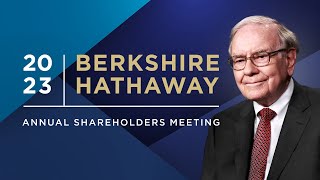
Charlie Munger on Long-Term Thinking
Charlie Munger saw long-term thinking as a practical edge: endure hardship, avoid needless activity, wait for rare opportunities, and let compounding work.
- Long-term success comes more from patience and endurance than constant action
- Most results come from a few rare opportunities, so waiting matters
- Avoid trading, prediction, and self-delusion; stay inside what you truly understand
- Compounding is powerful, and small ongoing costs or mistakes destroy it over time
- A short-term world gives an advantage to people willing to think and act for the long run

“If you soldier through, you can get through almost anything.”CNBC interview with Becky Quick, 2023 · 1:37:43
Long-term thinking starts with endurance
Munger treated long-term thinking as a character trait before it was an investing tactic. His basic view was that hard periods are unavoidable, and the winning response is not drama or prediction but steady endurance. He repeatedly came back to the idea that if you keep going, you can survive more than you think1.
That same attitude shaped how he thought about life and investing. He believed hardship will come, and so will occasional opportunity; the person who does well is the one who can endure the first and recognize the second without losing discipline3.
“If you soldier through, you can get through almost anything.”CNBC interview with Becky Quick, 2023 · full transcript →
Wait for rare opportunities instead of forcing action
Munger did not think long-term success comes from constant movement. He thought great outcomes usually come from a handful of big moments, which means patience is not passive at all; it is part of the strategy. Truly exceptional opportunities are uncommon, and acting as if they are everywhere leads to mistakes45.
This is why he admired sitting still when nothing attractive is available. He saw inactivity, when paired with sound judgment, as intelligent behavior rather than laziness. In his view, many people fail because they feel compelled to do something all the time instead of waiting for an obvious edge67.
Deferred gratification is how compounding gets a chance to work
Munger cared about deferred gratification because long-term advantage often requires giving up immediate rewards. He connected this to business quality, customer relationships, and personal conduct. A business that keeps serving existing customers well can build durable momentum over time instead of chasing flashy short-term gains8.
He also stressed the arithmetic of compounding. Even small recurring costs or frictions can devastate long-run outcomes, which is why he was so hostile to high fees and unnecessary financial tolls. For a long-term holder, protecting compounding is not a minor optimization; it is central to the whole game.
His own language about seeing the power of compounding shows how early and deeply he appreciated this force. Long-term thinking, for him, meant structuring decisions so that good results can accumulate for years without being interrupted by impatience, fees, or bad incentives10.
“Of course. I could see the power of it.”CNBC interview with Becky Quick, 2023 · full transcript →
Ignore the short-term noise and stay inside your competence
Munger did not believe long-term thinking meant making grand forecasts about everything. In fact, he thought one of the biggest mistakes is pretending to know what cannot be known. He was comfortable saying he did not know how situations would develop, and he preferred to operate where understanding was real rather than theatrical12.
That is why he emphasized knowing the edge of your competence. Long-term investors do not win by having opinions on every macro issue; they win by avoiding self-delusion and making a few sound decisions in areas they genuinely understand1314.
He also thought the market world is built around short-term games: quarterly expectations, tiny earnings beats, and endless attempts to outsmart one another in arenas that do not need to be played. That creates an opening for anyone willing to ignore the performance theater and think farther out.
Long-term thinking often means less trading and simpler behavior
Munger believed many investors damage themselves by thinking they should constantly buy, sell, and forecast. For most people, trying to pick individual securities is a mistake, and low-cost indexing is the wiser long-term path. That view fits his broader preference for reducing avoidable errors rather than chasing excitement16.
Even for skilled investors, he favored doing less and knowing more. He was skeptical of over-diversification when someone truly had an edge, but even more skeptical of the illusion that people understand far more than they do. Long-term thinking requires simplicity, realism, and a willingness to leave many games unplayed1314.
At the institutional level, he applied the same logic. If prices get cheaper, that creates future opportunity for a patient buyer, and there is no reason to panic about that. His orientation was toward what intelligent long-run action becomes possible, not toward emotional reactions to market moves18.
Munger on long-term thinking, in his own words
“If you soldier through, you can get through almost anything.”
Where to watch
 Charlie Munger on Deferred Gratification: Cultivating Long-Term Advantage2016 · 126 min · full transcriptBest single source for his thinking on deferred gratification, sticky businesses, and building durable advantage over time.
 Charlie Munger on Life Lessons: Soldier On, Avoid Crazy2023 · 102 min · full transcriptShows how resilience, hardship, and recognizing rare opportunities fit together in his long-term philosophy.
 Charlie Munger on Investing Philosophy: Bet Heavy When You Know2023 · 67 min · full transcriptClear statement of why great results come from a few rare opportunities and why patience matters so much.
 Charlie Munger on Value Investing: Do Less, Know More2019 · 120 min · full transcriptStrong on doing less, sitting still, avoiding overactivity, and staying within what you truly understand.
 Charlie Munger on Value Investing: Stay Away from Trading2017 · 450 min · full transcriptUseful for his view that long-term investors should avoid trading and adopt the right attitude toward investing.
 Charlie Munger on Stock Market Opportunities: Ignore Macro Forecasts2005 · 260 min · full transcriptBest short case for ignoring macro forecasts and welcoming lower prices as future opportunity.
Questions people ask
- How does Charlie Munger decide what to do with Berkshire's cash?
- What did Charlie Munger say Berkshire Hathaway owes its success to?
- What did Charlie Munger say about getting through hard times?
- What did Charlie Munger say about knowing the edge of your ability?
- What did Charlie Munger say about knowing your circle of competence?
- What did Charlie Munger say are the simple lessons of life?
Sources
Every quote above, word for word from the transcripts. Numbers match the text.
“If you soldier through, you can get through almost anything.”
“Sure. I I basically believe in the in the soldier on system. Mhmm. Lots of hardship will come, and and you're... You gotta handle it well by soldiering through. And lots of... A few where our opportunities will come. You gotta learn how to recognize them when they come and not to make too minor a trip to the bike counter when the opportunity is available. And those are the simple lessons.”
“It's very hard and rare.”
“There aren't many times in a lifetime when you know you're right and you know you have one that's really gonna work wonderfully.”
“It's amazing how intelligent it is to spend some time just sitting.”
“Well, I don't think we have a master plan of knowing where the opportunities are. We're trying to find intelligent things to do with a torrent of surplus cash. And we've always had a torrent of surplus cash. And we're always looking for intelligent things to do with it. And if we find things that are intelligent to do, we do it. And if we don't find anything, we let the cash build up. What the hell is wrong with that? Not much. Yeah. Not much is right.”
“The best business getter any lawyer ever has is the work that's already on his desk.”
“Of course. I could see the power of it.”
“You know, you stop and think about it, it's pretty hard. It doesn't look so damn easy just to go out. If you go to the ordinary person trying to promote himself as an investment adviser or some guy, he just thinks he knows everything about everything and how the Federal Reserve should be run and so on. We don't feel that way.”
“We're not so smart, but we kinda know where the edge of our smartness is. That is a very important part of practical intelligence. And a lot of people who are geniuses on IQ tests they're a lot smarter than they are, and what they are is dangerous. And and... But but if you know the edge of your own ability pretty well, you should ignore most of the notions of our experts about what I call dewarsification of portfolios.”
“Oh, yes. Well, it's a hugely important thing, going the edge of your... It's hardly a competence if you don't know the edge of it. You know, if you if you have a misapprehension regarding your own competency, that means you lack competency. You're gonna make terrible mistakes. So hardly anything is... I think you gotta constantly measure what you achieve against what other people will achieve, and then you have to keep being determined really rational and avoiding a lot of self delusion. But after a lifetime of observing it, I think the tendency to be pretty rational about one's own competency is largely genetic. I think people like Warren and I were just born this way.”
“I think that even attempts to pick individual securities is, that's a mistake for people; they will do better with a very, very low-cost S&P 500 Index Fund.”
“…if the market gets cheaper, we will have many more opportunities to do intelligent things with money.”
How this guide was made: drafted with AI from the full transcripts of the recordings cited, then checked: every quotation must match a transcript word for word and be the speaker's own words, and an independent review gates accuracy. Methodology and corrections.