Charlie Munger on Risk
Charlie Munger treats risk as what happens when ignorance, leverage, complexity, and bad incentives meet human overconfidence.
- Risk starts with not understanding what you are doing.
- Leverage and derivatives can turn ordinary mistakes into permanent damage.
- Most investors reduce risk by doing less, trading less, and staying inside their competence.
- Bad incentives create hidden risk by pushing people toward foolish or dishonest behavior.
- When nothing intelligent is available, holding cash and waiting is often the safer choice.
For Munger, the first risk is ignorance
Munger’s starting point is simple: before worrying about forecasts, volatility, or clever structures, ask whether you actually understand the thing in front of you. His test is not whether something sounds sophisticated, but whether its economics and behavior are clear enough to be judged sanely.12
That is why he repeatedly stays with what is knowable and refuses to pretend certainty about what is not. He is comfortable saying he does not know how events will develop, and that restraint is part of his risk management rather than a weakness.3
This way of thinking pushes investors away from exciting but murky situations. If you cannot understand the business, the security, or the forces driving outcomes, Munger would rather miss the opportunity than accept a risk he cannot size.14
Leverage and complexity make bad outcomes far worse
Munger sees leverage as dangerous because it removes room for error. A business or portfolio can survive ordinary mistakes when financed conservatively, but leverage can make the same mistake fatal.
He is especially wary when complexity is combined with borrowing. In his view, derivatives are troubling not because every contract is automatically evil, but because they can mix leverage with ignorance and create large exposures without a clear productive purpose.
This is a recurring Munger theme: risk is not just the chance something moves against you, but the chance a structure leaves you unable to recover. Simpler arrangements are easier to understand, easier to monitor, and less likely to hide disaster.5
Avoiding folly beats chasing brilliance
Munger’s risk advice is often subtractive. Do fewer stupid things, avoid arenas built on hype or speculation, and resist the urge to prove you are smarter than everyone else. His refusal to participate in crypto is a clean example of that instinct.6
He applies the same logic to short-term trading. Most people think they know when to buy and sell, but he believes that confidence is usually false, and that many investors would be safer in a very low-cost index fund than trying to pick securities actively.7
This preference for simplicity is also why he favors rough practical judgment over false precision. A sound, durable approach with modest expectations is safer than a sophisticated approach built on fragile assumptions.58

A practical risk posture is patience, cash, and realistic expectations
Munger’s answer to uncertainty is not constant activity but patience. If intelligent opportunities are not available, he is willing to let cash accumulate instead of forcing action. That discipline reduces the risk of buying weak ideas just to stay busy.11
He also believes expectations matter. Unrealistic demands push people toward leverage, speculation, and disappointment, while low, realistic expectations make it easier to stay rational through setbacks and market swings.812
In practice, this produces a conservative but not fearful posture: understand the problem, wait for favorable odds, and avoid situations that can cause ruin. Risk is best managed before you act, not after the damage appears.2
Munger on risk, in his own words
“I don't like chain letter operators.”
Where to watch
 Charlie Munger on Investing and Mental Models: Berkshire Q&A1995 · 138 min · full transcriptBest single source for Munger’s view that risk rises when complexity, derivatives, and weak understanding come together.
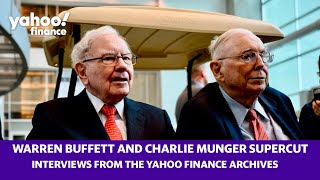 Charlie Munger on Pandemic, Markets, and Investing: Lessons from Berkshire2021 · 150 min · full transcriptShows how he handles uncertainty by staying inside the circle of competence and admitting what cannot be known.
 Charlie Munger on Investing and Judgment: Daily Journal Q&A2017 · 108 min · full transcriptStrong on leverage, bad actors, and the qualitative judgment Munger uses to avoid fragile situations.
 Charlie Munger on Value Investing: Stay Away from Trading2017 · 450 min · full transcriptBest for his practical advice that most investors lower risk by avoiding trading and using low-cost indexing.
 Charlie Munger on Investing and Life: Low Expectations, High Standards2021 · 113 min · full transcriptUseful for his views on speculation, crypto, limited margin, and the role of realistic expectations.
Questions people ask
- How does Charlie Munger decide what to do with Berkshire's cash?
- What did Charlie Munger say about keeping Berkshire open to bad news?
- What did Charlie Munger say about paper currency getting out of control?
- What did Charlie Munger say about self-insurance?
- What did Charlie Munger say is the secret to a happy life?
- What did Charlie Munger say about short-term thinking in markets?
Sources
Every quote above, word for word from the transcripts. Numbers match the text.
“The first question is can I understand it?”
“A problem thoroughly understood is half solved.”
“I don't know how it will morph.”
“If the thing has a lousy past record and a bright future, we're gonna miss the opportunity.”
“It's better to be roughly right than precisely wrong.”
“I certainly did not invest in crypto.”
“I think that even attempts to pick individual securities is, that's a mistake for people; they will do better with a very, very low-cost S&P 500 Index Fund.”
“Realistic expectations, which is low expectations.”
“I don't like chain letter operators.”
“Charlie and I are always, we're more interested in bad news always than good news. We figure good news takes care of itself. And one, we only give a couple of instructions to people when they go to work for us, and one of them is to think like an owner and the second one is to just tell us the bad news immediately because good news takes care of itself, and we can take bad news but we don't like bad news late.”
“Well, I don't think we have a master plan of knowing where the opportunities are. We're trying to find intelligent things to do with a torrent of surplus cash. And we've always had a torrent of surplus cash. And we're always looking for intelligent things to do with it. And if we find things that are intelligent to do, we do it. And if we don't find anything, we let the cash build up. What the hell is wrong with that? Not much. Yeah. Not much is right.”
“I ALWAYS SAY THE SAME THING. REALISTIC EXPECTATIONS, WHICH IS LOW EXPECTATIONS. IF YOU HAVE UNREASONABLE DEMANDS ON LIFE, YOU ARE ALMOST LIKE ARD THAT IS TRYING TO DESTROY HIMSELF BY BASHING HIS WINGS ON THE EDGE OF THE CAGE. YOU REALLY CAN'T GET OUT OF THE CAGE. IT IS STUPID. YOU WANT TO HAVE REASONABLE EXPECTATIONS AND TAKE LIFE, GOOD AND BAD AS THEY HAPP WITH A CERTAIN AMOUNT OF STOICISM.”
How this guide was made: drafted with AI from the full transcripts of the recordings cited, then checked: every quotation must match a transcript word for word and be the speaker's own words, and an independent review gates accuracy. Methodology and corrections.


