Charlie Munger on Berkshire Hathaway
Munger saw Berkshire Hathaway as a rational, owner-run capital allocation machine built on patience, trust, strong managers, and waiting hard for rare big opportunities.
- Berkshire is built to think like an owner, not a trader.
- Its edge is patience: hold cash, avoid folly, and act big only when the odds are clearly favorable.
- Culture matters more than bureaucracy: trust good operators, demand candor, and protect reputation.
- Berkshire works because it stays rational, knows the limits of its competence, and resists market games.

“Coming to business not as business school graduates but as people who had owned portfolios or securities. We thought like capitalists because we were always in the shareholder mindset. A lot of people running the businesses think like careerists, and believe me you got to think like a capitalist to some extent if you're in a career. But it also helps to look at the business strategy problems as though you're an owner. And so my advice to you is you don't be never get to be a career so much you don't see it from the owner's point of view.”University of Michigan Ross conversation, 2017 · 32:30
Berkshire starts with the owner’s mindset
Munger’s view of Berkshire begins with how to think, not with a spreadsheet. He and Buffett approached business as owners allocating capital, and he believed many executives go wrong when they think like careerists instead of capitalists. That owner mindset shaped how Berkshire judged businesses, managers, and strategy.12
He also tied Berkshire’s purpose to teaching the right attitude toward investing. The point was not constant activity or clever trading, but sound judgment about what to own and why to own it. That is why Berkshire’s identity, in his telling, is much closer to long-term ownership than to market prediction.3
“Coming to business not as business school graduates but as people who had owned portfolios or securities. We thought like capitalists because we were always in the shareholder mindset. A lot of people running the businesses think like careerists, and believe me you got to think like a capitalist to some extent if you're in a career. But it also helps to look at the business strategy problems as though you're an owner. And so my advice to you is you don't be never get to be a career so much you don't see it from the owner's point of view.”University of Michigan Ross conversation, 2017 · full transcript →
Its central skill is disciplined capital allocation
Munger described Berkshire as a place that always has surplus cash and does not force action just to stay busy. If intelligent opportunities appear, Berkshire acts; if they do not, it lets cash build. For him, that was not a failure of imagination but evidence of discipline.5
He repeatedly stressed that great results come from a few rare opportunities that are recognized and seized properly. Berkshire’s structure matters because it allows patience most of the time and aggression when the opportunity is truly obvious. That combination of waiting and then betting heavily is one of his clearest explanations for Berkshire’s success.6789
He also noted that Berkshire’s size changes the opportunity set. With very large cash resources and strong credit, the company needs big ideas that can move the needle, not merely good small ones. That helps explain why Berkshire can look inactive for long stretches and then pursue only unusually large situations.10

“Well, I don't think we have a master plan of knowing where the opportunities are. We're trying to find intelligent things to do with a torrent of surplus cash. And we've always had a torrent of surplus cash. And we're always looking for intelligent things to do with it. And if we find things that are intelligent to do, we do it. And if we don't find anything, we let the cash build up. What the hell is wrong with that? Not much. Yeah. Not much is right.”CNBC Influencers interview, 2021 · full transcript →
Berkshire’s culture depends on candor, trust, and good people
Munger saw culture as practical, not decorative. Berkshire gives few instructions, but the ones that matter are to think like an owner and report bad news immediately. That reveals a system designed around truth-telling, decentralization, and quick correction rather than layers of supervision.11
His comments on judging people show why Berkshire puts so much weight on character and records. He trusted demonstrated performance more than charm, and he cared deeply about avoiding bad actors and distorted incentives. In Berkshire, that means keeping talented operators in place while relying on simple principles instead of heavy bureaucracy.12
Reputation was part of the operating model, not just public relations. Munger wanted Berkshire to have exactly the reputation it needed and to protect it through behavior, including straightforward dealing and clear expectations. That fits Berkshire’s preference for plain terms and no-games negotiation.13

“Charlie and I are always, we're more interested in bad news always than good news. We figure good news takes care of itself. And one, we only give a couple of instructions to people when they go to work for us, and one of them is to think like an owner and the second one is to just tell us the bad news immediately because good news takes care of itself, and we can take bad news but we don't like bad news late.”Berkshire Hathaway annual meeting, 1995 · full transcript →
Rationality at Berkshire means avoiding what is foolish
Munger often explained Berkshire’s achievements less as brilliance than as steady avoidance of stupidity. He said practical intelligence includes knowing the edge of your own competence, and he distrusted people who act as if they understand everything. Berkshire’s restraint comes from that self-knowledge.1415
This is why he favored simple, durable judgment over fashionable complexity. He urged people to keep their own brains from misleading them, to understand problems deeply, and to prefer being roughly right to being precisely wrong. Berkshire’s decision-making style follows that pattern: fewer moves, simpler logic, and less dependence on forecasts or hype.21617
His skepticism about hype extended across markets and technologies. Even when he acknowledged potential, he resisted crowd enthusiasm and preferred old-fashioned intelligence to breathless narratives. Berkshire, in his view, should not be dragged around by whatever the market is currently excited about.1819
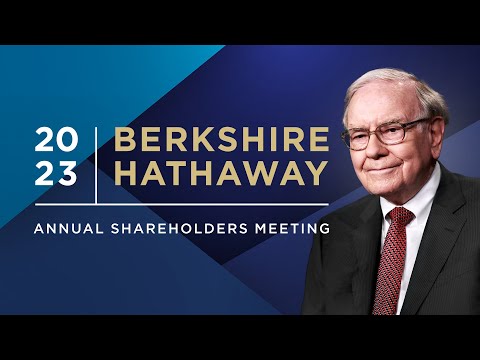
“We're not so smart, but we kinda know where the edge of our smartness is. That is a very important part of practical intelligence. And a lot of people who are geniuses on IQ tests they're a lot smarter than they are, and what they are is dangerous. And and... But but if you know the edge of your own ability pretty well, you should ignore most of the notions of our experts about what I call dewarsification of portfolios.”Berkshire Hathaway annual meeting, 2023 · full transcript →
Why Munger thought Berkshire was built to hold for the long term
Munger thought Berkshire worked well as a continuing enterprise, not as a collection of parts to be constantly rearranged. He argued that even if some conglomerates can look worth more broken up, that logic ignores taxes, reinvestment problems, and the one-time nature of dismantling. His conclusion was that Berkshire remained a strong long-term holding rather than something that needed to be split apart.21
That judgment fits his broader preference for organizations that can cope with both trouble and opportunity through rationality and old-fashioned virtue. He believed Berkshire had managed both well over time, and he linked that to habits of steadiness rather than grand theories. The company’s long-term appeal, in his account, rests on culture, patience, and judgment continuing to compound together.22

“Well, I don't think it's at all likely it'll be broken up for a long, long time. A lot of companies are worth more dead than alive, meaning at the current price for whole businesses, you could sell things at higher prices. But you can only do it once, and the shareholders will pay a big tax, then you'd have the problem of what to do with the money and so forth. I think all factors considered... And with Berkshire buying in its own shares when they're reasonably priced, I think Berkshire's a pretty damn good bet for shareholders to hold it long term in the future. And I don't think it's any hardship, but It isn't being broken up. It works pretty damn well. That bought Bergscheer held it for twenty years has done well. I think that will be true for those who buy it at the current price.”Daily Journal Corporation annual meeting, Los Angeles, 2023 · full transcript →
Munger on berkshire hathaway, in his own words
“Coming to business not as business school graduates but as people who had owned portfolios or securities. We thought like capitalists because we were always in the shareholder mindset. A lot of people running the businesses think like careerists, and believe me you got to think like a capitalist to some extent if you're in a career. But it also helps to look at the business strategy problems as though you're an owner. And so my advice to you is you don't be never get to be a career so much you don't see it from the owner's point of view.”
“Well, I don't think we have a master plan of knowing where the opportunities are. We're trying to find intelligent things to do with a torrent of surplus cash. And we've always had a torrent of surplus cash. And we're always looking for intelligent things to do with it. And if we find things that are intelligent to do, we do it. And if we don't find anything, we let the cash build up. What the hell is wrong with that? Not much. Yeah. Not much is right.”
“Charlie and I are always, we're more interested in bad news always than good news. We figure good news takes care of itself. And one, we only give a couple of instructions to people when they go to work for us, and one of them is to think like an owner and the second one is to just tell us the bad news immediately because good news takes care of itself, and we can take bad news but we don't like bad news late.”
“We're not so smart, but we kinda know where the edge of our smartness is. That is a very important part of practical intelligence. And a lot of people who are geniuses on IQ tests they're a lot smarter than they are, and what they are is dangerous. And and... But but if you know the edge of your own ability pretty well, you should ignore most of the notions of our experts about what I call dewarsification of portfolios.”
“Well, I don't think it's at all likely it'll be broken up for a long, long time. A lot of companies are worth more dead than alive, meaning at the current price for whole businesses, you could sell things at higher prices. But you can only do it once, and the shareholders will pay a big tax, then you'd have the problem of what to do with the money and so forth. I think all factors considered... And with Berkshire buying in its own shares when they're reasonably priced, I think Berkshire's a pretty damn good bet for shareholders to hold it long term in the future. And I don't think it's any hardship, but It isn't being broken up. It works pretty damn well. That bought Bergscheer held it for twenty years has done well. I think that will be true for those who buy it at the current price.”
Where to watch
 Charlie Munger on Value Investing: Stay Away from Trading2017 · 450 min · full transcriptBest single look at Berkshire’s investing attitude, shareholder communication, culture, and anti-trading philosophy.
 Charlie Munger on Investing and Mental Models: Berkshire Q&A2023 · 464 min · full transcriptShows how Munger described Berkshire’s management style, incentives, capital allocation, and rationality in a full annual-meeting setting.
 Charlie Munger on Investing Philosophy: Bet Heavy When You Know2023 · 67 min · full transcriptExplains the rare-opportunity, bet-heavy logic that helps make sense of Berkshire’s patience and occasional big moves.
 Charlie Munger on Life Lessons: Omaha, Judgment, and Berkshire2017 · 56 min · full transcriptConnects Berkshire’s methods to Munger’s deeper ideas about judgment, owner-thinking, records, and avoiding self-deception.
 Charlie Munger on Trade Wars and Berkshire Deals2021 · 126 min · full transcriptUseful for Berkshire’s plain-dealing transaction style and how major deals are approached without negotiation games.
Questions people ask
- How does Charlie Munger decide what to do with Berkshire's cash?
- What did Charlie Munger say about keeping Berkshire open to bad news?
- What did Charlie Munger say about knowing the edge of your ability?
- What did Charlie Munger say about thinking like an owner in business?
- What did Charlie Munger say about Berkshire Hathaway's cash and future acquisitions?
- What did Charlie Munger say about Berkshire Hathaway's future?
Sources
Every quote above, word for word from the transcripts. Numbers match the text.
“Coming to business not as business school graduates but as people who had owned portfolios or securities. We thought like capitalists because we were always in the shareholder mindset. A lot of people running the businesses think like careerists, and believe me you got to think like a capitalist to some extent if you're in a career. But it also helps to look at the business strategy problems as though you're an owner. And so my advice to you is you don't be never get to be a career so much you don't see it from the owner's point of view.”
“…the whole trick in life is to get so that your own brain doesn't mislead you…”
“The main thing we want to give them—well, Char, I feel this way—is the right attitude toward investing.”
“Well, I don't think we have a master plan of knowing where the opportunities are. We're trying to find intelligent things to do with a torrent of surplus cash. And we've always had a torrent of surplus cash. And we're always looking for intelligent things to do with it. And if we find things that are intelligent to do, we do it. And if we don't find anything, we let the cash build up. What the hell is wrong with that? Not much. Yeah. Not much is right.”
“Sure. I I basically believe in the in the soldier on system. Mhmm. Lots of hardship will come, and and you're... You gotta handle it well by soldiering through. And lots of... A few where our opportunities will come. You gotta learn how to recognize them when they come and not to make too minor a trip to the bike counter when the opportunity is available. And those are the simple lessons.”
“It's very hard and rare.”
“There aren't many times in a lifetime when you know you're right and you know you have one that's really gonna work wonderfully.”
“You gotta learn how to recognize them when they come…”
“Well, of course, there's an opportunity for a purchase a lot bigger that people can make. Who don't have is 160. We have 160,000,000,000 in cash plus a great credit rating we deserve. And who in the hell has that? Not very many. Yes. But but but what it's gonna be, I can't tell you. It it it can't be anything too small because it doesn't matter how good it is. We're of a size now. We're too small. Just doesn't move the needle very much. So we have... We need something big to come along and use up all our cash and some borrowing. But who's more likely to find something than a guy who has a hundred and sixty billion in cash plus a long history of buying bargains?”
“Charlie and I are always, we're more interested in bad news always than good news. We figure good news takes care of itself. And one, we only give a couple of instructions to people when they go to work for us, and one of them is to think like an owner and the second one is to just tell us the bad news immediately because good news takes care of itself, and we can take bad news but we don't like bad news late.”
“The paper record has about three times the predictive value of your impression interview…”
“We don't have one ounce of reputation more than we need.”
“We're not so smart, but we kinda know where the edge of our smartness is. That is a very important part of practical intelligence. And a lot of people who are geniuses on IQ tests they're a lot smarter than they are, and what they are is dangerous. And and... But but if you know the edge of your own ability pretty well, you should ignore most of the notions of our experts about what I call dewarsification of portfolios.”
“You know, you stop and think about it, it's pretty hard. It doesn't look so damn easy just to go out. If you go to the ordinary person trying to promote himself as an investment adviser or some guy, he just thinks he knows everything about everything and how the Federal Reserve should be run and so on. We don't feel that way.”
“A problem thoroughly understood is half solved.”
“It's better to be roughly right than precisely wrong.”
“I am personally skeptical of some of the hype that has gone into artificial intelligence.”
“I think old fashioned intelligence works pretty well.”
“Well, I don't think it's at all likely it'll be broken up for a long, long time. A lot of companies are worth more dead than alive, meaning at the current price for whole businesses, you could sell things at higher prices. But you can only do it once, and the shareholders will pay a big tax, then you'd have the problem of what to do with the money and so forth. I think all factors considered... And with Berkshire buying in its own shares when they're reasonably priced, I think Berkshire's a pretty damn good bet for shareholders to hold it long term in the future. And I don't think it's any hardship, but It isn't being broken up. It works pretty damn well. That bought Bergscheer held it for twenty years has done well. I think that will be true for those who buy it at the current price.”
“Well, we got a little less crazy than most people and a little less stupid than most people, and that really helped us. Then in addition, we were given this much longer time to run than most people because something kept us alive into our nineties. And that gave us a long track from our little fiddling start all the way to the nineties. Those are the two things that really happened. And, of course, we wised up over time. We got into better and better companies, and we understood more and more of the bad things that could happen, you know, and how easy they could creep in. And we avoided them avoided them even more s and g years later when we were old than we did when we were young, and it all it all worked.”
How this guide was made: drafted with AI from the full transcripts of the recordings cited, then checked: every quotation must match a transcript word for word and be the speaker's own words, and an independent review gates accuracy. Methodology and corrections.


