Charlie Munger: Acquired podcast interview
On Investing Philosophy: Bet Heavy When You Know

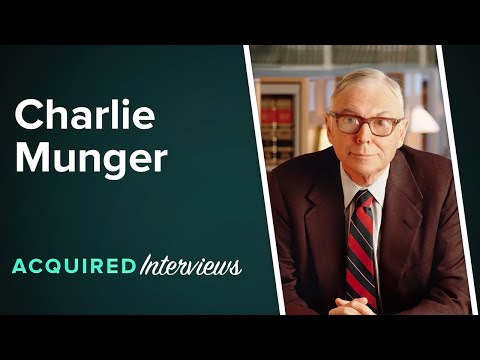
What Munger talks about
Charlie Munger joined Acquired for this podcast interview in October 2023, recorded at his Los Angeles home, to discuss investing, patience, simplicity, and betting heavily when the odds are clearly in your favor.
Also known as: Charlie Munger (Audio) (Acquired); Acquired interview.
Charlie Munger argues that successful investing comes from recognizing rare, obvious edges and betting heavily when you have them. He uses Costco, Apple, the Japanese trading houses, and Berkshire’s structure to show how a few great decisions can drive outsized results.
He also is skeptical of gambling-like behavior in markets, high-fee venture capital, and businesses he sees as overcomplicated or too dependent on style. Across the conversation, he emphasizes patience, simplicity, and staying aligned with managers and customers.
Ben Gilbert and David Rosenthal host; Andrew Marks asks some questions in the background.
In his words
“You want the house? You wanna be the house, not the punter.”
“It's very hard and rare.”
“There aren't many times in a lifetime when you know you're right and you know you have one that's really gonna work wonderfully.”
“It was a gold mine.”
Key points
- Sports betting and short-term stock trading look like gambling to Munger.
- Great opportunities are rare, but when you truly understand one, you should bet heavily.
- Costco worked because of low prices, efficient stores, limited inventory, and a strong capital-light model.
- Partnerships last when people like each other, divide work naturally, and share similar values.
- He is critical of venture capital fees and incentives, saying many firms do not truly align with founders or investors.
- Brands can create huge pricing power, but the very best brand businesses are extremely rare.
- Big wins often come from patience, leverage in the right form, and being willing to copy good models.
Full transcript: Charlie Munger, Acquired podcast interview (2023)
Ben GilbertBen, when we teased this episode in the email about the Jensen episode that we just released, the guesses that we were getting from folks were amazing.
David RosenthalI mean, people are like, it's Charlie, it's Warren, or it's Taylor Swift. And a lot of people were right.
Ben GilbertHey, Taylor. You know where to find us. Acquiredfm@Gmail.com.
David RosenthalIf you are looking to get more publicity, we're open.
Ben GilbertHave Travis get in touch.
David RosenthalAlright. Let's do it. Welcome to this episode of Acquired, the podcast about great technology companies and the stories and playbooks behind them. I'm Ben Gilbert. I'm David Rosenthal. And we are your hosts. This episode is a very unique one for David and I. Good friend of the show, Andrew Marks, organized a little dinner for us with Charlie Munger and a few other folks at Charlie's home in Los Angeles. You can hear Andrew a few times in the background asking Charlie questions. We are pretty sure that this is the only podcast that Charlie has ever done. Charlie, aside from being one of the most prolific investors of all time alongside his partner, Warren Buffett, is 99 years old.
He will turn 100 on January 1. Of course, our conversation was interesting because he's freaking Charlie Munger, but also because it was interesting to get the perspective of someone who has seen the last ninety nine years of human history. We talked with Charlie, of course, about Costco, his history investing in retailers over the last fifty years. We also got to hear his views on what it takes to build a great partnership, what's gone wrong in the global securities markets these days, the concept of investing versus gambling, and where investment opportunities remain in the world today.
Ben GilbertYeah. Ben, this was such a special life experience for you and me and you and me together to do this. And the fact that we got to record it and now share it with the world for posterity, just icing on the cake, and the whole thing was unbelievable.
David RosenthalYeah. Listeners, we knew we were gonna have dinner. We were not sure whether we were gonna be able to record it, and now we get to share it with all of you. With that, join the Slack. There is awesome discussion of every episode and the news of the day at acquired.fm/slack. If you sign up for Acquired emails, you will get episode corrections and follow-up from previous episodes plus hints at what the next episode will be. That's acquired.fm/email. And we have only one sponsor for this interview.
Ben GilbertYes. A special conversation deserves a special sponsorship, and longtime listeners will know there's only one company in the acquired universe that is truly appropriate because everything they do is modeled after Charlie and Warren, and that's Tiny.
David RosenthalYep. Tiny is the Berkshire Hathaway of the Internet. Literally, they are such huge fans that they started a company that makes bronze busts of Buffett and Munger themselves, but more on that in a minute.
Ben GilbertYeah. So Berkshire, as we know, started as a textile mill in Massachusetts nearly two hundred years ago. And almost twenty years ago, tiny founders Andrew Wilkinson and his partner, Chris, took their version of an Internet textile mill, the premier design agency, MetaLab, which designed the UIs for Slack, Uber, Tinder, Headspace, Coinbase, and others. And they asked themselves, what would Charlie and Warren do if they were us? And that led to the realization that just like Berkshire discovered in the physical world, the Internet also has wonderful niche businesses with great cash flows. In fact, they tend to be even better than the old days of C's candies and blue chip stamps because they require zero capital reinvestment, have software margins, and can build global brands much faster than the, what, fifty some odd years it took C's to expand around the world.
David RosenthalYep. So Andrew and Chris took the extra cash flow from MetaLab and their other businesses and created Tiny, the world's first and best permanent holding company for wonderful Internet businesses. And, boy, did it work.
Ben GilbertYeah. Fast forward to today, and thanks to Tiny's success, this opportunity is no longer a secret. Many people have caught on to the idea that this can really work. But just like Berkshire itself, no one else has the combination of experience, temperament, access to capital, and frankly reputation that Andrew and Chris have built over the past two decades. We're investors in Tiny ourselves alongside Bill Ackman and Howard Marks. And just like the two of them, Tiny is really the long term buyer of choice in their niche. Anyone who's looking for a permanent home for their profitable Internet business or who needs a capital partner for a cofounder or VC cap table buyout would be lucky to work with Tiny.
David RosenthalYep. For instance, they just bought the premier social network for film buffs, Letterboxd, which has been the founder's baby for twelve years and will stay so within Tiny. And this really reflects Tiny's whole ethos, work with only the best Internet businesses, commit to simple diligence, thirty day deals, and leave the business alone either for you to operate or bring in new long term oriented management. Up to you. So thanks to Tiny.
Ben GilbertThis is the only sponsor, as Ben said, that you'll hear on this episode. And just like Berkshire, it'll be here in perpetuity. Tiny just became a public company earlier this year, and they can now do deals ranging anywhere from 1,000,000 all the way up to 250,000,000. So if you wanna get in touch, just shoot them a note at hi@tiny.com, and just tell them that Ben and David sent you.
David RosenthalOh, and one more thing. The bronze Charlie busts, the perfect daily reminder in your workspace to ask what would Charlie do. Just head on over to berkshirenerds.store to buy your own. And they also have plenty of some guy named Warren too. Okay. Now without further ado, this is not investment advice. David and I may have investments in the companies we discuss, and this show is for informational and entertainment purposes only. And on to Charlie Munger. Charlie, I was watching the NFL games last weekend, and it it seems like every advertisement now is a sports betting advertisement. Is this good for America?
Charlie MungerNo. Of course not. Are the dog tracks and racetracks of America... The casinos good for America? Of course not. They're just very popular.
Ben GilbertThat's how Warren got his start, though, right, at the racetrack?
Charlie MungerWell, but Warren never gambled heavily as a patron. Warren wanted the odds in his favor, not somebody else.
David RosenthalRight.
Charlie MungerIt's just so simple if you're Warren. You want the house? You wanna be the house, not the punter.
David RosenthalListeners, the next topic that came up was retail stock trading and the idea that for many Americans, this is akin to gambling.
Charlie MungerWell, it's the way it's organized. They don't really know anything about the companies or anything. They just gamble on going up and down price. If I were running the world, I would have a tax on short term gains with no offset for losses or anything. And I would just drive this whole car out of business.
Andrew MarksWhat do you think about the algorithms like Renaissance and stuff like that?
Charlie MungerWell, of course, Renaissance was the first algorithm. It was so simple. They shifted all this data from the past. And what did they decide? Up up for two closing prices and down down were more common than down up or up down. Once they realized that's the way it was for various reasons deep in the psychology of man is that man is a natural trend follower. Keep figuring and gambling short term. And they they just... He just programmed the computers to automatically, you know, buy in one thing at the first up day and then... And sell before the end of the second day. And he just did it day after day after day. And it... Just every day, the machine would, you know, the central agent say your check today is eight million five hundred thousand dollars
David RosenthalIt's crazy.
Charlie MungerCheck tomorrow is 9,400,000. Well, what happens is that the ones... The easiest trade is to front run what you know what the average is, but the index funds have to buy. And you know what it is exactly. They all know that. And the way they get their returns year after year is taking the leverage, the midday leverage up higher and higher and higher and higher. So they're making smaller and smaller profits up more and more volume, which gives them this big peak leverage risk, which I would not run myself. And that's the only way they make these big returns is to have this huge leverage. It would make you crazy if you were already rich.
David RosenthalI had the good fortune of speaking with someone you know well, Richard Gallanti at Costco and spending a few hours.
Ben GilbertHe knows
Charlie Mungera lot about it. He's been there all his life.
David RosenthalIt's crazy. I mean, it seems like that's everyone on the
Ben Gilbertexecutive team. Been there.
Charlie MungerThey're all
Ben Gilbertthe ones.
David RosenthalI'm curious. How did you first come across Costco or or a Price Club at the time?
Charlie MungerRod Hills, someone who saw Price and knew what he was doing. He said, you have to go down and meet him, he said. So I drove down and went through the store and talked with Saul. And, of course, Saul was a very intelligent man. Saul was an ordinary lawyer that was 39 years of age. Then he went out and formed government employees discount company or whatever.
Ben GilbertIn the Fedco days?
Charlie MungerHe was no longer with Fedco. And he sold Fedco to the Germans.
David RosenthalAh, Fedmark to the
Ben GilbertYeah. Hugo man.
David RosenthalHugo man.
Charlie MungerYeah. Yeah. Yeah.
David RosenthalAnd did you get to invest in Price Club before it merged with Costco?
Charlie MungerYes. I did. But I just bought my stock in the market. I wasn't... I got any favor. And
David Rosenthalso how did you eventually meet Jim Senegal?
Charlie MungerWell, Senegal asked Warren to become a director of Costco. He was looking for somebody with a financial reputation.
David RosenthalAs an independent?
Charlie MungerYes. And Warren wouldn't do it. Said, well, she she would get Charlie to do it. I want shorter plane rides to directors meetings and so on. So that's how that happened.
David RosenthalAnd did Berkshire ever try to become a shareholder or acquire a custom?
Charlie MungerI tried to get Warren to buy out the French when they left Carrefour. And Warren wouldn't do it. Warren doesn't like retail.
Ben GilbertWas it just that he doesn't like retail or what was the big objection?
Charlie MungerHe's afraid of retail. Gradually, everything that was much mighty in retail is gone. Sears Roebuck is gone. The big departments are gone. You know? It's just too damn difficult as far as he's concerned.
Andrew MarksAnd you had a bad experience with diversified retail. Right?
Charlie MungerNo. We made nothing but money at diversified. We didn't exactly make it in retailing, but we made a lot of money.
David RosenthalWow. And with Diversified, most of the money was not on the retailing operation. You made a lot of that money through
Charlie MungerWhat happened was very simple. We bought this little pissant department store chain in Baltimore. Big mistake to compare it. As the ink dried on the closing papers, we realized it would be a terrible mistake. So we decided just to reverse it and take the hits to look foolish rather than go broke. He just told us, hey, get us out of this. By that time, we'd already financed half of it on covenant free debt and so forth. And they had all this extra cash. And our own stocks got down to selling enormous... We just... In the middle of one of those recessions, bought, bought, and bought, and all that money went right into those stocks. And, of course, we tripled and just was sitting on our ass.
David RosenthalAnd that led to Blue Chip?
Charlie MungerYeah. Yeah. It was part of this early success of Blue Chip.
David RosenthalWow. And so, you know, you mentioned Warren doesn't like Blue Chip.
Charlie MungerSomething else that people don't know about.
David RosenthalYeah.
Charlie MungerWe bought a little Pizzant Savings and Loan company for maybe $20,000,000. And when we left that thing, we had taken out of our little $20,000,000 investment over $2,000,000,000 in marketable securities, which went into Nebraska insurance companies as part of their bedrock capital. So we we had some wonderful early years, and that's what everybody needs, is wonderful early years. Wow.
Ben GilbertSo in our Costco episode, we started with the joke at one of the Berkshire beatings probably ten years ago. Warren told the joke about you were on a plane being hijacked, and the hijackers gave you one final request. And you said you'd like to give your speech on the virtues
Charlie Mungertired of me kinda reminding you
Ben Gilbertof me. Yeah. Yeah. And he said shoot me first. We were hoping... Could you give us your speech on the virtues of Costco?
Charlie MungerNo. Warren was kidding me for being so repetitive on the subject. But there aren't many times in a lifetime when you know you're right and you know you have one that's really gonna work wonderfully. Maybe five, six times in a lifetime you get a chance to do it. And even do it two or three times early, I'll go broke because I think it's easy. In fact, it's very hard and rare.
David RosenthalWhat was it about Costco that made you realize this is one of those few moments in a lifetime?
Charlie MungerWell, they really did sell cheaper than anybody else in America. And they did it in big efficient stores. And all the parking spaces were 10 feet wide instead of eight feet, nine, or whatever they normally are. They they did a lot of ride.
David RosenthalYeah.
Charlie MungerAnd they had a lot of parking spaces. And they kept out of their stores. Holy fuel didn't do big volumes, you see. And they gave special benefits to the people who didn't come to the stores in the way of reward points. The executive membership? Yeah. It all worked.
Ben GilbertAnd the capital light business model. I mean, when we were studying it, the difference between
Charlie MungerOh, yeah.
Ben GilbertNo. Price
Charlie MungerYeah. No investment in them. Make the suppliers wait until they've been paid, and then they're scheduled to pay only after they're scheduled to sell.
David RosenthalThey've got 900 warehouses around the world full of high quality merchandise, none of which they have sitting on their books.
Charlie MungerThat's correct.
Ben GilbertYeah. Our understanding is that Price Club went public initially before the merger. They just listed. They didn't raise any capital. They didn't need any capital.
Charlie MungerWho knows? Saul kind of would like... He was kind of a fence here. You like deals. You like this miscellaneous real estate. Like, yeah, but it doesn't make sense. You don't want... You got an enterprise as big as Costco. You don't have to screw around with your parking lot. You get other people. I'm gonna clog up your parking lot permanently and stuff that's not gonna pay you very much. Right. You don't want them is the answer.
David RosenthalHave you ever seen another business that takes advantage of the virtue of the low SKU count the way that Costco does?
Charlie MungerWell, if you... There are lots of them. That little grocery store chain here in Los Angeles, Gelson Brothers, they wanted the high turnovers and low capital costs, and they never made the least effort to earn any money or having... They wanna share their parking lot with anybody.
David RosenthalAs you reflect back on, you know, one of these few great companies in a lifetime that you should bet big on, What advice would you have for David and I as young partners looking for a few of these in our lifetime, things to look out for?
Charlie MungerOh, you find... Well, you you may find it five years after you bought it. You know? These things may work into it or you may... Your own understanding may get better. But when you know you have an edge, you should bet heavily. You know you're right. And most people, they teach that in business school. It's insane. Of course, you gotta bet heavily on your best bets.
David RosenthalAnd how do you develop that level of conviction to know
Charlie MungerYou work at it. You redo a lot of reading and thinking and visiting.
Ben GilbertCurious if we wanted to ask you. You know, you've had this beautiful partnership with Warren for half a century.
Charlie MungerYeah. But
Ben Gilberta decade in our partnership.
Charlie MungerWas a lot of low hanging fruit in the early days of our operation. You don't have any low hanging fruit that is easy to recognize.
David RosenthalYou mean in investment opportunities?
Charlie MungerYeah. That's right.
Ben GilbertBut your relationship with Warren, like, how have you
Charlie MungerWell, we were all kinda similar. We both wanted to keep our family safe and take a good job for our investors and so on. We had similar attitudes.
David RosenthalYeah.
Ben GilbertDid it change over the decades?
Charlie MungerNo. Warren still cares more about the safety of his burglars and shelters than he cares about anything else. If we used a little bit more leverage throughout, we'd have three times as much now. And it wouldn't have been that much more risk either. And we just do... We never wanted to give them at least chance of screwing up our basic shell or position.
David RosenthalIf you had used more leverage, do you think there's some chance that
Charlie MungerWe would have done a little better. Sure.
David RosenthalDo you think there's some chance that it wouldn't exist at all, that it would have cost you the franchise?
Charlie MungerNo. I think it would work fine.
Ben GilbertDoes it work like that?
Charlie MungerVery easy. The situation lend itself to... If you were intelligent, that's just milking it out.
Ben GilbertWhen you leverage... I'm so curious on after we did our
Charlie MungerIt's automatically leveraged. You go over to new store with no capital. Of course, it's leverage. Who wouldn't want a business with it and no inventories?
David RosenthalRight. That's a good point. By the virtue of you owe a whole bunch of people money on day one for these goods that
Charlie MungerWhich is... Which turn over so rapidly.
Ben GilbertRight. It's interesting. I mean, that's leverage. It's not debt leverage. I mean, how do you think about debt? Like, after we did our Berkshire series
Charlie MungerA lot of people do it now. A lot of people now do it who manufacture something. They're just terribly strong, and they're just forcing the suppliers to carry all the inventory. Isn't like we're the only ones that do that.
David RosenthalBack to the point on partnership, David and I are coming up on ten years as partners in this podcast we do together, different than the investing business, but a compounding one nonetheless. After a fifty year partnership with Warren, what advice would you have for us interpersonally to make for an enduring partnership? Well,
Charlie Mungerit helps if you like one another and enjoy working together. We do. Yeah. But I don't use any one formula. A lot of partnerships that work well for a long time happen because one's good at one thing and one's good at another. They just naturally divide it. And each one likes what he's doing. Now in Costco's case, they had Jeff Bratman, who's very smart, but not a retailer. And Jim Senegal, they divided it up. And they had originally agreed that Bratman would be the chairman and CEO because he was his ID. He founded the whole thing. But Samuel said, no. I have to be the CEO. So it was a big unfortunate board meeting. A big and real struggle. And Bratman moved aside.
Ben GilbertWas that after you joined the board?
Charlie MungerNo. Before. Do you think
Ben Gilbertyou and Warren not living in the same city helped your partnership last so long?
Charlie MungerWell, it may have helped. But Warren has very close relations with all those people that have lunch every Saturday at Berkshire Headquarters. It isn't like he doesn't have a little quarter of people there who are kinda pals from the ground up.
David RosenthalDo you think it helps that when you do spend the time together, it's special rather than being common?
Charlie MungerWell, of course, we used to spend a lot of time together when we were young because we didn't have that much to do. Now we've got more to do, and then... But then it's just the other initiative of life. So it's different.
Ben GilbertYeah. It's funny. I feel like we have a lot to do now. But
Charlie MungerWell, of course, you do. It's very difficult to invest money well. And I think it's almost impossible to do time after time after time and venture capital.
Ben GilbertYeah. We really wanted to ask your thoughts on venture capital.
Charlie MungerDeals get so hot and you have to decide so quickly. You're all just sort of gambling.
David RosenthalDo you think the role of venture capital is being properly accomplished in society?
Charlie MungerNo. I think it's very poorly done.
Ben GilbertCharlie elaborated on this point with a few things that we can't air, but the topic did turn to Bitcoin.
David RosenthalI've heard many comments you've made on Bitcoin. I'm curious if you have a thought on this particular angle. An easy way to transfer money in between countries, especially when those countries don't have a stable store of value within that country. Is it good to have an independent store of value that is not pegged
Charlie Mungergood to the world as a whole to have a way of having some currency. The way that was solved is for a long time, the British pound was the national currency of the investment world, and that shifted to the dollar. And it's still a dollar. Yep. And people like China have these enormous reserves of dollars. The money we make by... Think of the money people give us where we always just print up these pieces of paper.
David RosenthalYep. And what about the common person in some of these less fortunate countries who don't have access to US dollars?
Charlie MungerOh, they do if they already get any money. The dollar is very fungible. You can always buy one anywhere.
David RosenthalI'm curious. Back to this point of the role of venture capital in a society, if you could design a perfect system
Charlie Mungerto fund innovation very legitimate business if you do it right. If you wanna give the right people the power and nurture them, help them. And you know a lot about the tricks of the game so you can help them run their business yet not interfere with them so much they hate you. By and large, having bumped into a lot of people in the businesses with venture capital financing, I would say the ordinary rule is that people in the business doing the work, the more often than not, they hate the venture capitalists. They don't feel they're their partner trying to help them. They're only taking care of themselves and so on and so on. And they don't like them.
David RosenthalHow could it work differently?
Charlie MungerYeah. Well, I... But that's not true in Berkshire. You see, RVOA, they know we're not trying to discard them to the highest bid. See, if someone has an oil investment banker offers us 20 times earnings or some lousy business, we don't sell. If it's a problem business we've never been able to fix, we'll sell it. But if it's a halfway decent business, we never sell anything. And that gives us this reputation of staying with things, which helps us.
David RosenthalAnd do you think that buy and hold, not only mentality, but demonstration is the key thing that aligns investors with managers?
Charlie MungerWell, it's rare, you see. Everybody else has a standard way of doing things. The lawyers have their standard forms. And everybody just has the same standard form. And they get the same standard results subject to the vicissitudes of investment life. You don't want to make money by screwing your investors. And that's what a lot of venture capitalists do. The world is full of Goldman Sachs Partners that formed a private fund. They manage a billion dollars or something like that. And they charge two points off the top plus the split. That enables them to make very handsome loans themselves. But the endowments are not getting a good return.
Ben GilbertAnd do you think it's specifically the fee aspect of It's fund the nature
Charlie Mungerof way it works. And of course, you really shouldn't be in the business of charging extra unless you really are going to achieve very unusual results. And of course, it's more easy to pretend that you can get good results than it is to actually get them. And so it attracts the wrong people. People with an investment capital turn of mine. And the people who made the most money out of venture capital are a lot like investment bankers. It's like which hot new area they're gonna get in. They're not great investors or great at anything.
Ben GilbertWhat do you think endowments and large pools of capital should do then?
Charlie MungerWell, they're starting to do it. The endowments have started to say to the... All these people that judge three and thirty or whatever they judge. They said, we'll pay your three and thirty. We're gonna put in twice as much money. And then the next half, you'll get nothing on it. We're just going, right. Perry, pass you on some of your investments. So the fees go down by 50%. That'll take a lot of the fun out of it. Fees down 50%. And that's happening all over America. Feel had misled, irritated. They look foolish to their own trustees.
Ben GilbertOne of the issues I think in investing right now, you mentioned about venture capital, but I think it's true everywhere. It's like there's just so much capital and so much competition. We're so far removed from the cigar bud era. We're in the opposite of the cigar bud era these days. Are there opportunities out there? Will find
Charlie Mungera few things. But it gets harder and harder. I would argue one of the easiest ones was when they decided a little group around Home Depot. They would copy the Costco model and home improvements. And that was basically a good idea and think of the money they made doing it.
Ben GilbertYeah. Bernie Marcus. Yeah.
Charlie MungerIt was a direct copy of Costco.
David RosenthalDo you think there are more opportunities to copy Costco?
Charlie MungerWell, shoot. There was another one at Costco. Floor and Decor is the current imitator. And it's just this in vinyl... Wood imitating vinyl flooring that they're running a Costco model. And they keep adding miscellaneous stuff to it too.
David RosenthalIt's the miscellaneous stuff that'll eventually kill you, though.
Charlie MungerWell, it'll be simpler if it was all floor.
Ben GilbertYeah. It's just, like, the vertical... Home Depot worked so well, but I don't know that it was totally obvious. Like, part of the appeal of Costco was... It was horizontal. It was everything. Consumers could come. They could make a trip, bring their big wagon, bring their big truck.
Charlie MungerWas the same. They copy everything.
Ben GilbertAnd famously, Bernie Marcus came out to visit Saul
Charlie Mungerbefore he started. Yeah. They came out. They copied everything.
Ben GilbertSaul was, like, happy to share the playbook with everybody. Right? How did Jim and you feel about that?
Charlie MungerSaul was a... Not a crazy... He was domineering and so on, but he was also very intelligent. But there aren't many opportunities like Home Depot and Costco. There aren't very many.
David RosenthalWhy do you think Walmart hasn't been successful once they saw Costco in competing?
Charlie MungerThey were too wedded by the ideas they already had. That's everybody's trouble. They just can't accept a new idea because the place is occupied by an old idea. They got in the habit of getting into real estate, trying to give it nothing because they went in little towns where nothing was valuable. So they're always... Their occupancy costs were like zero, and they knew how to make big division stores. That was their formula. So it offended them to go against the rich suburbs and have to pay up for the good locations. And Costco just specialized in the good locations where the rich people live. And Walmart just let them do it year after year. It was
Ben Gilberta terrible mistake. Did you know Sam Walton?
Charlie MungerNo. Never met him. I knew the son... One of the sons. And they divided it up, you know, at about six parts very early.
Ben GilbertYeah. Walton Enterprises.
Charlie MungerSo they had never paid much gift taxes or anything.
David RosenthalThe topic then turned to the automakers and the future of the car industry.
Charlie MungerLook how hard it would be to go into the auto business and have some big killing. Who's going to win? Who knows? The whole thing has been thrown way up in the air by all these electric cars. All those big new capital requirements, different ways of selling cars. And plus they got these tough unions. See, just don't even look at the auto industry.
David RosenthalDo you think it's more investable today than it was fifty years ago because of the disruptive innovation of electric?
Charlie MungerWell, for maybe for one or two electric cars that are really good at it. Maybe. But certainly nobody else.
David RosenthalSo you think BYD
Charlie Mungeris do tough. BYD was a miracle. But that guy works seventy hours a week and has a very high IQ. He can do things you can't do. He can look at somebody else's auto part, and he can figure out how to make the goddamn thing. You can't do that, you see.
Andrew MarksCharlie, you invested in a Hyundai.
Charlie MungerYes. But they're they're clever too.
Andrew MarksHow was that investment for you?
Charlie MungerI lost money. Not much because I was stubborn. I held up until it got back to almost what I paid for it, and I sold it.
Andrew MarksThere's been a lot of discussion about Berkshire's investments in the Japanese trading houses.
Charlie MungerWell, but that is a no brainer. Something like that, if you're as smart as Warren Buffett, maybe two, three times a century, you get an idea like that. The interest rates in Japan were half a percent per year for ten years. And these trading companies were really entrenched old companies. And they had all these cheap copper mines and rubber foundations. And so you could borrow for ten years ahead all the money, and you could buy the stocks, and it's actually 5% dividends. So it's a huge flow of cash with no investment, no thought, no anything. How long do you do that? You'll be lucky if you get one or two a century. We could do that nobody else could.
It looked attractive at half or something. Couldn't get it. But Berkshire with his credit could. And the only way you could get it was be very patient and just pick away at little pieces at a time. It took forever to get $10,000,000,000 invested. But it was like having God just opening a chest and just pouring money into it. It's awfully easy money.
David RosenthalIt's interesting that it's paradoxical. You need Berkshire's credit, but at Berkshire's scale, it's actually hard to put enough money to work.
Charlie MungerThat's true. But why should it be hard to make money? Why should it be easy?
Ben GilbertJapanese trading companies reminds me. We studied another company recently, Nike, that is
Charlie MungerThat's a very different company. Yeah.
Ben GilbertDid you ever look
Charlie Mungerat it? Style company. Well, of course, I've looked I've looked at it, but I don't like style company.
David RosenthalToo fad driven? Well,
Charlie MungerI suppose if the RV Hermes is a cheap enterprise, I'd buy it. But short of that, I'm gonna buy this type of company.
David RosenthalOh, that's a good pick.
Andrew MarksSo the style point, another one that they covered was LVMH. What Arnaud has done has been amazing. So what do you make of that company?
Charlie MungerWell, if you're as good as they are, what they've done, you have a lifetime to do it in. Without a lifetime really, three or four lifetimes to do it in. You can create another, but it's not easy.
Ben GilbertHermes is on the eighth generation, I think, now, the family running it.
Charlie MungerIt's not a bit easy. They have meetings every day where they make policy decisions, and they choose the locations one at a time, and it's work.
David RosenthalIt's definitely work. What do you think the durable value is in these, as you say, style companies of the very best one in the world, the Hermes or the LVMH? What makes them enduring?
Charlie MungerWell, they just got a brand people trust so much. It took them a century to do it.
David RosenthalOur conversation then turned to comparing Kirkland Signature as a brand to Hermes.
Charlie MungerKirkland is a brand the way Tide is a brand, and Hermes is a different kind of a brand.
David RosenthalYeah. Ferrari doesn't make detergent.
Ben GilbertNo. We've spent a lot of time studying these brands. How do you look at the value of a brand?
Charlie MungerWell, it's hard for us not to love brands since we were lucky enough to buy the Cees candy for $20,000,000. That's our first acquisition. And we found out fairly quickly that we could raise the price every year by 10%, and nobody cared. We didn't make the volumes go up or anything like that. Just made the profits go up. So we've been raising the price by 10% a year for all these forty years or so. And it's been a very satisfactory company. We didn't require any new capital. That was what was so good about it. Very little new capital. We had two big kitchens and a bunch of rental stores when we bought it. And now it's got two big kitchens and a bunch of rental stores.
Well, Josh, he was a playboy. And he... His brother ran the company, his older brother, and dominated it completely. But when he died, Charlie made his brother his executor. And now he needs a lot of money to pay death taxes. He doesn't have it. And it's due, you know, eight months or something later. And so they really wanted to sell so they could pay the death taxes. And it seemed it was only making 4,000,000 pretax when we bought it.
David RosenthalAnd so that buying opportunity only came about because the family needed liquidity to pay the death tax.
Charlie MungerRight. We only found out about it because Charlie c was on his cruise to Hawaii or something with this guy who was a client of... My cousin also worked for Blue Chip Stamps, which is the company that bought it. And, anyway, that's how we found out about it. We paid that guy a finder's fee. We've never paid one since. We always say that's
Ben Gilbertwhat it was worth it.
Charlie MungerOf course. But don't want a reputation for pain fighters either. Everybody in the world will be bothering you all day long. So what do
Andrew Marksyou think... So there are categories like C's or like Hermes where brands lead to pricing power?
Charlie MungerI think your chances of buying one of them is so low I wouldn't even look. I don't even believe in looking at things that I might find. You're not gonna get a chance to buy Hermes. Curiosity related to your time. Yeah. Yeah.
Andrew MarksSo why do you think there are extremely well known brands in other categories, maybe packaged food or something where
Charlie MungerWell, there are a lot there are a lot of professional investors that buy Nellywood branded goods. And the one they usually start with is Nestle. And it is filler over there. They they done two or three points better than average, but it's not a bonanza.
Ben GilbertAfter that, our conversation turned to Kraft Heinz and why Heinz is able to have pricing power while Kraft is not.
Charlie MungerVery interesting. There's something about the flavor of ketchup on my goddamn fried potato. People are really willing to change brands over. They want Heinz. And so we could raise the price of Heinz pretty much. But you try to raise the craft cheese, and everything goes in rebellion, including the final customer of the housewife. They don't care that much about whether the cheese is crapped or not.
David RosenthalWhy do you think that is? That some
Charlie MungerWell, the flavor, it's happened elsewhere. In Korea, one guy, the Chinese guy, throws all the sauces. Every single major sauce, he throws at least 95% of them.
David RosenthalAnd it's because sauces have such a particular flavor that no one can imitate the trade secret? Yeah. And that gives pricing
Charlie MungerWell, you'll get used to it, and you'll like it.
Andrew MarksIs that Coca Cola as well?
Charlie MungerYeah. Sure.
David RosenthalCharlie, I'm curious. At age 99, what is something that you believe today that 70 year old Charlie would have disagreed with?
Charlie MungerI think... I I knew when I was 70 that it was probably hard, but it made it just so hard. I know how hard it is now. And all these people who are getting this to 20 or three or 30 or whatever, they all talk as, oh, it was easy, and they get to believe in their own bullshit. And, of course, it's not a bit easy. It's very hard.
Ben GilbertIf you were back 30 or 40 years old again today, would you decide to go into the investment business again?
Charlie MungerOh, probably because it suits my nature. But I didn't really enjoy the three and thirty business. Once I had enough money on my own, I'd rather just over it with my own money. That is a much better way of doing it than
Ben GilbertBecause of the freedom? Sale. We're forced
Charlie Mungerto deal with investment bankers. We're forced to deal with investment consultants. Forced to deal with venture capital. The hell... Who knew us? You don't wanna need other people. The point of getting rich is so you don't have to need other... You don't have to get along with other people.
Andrew MarksCharlie, if you started with Warren today and you're both 30 years old, do you think you guys would build anything close to what Berkshire is today?
Charlie MungerAnswer that. No. We would. We had everybody that has an unusually good result. Almost everything has three things. They're very intelligent. They worked very hard. They were very lucky. It takes all three to get them on this list. It's super successful. How can you arrange they have to be the answer to the good luck? The answer is you can start early and keep trying a long time, and maybe you'll get one or two.
Andrew MarksIf you were starting again today, do you think insurance would still be the vehicle?
Charlie MungerIt depends on your temperament. Insurance would be ideal for a certain kind of a temperament. And it takes a very patient person to get rid of insurance. Takes forever to get anything in. It takes forever to push anybody aside. It's very hard to make money.
David RosenthalI've heard you say as soon as you're wealthy enough to self insure, you should. Is there any insurance thing?
Charlie MungerFrankly, Think of all the crumbons of the world that drink too much and file big claims to the insurance company when the place gets on fire or something. Why would you wanna pay your share of their stupidity?
David RosenthalNot to mention the overhead. Of course, the insurance company needs to pay all the people that work there.
Charlie MungerYeah. Yeah. No. No. I... It's crazy.
David RosenthalIs there any insurance that you carry today?
Charlie MungerI carry no fire insurance anywhere.
David RosenthalDo you carry auto insurance?
Charlie MungerYeah. I have to.
Andrew MarksWell, you're legally
Ben GilbertYeah. Yeah.
David RosenthalYeah. Exactly. I don't know. Charlie could
Charlie MungerNo. I have to when I do.
Andrew MarksI'm curious being that... Since these guys are very tech focused, I'm curious not being a tech person. How did you think about the Apple investment? What gave you the conviction to be so big?
Charlie MungerWhat everybody's learned is that everybody needs some significant participation in the 12 companies to do better than everybody else. And you need two or three of them at least. And if you have that mindset, Apple was a logical candidate to be on the list therefore which you're gonna select your companies. And it's not very hard to come up with the idea that it may be okay.
David RosenthalMaking the list doesn't sound too hard. In fact, there are these acronyms, FAANG or MAMA, you know, Microsoft, Apple, Google, Facebook. But selecting the one and putting hundreds of billions of dollars into it.
Charlie MungerWe didn't put hundreds of billions. We put billions into it.
David RosenthalTo create hundreds of billions of value, that to me sounds hard to pick the one. How did you guys pick the one?
Charlie MungerWe couldn't buy anything else.
Ben GilbertWas it valuation? Or
Charlie MungerYeah. Well, it got cheap. We gotta pay about 10 times earnings and more on volume.
David Rosenthal2015, I believe, was the first. Yeah. It's fascinating to me this concept of if you look at distressed debt or you look at... I think Warren in the last Berkshire letter pointed out it's been a handful of really good decisions, or you look at venture capital that's classically power law distributed. Any of these asset classes comes down to a few really good decisions with high conviction over an entire career.
Charlie MungerYeah. That's exactly what I... That's exactly the way it works.
David RosenthalIt's not smooth. There's no asset class where you can repeatedly just do
Charlie MungerNo. No. There's the the the the the idea is it's not gone, but it's very small.
David RosenthalYou mentioned this idea that when we're talking about Apple, there's a few companies that it's just really important to be in. Do you think these big tech companies being the winners where all of the pensions and Berkshire and university endowments and everyone's four zero one k is being concentrated in these companies, do you think that was the natural outcome? Did we have to end up this way?
Charlie MungerYeah. It was natural. That's why it happened. It was so natural.
David RosenthalWhat causes that?
Charlie MungerWell, it's just it's just... That's what human nature and competition, that's what it causes.
David RosenthalWill we eventually have one?
Charlie MungerEventually, this craziness in venture capital when they're all all gone stupid, that's a natural outcome.
David RosenthalWill we have one $20,000,000,000,000 companies and then the next biggest company is know how
Ben Gilbertthe world's gonna... I didn't
Charlie Mungerknow we were gonna have friends. We did. They just happened.
Andrew MarksWould you continue investing in China? What's your position with that?
Charlie MungerWell, my position in China has been that the Chinese economy has better future prospects for the next twenty years than almost any other big economy. That's number one. Number two, the leading companies of China are stronger and better than practically any other leading companies anywhere. And they're available at a much cheaper price. So naturally, I'm willing to have some China risk in the Munger portfolio. How much China risk? Well, that's not a scientific subject. But I don't mind whatever it is, 18% or something. Whatever whatever is worked out in the Munger family, it's okay with me.
David RosenthalWhat about other geopolitical considerations? Like, would you hold TSMC at this point?
Charlie MungerWell, I don't like that as well. So I like something with a real consumer brand of its own, like Apple.
Andrew MarksI'm curious what major companies that haven't been mentioned do you think people would do well to study the virtues of, like studying the virtues of Costco.
Charlie MungerWell, I only study two kinds of companies. One, I'm a bit Ben Graham follower. To... Where if something is really cheap even though it's a crappy company, I'm I'm I'm consider willing buying it for a while anyway. And I do that occasionally. And I've done it with great success of time or two, but I might hard mark that I know once or twice in my lifetime for big gains, and that's it. It's not like I'd... If I have what's not gonna do. I've done a 100 times. So it isn't a bit easy. Yeah. A 100 times easy money is almost nonexistent.
Ben GilbertOne type of company is the cigar butt. What's the other type of company?
Andrew MarksThe companies that people would do well to on... To study
Charlie Mungerthe virtues. Companies, of course, are good. Get them at the right price. The whole trick is to get them on the few rare occasions when they're really cheap. But buying Costco at its present price, it may work out alright, but that's, again, it's getting hard.
Andrew MarksYeah. Forgetting the prospects of the stock, how do you think about the next ten years for the business?
Charlie MungerI can do pretty well.
David RosenthalOne more question for you in this area. What is your favorite advice to give to young people?
Charlie MungerWell, I don't give advice to just any young people. I give it to some. I pick my spots. I don't wanna be more of a guru to the young people than I already am. It's getting hard out there. And there's always bullshit and craziness. Of course, it's gonna be hard.
David RosenthalWhere do the attractive opportunities hang out anymore? It sounds like everything in the whole world is overpriced. Is... Could that be possible?
Charlie MungerDamn near. Of course, could be possible. It's not only possible. It's likely it's actually happened.
David RosenthalHow did the world get so rich if we have all this capital for so few opportunities?
Charlie MungerIt's the nature of things. Look. Biology produces a very advanced creature like us. You can sit around and talk intelligently on all these subjects. But it does it by killing everybody off in brutal competition one with the other for hundreds of thousands of years. In other words, the system that nature uses to get smart is kind of unpleasant to the people who are losing.
David RosenthalSo over the last hundred years, we've brutally shifted all this value from labor to capital, and now capital is all competing to get into a very small set of opportunities.
Charlie MungerWell, Capital never had... You would... It wasn't like it was all that easy if you go back a long time. It just was a lot easier.
David RosenthalAnd if it continues to get harder, the natural end is that you have
Charlie MungerYes. An unpleasant blowup of some kind. And God knows what happens after an unpleasant blowup with our modern democracies. You would get to hear a lot like Europe, which is quite dysfunctional.
David RosenthalIs it too pessimistic of a view to say that the world seems to be out of good ideas to match the amount of capital out there looking for good ideas?
Charlie MungerIt was never easy. I thoroughly understood it was never easy, and it's harder now. Those are the two where it were all... And you pay attention that you're handling the people you deal with. You want a good reputation when you're old and not a bad one.
Andrew MarksAnd I don't think you're saying there are no opportunities whatsoever. Think you're saying low low expectations And
Ben Gilbertthe the bonanzas.
Charlie MungerNow the beauty of it is you only have to get rich once. You do not have to climb this mountain four times. You just have to do it once.
Andrew MarksWell, that's sort of your philosophy on both sides is you gotta be patient for the great opportunities, but when they... You gotta recognize them when they come and and pounce.
Ben GilbertWe turned off the mics to have dinner and then recorded a little bit more later in the evening about Costco and some life advice from Charlie.
David RosenthalSo one Costco question that I've been wanting to ask you is all the puzzle pieces of the low SKU count and the high inventory turnover, There's and just so many things that fit together so beautifully.
Charlie MungerThey're pretty obvious, though.
David RosenthalBut how come no one else can pull it off if they're so obvious?
Charlie MungerWell, it takes a lot of good execution to do it. You really have to set out to do it and then do it with an every day, every week, every year for forty years. It's not so damn easy.
David RosenthalSo you think the success is the magic of the business model and culture?
Charlie MungerYes, yes. Culture plus model, yes, absolutely. And very reliable, hardworking, determined execution for forty years.
Ben GilbertI mean, they talk about the story of the catch up that you could increase the price of catch up by 3% and nobody would notice, but that would destroy everything if you did that. Right?
Charlie MungerI would say that the central norm was don't raise the market. Get it low and keep it there forever.
Ben GilbertWhich brings us to the hot dogs. Is it true, the story, that when Craig took over as CEO, he did try to raise the price of the hot dogs?
Charlie MungerI don't know. I had no conversations with him on that subject.
Ben GilbertAnd Jim forbade him.
Charlie MungerWell, I'm sure Jim would have forbade it. Absolutely.
Ben GilbertThere was no board level discussion No. Of the hot dog?
Charlie MungerNo. No. Those two would not have thought it was a board matter to discuss the price of the hot dog.
David RosenthalThe one thing that fascinates me about Costco is they seem to only be able to grow 10% per year because they're not capital constrained. No amount of money if they were to access it for free could
Charlie Mungerhelp I'll tell you what it is. It is hard to open too many stores a year. New store, new manager, new this, new politics, new... It's hard. Plus, a lot of stuff has to be learned and taught and put in place. And so they didn't wanna do more than they can comfortably handle.
Ben GilbertStore openings, you mentioned China earlier. Was it twelve to twenty years that Costco had the license to operate in China?
Charlie MungerWell, I'll you what happened there. The first store they tried to open in China, the first store somebody wanted a $30,000 bribe, you know, in Chinese culture. And they just wouldn't pay it. And that made such a bad impression on Jim Senegal. You wouldn't even talk to him going into China for about thirty years thereafter.
Ben GilbertSo what changed? Why finally go in?
Charlie MungerWell, finally, the board started making enough noises. So... Started agitating. Yeah.
David RosenthalYeah. Yeah. Who on the board could be excited about the Chinese market?
Charlie MungerYeah. Who can? Who knows?
Ben GilbertOh, that's so great.
David RosenthalOne thing I found fascinating about Costco was the fact that even though they're at, you know, the lowest possible prices, their audience skews wealthy. Was that an accident that they figured out over time, or
Charlie Mungerdid they know that? Price. Yeah. They figured out to announce.
David RosenthalAll the way back in the Price Club days?
Charlie MungerYes. He always wanted the rich man trying to save money.
Ben GilbertWell... And it's not just that they're the wealthiest customers. They're smart
Charlie Mungerwealthy customers.
Ben GilbertYeah. They're picky wealthy customers.
David RosenthalOn some topics that are outside of Costco, you mentioned in the Daily Journal annual meeting this year that a young man knows the rules, and an old man knows the exceptions.
Charlie MungerYeah. That's an old saying of Peters.
David RosenthalOh, is that a Peter Kaufman?
Charlie MungerYeah.
David RosenthalWhat are some of the exceptions that you've found the most useful in life?
Charlie MungerWell, take those goddamn Costco hot dogs. That's an exception. And anybody else would have raised the price of hot dogs a long time ago. They just don't do it. They just know that it's, like, half famous. I mean, you know, bring your kids in. They have hot... They they know they've got something going there that's worth extra money to them. They just don't destroy
David RosenthalA thing that I've never fully understood, I know you're a big fan of the company BYD that, of course, makes the the the Chinese company that makes batteries and electric vehicles.
Charlie MungerI may be a big fan, but I'm sort of hanging out by my hat while he lurches around the track. And they they make me nervous. It's so aggressive.
David RosenthalIs that dangerous in a company?
Charlie MungerNo. That's what makes me nervous. Of course, it's dangerous.
David RosenthalSo do you think that companies should try to grow at a lower rate than they're capable of in order to be more durable?
Charlie MungerWell, course, you do that if it's safer and easier and so forth. But I would argue Costco where they've done some of these things that are extreme like that, though, it's not a plus, and that we're... It was smart to not... To change their ways on one item or two.
David RosenthalAnd it seems like there's a spectrum where on the one side, there's Costco that is just not a fast growing company because it's very difficult to. And on BYD, like you're saying, they grew like crazy. I mean, you turned
Charlie MungerBYD, this year, sell at least two and a half million cars. Most of them electric. That's unheard of. Well, I've ever heard of... They're they're sold way more than Mercedes, for instance.
Ben GilbertMore than Tesla. Right?
Charlie MungerYeah. More than everybody. Yeah. Lots of troubles and losses. They ran into terrible trouble. They created the wrong kind of... They made lots of mistakes. They were lucky they'd be on the cutting edge of this electric car business. It's way more acceleration than most people. So you got a car with more oomph than most people. So the young macho male has a real lively car. There are a lot of things where... Well, like, electric car really works in some ways that is better. It make it a 90 degree turn. You go right opposite a parallel party place and just move this way, turn the wheels 90 degrees and go in.
Ben GilbertYeah.
Charlie MungerWell, nobody's ever done that. If your cargo is flat, you could run a 100 miles on three other wheels or something.
Andrew MarksAnd do they have better economics as they don't have nearly as many parts?
Charlie MungerIt's simpler.
David RosenthalHave you ever had an investment like that before? I think you've invested something like 270,000,000 that's now worth something like 8,000,000,000 in BYD.
Charlie MungerWell, very few people have an investment. That's a venture capital type investment. It happened to be a suddenly traded public company and we bought it instead of a venture capital type company. It was a venture capital type play and they just went put the foot right to the floorboard and played it hard.
David RosenthalHad they manufactured
Charlie MungerBy the way, both BYD and we tried to talk about how they're going into the car business. They're buy a bankrupt car business and go into the car biz. I said that's a graveyard for you. Would you want to do that? And he paid no attention to us and went right ahead.
David RosenthalHad you invested already when he told you this plan? Yes.
Charlie MungerIt worked fabulously well. After huge mistakes, they almost went broke with their early dealership building system. Almost went broke.
Ben GilbertWhat captivated you about BYU?
Charlie MungerGuy was a genius. He was at a PhD in engineering and he could look at somebody party. He could make that part, you know, look at the morning and look at it in the afternoon. He could make it. I've never seen anybody like that. He could do anything. He is a natural engineer and a get it done type production executive. And that's a big thing. It's a big lot of talent to have in one place. It's very useful. They solve all these problems on these electric cars and the motors and the acceleration and the braking and the so on.
Ben GilbertHow would you compare him and BYD to Elon and Tesla?
Charlie MungerWell, he's a fanatic that knows how to actually make things with his hands, so he has to. He's closer to ground zero, in other words. The guy at BYD is better at actually making things than anything that Elon is.
David RosenthalCharlie, you turn 100 Yeah. Which is an unbelievable statement on January first of next year. Do you have any plans?
Charlie MungerI'm gonna party.
Ben GilbertWhere's the party gonna be?
Charlie MungerTo California. I've I've totally maxed out the room. I can't squeeze another. What
David Rosenthalcaptivates you these days? What's fun?
Charlie MungerWell, practically, everything is. Even politics, bad as it is, is kind of interesting.
Ben GilbertWhen you look back at your... You're in Warren's time together. When did you have the most fun?
Charlie MungerWe had about the same amount of fun all the way through. We're having fun now.
David RosenthalIs there a particular era that you remember the most fondly that feels like the good old days?
Charlie MungerWell, I... We remember we were sweating bloods over those good old days.
David RosenthalOh, I mean, Solomon Brothers.
Charlie MungerSolomon Brothers. Yeah. Yeah. I know. There were a lot of close messes. We've got our big problem with Solomon. We could've had a big loss.
Ben GilbertWe could've had more problems than just a loss with Solomon. Right?
David RosenthalWell, actually, it... On on our... When we examined Berkshire Hathaway on our podcast, our takeaway was that the whole franchise was at risk during Solomon Brothers, the entire Berkshire Hathaway name and future. Would you agree with that?
Charlie MungerNot so much. I... Well, you're gonna survive it.
David RosenthalIf you would let the whole investment in Solomon go to zero, it would have been
Charlie MungerIf it all blown up and went to zero, we would have written it off and gone and done pretty well.
Ben GilbertWhat do you consider it to be your finest hour?
Charlie MungerWell, we like to remember the close misses for real terrible problems. We had a terrible problem on the Buffalo News.
David RosenthalThe Buffalo Evening News
Charlie MungerYeah. Well, yeah, it was... There are two noiseries in that town. And we started a Sunday edition, and that started a holy war, and the other guy went broke. Well, we could we could have a lot of bad difficulty over that.
David RosenthalAnd you were you were both pretty young and enterprising at that point. Yeah. Mean, you weren't the Warren and Charlie of
Charlie MungerNo. But I was very aggressive about wanting to have a good Sunday edition. I didn't wanna own the paper for fifty years with no Sunday edition on the other hand.
David RosenthalWhat made the newspaper business so attractive at that point in history?
Charlie MungerWell, it was a gold mine.
David RosenthalThat's attractive.
Charlie MungerTotal gold mine.
Ben GilbertWell, and the play in particular with the Buffalo Evening News and the Sunday edition was playing for the local monopoly, right, to be the game the game in town. And with newspapers, you could do that. Sure. I mean, newspapers for decades had EBITDA margins in the 50, 60% range. Right?
Charlie MungerNo. Only the little ones.
Ben GilbertOnly the little ones.
Charlie MungerYeah. The big ones are less. 30 or 40 or 25 or
Ben GilbertI've... I I said EBITDA in your presence. I apologize. Cash flow margins.
David RosenthalActually, do you still feel as... That EBITDA is a criminal the way that you've demonized it in the past?
Charlie MungerYeah. I do. I think I... So you have a big truck company and take the depreciation out of the trucks out of the earnings. You're a bit lying about the earnings.
Ben GilbertI mean, you witnessed its rise with Malone and TCI and Liberty, like, when EBITDA was invented as a concept. Right? Like, what were you thinking?
Charlie MungerWell, I've never liked John Malone's extreme manipulations. I don't wanna be known as the great manipulator like John Malone is. He paid less than he come back to anybody. He just pushed everything to the dry lawn to extreme.
David RosenthalIn many ways, EBITDA was the community adjusted earnings of its era. Are you familiar with the community adjustment from WeWork? Oh,
Ben Gilbertboy. Maybe a final question to wrap up. What are the set of companies that you think are the greatest that you've ever seen, either that you've owned or that you've not owned?
Charlie MungerWell, there are a lot of great companies. Senator Maze is a great company. In its heyday, General Motors is a great company. It just gradually went to hell one contract at a time.
Andrew MarksWhat do you think about the predictability of... There were a number of companies back when you started where you could have said this business will be the same in ten years. Do you think that number is the same today or do you think it's much harder?
Charlie MungerI think most places have a lot of change in threat in their future.
David RosenthalDo you think most places had a lot of change and threat in their future even fifty years ago and this story is over There's
Charlie Mungera difference. Some of it like always specialized industrial companies and Berger has a lot of them. We have a lot of companies that are quite insulated from really tough competition. Just because they've been so long and they're so good at what they do and they have a good reputation and high value and so on and so on.
Andrew MarksWhat companies can you see today where you can confidently say, Berkshire aside, Costco aside, you can confidently say the business will be as good as it is today in ten years?
Charlie MungerWell, I think a lot of companies are pretty good, but you can't count at least say what's gonna happen because you may get some guy like Igerian that just wants to push everything and do the right public relations. So no matter how good the business is, it'll be kinda phony.
Ben GilbertCharlie,
David RosenthalI have a personal question for you. David has a two year old, and I'm gonna have my first child in a month. What advice do you have for us about building families?
Charlie MungerWell, of course, you've gotta get along with everybody. You gotta help them through their tough times, and they help you and so forth. Yeah. But I think it's not as hard as... Look. Like, half of the marriages in America work pretty damn well. And would it work just as well if both of them marry somebody else, by the way?
Ben GilbertWell, you've said that the best way to have a great spouse is to deserve one.
Charlie MungerYeah. Sure.
Ben GilbertAs long as both parties feel that way, then it's a recipe for success.
Charlie MungerOf course it is. And you gotta trust with your spouse. Think it's things like education of the children and so forth.
David RosenthalYeah. I love that. Well, Charlie, thank you.
Ben GilbertYeah. Yeah. Thank you, Charlie.
Charlie MungerWell, good luck to you, Charlie.
Andrew MarksThis has been... A lot of people are gonna benefit a lot from hearing this and your your wisdom and they're
Ben Gilbertgonna learn so much. It's very
Charlie MungerYou know, you stop and think about it, it's pretty hard. It doesn't look so damn easy just to go out. If you go to the ordinary person trying to promote himself as an investment adviser or some guy, he just thinks he knows everything about everything and how the Federal Reserve should be run and so on. We don't feel that way.
Ben GilbertI will say with the people we get to talk to who've built great things, every single one of them says it was so hard. It's so hard. You can't build something great without it being so hard.
David RosenthalCharlie, thanks so much for doing this with us. Glad to do it.
Charlie MungerIt... It'll be an interesting life here, lady. You'll do pretty well at it, but it's not gonna be that damn easy.
David RosenthalDavid, total life experience and complete boondoggle.
Ben GilbertI can't believe we got to do this. I'm still pinching myself. It's now a couple weeks after it actually happened.
David RosenthalI know. With autographed copies of poor Charlie's Almanac to prove it.
Ben GilbertAs if the podcast wasn't enough. And, actually, for those of you who haven't listened back, what, in twenty twenty one, so years ago, we did a whole three part series just us covering the whole history of Berkshire Hathaway. Part one is on Warren. Part two is on Charlie. Part three is on Berkshire and Ted and Todd all the way up through to today. I assume many of you have listened to that, but there probably are a bunch of folks who haven't. So if you want another nine or ten hours of acquired content on Berkshire, I really think it's some of, if not, our best work. Go check those out.
David RosenthalWith that, listeners, our huge thank you to Tiny for being the sole presenting sponsor of this episode. If you have or you know of a wonderful Internet business, you should reach out hi@tiny.com, and just tell them that Ben, David, and Charlie sent you. You can sign up for notifications of new emails every time an episode drops, and we'll be including little tidbits as we learn things after releasing episodes, corrections, updates, things like that, and teasing the next episode. Acquire.fm/email. Listen to a c q two. This is typically where we talk about more up and coming companies who are earlier in their journeys or CEOs who are topic experts in important areas like AI. Search a c q two in any podcast player. After you finish this, join the Slack, acquired.fm/slack, and discuss with the whole Acquired community.
And if you wanna get some of that sweet Acquired merch that everyone's talking about, go to acquired.fm/store. With that, listeners, we'll see you next time.
Ben GilbertWe'll see you next time.
Transcribed from the audio by speech recognition (Deepgram); speaker labels are automatic. Timestamps link to the video above. Errors are possible.
Cite this recording
Charlie Munger, “Acquired podcast interview (2023)”, Acquired (Ben Gilbert and David Rosenthal), October 2023. Transcript and video: Thinkers Archive, https://thinkersarchive.com/charlie-munger/investing-philosophy-acquired-2023/
Quoting a passage? Link to its exact moment: every timestamp above has its own anchor (for example https://thinkersarchive.com/charlie-munger/investing-philosophy-acquired-2023/#t-19).