Charlie Munger on Value Investing
Munger’s value investing is buying a few understandable, durable businesses at sensible prices, waiting patiently, and acting hard only when the odds are clearly in your favor.
- Value investing is not about constant bargain hunting; it is about finding intelligent opportunities and waiting when none exist.
- He prefers a few well-understood businesses over wide diversification when real insight is present.
- The first filter is understanding: if you cannot understand the business and its economics, pass.
- Patience and aggression belong together: wait a long time, then act decisively when a rare obvious opportunity appears.
- Most people should avoid stock picking and own a very low-cost index fund instead.
Value investing means doing fewer things, but knowing them better
Munger’s version of value investing starts with selectivity. He does not present investing as a game of constant activity or endless ideas; he treats it as a search for a small number of intelligent actions. If nothing meets that standard, the right move is often to wait.1
That is why he repeatedly favors depth over breadth. He thinks many investors get into trouble by pretending they can understand too many businesses, too many variables, and too many market signals at once. Better results come from understanding a few things well and resisting the urge to always be doing something.345
Start with understandable businesses inside your circle of competence
For Munger, the first question in any investment is simple: can you understand it. He wants investors to begin with business comprehension, not with forecasts, formulas, or stories. If the business is outside your circle of competence, ignorance does not become wisdom just because the stock looks cheap.4
He also treats self-knowledge as part of investing skill. Knowing the edge of your competence is not optional; without that humility, investors drift into self-delusion and large mistakes. His standard is to keep measuring what you actually know, what you only think you know, and where you have no edge at all.47
This way of thinking explains why he is skeptical of complicated systems and grand predictions. He would rather miss an opportunity than buy something he does not understand. That discipline narrows the field, but it improves judgment.5
A good value is often a durable business, not just a cheap stock
Munger moved away from a narrow idea of value as statistical cheapness and toward businesses with durable economics, sticky demand, and trustworthy operators. His comments on investing consistently point toward quality and resilience rather than flimsy bargains. He wants to own businesses that can keep working, not businesses that merely look optically cheap for a moment.9
That is also why he pays close attention to human quality. He values judgment about people, dislikes promotional or deceptive operators, and avoids activities that depend on easy money, leverage, or questionable behavior. A business may look inexpensive, but if the incentives, culture, or industry structure are ugly, he does not treat it as real value.10
His approach therefore joins price with business quality. Lower prices are welcome because they create better opportunities, but the goal is not just to buy a falling security. The goal is to buy something intelligent at an attractive price and let the business do the heavy lifting over time.119
Patience matters most, but when the odds are obvious, bet heavily
Munger sees great investing as lumpy. Most of the time, there is nothing to do except keep learning, keep reading, and stay prepared. Then, every so often, a rare opportunity appears and the investor must recognize it.1213
At that point, he does not recommend timid action. He argues that the best results often come from a few moments in a lifetime when the investor genuinely understands the business and the odds are unusually favorable. In those moments, concentration can be rational.1415
This is why he describes investing as a mix of patience and aggression. Waiting is not laziness; it is discipline. Acting forcefully is not recklessness; it is appropriate only when knowledge and odds are strong enough to justify it.713
Ignore macro predictions, avoid trading, and let time work for you
Munger does not anchor investment decisions on market forecasts or economic prophecy. He openly admits that many important developments are not reliably knowable in advance, and he prefers to focus on what can be understood at the business level.11
That stance leads him away from trading. He thinks many people hurt themselves by believing they know when to buy and sell based on market moves, headlines, or short-term sentiment. His attitude toward investing is ownership, not hyperactive prediction.19
He also thinks lower prices should be viewed constructively by a net buyer of assets. If the market gets cheaper, more intelligent uses of capital become available. Over a long horizon, this matters more than guessing the next macro turn.11
For most people, the best value strategy is actually indexing
Munger draws a sharp line between what a few exceptional investors can do and what most people should do. Because true stock-picking skill is rare and fees and bad behavior are costly, he says most investors should not try to pick individual securities at all.1914
His preferred alternative for the great majority is a very low-cost S&P 500 index fund. That advice fits his broader philosophy: avoid unnecessary complexity, avoid overconfidence, and do not pay a heavy annual toll for activity that is unlikely to add value.19
So his view of value investing is not a universal command to become a concentrated stock picker. It is a conditional discipline: if you have real understanding and unusual temperament, act on it; if not, use a low-cost index and avoid self-inflicted mistakes.419
Where to watch
 Charlie Munger on Value Investing: Do Less, Know More2019 · 120 min · full transcriptBest single discussion of Munger’s core investing method: know a few things well, do less, and avoid fake sophistication.
 Charlie Munger on Investing Philosophy: Bet Heavy When You Know2023 · 67 min · full transcriptShows how Munger connects rare obvious opportunities with concentration and decisive action.
 Charlie Munger on Investing and Judgment: Daily Journal Q&A2017 · 108 min · full transcriptUseful for understanding why business quality, management quality, and industry character matter in valuation.
 Charlie Munger on Stock Market Opportunities: Ignore Macro Forecasts2005 · 260 min · full transcriptBest short case for ignoring macro forecasts and welcoming lower prices when they create better opportunities.
 Charlie Munger on Value Investing: Stay Away from Trading2017 · 450 min · full transcriptClarifies why Munger disliked trading and thought most people should index instead of picking stocks.
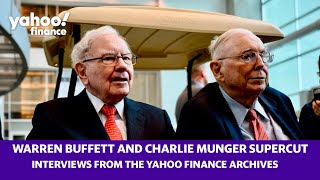 Charlie Munger on Pandemic, Markets, and Investing: Lessons from Berkshire2021 · 150 min · full transcriptReinforces the circle-of-competence mindset and the refusal to pretend the unknowable is knowable.
Questions people ask
- How does Charlie Munger decide what to do with Berkshire's cash?
- What did Charlie Munger say Berkshire Hathaway owes its success to?
- What did Charlie Munger say about knowing your circle of competence?
- What did Charlie Munger say are the simple lessons of life?
- What did Charlie Munger say makes a great investor?
- What did Charlie Munger say about the cost of investment fees over time?
Sources
Every quote above, word for word from the transcripts. Numbers match the text.
“Well, I don't think we have a master plan of knowing where the opportunities are. We're trying to find intelligent things to do with a torrent of surplus cash. And we've always had a torrent of surplus cash. And we're always looking for intelligent things to do with it. And if we find things that are intelligent to do, we do it. And if we don't find anything, we let the cash build up. What the hell is wrong with that? Not much. Yeah. Not much is right.”
“The problem was thoroughly understood as half solved.”
“Oh, yes. Well, it's a hugely important thing, going the edge of your... It's hardly a competence if you don't know the edge of it. You know, if you if you have a misapprehension regarding your own competency, that means you lack competency. You're gonna make terrible mistakes. So hardly anything is... I think you gotta constantly measure what you achieve against what other people will achieve, and then you have to keep being determined really rational and avoiding a lot of self delusion. But after a lifetime of observing it, I think the tendency to be pretty rational about one's own competency is largely genetic. I think people like Warren and I were just born this way.”
“You know, you stop and think about it, it's pretty hard. It doesn't look so damn easy just to go out. If you go to the ordinary person trying to promote himself as an investment adviser or some guy, he just thinks he knows everything about everything and how the Federal Reserve should be run and so on. We don't feel that way.”
“Obviously you have to know a lot, but partly it's temperament, partly it's deferred gratification. You got to be willing to wait, and it's a weird—good investing requires a weird combination of patience and aggression, and not many people have it. It also has to—it requires a big amount of self-awareness and how much you know and how much you don't know.”
“Well, we got a little less crazy than most people and a little less stupid than most people, and that really helped us. Then in addition, we were given this much longer time to run than most people because something kept us alive into our nineties. And that gave us a long track from our little fiddling start all the way to the nineties. Those are the two things that really happened. And, of course, we wised up over time. We got into better and better companies, and we understood more and more of the bad things that could happen, you know, and how easy they could creep in. And we avoided them avoided them even more s and g years later when we were old than we did when we were young, and it all it all worked.”
“We don't have one ounce of reputation more than we need.”
“…if the market gets cheaper, we will have many more opportunities to do intelligent things with money.”
“You gotta learn how to recognize them when they come…”
“Sure. I I basically believe in the in the soldier on system. Mhmm. Lots of hardship will come, and and you're... You gotta handle it well by soldiering through. And lots of... A few where our opportunities will come. You gotta learn how to recognize them when they come and not to make too minor a trip to the bike counter when the opportunity is available. And those are the simple lessons.”
“It's very hard and rare.”
“There aren't many times in a lifetime when you know you're right and you know you have one that's really gonna work wonderfully.”
“I think that even attempts to pick individual securities is, that's a mistake for people; they will do better with a very, very low-cost S&P 500 Index Fund.”
How this guide was made: drafted with AI from the full transcripts of the recordings cited, then checked: every quotation must match a transcript word for word and be the speaker's own words, and an independent review gates accuracy. Methodology and corrections.


