Brian Chesky on Leadership
Brian Chesky sees CEO leadership as a learned craft of staying deeply in the details, setting one clear direction, and acting as the company’s chief product owner while building a strong team around high standards.
- CEO leadership is learned, not innate, and most founders are not naturally good at it at first.
- The CEO should create clarity and one shared direction instead of managing by compromise or layers.
- Great CEOs stay in the details, especially around product, without becoming permanently controlling.
- In a product or tech company, the CEO should function as chief product officer.
- Strong leadership also means building a durable management team and holding high standards that help people rise.
CEO leadership is something you learn, often the hard way
Chesky’s starting point is unusually candid: being a founder does not automatically make you a good CEO. He says the CEO job is counterintuitive, and that most people are not born knowing how to do it well. His view is that leadership improves through learning, study, and repeated practice, not title alone.12
That is why he treats the CEO’s development as a hard constraint on the company. If the leader’s learning stalls, the company’s growth eventually does too. He also emphasizes curiosity as a core trait because the CEO has to keep updating how they lead as the company changes.456
The CEO’s first job is to create clarity and one direction
Chesky believes many leaders make things harder by apologizing for how they want to run the company or by splitting the difference between competing styles. His alternative is directness: people mainly want clarity, and companies move faster when everyone knows the direction. Leadership, in this view, is not pleasing every constituency inside the org; it is making the path legible.78
At Airbnb, that meant pulling key decisions closer to the center and creating what he describes as one shared consciousness among the top group of leaders. He favored an ongoing, company-wide conversation and a rolling roadmap so teams were aligned on the same priorities rather than drifting into separate agendas. That shows how he thinks a CEO should coordinate a large company: not by adding more layers, but by increasing shared context.9
This also explains why he is skeptical of heavy divisional fragmentation. A CEO should make sure product, design, engineering, and marketing are pointed at the same outcome. For Chesky, leadership is strongest when the whole company can feel one coherent intention.8109

“What everyone really wants is clarity.”Lenny's Podcast interview, 2023 · full transcript →
Great CEOs stay in the details without living as micromanagers
The signature idea in Chesky’s leadership philosophy is that great leaders stay in the details. He argues that a leader should be close enough to the work to judge quality, catch drift, and raise standards early. This is the core of what he calls founder mode.111213
But his point is not that the CEO should forever control every action. He says he reviewed nearly everything for a period because he first needed to understand what was really happening before delegating. His model is hands-on before empowerment: inspect the work, know the people, then give away responsibility carefully rather than blindly.14
The pandemic sharpened this belief. When Airbnb’s business collapsed, he responded by getting back into the details and running the company much more directly. For him, crisis revealed that distance from the work can be dangerous, especially when conditions change fast.15
In a tech company, the CEO should lead through the product
Chesky’s most concrete claim is that the CEO of a product or tech company should effectively be the chief product officer. He does not see product leadership as a function to understand secondhand. The CEO should know the product best, because product choices are where strategy, customer experience, and company standards become real.161718
This idea goes all the way back to how he thinks about building companies. He argues that you are a product person first, and that enduring growth starts from making something people love rather than from business mechanics alone. His emphasis on delighting a small set of passionate users before scaling fits the same logic: product truth comes first, then growth.192021
That is also why he keeps linking leadership with quality. He wants the CEO close enough to the product to push toward exceptional experiences, not merely acceptable ones. In practice, that means reviewing work, shaping decisions, and refusing to let organizational distance weaken customer experience.221718
High standards matter, but so does building people and the team
Chesky’s version of demanding leadership is not just about control; it is also about belief in people’s potential. He says that when he tells someone the work is not good enough, the point is not to diminish them but to signal that he sees more in them than they may see in themselves. His standard-setting is meant to elevate performance.23
At the same time, he does not think CEO leadership can be a solo act. He has said that a major part of his work is building a strong executive team that can stay together for the long run. So even though he argues for strong founder-led direction, he also believes the CEO must deliberately assemble and develop the leadership bench.24
His people philosophy is also shaped by mistakes. He admits he used to be overly deferential to experienced operators and often backed away when his intuition conflicted with theirs. Over time he learned that the CEO cannot outsource judgment; experienced people help, but the leader still has to engage directly and make the call.25
Why this leadership style matters even more now
Chesky thinks this style of leadership is becoming more important, not less. He argues that in the AI era, founder mode will be the defining way to operate: fewer layers, more direct involvement with the work, and less tolerance for managers who are detached from what is actually being built.2627
That does not mean every decision has to happen in a giant meeting. He expects organizations to become more asynchronous and flatter, while still preserving a clear chain of command and strong final accountability. The implication is that the CEO’s role becomes even more demanding: less ceremonial management, more real understanding.27
Underneath all of this is a simple belief: companies stay alive by staying vivid, inventive, and close to change. Chesky does not want leadership to become a safe custodial function. He wants it to remain visionary, product-centered, and willing to remake the company before the market forces it to.2829
Chesky on leadership, in his own words
“No one is born a good CEO, and the job of CEO is completely counterintuitive.”
“What everyone really wants is clarity.”
Where to watch
 Brian Chesky on Founder Mode: How he learned to lead Airbnb2022 · 66 min · full transcriptBest for how Chesky went from feeling like a weak CEO to becoming more decisive and hands-on.
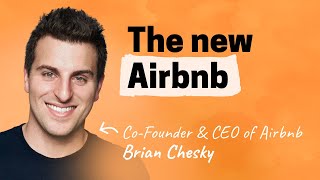 Brian Chesky on Founder Mode: Run the Company in the Details2023 · 73 min · full transcriptBest explanation of founder mode as clarity, shared direction, and being in the details.
 Brian Chesky on Founder Mode: The CEO as Chief Product Officer2024 · 42 min · full transcriptMost concise case for the CEO as chief product officer and why great leaders stay close to product.
 Brian Chesky on Founder Mode: Eyes On, Hands Off2023 · 47 min · full transcriptBest for the balance between curiosity, standards, and being eyes on without being controlling.
 Brian Chesky on Founder Mode: Building in the AI Era2025 · 83 min · full transcriptBest for why Chesky thinks this leadership model will matter even more in the AI era.
Questions people ask
- How does Brian Chesky think startups should go from one city to scale?
- How has Brian Chesky changed as CEO over time?
- What changes did Brian Chesky make to Airbnb after taking back control?
- What did Brian Chesky say about being a founder versus being a CEO?
- What does Brian Chesky mean by founder mode?
- Why did Brian Chesky stop deferring to more experienced executives?
Sources
Every quote above, word for word from the transcripts. Numbers match the text.
“No one is born a good CEO, and the job of CEO is completely counterintuitive.”
“I think almost nobody is born a good CEO.”
“A company can't grow faster than a CEO's learning curve.”
“I think that one of the most important characteristics for a leader—there's many—but I think it's curiosity and the ability to learn.”
“And so I think the first thing I try to do is to be a beginner. Pablo Picasso had a saying. He said, "It took me four years to learn to paint like Raphael, but a lifetime to learn to paint like a child." And so I've tried to always see the world through the eyes of a child. And I think one of the key characteristics of a child is curiosity. To see everything with fresh eyes. To not have too many judgments. When I was trying to figure how to run the company, I studied the history of divisional organizations and I studied Steve Jobs, but also studied what Bill Gates did. And I studied Alfred Sloan at General Motors that MIT Sloan is named after.”
“Way too many founders apologize for how they want to run the company.”
“What everyone really wants is clarity.”
“I stopped pushing decision-making down. I pulled it in. I created one shared consciousness and I said, the top 30, 40 people in the company are going to have one continuous conversation. Metrics are going to be subordinate to the calendar. So we're going to have a roadmap. It's going to be a two-year roadmap. We'll update the roadmap literally every month. People may wonder, well, what if the world changes? Yeah, it changes every day. So the roadmap's something where the next month doesn't change, but two years out it changes. It's a rolling roadmap. And by the way, if Ukraine gets invaded and you want to provide housing for refugees, you can still pivot people and adapt very quickly. We house 120,000 refugees. So you still keep a reserve of resources to be able to pivot and do things because there's always unexpected events. I created this new function called product marketing. We basically described what that is. I made the group much smaller. I took a lot of product managers, I reassigned them as program managers.”
“If you build a great product and no one knows about it, did you even build a product?”
“…if you're a leader, you should be in the details.”
“…great leaders are in the details.”
“The point is this: great leaders are in the details. That's what founder mode is.”
“Over time, basically, what I did is I reviewed every single thing for two, three years. I worked like a hundred hours a week, reviewed every little detail of the company. My vision wasn't do this forever. My vision wasn't to micromanage forever. My vision was before I empower people, I need to know what's going on. This notion that great leadership is hiring great people and trust them to know what to do. Well, how do you know they're great if you're not auditing what they're doing? And you actually want to start hands on under control and give ground grudgingly. Everyone does the opposite. They let go, they hire someone, they go in the wrong direction. And by the way, that's bad for the leader. You're not training them. So to bring it back to your question, that's founder mode. We need AI founder mode. AI founder mode is gonna be even more intense than founder mode.”
“And then the pandemic occurred and we lost 80% of our business in eight weeks. And then suddenly we're like, oh my God. I remember basically staring into the abyss. And luckily I've never had a near-death experience, but the way it's been described to me is it's like your life flashes before your eyes and you have clarity. And that's what happened to our business. We had a near-death business experience and our business flashed before our eyes. And so suddenly I basically got into action and I said, I'm going to run it this other way where I'm going to get back involved in the details. And by the way, Lenny, here's the funny thing. Before the crisis, a lot of people felt like I was too involved in different areas. Once the crisis happened, guess what happened? People were like, what do we do? We need you more involved. And so I got more involved. And when I got involved, I made the following changes. The first thing I did is I said, everything we're doing has to be written down and put into a Google sheet. It turns out people couldn't even write down everything they were doing.”
“I think the CEO should be basically the chief product officer of a product or tech company.”
“I think that the CEO of the company should always be the chief product officer…”
“I wouldn't have a chief product officer. I think the CEO should be basically the chief product officer of a product or tech company. If the CEO is not the chief product officer then I don't know if they're a product or tech led company. Maybe that's okay if they're an ops company or if they're a marketing company or if they're not a tech company at all. But ultimately I think the founder or CEO should be that person. So when we were starting Airbnb, it was probably the three of us. As you know, I think Airbnb was a unique situation where it was three of us. I don't think any of us was that dominant. I probably played the closest thing to the role of the people listening, the closest thing to the role of the product manager. But again, I did marketing, I did design, I did ops, I did a little bit of everything. So I was basically everything but engineering.”
“You can't be a business person, you're a product person first and foremost.”
“It's better to have 100 people that love you, 100 customers that love you, than a million customers that just sort of like you.”
“Probably the most important single piece of advice I got, which is probably advice that is probably the most important advice I can give you, or one of the most important advice, is he basically drew out this chart and he basically said, it's better to have 100 people that love you, 100 customers that love you, than a million customers that just sort of like you. In other words, if you have 100 people that absolutely love your product, they'll tell 100 people, and then they'll tell 100 people, or even 10 people, and this thing will grow. We call it growing virally. In fact, almost all movements in history have grown this way as well. There's like deeply passionate followers and they grow it. And they're customer advocates. And the problem is, in Silicon Valley, the general wisdom is, I need to build some app, this thing it needs to have this viral coefficient. I need to get millions of people to use it. And they gotta like it enough to share it. That's totally the wrong way to think about it, especially if you're in a service business like ours.”
“The way to get to product market fit is to just create a six or seven star experience.”
“I saw potential in people they didn't see in themselves. And that's my management philosophy. When I tell somebody it's not good enough, I'm not saying you're not good enough. I'm saying I see potential and you don't see it in yourself. That is the most motivating thing you can do, to say I believe in you and I believe you can do even more. And people will climb a mountain for that type of thing. And maybe the way to end this whole conversation is the most important person ever that you can believe in is yourself. And I think a lot of us that are entrepreneurs, we're driven by insecurity. We're driven by some hole. Not all of us, but a lot of us. Something in our childhood, something. A lot of us were not the coolest kids or whatever, and there's something in us you wanted to prove, and and then you get really successful, and you still have impostor syndrome.”
“Over the last couple years, it's been very, very clear that part of what I need to now be doing is building an incredibly strong management team and spending a lot more time building the team and building the platform for all future innovation. So, we had this very successful single product, homes, and we thought to ourselves, "Well, we want to be a company that's gonna be around for a long, long time." And so, to be able to do that, I want to be able to have an executive team that's gonna be with me for, you know, a dozen years or longer, the way Steve did or Jeff did at Amazon. And so, that's kind of probably the biggest thing that I've been doing.”
“And what do I do when my intuition and their experience collide? Usually, I deferred. And that was usually a mistake. It doesn't mean I was right, but it might have been that the solution was some engagement. My intuition is telling me this thing. It doesn't mean you're wrong, but now let's talk about it. Let's work through it together. And then, by not working through it, I knew the company so well that it's just really hard for somebody with experience at someone else's company to know how to do it at your company. One of the reasons why is they usually come from big companies and they have trouble applying their big scale to a small company. They also come from companies where they didn't build it. They managed it. And now they have to build it.”
“I think founder mode is gonna be the only way to operate in the age of AI.”
“A lot of companies you have to get your boss to approve it and your boss's boss to approve it and your boss's boss's boss to approve it. I'd have the full chain of command in the room, and anyone can give their opinion. I would make all the final decisions. I would not speak first, I'd usually speak last, And I'd usually agree with the team, but 10% of time I disagree, but I'd ratify every decision. It was a very clear chain of command. But this is a meeting based culture. I think in AI, I think we're gonna move away from meeting based to asynchronous. And we're fairly remote, and so I think that will benefit us. I think you're gonna have a lot fewer layers of management.”
“I think we're going to need to stay young. We need somebody to remake the company. So, I think we're going to need somebody that, like, you really want somebody that's got 10 to 15 years runway who is visionary, because I do not think the vision dies of the founder. I think if the vision dies of the founder, then you become a heritage brand. And if you're a heritage brand in technology, that's a big problem because technology is a synonym for the word change. So that would be what I would think. I would not think that you would want to hand it over to, like, a grownup, you know, safe pair of hands, and if you do—to me, that's a transitional leader. That leader is—…”
“So my fun fact was I was an artist and designer before Airbnb. Really an artist, at least how I thought about it. And I think that's maybe one of the things that makes Airbnb different. Because there's not a lot of designers or artists running Fortune 500 or S&P 500 companies. And I think that intuition, imagination, design, curiosity, I think we need more of that. By the way, I think the people listening, I think everyone on this, listen, you have these qualities. But I think that a lot of companies, it's like we're a body and the companies are cut off at the head and they're disembodied from their heart, and they're often really biased towards one side of their head.”
How this guide was made: drafted with AI from the full transcripts of the recordings cited, then checked: every quotation must match a transcript word for word and be the speaker's own words, and an independent review gates accuracy. Methodology and corrections.


