Brian Chesky on Entrepreneurship
Brian Chesky sees entrepreneurship as starting from a real problem, earning intense love from a small group of users, and building the culture to scale what works.
- Start with a real problem you personally feel.
- Launch fast and do unscalable things to learn.
- Seek passionate users, not broad lukewarm demand.
- Ignore rejection if customers care.
- Build culture early so the company can scale.
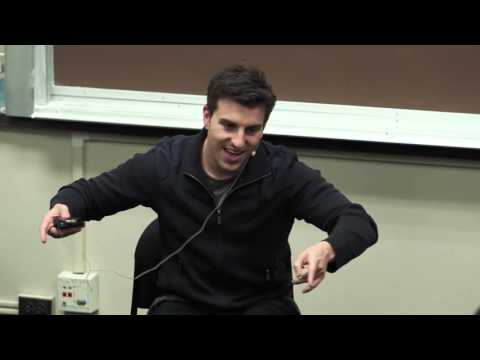
“What if we just created a bed and breakfast for the design conference?”Greylock lecture, 2016 · 4:43
Great startups often begin as practical solutions to your own problem
Chesky’s view of entrepreneurship starts with proximity to a real problem. Airbnb began when he and his cofounders needed rent money and saw that a design conference had filled local hotels, so the first idea was simply to turn their apartment into a temporary bed-and-breakfast. He treats this as a pattern: many important companies do not begin as grand plans but as concrete fixes for something right in front of the founders12.
That is one reason he thinks promising startup ideas can look ridiculous at first. If you are solving a problem that is new, neglected, or misunderstood, outsiders may see only the strangeness of the idea rather than the usefulness of it. Chesky’s own shorthand for this is that truly new ventures can sound like terrible ideas until they work3.
“What if we just created a bed and breakfast for the design conference?”Greylock lecture, 2016 · full transcript →
The way to become an entrepreneur is to start making things
Chesky is unusually direct about how to learn entrepreneurship: begin before you feel ready. He argues that the best preparation for creating a company is creating something now, whether that is a company, a club, a product, or some project that puts you in motion. His emphasis is less on credentials and more on practice, initiative, and repeated acts of creation4.
That same bias shows up in how Airbnb started. He describes building the first version quickly and putting it out without worrying much about polish. The entrepreneurial lesson is to compress the distance between idea and reality so you can get feedback from the world instead of just thinking about possibilities in your head5.
“And so, I think the best way to become an entrepreneur is just to become an entrepreneur. Like I don't know how else to say it. In other words, just start. And just creating things. Create things for people. The best preperation for creating a company is to create a company. If you can't create a company, create a club. Or create a product, or create something. And I found that throughout my history, all the things I created, whether it was my club hockey team at college or this thing I designed or a project with my friends for fun. and usually it was outside of school and it was always slightly mischievous, like, you know, like just slightly. Kind of fun or a prank or something. I think that's the best thing. So I think that other than the fact that it is good to learn in these classes, the thing that's even more useful than being here right now is to leave this thing and to start something immediately.”Greylock lecture, 2016 · full transcript →
Win a small group of people who love you before chasing scale
For Chesky, one of the central mistakes in entrepreneurship is trying to look big before becoming indispensable to anyone. He repeatedly returns to the idea that it is far better to have a small number of customers who deeply love the product than a huge number who merely think it is fine. In his view, real growth starts from intensity, because delighted users become the engine of word of mouth678.
This explains why he values doing things that do not scale in the beginning. In Airbnb’s early years, the goal was not mass awareness; it was making the experience good enough for a small set of early adopters that they would keep using it and tell others. He sees user experience itself as the best form of marketing, because genuine enthusiasm spreads farther than broad but shallow promotion9.
Rejection is normal; customer truth matters more than investor opinion
Chesky’s entrepreneurial story is full of dismissal, and he treats that as evidence of how unreliable conventional judgment can be in the early days. Investors ignored Airbnb, rejected it, and in one memorable response effectively dismissed both the founders and the idea. His conclusion is not that skepticism is meaningless, but that early external approval is a poor test of whether a startup should exist1011.
What mattered more was whether users found real value in the product and whether the founders could keep the company alive long enough to learn. Chesky points to extreme scrappiness, including selling novelty cereal boxes, as part of surviving the period before the business model was obvious. The broader lesson is that entrepreneurship often requires resourcefulness before it rewards elegance12.
Through all of this, he keeps returning to a simple hierarchy: customers come first. If users care deeply, that signal should outweigh a great deal of fashionable opinion from people outside the product13.
A founder’s job evolves from product obsession to company building
Chesky does not define entrepreneurship only as inventing an idea. Once a startup works, the founder has to turn that product into an enduring company. He frames this transition clearly: the founder must remain a product person, but the harder long-term task is building the organization that can keep delivering the product at scale1415.
That is why he puts so much weight on hiring and culture. He argues that culture is essential to scaling because it shapes decisions, trust, and how people behave when the founder is not in the room. In his view, values should be mission-specific, hiring should be deliberate, and long-term companies are built by people who truly believe in what they are doing rather than by short-term mercenaries16171819.
This also means entrepreneurship is not just about speed. It is about preserving clarity as the company grows: what the mission is, who belongs, and what standards cannot be compromised. Chesky sees culture as the operating system that allows a startup to stay creative and coherent as it becomes much larger2021.
Chesky on entrepreneurship, in his own words
“All that matters is the customers.”
“And so, I think the best way to become an entrepreneur is just to become an entrepreneur. Like I don't know how else to say it. In other words, just start. And just creating things. Create things for people. The best preperation for creating a company is to create a company. If you can't create a company, create a club. Or create a product, or create something. And I found that throughout my history, all the things I created, whether it was my club hockey team at college or this thing I designed or a project with my friends for fun. and usually it was outside of school and it was always slightly mischievous, like, you know, like just slightly. Kind of fun or a prank or something. I think that's the best thing. So I think that other than the fact that it is good to learn in these classes, the thing that's even more useful than being here right now is to leave this thing and to start something immediately.”
Where to watch
 Brian Chesky on Launching Airbnb: The Challenges of Scale2016 · 98 min · full transcriptBest single overview of Chesky’s founder philosophy: starting from your own problem, surviving rejection, finding love from early users, and learning to scale.
 Brian Chesky on Customer Focus & AI: Rebuilding Airbnb2023 · 69 min · full transcriptBest for understanding how Chesky interprets rejection, scrappiness, and customer focus from the vantage point of a mature founder.
 Brian Chesky on Company Culture: Values That Scale2014 · 50 min · full transcriptBest for the part many founder stories skip: how entrepreneurship becomes hiring, mission, and culture as the company grows.
 Brian Chesky on Airbnb Origin Story: From cereal boxes to IPO2022 · 24 min · full transcriptConcise version of the Airbnb origin story with clear lessons on doing unscalable things and enduring near-death moments.
 Brian Chesky on Airbnb’s Early Growth: From Air Beds to Press2012 · 12 min · full transcriptBest short watch on launching quickly, experimenting, and pushing an idea into the world before it looks polished.
Questions people ask
- What did Brian Chesky say about becoming an entrepreneur?
- How does Brian Chesky hire people at Airbnb?
- What are Brian Chesky's core values at Airbnb?
- What does Brian Chesky say about the relationship between culture and brand?
- Why does Brian Chesky think company culture matters so much?
- What did Brian Chesky say about raising Airbnb's first money when investors rejected the company?
Sources
Every quote above, word for word from the transcripts. Numbers match the text.
“What if we just created a bed and breakfast for the design conference?”
“What if we just turned our house into a bed and breakfast for a design conference?”
“It's the worst idea that ever worked.”
“And so, I think the best way to become an entrepreneur is just to become an entrepreneur. Like I don't know how else to say it. In other words, just start. And just creating things. Create things for people. The best preperation for creating a company is to create a company. If you can't create a company, create a club. Or create a product, or create something. And I found that throughout my history, all the things I created, whether it was my club hockey team at college or this thing I designed or a project with my friends for fun. and usually it was outside of school and it was always slightly mischievous, like, you know, like just slightly. Kind of fun or a prank or something. I think that's the best thing. So I think that other than the fact that it is good to learn in these classes, the thing that's even more useful than being here right now is to leave this thing and to start something immediately.”
“And literally, 30 minutes, we built this as we were talking. And I don't know, I'm not here to give lessons except to say have an idea, just put something out there in 20, 30 minutes, don't matter, don't worry how bad it looks. And our first launch, our first of many, was this. And this is a site that two designers had built. Um, looks pretty modest today. We ended up hosting three people from around the world. A mole actually came from India, Catherine was a 35-year-old woman from Boston, and Michael, that's not Michael—I just got a 45-year-old guy from Google News. I couldn't actually find a photo…”
“It's better to have 100 people that love you, 100 customers that love you, than a million customers that just sort of like you.”
“…it's better to have 100 people love your service than have a million people that are kind of like your service…”
“Probably the most important single piece of advice I got, which is probably advice that is probably the most important advice I can give you, or one of the most important advice, is he basically drew out this chart and he basically said, it's better to have 100 people that love you, 100 customers that love you, than a million customers that just sort of like you. In other words, if you have 100 people that absolutely love your product, they'll tell 100 people, and then they'll tell 100 people, or even 10 people, and this thing will grow. We call it growing virally. In fact, almost all movements in history have grown this way as well. There's like deeply passionate followers and they grow it. And they're customer advocates. And the problem is, in Silicon Valley, the general wisdom is, I need to build some app, this thing it needs to have this viral coefficient. I need to get millions of people to use it. And they gotta like it enough to share it. That's totally the wrong way to think about it, especially if you're in a service business like ours.”
“The best marketing is investing in the user experience, and then your users will market it for you.”
“We love everything but you and your idea.”
“Jason, we were trying to raise $150,000 at a $1.5 million post-money valuation. So, for $150,000, you could have owned 10% of Airbnb. And the majority of them didn't even reply to the email. I actually ended up publishing a bunch of the rejection emails, but many people said, like, this isn't a good idea. Many people said, like, travel, we're not, like, excited about travel. Um, I remember one investor said, "We love everything but you and your idea." In other words, we don't. I'm like, well, everything else is good. I, I, I thought—I was like, I thought to myself, wait, what else is there? There's me, there's the idea. Yeah, I guess there's the, the name, but they don't, they don't like the name either. So, and what they meant by they—they liked everything but us and the idea was it was three founders, one software engineer and two…”
“I guess if you can convince people to pay $40 for a $4 box of cereal, then maybe you can convince at least some people to stay in each other's homes.”
“All that matters is the customers.”
“You can't be a business person, you're a product person first and foremost.”
“I spend almost all my time on product, marketing, and hiring.”
“Culture is the thing that's gonna be very, very important for you to be able to scale the business.”
“We want people to be here for the one thing that will never change, and that's our mission.”
“So we were kind of in trouble. And we had this conversation and there was the pragmatic decision of should we acquire them and then there was the values decision. The pragmatic one should've probably have said buy them because you can't risk losing international. So just guarantee you're gonna get international. But we ended up not buying them. And the reason we ended up not buying them is I just didn't like the culture. I didn't wanna bring in this 400 people. I felt like we were missionaries and they were mercenaries. I didn't think they were doing it for the beliefs. I thought they were doing it to make a lot of money very quickly. And I believe in a war on missionaries would outlast and out-endure mercenaries. And I also felt like the best revenge against an Internet startup, Internet clone was just to make them run the company long term. It's like you have the baby, now you gotta raise it.”
“The biggest problem of culture, is it doesn't pay off in the short-term. In fact, if you wanted to, in one year, build a company and sell it as quickly as possible. The number one piece of advice I give you is, fuck up the culture. Forget about it, just hire people quickly. Culture makes you hire really slowly and makes you be deliberate about decisions that in the near term can slow progress. It's kinda like putting an investment into the company short-term. And so, these are the things people never tell you. So it, it's really about building a company for the long-term and to endure. Now, some of the things about culture. The first thing is you need to like be very clear about like. What's unique to you, that you stand for? Once you do that, you need to make sure you hire people that believe in that.”
“They are two sides of the same coin. So cultural like the principles and the beliefs you have inside the company that you want people to be aligned with long term. And whatever happens inside the company eventually comes out. You can't hold it in. And brand is really the promise outside the company that everyone identifies with. And so I think, having a clear mission, and making sure that you know that mission, and making sure that mission comes through the company is probably the most important thing you can do for both culture and values. And then, the second thing you need to know is that your brand, the way people think about you as a company, is often decided by your, you know, your brand evangelists are your employees.”
“The company, more so than the product needs day to day management, but the company, the product's fine. So, there's a couple things. The first, probably the two biggest things I'm focusing on, the first one is scaling the culture for the new size. A lot of the cultural norms and kind of things we institutionalize was for a company that was 500 people. We're now over 2,000 people and I wanna make sure that this still feels like a fast growing start up. It's still product oriented. It's still everyone is mission driven. So that means a lot of the methods and behaviors in the day to day has to change. The other thing though, probably even bigger, is, most companies that are really, really big have more than one product.”
How this guide was made: drafted with AI from the full transcripts of the recordings cited, then checked: every quotation must match a transcript word for word and be the speaker's own words, and an independent review gates accuracy. Methodology and corrections.


