Brian Chesky on Corporate Maturity: Building Airbnb for the Long Run

What Chesky talks about
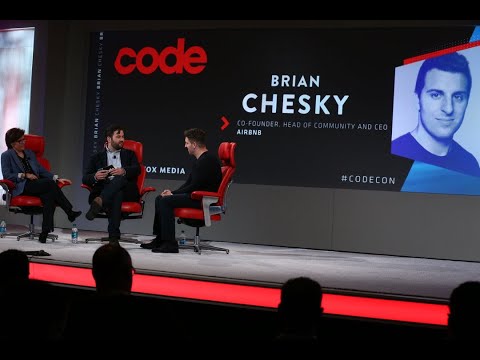
Brian Chesky gave this interview at Code Conference in 2019 about Airbnb’s long-term strategy, management team, travel platform expansion, regulation, and corporate maturity.
Also known as: Full interview; On with Kara Swisher; Code 2018 interview.
Brian Chesky talks about Airbnb’s shift from a young startup to a company built for the long run. He says his main job now is building a strong management team and a platform for future innovation, not just pushing one product forward.
He also explains Airbnb’s strategy around experiences, China, and the broader travel ecosystem. Chesky argues that Airbnb’s edge comes from community, unique inventory, and a global network effect that can expand into many travel categories.
A major part of the conversation is regulation and social responsibility. Chesky describes how Airbnb is trying to work with cities, address discrimination, and think more broadly about its impact on neighborhoods and stakeholders.
An interviewer moderates the main conversation, with several audience Q&A questions near the end.
In his words
“Part of what I need to now be doing is building an incredibly strong management team”
“Airbnb so different is the fact that we're a community, not just a series of commodities”
“The experience economy”
“The moment you create something and people come dependent on you, you have a responsibility.”
“We have a greater responsibility”
Key points
- Airbnb has moved from product-building into a phase focused on management, structure, and longevity.
- Chesky sees Airbnb as a community marketplace, not just a real estate or lodging business.
- Experiences are growing quickly and are being built with more verification and local authenticity than early home listings.
- China required a decentralized operating model and clear internal lines on data and regulation.
- Airbnb’s defensibility comes from global network effects, community, unique inventory, brand, and an integrated travel ecosystem.
- Regulation is a long-term battle, but Chesky emphasizes partnerships with cities over confrontation.
- He says companies should measure their impact on multiple stakeholders, not just investors.
Full transcript: Brian Chesky, Code Conference interview (2019)
(music) Thank you for, thank you for having me. Thank you. So, we're gonna talk about responsibility, regulation, travel, all the fun stuff. But I think I want to ask you first, you know, last night we got to see an Evan Spiegel, you know, the joy and agony of being a young CEO and everything that comes along with that. And since we've had you out here a few years ago, how have you changed? What's your style as CEO, and how are you learning and evolving as a leader? Well, I came here 2015, and around that time we were like a really big adolescent, and the, you know, when you start a company you're really building a product, and at some point you have to build a small team, and you learn all these things that
made you successful. Like, you can dive in, you can help people, you can solve problems, and one day it feels like everything you do doesn't matter because the company's too big and you have to start to run the company fairly differently. Over the last couple years, it's been very, very clear that part of what I need to now be doing is building an incredibly strong management team and spending a lot more time building the team and building the platform for all future innovation. So, we had this very successful single product, homes, and we thought to ourselves, "Well, we want to be a company that's gonna be around for a long, long time." And so, to be able to do that, I want to be able to have an executive team that's gonna be with me for, you know, a dozen years or longer, the way Steve did or Jeff did at Amazon. And so, that's kind of probably the biggest thing that I've been doing. Like, talk about that, because you've had
turnover. Yeah. Yeah, high-profile departures especially, and there was a lot of talk about different ideas how to run Airbnb. What happened there? Well, there honestly, what happened there — there wasn't too much. Young LT wanted to go start his own company, and we did have subtly different visions, but, you know, all of us in the management team disagree quite a lot. And we've had not a ton of turnover on the team. We've had two executives leave, and we're gonna need to get another CFO. But the — what was reported, the amount of disagreement, wasn't actually nearly what it was. I mean, there was a report we were disagreeing about aviation. That was actually not true. So, you know, we definitely had some differences in how we wanted to, like, what we thought the mountaintop was, but it wasn't nearly what was — what was your mount-
top? I don't care what his is, because he's just the CFO. But what was yours? It was really about building this end-to-end travel app where you can be this global travel community. And I think the key that makes Airbnb so different is the fact that we're a community, not just a series of commodities. And so, the people who misunderstand Airbnb, they tend to just see a bunch of real estate and they're like, "This is real estate." It's, you know, you know, people have a bunch of opinions about real estate being rented on a short-term basis. But of course, when you look a little deeper, what you're going to see, or three million people are hooked in is what you're really buying. And so, I think, yep, only a community marketplace is kind of the big idea here. Meaning you wanted to build it slower or not as profitable, or what? How do you —
mean I think that I, I think that, you know, we want it. I, I don't think there was a fundamental misalignment. I don't want to get to a ton of details about like what, what the misalignment was, any misalignments. But, you know, we really have a huge ambition, I think, an extremely long time horizon, and there's a lot of areas you can invest in. And we've decided that we want to focus on the things that are most differentiated, the things that are most ornate around community, so that were there, that's going into experiences or doubling down on China. These are things that really strengthen the global network effect, and they are really important for us. So, let's talk about experience. Yeah, because that was something that you rolled out over a year ago. Big events in LA, impressive event. I don't really hear
about them, though. I don't see them. I don't see friends bragging that they're on a cool Airbnb experience. I see "This is my beautiful Airbnb," but not "we're on a great taco tour," or something like that. Yeah, are people using them? Is it a success? Or at least say, "I've done four of them." What have you done? She's done sake tasting, ramen making. Yeah, that's ridiculous. And Franciscan and photography. Yeah, and then crabbing. Yeah, I think so. Yes, they were great. Okay, fantastic. Well, no one really heard about Airbnb homes when they first started, and so to give you a sense, experiences — we're doing about a million and a half bookings a year on an annualized basis. It's growing about 10 times faster than homes, so it's growing much, much faster, but it's obviously on a much smaller base now. You expect it to
grow faster because we have all the traffic. The review ratings for experiences are significantly higher than homes, about 91 to 92 percent of people leave a five-star review. And the big lesson here is we learned a lot of lessons in the homes business. See, when we started the homes business, my role models were eBay and Craigslist. Those were the big classified sites, and they basically had an idea that a website should be like an immune system, in other words, let the community moderate itself. And, you know, 300 million people later, I will say there are limitations to letting the community moderate itself. We'll get into that. Yes. And so what we ended up doing is saying we are actually going to verify every single experience. I mean, we actually didn't verify them, and we had a beta and
A woman had an experience. We would go to a beach with her, and you'd pick up trash while she yelled at you. And that was the moment we realized we should absolutely be verifying this because a bad house is only so bad; you have to live in it, but a bad experience could be kind of this nightmare you can't escape. I'm really sorry I posted that. Yeah, with Kara Swisher. Can you gotta find a posting tour? Exactly. No, but the truth is they're doing incredibly well, and I think over the next year you're gonna hear a lot more about them. And in terms of getting them in a central... One of the things that was interesting when I was on the experiences that there were a lot of sites like this, for, there were like 10 companies. I don't remember the names of all of them that were trying to do these. They're not—where, they're not working. They're not working. Are there anything your problems with these sites? The first is most of them don't have
traffic, right? And so everyone needs a home. Most people don't consciously search online, on Google, or think that you need to have an experience. So these sites lack the traffic and we have more than a half a billion people searching. The other problem, it's less obvious, is that I think these other sites are basically doing tourism, basically stuff that if you live in the city, you would never do, like "Let's go in Fisherman's Wharf and hang out and do things that nobody in San Francisco ever does." That's what tourism is doing: what a local person would never do. And so we said, let's create these experiences in the eyes of a local. Well, what I want to do if I actually live there. And that was basically the difference. Yeah. And they also like the centrality. I'm at the numbers, and because they were on Google doing it, a lot of these things, and they got way—they do it, definitely should work. It's just a question of how big of
business is that for somebody. Once said, you know, if I don't know how big it is, I mean, that's anyone's guess, but well, you need to get—no, can't just cast you. Nobody, nobody knew how big Airbnb was gonna be when we started. You know, the market size was something we were creating. When you're creating a market, the ceiling of that market is unknown. And here's what I will say: if you combine the market cap of Amazon and Alibaba, these are greater than trillion dollars for physical goods sold. How big could the opportunity for experiences be? I don't know, but it should rival. It doesn't mean we'll take all of it, but three and four Millennials said they'd rather buy an experience than a physical good, and there are more Millennials in the world than non-Millennials, especially outside the United States. You look at the emerging economies of China and India. So I actually think, you know, we talked a lot about the sharing
economy, and that term probably frankly got misappropriated, and it's not even clear what that term even means anymore. But the experience economy—not to create a new term, because I will probably also get turned into something else—but there will probably be a massive economy on experiences, and we'll just be one player in that economy. But I think will be really, really big. So what about other businesses that... Well, we have the China business. We've had 10 million people in China use Airbnb, and we have 200,000 homes. We are probably one of the most successful American companies in China. So Senator Warner has talked about American companies selling their souls in China, talk about the problems. Yeah, you have a different situation, not trading content. You're not, but information certainly, in data about people. Well, one thing we've decided to do, so when we went to China, we said we
have to identify the bright lines that we don't want to cross, and then we'll do business so long as those aren't our bright lines. And there were kind of obvious stuff about protecting user data. And then there was something that emerged: every time you go to a hotel, you must give your ID to the hotel, and they give the copy of that license to these public security bureaus—there's local police departments. And we had to make a decision: we can either not do business or do business. And we said, we'll do what the Hilton does because that feels like within reason. So we'll be transparent. If the Hilton collects your passport, we'll collect your passport, we'll give that to the Public Security Bureau. And so that's the primary thing we do, but otherwise it's pretty much the same thing as what you'd see here in United States. Is the product dramatically different there? It's a
little different. I mean, one of the things that we learned was this company after company had failed in China, and the reason they failed, and this is a story of like basically every tech company that tried, like Amazon—they were so successful in Brazil and then they go to India and it works. And you go to China, are like, "Well, China's different." But so was India and it worked in India. And every single person told us, just treat it like a separate universe and decentralize it. Don't have any reporting other than the head of China report in to San Francisco, well some of the control functions. So we decentralized engineering, decentralized design, decentralized all these groups, and then I took one of my co-founders, Nate, and we said your focus is just going to be the chairman of China. And that basically means we're gonna get local Chinese
people to run China, not Americans, but have the American person here that's going to be there like every two, every three weeks. And that model has worked really well with us. The other thing I would just say is it's not rocket science. We have a global travel network. When you're a global travel network, you're gonna have hundreds of millions of Millennials who want to leave China. If they want to stay in a home, they're gonna have to choose a global platform probably. Yeah. So the model helped us there. So go ahead. It's speaking of global platforms. Um, you know, you say you have a lot of traffic, you're—you're hardly alone. And having a lot of traffic or selling travel and it seems that, seeing your success, many of the global travel vendors have started to sell vacation rentals, basically non-Airbnb.
Airbnb ease. I just got an email from Chase saying I can now book vacation rentals with my Ultimate Rewards. Pointedly, would Chase, yeah, Booking.com is massive. Yeah, nice. Ok, Booking is massive. I'm curious, besides, you know, you see the traffic, what else? What's the real, and what are the daily Airbnb like? Why does it matter that I would rent something from you as opposed to Booking or anyone? Well, depends on if you're asking from a customer standpoint or the business strategy. I can answer both of you. Like, please. Okay, it's the business strategy. There's, I'd say, four or five big differentiators. The first is—the first is a global network effect. Every company, by the way, this is like the most misappropriated term in tech, which is cool, network effect. Our global network
effect is quite different than say ride-sharing, which is a local network effect, and after three minutes, you know, you don't really care if there's more cars on the road. With Airbnb, we're in 1,000 cities, we're in all price points, and we have a huge range of homes. So, the network gets stronger as we add more inventory. They don't— they don't have that. Only you have that. We have a unique people-to-people network effect. So our number one source, a host, our prior guest, and so there's a flywheel where how do you actually recruit all these different hosts? That's a hard problem to solve, except which I saw is in the Mary Meeker, so I did quite a few, quite a few. Well, there's five million homes now. Yeah, number two is the soup— incredible passionate community. There's many a home rental website, so it's not many communities, and the community is important because of the
five million homes, three and a half million only list on Airbnb, and they choose to only list on Airbnb and they don't seem interested in listing elsewhere. That's pretty important. Like a Lyft and a new burger. Yeah, the number— it's not who has the most homes, it's who's got the most unique inventory because we can all add boutique hotels and B&Bs, like what's been doing this, which we have been doing and what add will add a lot more of those. So that's the second thing. The third is the thing I just said, unique inventory. The brand is probably number four, and the last one is we're trying to build an ecosystem, you know, so we want to build a one-stop shop for travel. Now, a lot of other sites are trying to do that, but we want to be truly integrated, so you can see homes, you can see experiences, we're gonna kind of build it like a truly end-to-end, says
Where are you with actual travel plane travel, Airbnb airlines? So the idea is we want to build this, we want to take what is a platform for homes and abstract it so it's just a single platform where we can create a hundred businesses or a hundred categories, and that's the big technology thing we're doing. We have like dozens of incubations going. Yeah, I'm sorry, name a few. Content, you know, travel content is a huge one. So the biggest problem with travel content for us is people open travel guidebooks, TV shows, and we don't exist in any of the travel media. I mean, it's obvious why. We're not major advertisers. The other thing is that we're step four in the travel booking
process. So you have inspiration, planning, flights, then Airbnb. So everyone comes here maybe with a destination in mind, and so you're kind of really far down the funnel. So content is a big one. We're looking at services, you know, there's about that mean, a magazine, a travel show, whatever. I would love to put content in the app so you actually come to Airbnb instead of going to some other website to figure out where to travel. Conde Nast Traveler. Yeah, like Machen coming to Airbnb to figure out where to travel. And the content is so much more interesting because it's not tourism, it's like here, our local communities, here’s like the little Instagram stories, right? Which you just kind of launched. That was a bit of an experiment, but yeah. Yeah, that's— I've also seen a slide where you're launching like grocery delivery and things like that. There will be a lot of different services like meaning if you go
somewhere, the food. We don't necessarily have to do them all. Like we plugged in Rezzie, which is a restaurant reservation app. You said we don't need to get in the business of restaurant bookings, people do that passionately. But what we are, you're different, differentiated about, it's typically no community-driven travel. Let's get to the hearty—the problem though, regulation. Yeah, that's—oh, you're having some issues in every major city the last seven or eight years. We've had probably starting 2010. All right, where are the real vulnerabilities? Let's talk about San Francisco and— yeah, San Francisco, New York are two of our four worst cities in the world. Worst cities? I'm sorry, worst— our biggest two were the four most difficult cities from a regulatory— talked about that. What, honestly? Talk about like what is— New York has been a standstill since 2010 to
2010. I said this is gonna be a one-year challenge, and then in 2011, I said this was robbing to take a few years, and in 2018, it's gonna take more than a few more years. It doesn't seem like the end is in sight with that challenge. What's the challenge? The challenge is that you have what is a huge challenge, but we're still there, and we're still really large. I'm a lot bigger than we were the last time I saw you, and you— right. Right. So the challenge is that the challenge is that you have this huge hotel industry, the way— well done on that one. But thank you. We— this hugely powerful hotel industry in New York and hotel unions that have really galvanized people in created this kind of perpetual battle.
And so, we have tried to, for example, hope a hotel tax, which would have been hundreds of millions of dollars, and we're accused of not collecting hotel tax, but we haven't been allowed to. We've done it in five hundred other cities around the world, so this thing is just a kind of political stance. Tony, San Francisco is different; it was a political standstill, and we had this new system last year—a pass-through registration where everyone that they list on Airbnb, we automatically register them with the city, share their information with the city. The hosts know this is happening; they get a registration number, they put the registration number on their listing, and then we collect, remit hotel taxes, and give the hotel taxes to the city. That's a pretty reasonable solution. We've done this in Philadelphia and Chicago and
cities all over the world: New York. Many people don't want that to get solved and leave New York. I think we've talked about—it was dinner, and your advice to me was to leave New York. Yeah, so we haven't done that yet. I'll tell you what I told you at dinner: that if it was just a business decision, it probably wouldn't be worth it to stay there. But we're not there just for business. There are 50,000 people that depend on it to make income, and if you were to shut a market down, that's fifty thousand emails, fifty thousand really long stories about people who need this money to earn income. And so I can't just make a decision from a purely business perspective. The moment you create something and people come dependent on you,
you have a responsibility. And that's the responsibility we have is to continue to do this for them. Let's talk about those, because that's a great slide: you know, up into the right, homes—this thing—yeah, host people make money, yeah, but rents also go up and people have fewer places to live. And, you know, there's some element of this is the tech responsibility part of the discussion. Yeah, I'd love to talk about this. Yeah, how do you balance that? Like, what's the right—it's a hard balance. And listen, we want to make neighborhoods better; we don't want to make them more expensive. By the way, I love that I can stay in the Marais in an Airbnb because there's no good hotel there, and it's Silver Lake and wherever else. So it is a great thing for the traveler, but it kind of might suck for the person living next door. I don't know; it does sometimes suck, and so
what we've done is we've partnered with cities. And, as some cities really want a lot of Airbnb's, and some cities want to have more restrictions, when we go city by city—I mean, at the end of the day, we want to be—we want to be good for neighborhoods; we don't want to be bad for neighborhoods. There's sometimes a trade-off between what a neighborhood wants and what hosts want and what business wants, and you have to find that balance. Oftentimes, we end up going on the side of the city. Like in the city of New York, we removed all people that had multiple listings. In the city of San Francisco, we are—you know, we are smaller than—we work free registration in San Francisco. That was definitely a trade-off. But Amsterdam wants to kick you out. Yeah, this controversy in
Amsterdam predates Airbnb. People in Amsterdam feel like there's too many tourists to Amsterdam now. You also have a lot of, you know, big bus tourists coming into Amsterdam, and so I think this is a major backlash against mass tourism. You know, honey and Airbnb, most people stay much longer, you know, typically around a week, not a few days. It's a pretty different use case. So we want to be part of the solution, but we are a tiny little section of a much broader tourism economy. In Amsterdam, 95% of people in Amsterdam are staying in hotels. And the backlash isn't housing as much as just mass tourism in the city. They call it museum; they're focused on you. They are focused on us and our competitors as well. Yeah, this seems like
such an important part of people's lives. But for whatever reason—and you're in many ways cut from the same cloth—is Uber a, you know, disrupter using interesting new marketplaces, using technology to build them, and in many cities hate you. How have you managed to avoid, though, the delete Airbnb-type crisis where, you know, people hate you more than they should? Well, I don't think we're cut from the same cloth. I mean, the anti-Travis—well, we're different. I mean, you know, like, in 2010, New York passed this law, and my instinct was to fight, and that was a natural instinct, my own soul instinct. When people don't like you, avoid
them, don't talk to them. And then we hired this incredible woman who's our CFO, Belinda Johnson. She told me two things: when people hate you, talk to them and partner with them. And I said, that is like absurd. Why would I do that? And she said, give it a try. And I meet with people who have entrenched positions that you're terrible, you're ruining the city, and we'd say, okay, well, tell me. Like, let me tell you, I mean, be how it works; let me hear your concerns. And 99 times out of 100, they would hate me less when I left the room. And so I said, why should I just enter more rooms? And I just kind of said, who hates me the most? Let me just talk to that person. It was fun, by the way, these conversations. One time I met a politician, and they said, you're like ruining my city. And I said, can you tell me more? It says, let's turn on the
Internet, and they pointed to a television, so it became very clear that people had fundamentally different amounts of understanding about here, maybe. But I want to say this: like, I don't think all cities hate us. We've done 500 agreements, tax agreements. We've collected 500 million dollars in hotel tax. We will soon be the largest collector of hotel tax of any company in the world. So you read about news; you don't read about the 81 thousand other cities we're in. So, and again, it comes down to partnership. Now, we're not perfect, absolutely not. There are externalities to all of our businesses. When I came to Silicon Valley, you know, we all thought we were just good in.
Benevolent, and tech was making the world a better place. And I think that kind of bubble made us not ask hard questions about the ramifications of our products. And I think what's happened over the last ten years, and especially last few years, is all of us are acknowledging that we have a greater responsibility, and Airbnb has a greater responsibility than I thought, probably even when I was back here in 2015. We do have a responsibility to neighborhoods. We do have to improve things. What about some of the things that you got in trouble in the early—doesn't remember—you and I had a—I'm gonna repeat this—but you, you, you and I had a—it was a weird place. We had a, we had an event where we talked, and there were hotel people there or something like that, and they were challenging you on that at the time when they had that, that problem with the.
Woman that you guys were—so the woman's, the woman that was—and I can't believe you said this, but you, I was there—there's crime in other places, and you said, "Oh, I'll never forget this: you know, hotels have been having orgies for decades now," which I thought was the best answer I've ever gotten, but they are great for them. Yeah, they are. I don't—not from personal experience. Okay. Me neither. Yeah, yeah. Well, we've read about it, didn't see you there. Yeah, no. So, so one of the things we took this—that you had an issue like that issue—you responded kind of closely to the original one. It was, it was screwed up. Yeah, you know why? Because I was listening to what I thought were experts and experts, they don't accept responsibility. If you do, you'll be liable, and I didn't, and then it got.
Worse and worse and worse, and one day it got so bad, I said if it all went to hell, how would I want to act? And Ben, remember? And I said, for now, and I'll just do things like that. And so we just said, "We're sorry. We're gonna do a host's guarantee," and I call that being a principle decision as compared to a business decision. And a business decision is trying to forecast how it's gonna— you know, what's the right move based on how it's going to end. But these business decisions often end up—you end up on the wrong side of them because you can't actually predict how. You know, we just recently had an experience with some African-American women, is that correct? Yeah. Explain what happened there for people. Um, there were some women that were checking out of an Airbnb and the neighbor said, "Those people don't live here," and they called the police, and it was.
Incredibly discouraging situation. And, you know, it wasn't directly—there wasn't too much we could do in that circumstance because it wasn't a direct community member, but we did reach out to the guests. But we have had a history of, in 2015, it was pretty well reported, 16 discrimination on a platform, right? And so from there, we decided we're gonna have a zero tolerance discrimination. We made every single person click a box that said, "I will not discriminate based on age, sex, race, religion." The tens of thousands of hate mail we got from community members was—was vast. Last year in Charlottesville, people were trying to stage after-parties for the rally, and Airbnb—that was actually happening. And so we actually had a team.
It was actually elevated by our community. We canceled these reservations. We tried to snap out as much as we could. And that, you know, we got on the wrong—you know, we got—we became a pretty big target of people, you know. So what we decided was, we can't intervene in every social issue, but when it's related to our mission, you should lean out and likely lean into that line, and that's what we'd say. What do you make of what has happened with Uber and Facebook, where things haven't been done correctly? I think that, I think that tech has maybe been trying to stay out of trouble rather than the leadership place that the world wants him to be in. And I don't think that's specific to any company. I think that's.
The culture. We thought we were good. Well, if we're good, why do we need to do more? And suddenly we're so big that we have a huge impact on society. And so if you go to, you walk into a company's board meeting, for example, every chart is going to be typically something oriented around financials and the customer of that information is an investor. Well, actually, it turns out companies have more stakeholders, like we have employees, we have guests, we have hosts, and we have communities we live in. Imagine at a board meeting you would report on the results not just for investors but all these stakeholders. I think these are the kind of things that we haven't, we haven't done yet, but us and other companies are gonna need to do. We're going to need to consider our impact on society, and what I, what I've basically been.
Saying is most companies are oriented around a 20th-century model. It's a little bit more short-term; you serve your shareholders, and I think society expects more of us. I know I think society expects us to have a much longer horizon, but more importantly, balance its needs with the needs of the business and actually measure your impact with these different stakeholders. They make commitments. This is day one for us, and I hope more and more companies follow the lead rather than just cherry-picking certain issues. Just think very broadly about the impact you have on the world. Okay, we're gonna get some questions. Are you gonna IPO next year? We'll be ready to IPO next year, but I don't know if we will. Why? Well, you know, we're very, very—we have investors who are really patient, and I want to make sure that it's a major benefit to
the company when we do it. What do you want to? Watching Evan and others? Oh, you know, I just—you know, Katrina backstage and she's—you know, we were talking about it, and she was very clear, like for her, some have been a great experience and most people I talked to have said it's been a good experience for them. Mark is a big proponent of it, so I've—know, yes, I have no issues with it at all whatsoever. So could it—could happen? Could happen. All right, questions from the audience. Hi. Hi, Rosen here. Um, it's interesting to hear you talk about the initiatives that you're embarking on in major cities like New York and things like that, but there are also a tremendous number of small cities, and I own a couple rental properties in small cities that are that
are adamantly against having Airbnb, and I've noticed that the residents of those cities are better organized than the people who own properties who don't live there. Are you almost on Airbnb? I am not because I don't have the rental permits because the city's in charge of that are not allowing us to get the rental permits, and I'm literally selling one of the properties because if I can't rent it, I don't want to own it. And what I've noticed is that I actually reached out to Airbnb, and I said do you guys have any data or assistance or things that you can do to help organize the people in the community who own these properties with data, for example, about the home values going up or other things we can use to be helpful? But there wasn't any such organizing function. I'm
wondering if you've ever thought of organizing the owners or the prospective Airbnb renters, hosts, with empowerment of data and some support because the smaller cities, I know they're not as powerful in the short run, but if you lose those battles at the level with the local governments, it's kind of over for a lot of those places. No, you're right, and most of our business is not in big cities. Two-thirds of our business is in small cities—what you would call the long tail. What you're describing is what we're doing in hundreds of cities; we just haven't figured out how to do it in tens of thousands of cities. The two most effective things that we've done in cities is organize our hosts, and I think we have a few hundred host clubs. We want to have a thousand. I'm not sure if your
city would be one of the thousand, and we do give data into cities. I think what you're describing is a little more of a kind of platform technology approach where the information can be a little more self-serve, people can become ambassadors for a city and get a bunch of information, get a playbook. So we haven't systematized it, but I do agree we kind of started with the big cities, so we're probably not there yet, but I think that's probably in our future. Thank you, though. Bert Black, Rocks Armani music publishing. Hello, I'm actually an experienced host, so I can attest to a lot of things that you've said when you're absolutely on point. So I took some notes. I got two quick questions, and I wanted to say something. What's your experience? I
started out with "Be a DJ for a day" and because I got to work out the kinks through there, it's directly the reason why I have my intensive here at Code. Through your experience, do you consider Airbnb an SBA? It seems to be like the biggest thing in the world as far as an SBA. Was that the initial idea? I guess small business? Yeah, because I mean, you're giving all these hosts an ability without a loan, without any startup cost, you're absorbing all of that, you're exposing it to the world, and then you're just taking a small piece on the back end. And was that the initial idea? We do. I'd never use those words actually like that description. We basically say we're a community of entrepreneurs or like micro-entrepreneurs because most people don't
think of our hosts as entrepreneurs, and again that goes back to the thing I think people misunderstand: they just see real estate. And I think what I like about experiences, people will see what our community is — its people. And so I do see us as a way, you know, listen, Airbnb is not gonna solve the economy's problems today, but it's pretty clear a hundred million jobs will be automated, and so a lot of comes gonna be thinking about creating new economic opportunities. And I think we can probably create, you know, tens of millions of entrepreneurs. I'd like before I die for a hundred million people to be able to say I earned income on Airbnb. That would be what I'd love to be able to say. I mean, I've done mid five figures through your program. It's absolutely a real thing. I've been up to the headquarters and spoken to awesome, and anybody who's been and
See me speak, see how passionate I am. I've had people tear up coming to me, "Oh wow, thank you." Farzad, Brett-Brett, Joe, By Robots, been wonderful. Lamarr, John Wayne, they go up and are really supportive, and I think it was important to share that. Thank you. I'm terrible at doing my trash yelling thing. I want to thank nobody. Hi Brian. Julie, how are you? As someone who has been a fan of yours for a while, I'm curious where you're getting your inspiration these days. And, and this is loaded because I remember years ago you were Uber's number one user. And I look at the parallels between the growth
at Uber and that you've had for the last decade, and I'm just curious where a sweet guy from Niskayuna, New York is looking for inspiration these days. Yeah, I was the number one all-time rider at one point. So, I've been pretty shameless about seeking mentors, people that I could get time with. Cheryl was here, I think, last night. She has been a very important mentor of mine, as has Warren Buffett and other members. So, I've been pretty – I've been pretty shameless about reaching out to people. Somebody once said, I remember meeting somebody who's like pretty well-known, and I said, "Well, how many people do you mentor?" And they say, "Hardly any." And I say, "Why not?" It's because no one asked me.
And I thought, "Wow, well that's a good sign. I should be pretty shameless in asking." And every step along the way I've been shameless. And I say "shameless" because I think people are really proud to ask for help. And I think, like, my point of view is, I don't want thousands of people paying for my learning curve. That's like ridiculous. So I should fast track that. Good to see you. Thank you. Jana. Rich from Rich Talent, good to see you. Good to see you as well. Also, like, Julie, a big fan of yours. You were here on stage three years ago and made a pretty public commitment to adding a woman to your board. I was just curious if there's any update on that. Yes, so I need to find that out by the way. And they're very, let's say, loctite. It's unusual; I usually can find things out pretty quickly. Yeah, you're very good.
That's either there's no—you haven't hired them or we haven't—we haven't brought them on yet. Literally yesterday, I was meeting with one of the candidates, one of the people I'm very excited about. We will hire, we will actually hire—we will appoint one person, at least one woman, this year. I'd like to add to this year, and we're probably going to add somebody who's got an audit profile and somebody with a broader business, general management profile. And what about more—what is your board now? It's six people, so three founders. Guys. Yeah, six guys. Ken Chenault is our only independent director, and he was CEO of American Express. It was past February, so he's the only independent director. So we have a situation where we need to add at least two or three independent directors at this. And how are you looking for those?
How? What is your criteria? You know, it's an interesting thing because there's plenty of people to look at. There are plenty of people. It takes so long to do that. Well, if you want to add—if you want to. Two things: Number one, you know, we are focusing our pool on people back in add diversity to the board. That's number one, really important. And number two, we really want to add people that have a really long horizon, understand the nature of our community. And, you know, I want to have really long relationships with these people. So, you know, it's been really this kind of experience where you spend a lot of time with people. So, but I think we could point a few people, you know, pretty quickly. Alright on that, thank you. Can, thank
you so much. Thank you. Thanks so much. Thank you so much.
From YouTube captions, lightly punctuated for readability. Timestamps link to the video above. Errors are possible.
Cite this recording
Brian Chesky, “Code Conference interview (2019)”, 2019. Transcript and video: Thinkers Archive, https://thinkersarchive.com/brian-chesky/corporate-maturity-code-conference-2019/
Quoting a passage? Link to its exact moment: every timestamp above has its own anchor (for example https://thinkersarchive.com/brian-chesky/corporate-maturity-code-conference-2019/#t-132).