Build For Belonging
Airbnb’s real product is human connection.

“Then your friends pretty soon became your followers, and when your friends became your followers, it no longer meant it was about connection, it was about performing. And when you start performing for other people, you lose intimacy and you lose authenticity, which is not really a bad thing, but it's not meant to fill the void of connection in your life. and I started thinking to myself, I said, I want Airbnb to be able to help combat loneliness because we were about connecting the real world. We weren't about devices. We spend our whole lives and devices. And I noticed I've never had a dream where the devices in my dream. But there's something about that. Yeah. The real world is the real world.”IMO interview, 2024 · 31:05
The lesson
Chesky’s starting point is that Airbnb should not be understood as a lodging company with a nicer interface. He repeatedly frames it as a marketplace for trips and as a community, where the value comes from people connecting in the real world rather than simply transacting over space or inventory12. That is why belonging sits at the center of the mission: the company is trying to create a feeling and a form of participation, not just complete a booking34.
This view depends on a broader diagnosis of modern life. Chesky argues that technology can drift from being a tool for connection into something performative and isolating, and he links that drift to growing loneliness56. In that context, Airbnb’s purpose becomes clearer: if digital products often keep people on screens, Airbnb should help people meet, host, travel, and build real-world relationships instead75.
That mission shapes the product strategy. Chesky says travel should be both magical and easy, and that the magic comes from people and local communities, not from logistics alone8910. So the product has to extend beyond a bed for the night into the full trip: homes, experiences, places, and tools that help people move through travel more spontaneously and meaningfully11121.
He also sees this as part of a larger shift in travel and the economy. Travel is changing from a narrow booking category into a more social, mobile, and people-powered experience, and Chesky argues that the future is increasingly empowered by individuals rather than institutions alone1314. In that model, Airbnb wins by enabling hosts, guests, and cities to benefit together, which fits his idea that this marketplace should create value without requiring someone else to lose15.
For builders, the practical lesson is to design from human needs backward. Chesky describes the designer’s role as assembling technology to better serve society, which means starting with loneliness, trust, identity, and transformation rather than with features alone1617. If the mission is belonging, then product, culture, and brand all need to reinforce it consistently, because what happens inside the company eventually becomes the experience people feel outside it4.
4 principles from Brian Chesky
Design for real-world connection, not just digital engagement
Chesky treats technology as a means, not the destination. When evaluating a product, ask whether it leaves people more connected to other people offline, or just more active on a screen.
“Then your friends pretty soon became your followers, and when your friends became your followers, it no longer meant it was about connection, it was about performing. And when you start performing for other people, you lose intimacy and you lose authenticity, which is not really a bad thing, but it's not meant to fill the void of connection in your life. and I started thinking to myself, I said, I want Airbnb to be able to help combat loneliness because we were about connecting the real world. We weren't about devices. We spend our whole lives and devices. And I noticed I've never had a dream where the devices in my dream. But there's something about that. Yeah. The real world is the real world.”
Treat the community as the product
Airbnb’s distinctiveness comes from being a community marketplace rather than a stack of interchangeable listings. Build systems that strengthen trust, participation, and mutual value between the people on both sides of the marketplace.
“It was really about building this end-to-end travel app where you can be this global travel community. And I think the key that makes Airbnb so different is the fact that we're a community, not just a series of commodities. And so, the people who misunderstand Airbnb, they tend to just see a bunch of real estate and they're like, "This is real estate." It's, you know, you know, people have a bunch of opinions about real estate being rented on a short-term basis. But of course, when you look a little deeper, what you're going to see, or three million people are hooked in is what you're really buying. And so, I think, yep, only a community marketplace is kind of the big idea here.”
Build the whole journey, not a single transaction
Chesky expands the scope from booking a place to enabling an entire trip. Look for the broader user journey around your core product and decide where reducing friction can also deepen meaning.
“Welcome to the world of trips, where we put homes, experiences, and places together, all in one place.”
Use mission to align brand, culture, and product
Belonging is not just a slogan; it should shape how the company behaves internally and what users experience externally. A clear mission helps decisions stay coherent as the product grows into new areas.
“…our brand to become a universal symbol for something that's very important to us…”
In his own words
The quotes behind the lesson, word for word from the transcripts. Numbers match the lesson above.
“…we're in the business of trips.”
“It was really about building this end-to-end travel app where you can be this global travel community. And I think the key that makes Airbnb so different is the fact that we're a community, not just a series of commodities. And so, the people who misunderstand Airbnb, they tend to just see a bunch of real estate and they're like, "This is real estate." It's, you know, you know, people have a bunch of opinions about real estate being rented on a short-term basis. But of course, when you look a little deeper, what you're going to see, or three million people are hooked in is what you're really buying. And so, I think, yep, only a community marketplace is kind of the big idea here.”
“…our brand to become a universal symbol for something that's very important to us…”
“They are two sides of the same coin. So cultural like the principles and the beliefs you have inside the company that you want people to be aligned with long term. And whatever happens inside the company eventually comes out. You can't hold it in. And brand is really the promise outside the company that everyone identifies with. And so I think, having a clear mission, and making sure that you know that mission, and making sure that mission comes through the company is probably the most important thing you can do for both culture and values. And then, the second thing you need to know is that your brand, the way people think about you as a company, is often decided by your, you know, your brand evangelists are your employees.”
“Then your friends pretty soon became your followers, and when your friends became your followers, it no longer meant it was about connection, it was about performing. And when you start performing for other people, you lose intimacy and you lose authenticity, which is not really a bad thing, but it's not meant to fill the void of connection in your life. and I started thinking to myself, I said, I want Airbnb to be able to help combat loneliness because we were about connecting the real world. We weren't about devices. We spend our whole lives and devices. And I noticed I've never had a dream where the devices in my dream. But there's something about that. Yeah. The real world is the real world.”
“…the number one killer in America is loneliness.”
“…make sure you have real friends in the real world…”
“…we think travel can be magical and easy.”
“…the magic is in the people.”
“But it's not magical. And if you want to have an amazing trip, you end up basically on a research project. You might go, you might search online, you'll get guidebooks, you'll download an app or maybe use like 20 apps. You'll do research, maybe a friend's in Europe that you'll ask. And pretty soon, you could literally spend as much time planning your trip as on your trip. And so, we want to fix this. We don't think there should be a trade-off. We think travel can be magical and easy.”
“Welcome to the world of trips, where we put homes, experiences, and places together, all in one place.”
“I'm really excited about this, and this is trips. So, um, this is essentially the timeline of all of your travel. This is your itinerary, and you can see these are the trips I've taken. I've taken a bunch of them, and this really shows the timeline of your life through travel. And I think this is really powerful because now, when you're traveling, the phone can be in your pocket, and it can help you get to all the places, and this allows you to be spontaneous with travel.”
“I think travel is changing completely.”
“The future, the economy is going to increasingly become empowered by people.”
“…for us to win, nobody has to lose.”
“…the role of a designer is to assemble things, components or technology to better suit the needs of society…”
“And say that like, we can design that world. And I think that's the role of a designer. The role of a designer is to assemble things, components or technology to better suit the needs of society. And you're constantly in a state of redesigning based on getting more information. and it's easy to get defensive for those people just attacking me. Yeah. So I'm going to defend. But at some point you do have to look in the mirror and ask well is what they're saying true. And if it is true and sometimes usually what happens is some things are saying is true and then some things aren't and not take it personally and say well I'm going to address the part that is true.”
Reflect
- Where in your work are you optimizing for convenience or engagement when you should be designing for trust, connection, or belonging?
- If your product is more than a transaction, what is the larger journey users are actually trying to complete?
- What mission or belief should tie together your team’s internal culture and the promise users experience outside the company?
Check your understanding
Go deeper
 Brian Chesky on Loneliness and Success: Why Friendship Matters2023 · 101 min · full transcript
 Brian Chesky on Technology and Loneliness: Designing for Connection2024 · 55 min · full transcript
 Brian Chesky on Travel As Journey: Airbnb’s Trips vision2016 · 46 min · full transcript
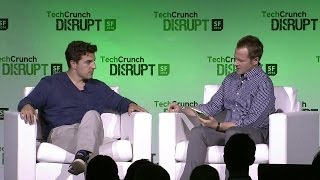 Brian Chesky on Product Philosophy: Trips, Belonging, and Trust2014 · 26 min · full transcript
 Brian Chesky on Travel’s Future: Mobility, Sharing, and Design2012 · 33 min · full transcript