Learn Founder Mode
Stay in the details without controlling everything.

“Way too many founders apologize for how they want to run the company.”Lenny's Podcast interview, 2023 · 0:00
The lesson
Founder mode starts from a simple belief: the founder or CEO should not back away from how they believe the company needs to be run. Chesky argues that people do not mainly want a negotiated compromise on leadership style; they want clear direction and a leader who owns the model of operating the company12. In his version of founder mode, the CEO stays close enough to the work to create shared direction across functions rather than letting the company fragment into silos3.
That closeness is not the same as controlling every move. Chesky’s standard is to be in the details because that is where quality, coherence, and product judgment are formed, especially in a product company where the CEO should act as chief product officer45. The point is not to review details for their own sake, but to understand the product and the decisions shaping it well enough to set standards, ask sharp questions, and keep teams aligned67.
A big reason Chesky arrived at this view is that he believes leadership is learned, not automatic. He says most people are not born good CEOs, and that the role is counterintuitive enough that companies can outgrow a leader’s ability unless the leader deliberately improves8910. His answer is curiosity: study how organizations work, examine your own instincts, and keep learning instead of assuming that hiring experienced operators means you can stop understanding the work yourself1112.
Founder mode also changes how decisions and teams are organized. Chesky describes pulling key decisions closer to the center, creating one shared conversation among senior leaders, and reducing layers so functions can work in a more integrated way3. He also warns against over-delegating before you really know what good looks like; in his telling, leaders should earn the right to delegate by first understanding the work deeply, auditing quality, and then handing over responsibility with judgment rather than blind trust13.
Finally, founder mode is not only for crisis recovery; Chesky thinks it will matter even more in the AI era. He expects fewer layers, more direct engagement with the actual work, and less reliance on managers who are distant from product and execution1415. The through line is that a founder-led company stays inventive and coherent when its leader combines high standards, product intimacy, and deliberate learning instead of managing from abstraction.
5 principles from Brian Chesky
Be explicit about how you want to run the company
Do not lead by half-apologizing for your instincts or trying to split the difference with every preference around you. Give people a clear operating model and a clear direction so they know how decisions get made and what standards matter most.
“Way too many founders apologize for how they want to run the company.”
Stay in the details to set standards
Being close to the work is how you judge quality, shape the product, and keep teams aligned. This does not require constant interference; it requires enough direct understanding that your feedback improves the work and your decisions are grounded in reality.
“…if you're a leader, you should be in the details.”
Treat the CEO role as a craft to learn
Founder instincts do not automatically make someone a strong CEO. Build the habit of studying, asking questions, and upgrading your leadership because the company can only scale as fast as your own learning does.
“No one is born a good CEO, and the job of CEO is completely counterintuitive.”
Delegate after understanding, not before
Do not assume that hiring smart people removes the need to inspect the work. First learn what is happening, review enough details to know what good looks like, and then give away ownership from a position of informed trust.
“Over time, basically, what I did is I reviewed every single thing for two, three years. I worked like a hundred hours a week, reviewed every little detail of the company. My vision wasn't do this forever. My vision wasn't to micromanage forever. My vision was before I empower people, I need to know what's going on. This notion that great leadership is hiring great people and trust them to know what to do. Well, how do you know they're great if you're not auditing what they're doing? And you actually want to start hands on under control and give ground grudgingly. Everyone does the opposite. They let go, they hire someone, they go in the wrong direction. And by the way, that's bad for the leader. You're not training them. So to bring it back to your question, that's founder mode. We need AI founder mode. AI founder mode is gonna be even more intense than founder mode.”
Design for one shared direction, not siloed autonomy
When functions drift into separate agendas, the company slows down and the product gets less coherent. Pull senior leaders into a common conversation, use a shared roadmap, and make sure product, design, engineering, and related functions are working toward the same priorities.
“I stopped pushing decision-making down. I pulled it in. I created one shared consciousness and I said, the top 30, 40 people in the company are going to have one continuous conversation. Metrics are going to be subordinate to the calendar. So we're going to have a roadmap. It's going to be a two-year roadmap. We'll update the roadmap literally every month. People may wonder, well, what if the world changes? Yeah, it changes every day. So the roadmap's something where the next month doesn't change, but two years out it changes. It's a rolling roadmap. And by the way, if Ukraine gets invaded and you want to provide housing for refugees, you can still pivot people and adapt very quickly. We house 120,000 refugees. So you still keep a reserve of resources to be able to pivot and do things because there's always unexpected events. I created this new function called product marketing. We basically described what that is. I made the group much smaller. I took a lot of product managers, I reassigned them as program managers.”
In his own words
The quotes behind the lesson, word for word from the transcripts. Numbers match the lesson above.
“Way too many founders apologize for how they want to run the company.”
“What everyone really wants is clarity.”
“I stopped pushing decision-making down. I pulled it in. I created one shared consciousness and I said, the top 30, 40 people in the company are going to have one continuous conversation. Metrics are going to be subordinate to the calendar. So we're going to have a roadmap. It's going to be a two-year roadmap. We'll update the roadmap literally every month. People may wonder, well, what if the world changes? Yeah, it changes every day. So the roadmap's something where the next month doesn't change, but two years out it changes. It's a rolling roadmap. And by the way, if Ukraine gets invaded and you want to provide housing for refugees, you can still pivot people and adapt very quickly. We house 120,000 refugees. So you still keep a reserve of resources to be able to pivot and do things because there's always unexpected events. I created this new function called product marketing. We basically described what that is. I made the group much smaller. I took a lot of product managers, I reassigned them as program managers.”
“…if you're a leader, you should be in the details.”
“I think that the CEO of the company should always be the chief product officer…”
“The point is this: great leaders are in the details. That's what founder mode is.”
“I wouldn't have a chief product officer. I think the CEO should be basically the chief product officer of a product or tech company. If the CEO is not the chief product officer then I don't know if they're a product or tech led company. Maybe that's okay if they're an ops company or if they're a marketing company or if they're not a tech company at all. But ultimately I think the founder or CEO should be that person. So when we were starting Airbnb, it was probably the three of us. As you know, I think Airbnb was a unique situation where it was three of us. I don't think any of us was that dominant. I probably played the closest thing to the role of the people listening, the closest thing to the role of the product manager. But again, I did marketing, I did design, I did ops, I did a little bit of everything. So I was basically everything but engineering.”
“No one is born a good CEO, and the job of CEO is completely counterintuitive.”
“A company can't grow faster than a CEO's learning curve.”
“I think almost nobody is born a good CEO.”
“I think that one of the most important characteristics for a leader—there's many—but I think it's curiosity and the ability to learn.”
“And so I think the first thing I try to do is to be a beginner. Pablo Picasso had a saying. He said, "It took me four years to learn to paint like Raphael, but a lifetime to learn to paint like a child." And so I've tried to always see the world through the eyes of a child. And I think one of the key characteristics of a child is curiosity. To see everything with fresh eyes. To not have too many judgments. When I was trying to figure how to run the company, I studied the history of divisional organizations and I studied Steve Jobs, but also studied what Bill Gates did. And I studied Alfred Sloan at General Motors that MIT Sloan is named after.”
“Over time, basically, what I did is I reviewed every single thing for two, three years. I worked like a hundred hours a week, reviewed every little detail of the company. My vision wasn't do this forever. My vision wasn't to micromanage forever. My vision was before I empower people, I need to know what's going on. This notion that great leadership is hiring great people and trust them to know what to do. Well, how do you know they're great if you're not auditing what they're doing? And you actually want to start hands on under control and give ground grudgingly. Everyone does the opposite. They let go, they hire someone, they go in the wrong direction. And by the way, that's bad for the leader. You're not training them. So to bring it back to your question, that's founder mode. We need AI founder mode. AI founder mode is gonna be even more intense than founder mode.”
“I think founder mode is gonna be the only way to operate in the age of AI.”
“A lot of companies you have to get your boss to approve it and your boss's boss to approve it and your boss's boss's boss to approve it. I'd have the full chain of command in the room, and anyone can give their opinion. I would make all the final decisions. I would not speak first, I'd usually speak last, And I'd usually agree with the team, but 10% of time I disagree, but I'd ratify every decision. It was a very clear chain of command. But this is a meeting based culture. I think in AI, I think we're gonna move away from meeting based to asynchronous. And we're fairly remote, and so I think that will benefit us. I think you're gonna have a lot fewer layers of management.”
Reflect
- Where in your work have you delegated so far away from the details that you can no longer judge quality for yourself?
- What is one area where your team would benefit from more clarity about how decisions are made, who sets standards, and what direction matters most?
- If your company or project could only grow as fast as your own learning curve, what leadership skill would you need to improve next?
Check your understanding
Go deeper
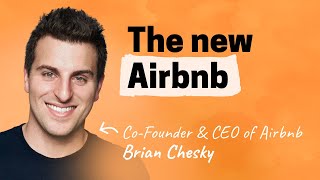 Brian Chesky on Founder Mode: Run the Company in the Details2023 · 73 min · full transcript
 Brian Chesky on Founder Mode: Building in the AI Era2025 · 83 min · full transcript
 Brian Chesky on Founder Mode: Eyes On, Hands Off2023 · 47 min · full transcript
 Brian Chesky on Founder Mode: How he learned to lead Airbnb2022 · 66 min · full transcript
 Brian Chesky on Founder Mode: The CEO as Chief Product Officer2024 · 42 min · full transcript
- How has Brian Chesky changed as CEO over time?
- What did Brian Chesky say about being a founder versus being a CEO?
- What did Brian Chesky say about thinking like a founder?
- What does Brian Chesky mean by founder mode?
- What does Brian Chesky think the CEO should be in a product company?
- Why did Brian Chesky bring himself back into the details at Airbnb?