Make People Love You
Win a few people before chasing everyone.
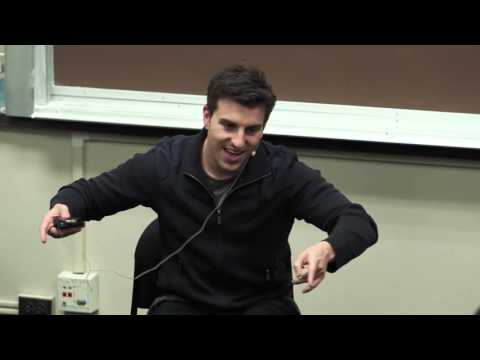
“It's better to have 100 people that love you, 100 customers that love you, than a million customers that just sort of like you.”Greylock lecture, 2016 · 22:11
The lesson
Chesky’s core startup lesson is to resist the urge to look big too early. The better path is to start with a small, specific problem, get a product a few people truly love, and only then expand. He repeats this in multiple places: focus on 100 people who love you rather than a huge audience that feels only mild interest, because deep enthusiasm creates learning and word of mouth that shallow adoption does not123.
This matters because early-stage companies do not win by broad reach alone; they win by creating conviction. Chesky argues that if a small group loves what you made, they will bring in others, becoming a form of organic growth and validation3. That is why he treats early growth less as a marketing problem and more as a product and experience problem, with the best marketing coming from investing in the user experience itself4.
To create that kind of love, Chesky pushes founders to act like product builders first. In his telling, the job is not mainly to optimize spreadsheets or chase scale, but to make something that fundamentally works for people in a memorable way567. This is where design matters: not as surface polish, but as a way to simplify the experience, focus on details, and shape how the product actually works for the user67.
A practical implication is to make the problem smaller before trying to make the company bigger. Chesky describes a pattern of piloting in one market, then expanding to ten, then industrializing only after the model works, because it is easier to improve something intimate and contained than something already spread too wide8. That logic matches his earlier startup advice: doing things that do not scale is not a detour from growth, but often the fastest route to discovering what should scale later9.
There is also a mindset beneath this approach: many strong ideas initially look strange or dismissible. Chesky says breakthrough ideas are often underestimated at first, which means founders cannot rely on early external approval as proof they are on the right path1011. Instead, they need enough direct contact with users to see real change in people’s lives and enough passion to keep refining the product through doubt and rejection12.
4 principles from Brian Chesky
Win intense love before broad reach
Do not optimize for the largest possible audience at the beginning. Start by making a small number of users care deeply, because that gives you clearer feedback and creates the kind of advocacy that can drive growth.
“It's better to have 100 people that love you, 100 customers that love you, than a million customers that just sort of like you.”
Treat user experience as your primary marketing
Instead of leading with promotion, improve the product until users naturally want to tell others. This shifts your attention from acquiring attention to earning enthusiasm.
“The best marketing is investing in the user experience, and then your users will market it for you.”
Be a product person first
In the early stages, your main job is to make something that truly works for people. Chesky ties this to design in the deeper sense: understanding the experience, simplifying it, and getting the details right.
“You can't be a business person, you're a product person first and foremost.”
Make the problem as small as possible
Constrain the launch so you can learn quickly and fix what is broken. Prove the product in one market or one tight use case before trying to roll it out widely.
“And then he does another section of what would look like a well, and he said, these are the same volumes. But he said it's better to have 100 people that deeply love you. If this axis is number of people and this axis is love, focus on 100 people that love you, rather than getting a million people that kind of like you. And I think that was a profound piece of advice, and may have been the best piece of advice I've ever gotten. And it actually runs counterintuitive to almost everything that everyone says, everyone focuses on scale. But scale requires people to have a deep passion because if you focus on 100 people who love you, there's two things that happen. The first thing is, how do you know how to make something for a million people? I don't know where to start. But if I pick one person in the audience and I study you, and I take you a journey and say, how do we improve this part of the journey?”
In his own words
The quotes behind the lesson, word for word from the transcripts. Numbers match the lesson above.
“It's better to have 100 people that love you, 100 customers that love you, than a million customers that just sort of like you.”
“It's better to have 100 people that deeply love you.”
“Probably the most important single piece of advice I got, which is probably advice that is probably the most important advice I can give you, or one of the most important advice, is he basically drew out this chart and he basically said, it's better to have 100 people that love you, 100 customers that love you, than a million customers that just sort of like you. In other words, if you have 100 people that absolutely love your product, they'll tell 100 people, and then they'll tell 100 people, or even 10 people, and this thing will grow. We call it growing virally. In fact, almost all movements in history have grown this way as well. There's like deeply passionate followers and they grow it. And they're customer advocates. And the problem is, in Silicon Valley, the general wisdom is, I need to build some app, this thing it needs to have this viral coefficient. I need to get millions of people to use it. And they gotta like it enough to share it. That's totally the wrong way to think about it, especially if you're in a service business like ours.”
“The best marketing is investing in the user experience, and then your users will market it for you.”
“You can't be a business person, you're a product person first and foremost.”
“Design is how something fundamentally works.”
“And to me, design is a much deeper idea, design is how something fundamentally works. I think design makes the complex simple and it focuses on every single detail. Design is really about understand the essence, I think it was Steve Jobs that said design is a fundamental soul of a man-made creation that reveals itself through subsequent layers. And so I think of design as not just how something looks, it's a way to think about the world, and a way to simplify. And engineers, I think, tend to want to narrow in, reduce, like my co-founder, Nate, likes to narrow in and get very focused on a problem you can contain because you gotta build it. And designers, we tend to want to zoom out, to the frustration of the engineers, and be very, very holistic. But I do think that that holistic thinking affected everything.”
“The basic philosophy is make the problem as small as possible. Get to product market fit, then scale. So we launched service experiences last year, and it didn't work right away. And I'm like, oh, shit. We launched service experiences in a 100 cities. And I went back and I thought to myself, wait a second, Airbnb launched in New York, Uber launched in San Francisco, DoorDash launched in Palo Alto. Let's make the problem small and just perfect a city. And so we started doing this with new businesses. We basically had any new business, we're gonna do one to 10 to many. We'll pilot in one market, any idea. If we get the market to work, we'll go to 10. If get a 10 at works, we'll industrialize.”
“And then he does another section of what would look like a well, and he said, these are the same volumes. But he said it's better to have 100 people that deeply love you. If this axis is number of people and this axis is love, focus on 100 people that love you, rather than getting a million people that kind of like you. And I think that was a profound piece of advice, and may have been the best piece of advice I've ever gotten. And it actually runs counterintuitive to almost everything that everyone says, everyone focuses on scale. But scale requires people to have a deep passion because if you focus on 100 people who love you, there's two things that happen. The first thing is, how do you know how to make something for a million people? I don't know where to start. But if I pick one person in the audience and I study you, and I take you a journey and say, how do we improve this part of the journey?”
“It's the worst idea that ever worked.”
“The worst idea that ever worked.”
“So there's a lesson, study people you admire. But he said, "You have to be passionate "about things you do "because there are gonna be days where it's so hard, "it's easy to stop believing in it." So if you don't have this reservoir of deep passion for what you're doing, you'll kind of lose faith and stop believing in it, when it gets really hard. And I had this deep conviction it would work. And many people say, "Well why'd you have this conviction. "Why'd you believe Air Bed and Breakfast would work?" And it was that very first weekend we hosted three people and I saw how my life changed. And I saw how other people's lives changed. They literally changed. One person moved. The other person decied to go on a different path 'cause of the designers he met. And I thought, with Joe, if people could experience what I'd experienced that first weekend, this would be an idea that spread around the world. And I really believed that.”
Reflect
- Who are the 100 people you most want to love what you are building, and what would make the experience unforgettable for them?
- Where are you trying to scale too early instead of narrowing the problem and perfecting one use case, market, or customer journey?
- If your current users had to market the product for you, what part of the experience would they enthusiastically talk about today?
Check your understanding
Go deeper
 Brian Chesky on Launching Airbnb: The Challenges of Scale2016 · 98 min · full transcript
 Brian Chesky on Designing Experiences: The 10-Star Airbnb Story2023 · 55 min · full transcript
 Brian Chesky on Airbnb Origin Story: From cereal boxes to IPO2022 · 24 min · full transcript
 Brian Chesky on Travel’s Future: Mobility, Sharing, and Design2012 · 33 min · full transcript