Run One Company
Simplify the organization around the product.

The lesson
Chesky’s rebuild starts with a simple leadership choice: stop designing the company around management conventions and start designing it around clarity. He argues that leaders should be explicit about how they want to run the company, because people mainly need clear direction and shared understanding, not endless compromise over style12. At Airbnb, that meant pulling the organization back toward a startup-like functional model instead of letting it fragment into semi-independent divisions and layers.
The core operating mechanism was one roadmap for the whole company. Chesky describes discovering that teams had stacked roadmaps inside other roadmaps, which made priorities hard to see and decisions hard to align; the response was a single company roadmap with a hard rule that work ships only if it is on that roadmap34. He paired that with a rolling planning rhythm and a tighter senior-team conversation, so the top group could stay synchronized while still updating the longer-term plan as the world changed5.
This structure only works if product and marketing are treated as one system rather than separate handoffs. Chesky says he spends most of his time on product, marketing, and hiring, and he frames product quality and customer awareness as inseparable problems67. In practice, this means product managers cannot operate as isolated roadmap owners while marketers arrive later; the company has to connect what it builds, how it works, and how customers understand it.
He also changed who should carry complexity. Rather than adding many managerial layers, Airbnb moved toward fewer layers and more senior people close to the work, with the CEO staying deeply involved in details89. Chesky is careful that this is not an argument for permanent micromanagement: his logic is that leaders need enough direct contact with the work to judge quality, set standards, and coach effectively before they delegate more authority10.
Design is the integrating discipline in this model because it focuses the company on how the product fundamentally works, especially under uncertainty1112. Chesky’s idea is not that design replaces engineering or business judgment, but that design-led reviews help the company simplify, make tradeoffs visible, and ship fewer things at higher quality134. Running one company, then, means organizing around a coherent product experience, not around internal silos.
5 principles from Brian Chesky
Run for clarity, not compromise
Be explicit about how decisions get made and what the organization is optimizing for. People can adapt to a demanding system more easily than to an ambiguous one, so define the model clearly and repeat it consistently.
“Way too many founders apologize for how they want to run the company.”
Keep one roadmap for the whole company
Use a single visible roadmap to force prioritization and expose conflicts early. If work can bypass the shared roadmap, teams will recreate silos and the company will drift into too many parallel agendas.
“…if it's not in the roadmap, it can't ship, and it must be on one roadmap.”
Integrate product and marketing
Treat building the product and helping customers understand it as one continuous job. When these functions are tightly linked, the company can make better choices about what matters, what to launch, and how to communicate value.
“If you build a great product and no one knows about it, did you even build a product?”
Stay in the details before you delegate
Senior leaders should review the actual work closely enough to know the quality bar and the direction of travel. Delegate from understanding, not from distance; otherwise you are trusting processes and titles more than reality.
“The point is this: great leaders are in the details. That's what founder mode is.”
Use design to simplify decisions
Design is a way to resolve uncertainty by clarifying how the product should work for the customer. In reviews, use design to make tradeoffs concrete, reduce excess scope, and align functions around a coherent experience.
“Design is kind of a solution to uncertainty, ultimately.”
Moments to watch
In his own words
The quotes behind the lesson, word for word from the transcripts. Numbers match the lesson above.
“Way too many founders apologize for how they want to run the company.”
“What everyone really wants is clarity.”
“…if it's not in the roadmap, it can't ship, and it must be on one roadmap.”
“So what do we do? We rebuilt the company from the ground up. We went from business unit organization to a functional organization, so we had a design department, a marketing department, engineering department, the way every startup is run. We took all the projects in the company. First of all, I asked every leader, "Show me your roadmap." They couldn't even figure out their roadmaps because everyone had a sub-roadmap on sub-teams, and those teams had roadmaps, and those teams had roadmaps. And so I said, there's a simpler rule: if it's not in the roadmap, it can't ship, and it must be on one roadmap. So with this giant exercise, we put every single thing on one roadmap. Then I said, "We can only do 10 of the things on the roadmap." That was a wet reckoning. So I said, "We're only going to do a few really big things.”
“I stopped pushing decision-making down. I pulled it in. I created one shared consciousness and I said, the top 30, 40 people in the company are going to have one continuous conversation. Metrics are going to be subordinate to the calendar. So we're going to have a roadmap. It's going to be a two-year roadmap. We'll update the roadmap literally every month. People may wonder, well, what if the world changes? Yeah, it changes every day. So the roadmap's something where the next month doesn't change, but two years out it changes. It's a rolling roadmap. And by the way, if Ukraine gets invaded and you want to provide housing for refugees, you can still pivot people and adapt very quickly. We house 120,000 refugees. So you still keep a reserve of resources to be able to pivot and do things because there's always unexpected events. I created this new function called product marketing. We basically described what that is. I made the group much smaller. I took a lot of product managers, I reassigned them as program managers.”
“I spend almost all my time on product, marketing, and hiring.”
“If you build a great product and no one knows about it, did you even build a product?”
“…great leaders are in the details.”
“A lot of companies you have to get your boss to approve it and your boss's boss to approve it and your boss's boss's boss to approve it. I'd have the full chain of command in the room, and anyone can give their opinion. I would make all the final decisions. I would not speak first, I'd usually speak last, And I'd usually agree with the team, but 10% of time I disagree, but I'd ratify every decision. It was a very clear chain of command. But this is a meeting based culture. I think in AI, I think we're gonna move away from meeting based to asynchronous. And we're fairly remote, and so I think that will benefit us. I think you're gonna have a lot fewer layers of management.”
“Over time, basically, what I did is I reviewed every single thing for two, three years. I worked like a hundred hours a week, reviewed every little detail of the company. My vision wasn't do this forever. My vision wasn't to micromanage forever. My vision was before I empower people, I need to know what's going on. This notion that great leadership is hiring great people and trust them to know what to do. Well, how do you know they're great if you're not auditing what they're doing? And you actually want to start hands on under control and give ground grudgingly. Everyone does the opposite. They let go, they hire someone, they go in the wrong direction. And by the way, that's bad for the leader. You're not training them. So to bring it back to your question, that's founder mode. We need AI founder mode. AI founder mode is gonna be even more intense than founder mode.”
“Design is not just how something looks, it's how it fundamentally works.”
“Design is kind of a solution to uncertainty, ultimately.”
“What if design just ran the boardroom?”
Reflect
- Where does your team currently have multiple hidden roadmaps, and what would break if you forced everything onto one shared list of priorities?
- How separate are product and marketing in your work today? Identify one decision that would improve if both were involved from the start instead of in sequence.
- What important area are you delegating without enough direct contact with the work, and what review habit would let you raise quality without becoming a bottleneck?
Check your understanding
Go deeper
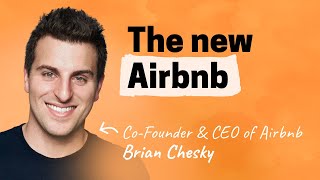 Brian Chesky on Founder Mode: Run the Company in the Details2023 · 73 min · full transcript
 Brian Chesky on Customer Focus & AI: Rebuilding Airbnb2023 · 69 min · full transcript
 Brian Chesky on Founder Mode: Building in the AI Era2025 · 83 min · full transcript
 Brian Chesky on Design Leadership: Running the Boardroom2023 · 29 min · full transcript
 Brian Chesky on Founder Mode: The CEO as Chief Product Officer2024 · 42 min · full transcript
- What changes did Brian Chesky make to Airbnb after taking back control?
- What is Brian Chesky focused on now that Airbnb is scaling?
- Why did Brian Chesky stop deferring to more experienced executives?
- How does Brian Chesky think companies should organize in the age of AI?
- What is Brian Chesky's management philosophy?