Brian Chesky on Product Philosophy: Trips, Belonging, and Trust
What Chesky talks about
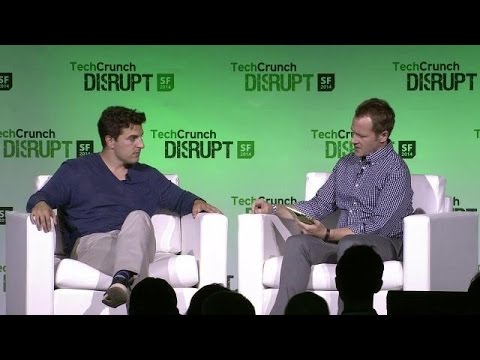
Brian Chesky took part in this Q&A at TechCrunch Disrupt in 2014 about Airbnb’s product philosophy, trips, belonging, trust and safety, and regulation.
Also known as: Airbnb's Brian Chesky | Disrupt SF 2014; TechCrunch Disrupt SF 2014; Airbnb's Brian Chesky.
Brian Chesky frames Airbnb less as a place to book rooms and more as a company in the business of trips. He says the goal is to become present across the full travel journey, not just the place you sleep.
He also argues that Airbnb’s deeper purpose is belonging, and that the brand, product experiments, and host education should all support that mission. The discussion covers Experiences, city partnerships, trust and safety, and how the company responds to regulation.
Ryan Lawler moderates the Q&A, with an intro speaker briefly introducing Chesky.
In his words
“We're in the business of trips.”
“Our brand to become a universal symbol for something that's very important to us”
“The future, the economy is going to increasingly become empowered by people.”
Key points
- Airbnb should be understood as a marketplace, not a hotel company.
- The company’s real business is trips, not homes or space.
- Airbnb wants to extend beyond lodging into the full travel experience.
- Belonging is the core purpose behind the brand and product direction.
- The company is becoming more proactive on trust, safety, identity, and bad actors.
- Regulation should be handled city by city through partnerships and compliance.
- He sees the platform as part of a broader shift toward people-powered commerce and reputation.
Full transcript: Brian Chesky, Disrupt SF Q&A (2014)
Our next guest is a really, really cool guy. A lot, a lot to be proud of for sure. I actually rented out my Airbnb in New York to come here. So Brian, your cut is backstage after the interview. Please welcome Brian Chesky, co-founder of Airbnb, and Ryan Lawler, our (applause) moderator. How's it going? Good, thank you for having us here. Yeah, thanks everybody for making it back from lunch. Brian had kind of a crazy morning. You were at the Apple event? Yeah. What did you see there? Well, the first thing I saw was...
A pretty unbelievable production. The place was completely electric, and obviously, I—obviously everyone knows the news, the phone, which we were able to see in person, was pretty, pretty awesome. It was really insane. And YouTube played it completely live at the very end. It was pretty amazing. Another funny thing was they—Tim Cook asked everyone, like, "Stand up if you're an Apple employee," and almost the entire place stood up. So it was like this huge house of just Apple employees. It's pretty cool. So how does that work? Do you just get really cool perks like that because your company is worth like 10 billion dollars? I—I got invited. Joe and I got invited because we're friends with Johnny I. Okay, so I don't know why other people get invited, but we just happen to know him because he's a designer and we...
Admire him, awesome. Um, so, so yeah, you recently raised a big round of funding. You're valued at about 10 billion, is that right? Last round? Okay. All right, so that puts you around companies like InterContinental, Hyatt, Wyndham. Um, is that a fair comparison on valuation, like that? Um, I, yeah, I, I, I don't think, like, comparing valuations, first of all, is like a really important metric. I think I've always thought of us as much more of a marketplace than anything else. So, I think like a more comparable company to think of us as like a marketplace, like eBay. In fact, when we launched Airbnb, it was originally called AirBnB, and breakfast.
And we entered, why, commentator, and like a lot of people now are called the Airbnb of or the Uber of, and we were not there of anything because A didn't mean anything back then. And so Paul Graham said you should say either you're the eBay of space because eBay was huge and everyone's got space. And so we always kind of thought of ourselves as the eBay of space in the very early days. And I would become much more than that, but I don't—I don't think the valuations are like an important metric. And it's funny, like when you're a public company, no one leads the first sentence of an article with like Google, the $400 billion doll company. But it's—there's an obsession obviously with private companies. And I just don't think it's the most important thing to focus on. But it is—it is interesting though that I mean, what does it mean for you as a company to be a hospitality company with no actual real?
Assets of your own. Um, well, the hotels don't actually own most of the assets, so almost like the big misnomer about hotels that they own the hotels—most of them actually are in a very similar business to us. So I met with a couple executives of hotels and they actually say, you know, "It's funny, your model isn't that much different than ours." Most of the hotel companies like Hilton and Marriott do not actually own their hotels. They have people that manage them, that people own them, and they're basically like a franchisee. And in a weird way, we're kind of like that too, except we're more decentralized. Okay. All right, so you're not a hotel. We're not a hotel, but you're adding a lot of sort of perks for hosts. You're, um, you know, sort of standardizing what some of these listings will look like. You're giving
Out, uh, you're giving out fire alarms for some hosts. You just, uh, announced that you're giving out like Nest thermostats, um, neighborhood guide stuff like that. Um, so what's next? I mean, what are the other things that you're looking at to help hosts and make this a better experience for guests? Yeah, so, um, you know, what we do today is we provide homes and we actually started by providing rooms all over the world. And just to give you a sense of where we are today before I say where we're going, um, our record was about two weeks ago. We had about 420,000 people staying in an Airbnb, and, you know, we'll have close to, you know, a...
Million homes around the world, and, you know, we had people staying that single night from 160 countries. So this has gone to a massive scale kind of overnight. It's been a pretty amazing story. And at our core, though, we're not just about homes for trips. We think that people, like if you go to Paris, you're not going to Paris to stay in a home. You're going to Paris because you want to experience Paris. When you go there, you need to happen to have a home to sleep in. And so we want to be much more of a part of the trip than we are right now. So, is that what—that's what experiences are, right? I mean, people in life want to have experiences. And at the heart of it, we want to make sure that every trip that you have on Airbnb is a great trip. Now, the thing is—
If you go to Paris, you go to New York, you go to Tokyo, a portion of your trip is in the house, and we're not present currently in the rest of your trip. And so, I think one of the things we're really looking at is how can we become more present throughout the rest of your trip so we can make that trip an amazing experience. And it really maps back to what we're really—our core purpose is. And it's the idea that if we're truly successful, you know, we're going to create a world where you can truly bring people together and create a sense of belonging. Okay, but you have a product which is testing right now called Experiences, where you're allowing hosts to not just be a host of, you know, a home or a listing that someone stays in, but a host that can be like a city guide or take you on a tour, stuff like that. So
That's what you're talking about. Well, yeah, that is one of the things we're working on. That's a bit of an experiment we're doing. We have a lot of other experiments happening right now, kind of all over the world, and the idea is that hopefully over time we can start to package these things together to create a much more meaningful experience for when you're traveling. Okay, so what about other value-adds, like pickups at the airport or dry cleaning, or, you know, things that, you know, not to nail that hotel thing, things that like high-end hotels would offer? Yeah, well, I think like the hotels are primarily focused on the in-room experience. They want to do things like room service. We'll be able to do a lot of different things the hotels can do as well, but one of the things we're really looking at is also doing things when you're out and about during your trip. So I think there will be a lot—
—of things. I don't think necessarily we'll be the ones to do everything. I think, you know, we can partner with other companies. If a company's doing something really interesting, we'd be happy to partner with them so we make it more seamless for you to have that experience when you're traveling. But, you know, one of the things we did a few years ago is we had to ask ourselves, what business are we in? Are we in the business of homes? Are we in the business of space? We made a decision a couple years ago; we said we're not in the business of homes or space, we're in the business of trips. That's what we're in the business of. You travel to have a trip, not to have a space. And so space is a part of it, but we're in the business of trips. And we created this thing that we call Snow White. It was basically we storyboarded out what the perfect trip would look like, and we said we're only present right now in a few of these frames and we want to get to the place where we're present throughout the entire journey. And so obviously, like dining in homes is—
—one experiment we're doing. You know, we have tours, that's another experiment, but there's a lot of different things. We haven't officially unveiled anything. We want to make sure when we launch something, it's truly amazing. Okay, um, why did you roll over for the Attorney General in New York? Roll over? Well, um, we got subpoenaed by them in late October, where they asked for data on 15,000 people. We challenged them in the New York State Supreme Court. We put up a fight for over six months. Very few companies have ever done that, actually. It doesn't happen very frequently. And we initially won the case, and then—
—the judge narrowed the subpoena, and it was very clear that we weren't going to win the next case. And so we kind of all along realized that we and the attorney general agreed on a few things. We agreed that the ordinary New Yorkers are trying to make a living—they're totally acceptable behavior. We also agreed that there were a few bad actors that weren't living by our own standards of enriching cities, and so we obviously complied with that subpoena, and we had to. That was a court order. Okay, but you shut down those homes? They were actually shut down long ago. Most of the people whose data is out now, yeah, they were shut down months ago. Okay, but you were happy to, you know, take money from their bookings for years. What actually changed? Why—
—are they bad actors now and not before this subpoena was issued? Right. Well, I mean, I think that, like, to be honest, we didn't understand the scope of activity happening in New York. So there was a very narrow group of people in New York that were turning homes into hotels. It was obviously not the vast majority of our activity. And when this activity was brought to us, you know, we obviously took action. And it kind of, you know, the marketplace grew so fast for us. But, you know, this was a very, very small minority of people. Okay, but you still handed that user data over to the Attorney General. Yeah, we had to. Isn't that kind of like throwing your users under the bus? I don't think so. I mean, honestly, we've protected the vast majority of people in New York. We put up—
—a fight for almost nine months in the New York State Supreme Court, and, you know, we fight to the very end until the end of a subpoena. Okay, does this set a precedent for other markets, like won't regulators or government agencies, you know, in other places say, "Well, you did this for New York, you shut down these listings, you gave over user data so that we could, you know, go after that for running illegal hotels"? Can't any city just say that now? Well, we're actually already in discussions with dozens of cities, and we've been in discussion with Portland and cities all over the country and actually all over Europe to work on integrations around making sure that, you—
—know, we have ways to comply with taxes like we did in Portland. And so, you know, when cities give us subpoenas, we'll of course comply with them, as long as they're not overly broad. You know, we always have to comply with subpoenas that are very narrow. Any company would. But, you know, the ultimate thing we want to do is we want to be able to enrich cities that we serve, and so we're in 34,000 cities. And so we're now in discussions with dozens of cities, not in every city, but dozens of cities, with city regulators. I've met numerous kind of policymakers, supervisors, and cities, and the idea is how can we work together to enrich cities? And this program we put out is this thing we call Shared City. And we announced this in Portland, and it's an integration between us and Portland, and we did a number of things. The first—
The thing we did is we provided, you know, free smoke detectors with carbon monoxide filters in homes in Portland. We provided, uh, you know, we're promoting Portland as a destination. And so, there's a bunch of things we're doing. We're doing this city by city around the world. Okay. Um, earlier today on Kim's panel, David Chu is here and he talked about the legislation he's putting forward for San Francisco. Um, now that would create a legal framework for Airbnb, right? Now, but it would also mean taking down the same types of listings where, you know, a small percentage of users have a large number of listings. Yeah, right. Yeah. Um, why don't you just do that everywhere? You obviously know who
these H are that are running these hotel operations. Um, and, you know, that it's going to be a problem in every market that you're in. Why wait for—why wait for the order to come down from a regulator? Yeah. Well, it's not actually a problem in every market. There are a lot of cities throughout Europe and around the world where they're very happy to have types of business where people are managing multiple units. But we've actually been taking down lots of multiple dwellings all over cities around the world. And the notion that there's a lot of these people in San Francisco—just false. We don't have a lot of that activity here. Okay? I mean, there was a study several months ago that said there were about 500 hosts that together had 1,500 listings.
Host with multiple listings? Um, so these people exist. Yeah, I don't—I don't—I don't know about that study. I think that was a San Francisco Chronicle study. I'm not sure about that data. But the vast majority of people in San Francisco are ordinary people renting out their primary dwellings. We don't have that many people renting multiple units. And the other thing is a number of times people are renting homes on behalf of other people who actually live in that home. And so, in a number of cities, that's totally fine. So, in other words, if I am away, someone else can use my account to manage my listing for me while I'm gone. A lot of cities say it's completely acceptable behavior. And these people are getting thrown in with these property managers who aren't the same kind of business. So the idea is you gotta be a little more nuanced city by city. But we're already partnering with cities—I mean, we're complying with San Francisco, complying with Portland. We're
working city by city all over the world. You kind of gotta do it on a case-by-case basis. You don't want to have a blanket kind of policy because, you know, unless it's something that applies to every city in the world. So, what kind of lesson has this been for you in politics? Well, I've—it’s been an overall lesson for me in managing a marketplace. Um, I've learned a couple things. The first thing I've learned is just generally in politics, so much comes down to understanding people have an opinion about you and it's based on what they understand. And sometimes their opinion's based on the people who have gotten to them. And so, if you reach out to a politician to educate them and you get to know them, you may be on a good basis. If you wait for them to, like, kind of hear from other constituents and you're really slow in education, then you start in a really bad place. So that's been a good lesson for
me. Like the hotel lobby that you're not competing with—I'm sorry, like the hotel lobby? Oh yeah. Well, I mean, we have good relationships now with the hotel industry and there are some people that weren't super happy with us. But the other thing I learned was just generally principles about managing a marketplace. So, when we started Airbnb I took the kind of Craig Newmark approach to managing a marketplace. Craig Newmark's the founder of Craigslist and he thought, you know, marketplaces or classified sites were kind of like, uh, immune systems. They had communities and the communities should police and moderate itself. And so, we thought, you know, our community fundamentally is an immune system and if bad experiences are happening, you know, that's not a terrible thing because ultimately the community will moderate and remove them over time. What I've learned is that, you know, that's, you know,
a bit unrealistic. Like, we need to be much more proactive. So, over time, we've gotten much more proactive whether it's on trust and safety, removing bad actors, providing insurance for people, being more proactive a regulator. So, these are things that you start to learn. You get more proactive over time. Okay, and that was a pretty good lesson. Okay, so I want to put some—something up on the screen. Up yet? Oh, there it is. This thing. Uh, what body part does that look like to you? I think it's an ear. It's—I guess it's whatever you're thinking about. A lot of people have very dirty minds then.
Yeah. Uh, but, but seriously. So, um, we don't need it anymore. Uh, we all know what this looks like. Um, you—you partnered with, um, Design Studio on this? Yeah. How many people were part of that process and how long did it go as far as design process? Yeah. Oh, I mean, we had quite a few people. We had dozens of people. I know where you're going with did anyone bring this up? And, yeah, of course. And, yeah, some people had brought it up. And ultimately, um, you know, I just—we just fell in love with this symbol and it wasn't the first thing we saw. I think, you know, people obviously have quite dirty minds. I mean, I think what we really wanted to do was, you know, we wanted our brand to become a universal symbol for something that's very important to us and the thing that's
Important to us, much more than rooms or homes, is this idea of belonging. And so, we want to come up with the universal symbol of belonging. And I love this symbol so much because I think it represents, like, kind of love upside down, like a heart embracing. And obviously, people can see other things with it, but I think one thing we were trying to do was get people to forget the old logo. And I think if there was ever a way to get people to forget the logo, it's something like this. And so, we obviously, it took the World by, like, the media by storm. Not in maybe completely the way we anticipated it, but we got people talking about it, and really happy the work the team did. So, all press is good press on this, I think. On this case, all press is good press for sure. And, um, yeah. And I think it's been quite a
You know, the other thing is that, like, the one, one other thing I told the team is I said, don't worry about, like, agitating a little bit in social media and the press. Like, if you put out something and the whole world doesn't love it, that's okay. Most the worst thing in the world is putting something out and no one caring, no one ever paying attention to you. That would be, or just, just awful. It just means you're irrelevant. So, we want to become part of this kind of social conversation, a bit of part of pop culture. And I think for that week that we launch this, we were okay. Um, so, I was looking at your investor list and you really have, like, every one. Uh, you've got Sequoia Founders Fund, Andreessen Horowitz, Uh, Crunch
Fund. Um, who's been the most helpful? Um, we've had some—I mean, it's hard to pick one person. They've, they, so many of them been so, so helpful. I would say a few that come to mind. I mean, obviously Alfred Lin is on our board and Jeff Jordan on my, on my board, the two board members were been amazing. Um, Ron Conway has been utterly unbelievable to us, and he's been really great. Um, you know, Mark Andreessen has been super helpful, Reid Hoffman also, and then Paul Graham and Jessica Livingston from Y Combinator. So, it's hard to really pick any one person. Basically, everyone has been the best, I'd say just about everyone. I like the one thing I said is like when we brought investors in, I, I, I
Kind of view them as, as partners, like co-founders. You know, you can't fire an investor, so you got to make sure you can live with them. And so, I thought if we're going to have investors, they got to be people that we really, really want, love. And so every single round we did, the first thing is we never picked the highest price. So every single round, we could have gone a higher price, but we ended up picking the partner that was best for us. And we wanted somebody that we could have a really good relationship with. And until the last round where we did get some mutual funds in, we had this really interesting trend where every single person who ever invested in us had started to run a company. And this is, like, true of about a dozen people, and this is pretty unusual. And the reason was we wanted people that actually add value. And so, I've been pretty shameless about at just pinging them. They'll, they'll all know that I kind of bother them a lot for help, so they've been
Really great. Can you give me an example? Like, what's the type of thing that you bother someone for? Um, Mark Andreessen, one example. Um, TechCrunch, obviously mid-2011, we had the apartment trashing incident, and Mark Andreessen called me and I wasn't exactly sure, like, how to deal with it. And obviously, we need to have a response, but the response had to have some dramatic action behind it. I couldn't just apologize and say, "I'm sorry, sorry this happened." There needed to be something substantial behind it. And the thing we came up with was this thing called the Airbnb Guarantee, which we have today. And at the time, we were going to do a $5,000 guarantee. And this is the night before we're about to announce it, and Mark Andreessen comes to my office at midnight and I'm showing him the blog
Post, and this is, like, the apology post I put out that I know TechCrunch put out. And he takes the post and he adds two things. The first thing he takes is, he takes the $5,000 guarantee and he adds a zero at the end, said, "Make that $50,000." Then he told me to add my personal email to it, which I did. And at the time, the $50,000 guarantee seemed totally crazy. I mean, we had no—because we basically gave people 30 days if we wanted to restore, like, confidence, if there's been any problem in 30 days, tell me what's happened. And we had pretty flexible policy back then and for all I knew, we would have used the entire round to pay for the policy. And so, having an investor give me confidence that we should do something that dramatic to restore confidence was really, really great. So that's just like one example. Okay. Um, I'm glad you brought that up, uh, because you
Know, we all know about the, you know, the trash meth house and all that, um, but over the last six months, you know, you've had, you've had stories about sex parties and squatters and listings with, you know, 22 beds stacked up against each other in one house. Um, I mean, are we just sort of immune to this now? Um, is it just that you're so big that we don't, we don't care quite as much when these things happen? Well, I mean, I think the first thing we need to do is put these incidents in perspective. When you have 400,000 people a night, it's the size of a small city. So if you were to imagine presiding over a city and you imagine, imagine a city of 400,000 people, imagine all the things happening in that city. There'd be a lot of crazy
Stuff happening. I think the vast majority of what's happening at Airbnb is good, and the reason why is because there's no anonymity in the platform. So, there are incidents, but I think if you look at us as a percentage, they're going down dramatically, and they're not very common. Is there more that you can do? I think there's absolutely always more we can do, and every time something like happens, just really, like, it's pretty outrageous. Like, these stories were outrageous. I think there's continually more we're going to do. And on the trust and safety idea front, we want to go even further than where we've already gone. You know, when we started Airbnb, there was no insurance. We didn't verify people's identities. You could be totally anonymous, and you could book an experience. Now, all that's turned on its head, and over time, what we want to do is provide even more authenticated identity. So, over time eventually, we want everyone to be vetted and verified.
On Airbnb, and we vet and verify everyone in a way, but we want to just go deeper and deeper on it. All right, a few days ago, maybe a week ago, something like that, you announced a conference. You have this Airbnb Open conference. I can kind of understand, you know, when Box or Salesforce or, you know, some company that has like a developer ecosystem having a conference, but this is just for hosts. Yeah. Why is it important for you to do that as a business?
So about a third of our hosts depend on Airbnb as a job, and two-thirds depend on it to pay the rent or mortgage. So Airbnb is really, really important. And one of the things our hosts tell us is they say Airbnb, we think of you as partners. And so we really are partners with them, right? Our customer is not the host, our customer is the guest, and we're partnering with the host to provide an experience for the guest. So any company that has partners, they'll often bring them together, right? And so that's just a box. And so we think just like eBay had eBay Live, we have this event that we're going to be doing, and it's just a way to bring our hosts together to make them feel like partners. And this is something they've been requesting for a number of years. We're starting really small the first year, though. I think we'll only have about a thousand hosts, which is not a very big event given that we're going to have obviously over a million homes around the world. Are these hosts like people who are just paying to be a part of it, or you inviting them? Like, what's the process? We are
inviting them, and we're inviting them starting with our very top post. I don't think they're paying. I mean, they'll pay their way, but they don't have to get a ticket to go in. And they're just generally people I would assume that are very, very passionate about the Airbnb community. They're like superhosts, people who care deeply about this idea of hosting. They love hospitality, and, you know, one of the things I would love for us to do is become the largest educator of hospitality on the planet. So, you know, at the end of the day, what we provide is hospitality. You know, we are really a hospitality company in that sense of the word. We're not a hotel company, but we are a hospitality company. We're welcoming people into our homes. That's what we're doing when we host on Airbnb. And so, we want to be an educator of hospitality, and this event is going to be really focused on providing education about how you can be a better host. And our hosts are really excited about
this. All right, and part of that started with you hired this guy, Chip Conley. Yeah, so Chip Conley is the founder of Joie de Vivre Hotel Group. They started the Hotel Vatal and the Hotel Phoenix around here, and he's been amazing. You know, when we started Airbnb, I definitely did not think we were a hospitality company, so that's what hotels do. And as I learned about hospitality, I realized hospitality is really just providing service with heart, and what we do at Airbnb is that exact thing. But the difference between us and really every other hotel company is that we aren't really like a mass-produced thing. We are an economy that's powered by people, and every one of these people are providing hospitality, and they're not mass-produced. And part of the concept when we did the brand launch was we wanted every single person to have their own mark, their own identity. And I think this leads to where I see a lot of
commerce going in the future. Whether it's us, Lyft, Uber, and a lot of these companies, I think in the future, the economy is going to increasingly become empowered by people. More and more people have power of the economy to be able to produce and create things, and the reason this will happen is because they'll have reputations, and this is one of the things we've been doing. Okay, so I see that, and it's an obvious trend, but is it a good trend? Is the 1099 economy good for the world? Good for you? Have record underemployment since the Great Depression. Most of the people that have worked on Airbnb, that are hosting Airbnb, didn't have an income before. I think anybody that unlocks a lot of inventory in the world, allows them to monetize the most expensive asset that they can't create, is great. And I think the 1099 world that's like saying it's a hobby. Well, a lot of hobbies can stay as
Hobbies, and in the future, people may have multiple income streams. But then, more and more people can decide to become professional. We're seeing this probably more with ride-sharing, with Lyft and Uber, and I think that's actually a great thing for the world. Okay, well, uh, we're out of time. That thing's flashing at me. So, thanks for being here. Thank you very much, Ryan.
From YouTube captions, lightly punctuated for readability. Timestamps link to the video above. Errors are possible.
Cite this recording
Brian Chesky, “Disrupt SF Q&A (2014)”, TechCrunch Disrupt, 2014. Transcript and video: Thinkers Archive, https://thinkersarchive.com/brian-chesky/product-philosophy-disrupt-sf-2014/
Quoting a passage? Link to its exact moment: every timestamp above has its own anchor (for example https://thinkersarchive.com/brian-chesky/product-philosophy-disrupt-sf-2014/#t-131).