Brené Brown on Vulnerability
Brené Brown argues that vulnerability is not weakness but the courage to face uncertainty, emotional exposure, and risk in order to build connection, creativity, trust, and love.
- Vulnerability means uncertainty, risk, and emotional exposure, not weakness.
- Brown treats vulnerability as the core of courage and the start of any brave life.
- Love, belonging, joy, trust, empathy, and creativity all depend on vulnerability.
- Armor like perfectionism, blame, numbing, and people-pleasing blocks vulnerability and keeps people disconnected.
- The practice is to tell the truth, accept imperfection, and stay open even without guarantees.
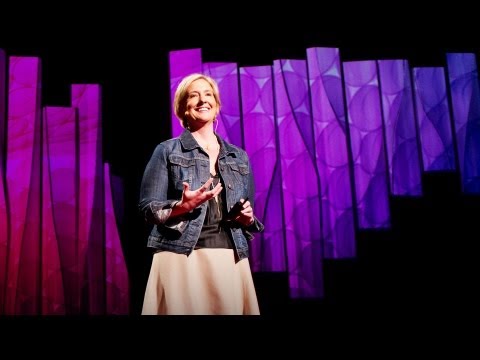
Vulnerability is courage, not weakness
Brown’s central move is to redefine vulnerability. She does not treat it as fragility or oversharing, but as the experience of facing uncertainty, risk, and emotional exposure. In her view, if an act contains those elements, it belongs to courage, not weakness.13
That is why she keeps linking bravery and vulnerability so tightly. Showing up when you cannot control the outcome is, for Brown, the clearest picture of courage. A brave life is not fear-free; it is a life where fear and courage often appear together.45
“Vulnerability is our most accurate measurement of courage…”TEDxHouston talk, 2012 · full transcript →
Connection, love, and belonging require being seen
Brown starts from a simple claim about human life: people are built for connection. But connection only becomes real when a person allows themselves to be seen as they are, instead of managing every impression or hiding every imperfection.6
This is why vulnerability matters so much. Brown says it is the path to love, belonging, intimacy, trust, and joy because those experiences all involve openness without guarantees. To love wholeheartedly is to stop demanding certainty before giving your heart.8910
Her language of wholeheartedness points to living all-in rather than from behind a performance. Wholehearted people are not flawless or untouched by pain; they are more willing to be imperfect, authentic, and present.11

“Because to feel this vulnerable means I'm alive…”TEDxHouston talk, 2010 · full transcript →
Shame makes vulnerability feel dangerous
Brown’s work on vulnerability is inseparable from her work on shame. She describes shame as the fear of disconnection: the worry that if people really know or see something about you, you will no longer be worthy of connection.12
She sharply distinguishes shame from guilt. Guilt says you did something bad; shame says you are bad. That difference matters because shame attacks identity and pushes people to hide, armor up, or withdraw.1314
The way through shame is not tougher self-judgment but empathy. Brown argues that empathy restores connection, while secrecy, silence, and judgment let shame spread. Vulnerability becomes more bearable when people meet struggle with a truthful, humane response.15161718
“Empathy's the antidote to shame.”TEDxHouston talk, 2012 · full transcript →
Armor protects us briefly but disconnects us over time
Brown thinks many common habits are really defenses against vulnerability. Perfectionism, numbing, blame, cynicism, and people-pleasing all promise protection from uncertainty and hurt, but they also reduce courage and connection.192021
She ties this defensive style to scarcity: the background belief that there is never enough and that we are not enough. In that mindset, ordinary life can feel unsafe or insufficient, so people start bracing for disappointment or trying to control everything.2223
But armor has a cost. Brown warns that people cannot selectively shut down painful emotions without also dulling joy. The same openness that exposes us to fear is also what lets us feel love, faith, creativity, and delight in ordinary moments.20924

“Vulnerability is absolutely at the core of fear and anxiety and shame…”TEDxKC keynote, 2013 · full transcript →
Practicing vulnerability means telling the truth and staying in the hard
Brown makes vulnerability practical by tying it to truth-telling. It is the willingness to express what is true about who you are and what you feel, even when that honesty may disappoint people or leave you exposed.252627
That practice needs boundaries and self-respect. Brown is not calling for indiscriminate disclosure; she is pointing toward honest, grounded openness in relationships, creative work, and leadership. Being brave means staying with hard conversations and hard feelings rather than escaping into performance or control.28
In work and leadership, the same logic holds. Innovation, trust, empathy, and creativity all depend on people who are willing to risk being seen, to ask for help, to give and receive feedback, and to get back up after setbacks.303132

“Vulnerability is, I believe, and it's probably 60% of the book, the only path to courage…”CBS This Morning interview, 2018 · full transcript →
Brown on vulnerability, in her own words
“Vulnerability is our most accurate measurement of courage…”
“There is no courage without vulnerability.”
“…vulnerability is also the birthplace of joy, of love, of belonging, of creativity, of faith…”
“Vulnerability is the path to love, belonging, joy, intimacy, trust, innovation, and creativity.”
“…being willing to express the truth no matter what.”
“Armor gets in the way of us being brave.”
Where to watch
 Brené Brown on Shame Resilience: Vulnerability Is Not Weakness2012 · 21 min · full transcriptBest short statement of Brown’s core claim that vulnerability is courage and the key to shame resilience.
 Brené Brown on Vulnerability and Connection: The Power of Being Seen2010 · 21 min · full transcriptBest starting point for understanding why vulnerability matters for connection, worthiness, and wholehearted living.
 Brené Brown on Invulnerability: The Price of Emotional Armor2013 · 16 min · full transcriptBest for seeing the costs of avoiding vulnerability through numbing, perfectionism, and foreboding joy.
 Brené Brown on Daring Leadership: Vulnerability Is the Path to Courage2018 · 6 min · full transcriptBest concise application of vulnerability to leadership, trust, and hard conversations.
 Brené Brown on Vulnerability and Shame: Living Brave with Oprah2015 · 21 min · full transcriptBest personal explanation of vulnerability as telling the truth about who you are and what you feel.
Questions people ask
- Can you live a brave life without disappointing people, according to Brené Brown?
- How does Brené Brown say to scale daring leadership in organizations?
- What did Brené Brown say about being enough?
- What did Brené Brown say about vulnerability and connection?
- What did Brené Brown say about why courage requires vulnerability?
- What did Brené Brown say vulnerability really is?
Sources
Every quote above, word for word from the transcripts. Numbers match the text.
“Vulnerability is our most accurate measurement of courage…”
“There is no courage without vulnerability.”
“It's not winning or losing. It's having the guts to show up and be seen when there are no predictions of outcome…”
“…most of us are brave and afraid in the exact same moment all day long.”
“…connection is why we're here…”
“Vulnerability is the path to love, belonging, joy, intimacy, trust, innovation, and creativity.”
“…vulnerability is also the birthplace of joy, of love, of belonging, of creativity, of faith…”
“To love with our whole hearts even though there's no guarantee. And that's really hard, I can tell you as a parent, that's excruciatingly difficult. To practice gratitude and joy in those moments of terror when we're wondering, "Can I love you this much? Can I believe in this as passionately? Can I be this fierce about this?" Just to be able to stop and instead of catastrophizing about what might happen, to say, "I'm just so grateful. Because to feel this vulnerable means I'm alive." And the last, which I think is probably the most important, is to believe that we're enough. Because when we work from a place that says, "I'm enough," then we stop screaming, and we start listening.”
“I have not loved you with my whole heart…”
“And it turned out to be shame. And "shame" is really easily understood as the fear of disconnection. Is there's something about me that if other people know it or see it, that I won't be worthy of connection? The things I can tell you about it is: it's universal, we all have it. The only people who don't experience shame have no capacity for human empathy or connection. No one wants to talk about it, and the less you talk about it the more you have it. What underpinned this shame, this "I'm not good enough," which we all know that feeling, that "I'm not blank enough, I'm not thin enough, rich enough, beautiful enough, smart enough, promoted enough.”
“Shame is a focus on self, guilt is a focus on behavior.”
“The thing to understand about shame is, it's not guilt. Shame is a focus on self, guilt is a focus on behavior. Shame is "I am bad." Guilt is "I did something bad." How many of you, if you did something that was hurtful to me, would be willing to say, "I'm sorry. I made a mistake?" How many of you would be willing to say that? Guilt: I'm sorry. I made a mistake. Shame: I'm sorry. I am a mistake. There's a huge difference between shame and guilt. And here's what you need to know. Shame is highly, highly correlated with addiction, depression, violence, aggression, bullying, suicide, eating disorders.”
“Empathy's the antidote to shame.”
“Empathy fuels connection; sympathy drives disconnection.”
“If you put shame in a Petri dish, it needs three things to grow exponentially: secrecy, silence and judgment. If you put the same amount in a Petri dish and douse it with empathy, it can't survive. The two most powerful words when we're in struggle: me too. And so I'll leave you with this thought. If we're going to find our way back to each other, vulnerability is going to be that path.”
“Empathy is "I'm feeling with you." Sympathy is "I'm feeling for you." And to me, I always think of empathy as this kind of sacred space when someone's kind of in a deep hole and they shout out from the bottom and they say, "I'm stuck. It's dark. I'm overwhelmed," and then we look and we say, "Hey," and climb down, "I know what it's like down here and you're not alone." Sympathy is dark deep hole, "oo, it's bad," uh-huh uh.”
“Armor gets in the way of us being brave.”
“Here's the consequence to numbing that I've learned, you know. And I'm, as a vulnerability researcher, I've spent the first six years of my research studying shame, empathy, and courage, and the last four years studying joy, authenticity, love, and belonging. And one of the things that I learned that was very startling for me personally and everyone I've ever met is that you cannot selectively numb emotion. When we numb the dark emotion, when we numb vulnerability and fear and shame of not being good enough, we by default numb joy. We cannot selectively just numb the dark emotions. We have interesting…”
“Because why? Why? Because it gives us some semblance of control. It gives us some semblance of control. But here, if you enjoy blaming, this is where you should stick your fingers in your ear and do the n n n n thing because I'm getting ready to ruin it for you because here's what we know from the research: blame is simply the discharging of discomfort and pain. It has an inverse relationship with accountability, meaning that people who blame a lot seldom have the tenacity and grit to actually hold people accountable because we expend all of our energy raging for…”
“We live in a culture that tells us that there is never enough…”
“Vulnerability is absolutely at the core of fear and anxiety and shame…”
“…the ordinary moments of our lives, is really where we can find the most joy…”
“…being willing to express the truth no matter what.”
“Is being willing to express the truth no matter what. The truth of who you are, the essence at your core, of what you're feeling in any given moment. It's being able to open up your soul and let it flow so that other people can see their soul in yours. So, this is the first question. I'm getting ready to start crying, so I don't know that this is good. Okay? Yeah. Give me an example from your life. Give me a specific thing that feels really vulnerable for you still after all of your experience. What's still vulnerable for you, not professionally or personally? Uh...”
“You cannot live a brave life without disappointing some people.”
“Vulnerability is, I believe, and it's probably 60% of the book, the only path to courage…”
“…vulnerability is the birthplace of innovation, creativity and change.”
“…it is the birthplace of innovation, creativity, trust, empathy.”
“Operationalize those in behaviors. Do you know what behaviors support your values? What don't? Three breathing trusts: Can you build trust and be trustworthy? And the last one, which I think was really interesting, was learning how to get back up, learning how to rise, because we found that people are more willing to be courageous upfront if they know how to rise. Yeah, I mean, that's why—I'm sorry John, that's what I called this a masterpiece, because to just sum up everything. And then you write, courage is contagious. To scale daring leadership and build courage in teams and organizations, we have to cultivate a culture in which brave work, tough conversations, whole hearts, the expectation and armor is not unnecessary or rewarded. That's the thing, because people want to know, how do we scale this type of behavior? Yeah.”
How this guide was made: drafted with AI from the full transcripts of the recordings cited, then checked: every quotation must match a transcript word for word and be the speaker's own words, and an independent review gates accuracy. Methodology and corrections.