Brené Brown on Vulnerability and Courage: The Birthplace of Creativity

What Brown talks about
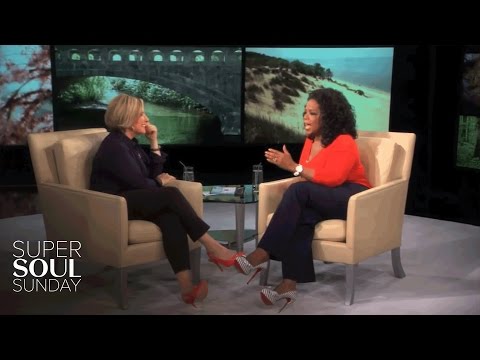
Brené Brown joined Oprah on OWN's Super Soul Sunday in 2015 for a television interview about vulnerability, shame, courage, and wholehearted living.
Also known as: The Two Most Dangerous Words in Your Vocabulary; SuperSoul Sunday interview; OWN interview with Oprah.
Brené Brown and Oprah discuss the original meaning of courage as sharing all of yourself with your whole heart. Brown connects that idea to storytelling, vulnerability, and wholehearted living.
The conversation turns to scarcity culture, internalized fear, and the feeling of “not enough.” Brown argues that this climate shuts people down and makes vulnerability the first casualty.
Brown says vulnerability is not just about pain; it is also where creativity, joy, faith, love, and innovation begin. She closes by stressing that creativity and innovation require the willingness to fail.
Oprah hosts the conversation and Brown speaks throughout.
In her words
“Share all of yourself—share your whole story with your whole heart”
“We now live in a culture that measures itself, ourselves, by how many likes we get on Facebook?”
“Vulnerability is not just about fear and grief and disappointment.”
“There is no innovation and creativity without failure. Period.”
Key points
- Courage originally comes from cor, meaning heart, and meant sharing your whole story with your whole heart.
- Modern culture rewards hustle and external validation, which feeds a sense of never being enough.
- Fear can become internalized, shaping how people act, speak, and relate to one another.
- Scarcity culture makes vulnerability harder because people shut down to protect themselves.
- Vulnerability is the birthplace of creativity, joy, faith, love, and innovation.
- Innovation and creativity require openness to failure.
Full transcript: Brené Brown, Super Soul Sunday interview with Oprah (2015)
I love in the, in the TEDx talk, I think it was a TEDx talk where you talk about the original definition of courage. Can you share that? Yeah, I love that. I do too. It's from the Latin word "cor," meaning heart, and so the original definition was to share all of yourself—share your whole story with your whole heart. So an act of courage was an act of storytelling, which I think is true. I think so many of us, you know, I watch Super Soul Sunday and I love when you talk. You know, you talk a lot about the ego. Yes. To me, I call the ego "The Hustler." He's my—he's my Hustler. Yeah, that's good. That's a good term for it. Yeah, yeah, he's the Hustler, and the ego says to me, you have no inherent worth; you got to hustle for it.
Baby, how fast you're going to run, how high you're going to jump, how many, you know, how many likes do you have on Facebook, how many comments do you have on that post—that's the hustle. Yeah, and isn't it, we now live in a culture that measures itself, ourselves, by how many likes we get on Facebook? For sure. Yeah, yeah, we are. I feel like scarcity culture: never enough, never good enough, thin enough, rich enough, safe enough, certain enough. And, you know what, I think is interesting is I wanted to get your thought on this just because you've also been looking in the faces of people for the last many years, right? Yeah, I started my research six months before 9/11, obviously.
Incidentally, we are afraid. I would say the last 12 years have been marked by a deep fear in our culture. It's like a collective post-traumatic response. Like, all of a sudden, oh my God— I just had a big aha, what? I just had a big finish, finish speaking, but I just got that. I got that in a big way. No, I hope everybody else—I hope other people got it too. Yeah. You know, tell me. No, no, no, you—you go. No, I—well, that was such a big aha. I—I—that—no. I can, when you just said that, I just realized that we shifted from being on alert and afraid of whether it's the orange code or the yellow code, we somehow internalized that.
Fear, and it shows up. It shows up in the bickering and the snarkiness and the—that, yeah. That we have internalized the fear. So we're not worried about what the code alert is anymore because we, we think we're safe there. We got Homeland Security looking at that. But that fear has been internalized. That's what I heard you saying. That's it, there is a thin— That's it, I—I got the high five. I got the high five. Um, no, I think there's like a thin film of terror wrapped around us, and so if it's not I'm not safe enough, I'm not secure enough, it's I'm not liked enough, I'm not promoted enough, I'm not loved enough, I don't have enough, I am not
Enough at the very bottom. Yeah, I'm not enough. Yeah, whoa, that's big. Big, big, big, big, big. Somebody ring some bells; we need some bells to ring on this show. But that's no—that's it. And so guess what the number one casualty is of a scarcity culture? What? Vulnerability. We shut down. We shut down because I'm not... I'm not going to let you know. No, because I'm—not altogether. Yeah, yeah. And the thing is that, like, oh well, we lose a little vulnerability, but vulnerability is not just about fear and grief and disappointment. It's the birthplace of everything we're hungry for: creativity, joy, creativity, faith, love, innovation, and all of that. Yes, and the
whole thing is there is no innovation and creativity without failure. Period. So you got to be open enough to take the risk to fail. Yeah. (music)
From YouTube captions, lightly punctuated for readability. Timestamps link to the video above. Errors are possible.
Cite this recording
Brené Brown, “Super Soul Sunday interview with Oprah (2015)”, OWN / Super Soul Sunday, 2015. Transcript and video: Thinkers Archive, https://thinkersarchive.com/brene-brown/vulnerability-courage-super-soul-sunday-2015/
Quoting a passage? Link to its exact moment: every timestamp above has its own anchor (for example https://thinkersarchive.com/brene-brown/vulnerability-courage-super-soul-sunday-2015/#t-136).