Brené Brown on Scarcity
Brené Brown sees scarcity as the cultural story of never enough, and she argues that it drives shame, armor, and disconnection by making vulnerability feel too dangerous.
- Scarcity is the belief that there is never enough and that we are not enough.
- Its first casualty is vulnerability, so people protect themselves with perfectionism, blame, cynicism, and numbing.
- That protection also blocks what people most want: joy, love, belonging, creativity, trust, and innovation.
- Brown’s answer is wholehearted courage: show up, be seen, practice gratitude instead of catastrophizing, and build connection through empathy.
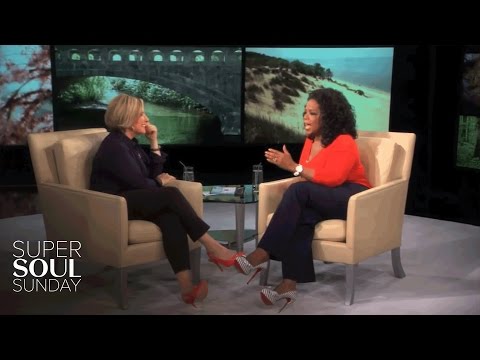
“But that's no—that's it. And so guess what the number one casualty is of a scarcity culture? What? Vulnerability. We shut down. We shut down because I'm not... I'm not going to let you know. No, because I'm—not altogether. Yeah, yeah. And the thing is that, like, oh well, we lose a little vulnerability, but vulnerability is not just about fear and grief and disappointment. It's the birthplace of everything we're hungry for: creativity, joy, creativity, faith, love, innovation, and all of that.”Super Soul Sunday interview with Oprah, 2015 · 3:01
Scarcity means living inside a story of never enough
Brown treats scarcity less as a lack of resources than as a governing mindset. It is the cultural message that there is never enough, and under that pressure people start to measure themselves by external markers and come to feel fundamentally insufficient123.
In her account, this mindset does not stay abstract. It becomes an inner soundtrack of deficiency and self-doubt, making people ask whether they are good enough, safe enough, successful enough, or impressive enough to belong31.
That is why scarcity matters so much in Brown’s work: it is one of the forces that turns ordinary human vulnerability into a perceived threat instead of a normal condition of being alive and connected45.
Scarcity shuts down vulnerability first
Brown says vulnerability is the first major casualty of scarcity. When people are gripped by not-enoughness, they stop revealing themselves honestly because exposure feels too risky, and they shut down to protect against judgment, rejection, or failure67.
This matters because Brown defines courage itself through wholehearted self-disclosure and the willingness to be seen without guarantees. Scarcity attacks that willingness by teaching people to manage appearances and chase approval instead of telling the truth about who they are897.
For Brown, the loss is bigger than tenderness or openness. Once vulnerability is treated as weakness, people lose access to the very capacities they most admire in themselves and in others106.
“But that's no—that's it. And so guess what the number one casualty is of a scarcity culture? What? Vulnerability. We shut down. We shut down because I'm not... I'm not going to let you know. No, because I'm—not altogether. Yeah, yeah. And the thing is that, like, oh well, we lose a little vulnerability, but vulnerability is not just about fear and grief and disappointment. It's the birthplace of everything we're hungry for: creativity, joy, creativity, faith, love, innovation, and all of that.”Super Soul Sunday interview with Oprah, 2015 · full transcript →
The defenses against scarcity are costly
Brown links scarcity to a familiar set of defenses: perfectionism, blame, cynicism, emotional armor, and numbing. These strategies create a sense of control, but they are really ways of discharging discomfort and avoiding the uncertainty that vulnerability brings115.
Perfectionism and external validation are especially tempting because they seem measurable and socially rewarded. But Brown argues that when people define themselves by what others think, they lose the courage to be vulnerable and become trapped in comparison and performance7212.
Numbing is no better. Brown’s point is that people cannot selectively deaden fear, shame, and hurt; when they numb vulnerability, they also numb joy, aliveness, and connection134.

“Here's the consequence to numbing that I've learned, you know. And I'm, as a vulnerability researcher, I've spent the first six years of my research studying shame, empathy, and courage, and the last four years studying joy, authenticity, love, and belonging. And one of the things that I learned that was very startling for me personally and everyone I've ever met is that you cannot selectively numb emotion. When we numb the dark emotion, when we numb vulnerability and fear and shame of not being good enough, we by default numb joy. We cannot selectively just numb the dark emotions. We have interesting…”TEDxKC keynote, 2013 · full transcript →
What scarcity blocks is exactly what humans most need
Brown’s central claim is that vulnerability is not only tied to fear and shame; it is also the birthplace of the experiences people most want from life. Love, belonging, joy, creativity, faith, trust, innovation, and intimacy all require the willingness to risk emotional exposure141510.
That is why scarcity is so destructive. In trying to protect themselves from pain, people cut themselves off from meaning, connection, and even creative work, because there is no creativity or innovation without failure and no creativity without vulnerability1617.
Brown also pushes back on the fantasy that significance lies somewhere grander than everyday life. Scarcity teaches contempt for the ordinary, but she argues that ordinary moments are where joy is actually found18.
Brown’s response is courage, gratitude, and connection
Brown’s answer to scarcity is not invulnerability but wholeheartedness. That means showing up, being seen, and acting with courage even when there are no assurances about the outcome91920.
Practically, she points people toward gratitude as an antidote to foreboding and catastrophizing. Instead of rehearsing loss the moment something precious appears, she urges people to practice gratitude and remember that feeling vulnerable is part of being fully alive21.
She also returns again and again to connection. Love and belonging cannot be negotiated by chasing approval from the outside, and suffering deepens when people are cut off from them; empathy helps restore that bond because connection is what makes hard things bearable22232425.
Brown on scarcity, in her own words
“But that's no—that's it. And so guess what the number one casualty is of a scarcity culture? What? Vulnerability. We shut down. We shut down because I'm not... I'm not going to let you know. No, because I'm—not altogether. Yeah, yeah. And the thing is that, like, oh well, we lose a little vulnerability, but vulnerability is not just about fear and grief and disappointment. It's the birthplace of everything we're hungry for: creativity, joy, creativity, faith, love, innovation, and all of that.”
“When we're defined by what people think, we lose the courage to be vulnerable.”
Where to watch
 Brené Brown on Invulnerability: The Price of Emotional Armor2013 · 16 min · full transcriptBest concise explanation of scarcity as never enough and how it fuels foreboding joy, numbing, and emotional armor.
 Brené Brown on Shame and Vulnerability: Why Connection Matters2011 · 22 min · full transcriptShows how scarcity turns people toward fear, blame, and disconnection, and why empathy and vulnerability are the way back.
 Brené Brown on Vulnerability and Courage: The Birthplace of Creativity2015 · 4 min · full transcriptA short, direct account of scarcity culture and why vulnerability is its first casualty.
 Brené Brown on Vulnerability and Creativity: Daring Greatly2013 · 91 min · full transcriptConnects scarcity to creativity, courage, being seen, and the fear of judgment.
 Brené Brown on Vulnerability and Shame: Courage Starts Here2016 · 52 min · full transcriptDeepens the link between not-enoughness, shame, perfectionism, and the practice of wholehearted living.
Questions people ask
- What did Brené Brown say about being enough?
- What did Brené Brown say about blame and accountability?
- What did Brené Brown say about numbing emotions?
- What did Brené Brown say about the original definition of courage?
- What did Brené Brown say about vulnerability and connection?
- What did Brené Brown say about vulnerability and scarcity culture?
Sources
Every quote above, word for word from the transcripts. Numbers match the text.
“We live in a culture that tells us that there is never enough…”
“…we now live in a culture that measures itself, ourselves, by how many likes we get on Facebook?”
“…shame drives two primary tapes: not good enough and who do you think you are?”
“Vulnerability is absolutely at the core of fear and anxiety and shame and very difficult emotions that we all experience. But vulnerability is also the birthplace of joy, of love, of belonging, of creativity, of faith. And so it becomes very problematic when, as a culture, we lose our capacity to be…”
“Vulnerability is absolutely at the core of fear and anxiety and shame…”
“But that's no—that's it. And so guess what the number one casualty is of a scarcity culture? What? Vulnerability. We shut down. We shut down because I'm not... I'm not going to let you know. No, because I'm—not altogether. Yeah, yeah. And the thing is that, like, oh well, we lose a little vulnerability, but vulnerability is not just about fear and grief and disappointment. It's the birthplace of everything we're hungry for: creativity, joy, creativity, faith, love, innovation, and all of that.”
“When we're defined by what people think, we lose the courage to be vulnerable.”
“…share all of yourself—share your whole story with your whole heart…”
“It's not winning or losing. It's having the guts to show up and be seen when there are no predictions of outcome…”
“Vulnerability is not just about fear and grief and disappointment.”
“Because why? Why? Because it gives us some semblance of control. It gives us some semblance of control. But here, if you enjoy blaming, this is where you should stick your fingers in your ear and do the n n n n thing because I'm getting ready to ruin it for you because here's what we know from the research: blame is simply the discharging of discomfort and pain. It has an inverse relationship with accountability, meaning that people who blame a lot seldom have the tenacity and grit to actually hold people accountable because we expend all of our energy raging for…”
“If you can measure it, it's probably not that important…”
“Here's the consequence to numbing that I've learned, you know. And I'm, as a vulnerability researcher, I've spent the first six years of my research studying shame, empathy, and courage, and the last four years studying joy, authenticity, love, and belonging. And one of the things that I learned that was very startling for me personally and everyone I've ever met is that you cannot selectively numb emotion. When we numb the dark emotion, when we numb vulnerability and fear and shame of not being good enough, we by default numb joy. We cannot selectively just numb the dark emotions. We have interesting…”
“…vulnerability is also the birthplace of joy, of love, of belonging, of creativity, of faith…”
“Vulnerability is the path to love, belonging, joy, intimacy, trust, innovation, and creativity.”
“…there is no innovation and creativity without failure. Period.”
“…there is no creativity without vulnerability.”
“…the ordinary moments of our lives, is really where we can find the most joy…”
“Vulnerability is never easy, and it feels terrible, but there's no evidence that it's anything but courage. I mean, the best example, I think, and something that I think everyone in here and everyone watching can relate to, is picking up the phone and making that call after something horrible happens to someone we care about. Yeah, right? And we look at the phone and we're like, "I really need to call. I can't believe her husband dropped dead; he was 45. I just, you know what, I'm going to call in an hour. She's probably resting," and then an…”
“…most of us are brave and afraid in the exact same moment all day long.”
“To love with our whole hearts even though there's no guarantee. And that's really hard, I can tell you as a parent, that's excruciatingly difficult. To practice gratitude and joy in those moments of terror when we're wondering, "Can I love you this much? Can I believe in this as passionately? Can I be this fierce about this?" Just to be able to stop and instead of catastrophizing about what might happen, to say, "I'm just so grateful. Because to feel this vulnerable means I'm alive." And the last, which I think is probably the most important, is to believe that we're enough. Because when we work from a place that says, "I'm enough," then we stop screaming, and we start listening.”
“…belonging is not something we negotiate with the external world. It's something we carry in our hearts…”
“In the absence of love and belonging, there is always suffering.”
“Empathy fuels connection; sympathy drives disconnection.”
“What makes something better is connection.”
How this guide was made: drafted with AI from the full transcripts of the recordings cited, then checked: every quotation must match a transcript word for word and be the speaker's own words, and an independent review gates accuracy. Methodology and corrections.

