Brené Brown on Wholehearted Living
Brené Brown sees wholehearted living as choosing courage over armor so you can love, belong, create, rest, and connect from a grounded sense of worthiness.
- Wholehearted living means living and loving all-in, not from perfectionism or self-protection.
- Vulnerability is the doorway: without it, there is no real courage, love, belonging, joy, or creativity.
- Shame and scarcity block wholeheartedness by making people feel not good enough and pushing them toward silence, judgment, and armor.
- Wholehearted people practice courage, self-compassion, authenticity, and connection rather than pretending, pleasing, or performing.
- In daily life, wholeheartedness looks like gratitude in the face of fear, plus space for rest, play, calm, creativity, and honest relationships.

Wholehearted living is loving and showing up all-in
Brown’s idea of wholeheartedness starts with a simple but demanding shift: stop treating life as something to manage from a distance and start participating in it fully. She describes connection as a basic human need, and she links wholeheartedness to living and loving in a way that risks real involvement rather than staying protected on the sidelines1.
That is why wholehearted living is not a mood or a personality type. It is a way of being in which you let yourself be seen, let yourself care, and let yourself enter ordinary life without guarantees. Brown ties this directly to the truth that vulnerability is part of being alive, not evidence that you are failing23.
“I have not loved you with my whole heart…”Good Life Project interview, 2010 · full transcript →
Vulnerability is the path, not the obstacle
Brown’s central claim is that vulnerability is not weakness. It is the condition for the experiences people most want: love, belonging, joy, creativity, faith, and courage. If you remove vulnerability, you do not get safety plus a meaningful life; you lose access to the life you want456.
This is why wholehearted living always feels risky. Courage does not come before vulnerability and make it unnecessary; courage requires walking through vulnerability. Brown repeatedly argues that showing up, being seen, and acting without certainty is what courage actually is7.
She also makes this practical. In relationships, learning, parenting, and public life, the same rule holds: if you seal yourself off from emotional exposure, you also seal yourself off from growth and connection.

“You can't get to courage without walking through vulnerability period.”Super Soul Sunday, OWN TV interview, 2015 · full transcript →
Shame and scarcity are the main enemies of wholeheartedness
Brown thinks many people struggle to live wholeheartedly because shame tells them they are fundamentally not enough. She defines shame as the fear of disconnection and describes its core messages as not good enough and who do you think you are. Those inner scripts make openness feel dangerous and self-protection feel necessary1112.
She also argues that scarcity intensifies this pattern. When a culture keeps telling people there is never enough, they begin to experience life through deficiency: not safe enough, not special enough, not productive enough, not worthy enough. Wholeheartedness becomes difficult because the person is always bracing, comparing, and trying to earn what Brown says should not require earning1314.
Shame grows in secrecy, silence, and judgment, so it pushes people away from the very connection they need. Instead of asking for help, telling the truth, or receiving care, they hide and harden. That is how shame unravels connection and keeps people from living openly1517.
Wholehearted people choose authenticity, self-compassion, and connection
Brown says the people she studied who lived wholeheartedly were not flawless or fearless. What distinguished them was that they had the courage to be imperfect, practiced compassion with themselves and others, and let go of who they thought they were supposed to be in order to be who they were. For Brown, that combination creates the conditions for real connection18.
This is also why pleasing everyone cannot be the goal. Brown is explicit that a brave life will disappoint some people. Wholehearted living therefore requires clarity about what matters, a willingness to tell the truth, and less dependence on approval as proof of worth193.
Underneath all of this is worthiness. Brown’s view is that love and belonging are not prizes for performance. People move toward wholeheartedness when they begin from the belief that they are worthy as they are, and then act from that place rather than trying to secure worth through perfectionism or comparison142021.

“And so these folks, very simply, had the courage to be imperfect. They had the compassion to be kind to themselves first and then to others, and as it turns out we can't practice compassion with other people if we can't treat ourselves kindly. And the last was they had connection - and this was the hard part - as a result of authenticity, they were willing to let go of who they thought they should be in order to be who they were, which you have to absolutely do that for connection.”TEDxHouston talk, 2010 · full transcript →
In practice, wholehearted living means gratitude, rest, play, creativity, and calm
Brown’s version of wholeheartedness is not only about emotional insight; it also changes daily habits. She warns that when people try to numb fear, shame, or vulnerability, they also numb joy. So one practice of wholehearted living is staying emotionally present rather than deadening hard feelings and hoping the good ones remain.
She offers gratitude as one answer to what she calls foreboding joy: the tendency to expect disaster when life feels beautiful or peaceful. Instead of catastrophizing, wholehearted people practice gratitude and allow themselves to inhabit ordinary moments, which Brown says are often where the deepest joy is found2023.
Brown also treats rest, play, creativity, and calm as necessary practices rather than extras. They matter because perfectionism, comparison, and anxiety crowd them out, and when that happens people lose contact with aliveness and connection. Wholehearted living therefore includes making room for the forms of expression and recovery that keep a person open and present.

“…the ordinary moments of our lives, is really where we can find the most joy…”TEDxKC keynote, 2013 · full transcript →
Brown on wholehearted living, in her own words
“You can't get to courage without walking through vulnerability period.”
“…no vulnerability, no love, no belonging, no joy…”
“Connection is the energy that is created between people when they feel seen, heard, and valued, when they can give and receive without judgment.”
Where to watch
 Brené Brown on Wholehearted Living: Shame, Courage, and Joy2015 · 42 min · full transcriptBest single overview of wholehearted living in practice: courage, shame resilience, joy, rest, play, calm, and worthiness.
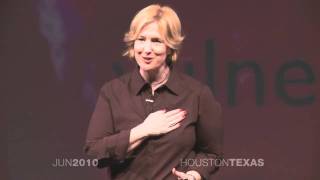 Brené Brown on Vulnerability and Connection: The Power of Being Seen2010 · 21 min · full transcriptShows how Brown’s research led to wholeheartedness and why vulnerability is necessary for connection and belonging.
 Brené Brown on Invulnerability: The Price of Emotional Armor2013 · 16 min · full transcriptExplains the defenses that block wholeheartedness, especially scarcity, numbing, perfectionism, and foreboding joy.
 Brené Brown on Vulnerability and Shame: Courage Starts Here2016 · 52 min · full transcriptDeepens the link between shame, worthiness, creativity, rest, and the struggle involved in living bravely.
 Brené Brown on Vulnerability and Wholeheartedness2010 · 51 min · full transcriptA more personal and extended account of wholeheartedness as living all-in with less judgment, comparison, and control.
 Brené Brown on Vulnerability and Shame: Living Brave with Oprah2015 · 21 min · full transcriptMakes wholeheartedness concrete through truth-telling, boundaries, and the cost of disappointing others.
Questions people ask
- Can you live a brave life without disappointing people, according to Brené Brown?
- What did Brené Brown say about being enough?
- What did Brené Brown say about courage?
- What did Brené Brown say about how shame grows and how to stop it?
- What did Brené Brown say about numbing emotions?
- What is Brené Brown's parenting manifesto?
Sources
Every quote above, word for word from the transcripts. Numbers match the text.
“…connection is why we're here…”
“Because to feel this vulnerable means I'm alive…”
“…being willing to express the truth no matter what.”
“…vulnerability is also the birthplace of joy, of love, of belonging, of creativity, of faith…”
“…no vulnerability, no love, no belonging, no joy…”
“…vulnerability is the birthplace of everything we want more of in our lives…”
“You can't get to courage without walking through vulnerability period.”
“…shame drives two primary tapes: not good enough and who do you think you are?”
“I've lived with who do you think you are my whole life…”
“We live in a culture that tells us that there is never enough…”
“…worthiness is an as-is proposition.”
“Shame needs three things to grow exponentially in our lives secrecy, silence, and judgment.”
“The enemy of worthiness is shame.”
“And so these folks, very simply, had the courage to be imperfect. They had the compassion to be kind to themselves first and then to others, and as it turns out we can't practice compassion with other people if we can't treat ourselves kindly. And the last was they had connection - and this was the hard part - as a result of authenticity, they were willing to let go of who they thought they should be in order to be who they were, which you have to absolutely do that for connection.”
“You cannot live a brave life without disappointing some people.”
“To love with our whole hearts even though there's no guarantee. And that's really hard, I can tell you as a parent, that's excruciatingly difficult. To practice gratitude and joy in those moments of terror when we're wondering, "Can I love you this much? Can I believe in this as passionately? Can I be this fierce about this?" Just to be able to stop and instead of catastrophizing about what might happen, to say, "I'm just so grateful. Because to feel this vulnerable means I'm alive." And the last, which I think is probably the most important, is to believe that we're enough. Because when we work from a place that says, "I'm enough," then we stop screaming, and we start listening.”
“Above all else, I want you to know that you are loved and loveable.”
“…the ordinary moments of our lives, is really where we can find the most joy…”
How this guide was made: drafted with AI from the full transcripts of the recordings cited, then checked: every quotation must match a transcript word for word and be the speaker's own words, and an independent review gates accuracy. Methodology and corrections.