Brené Brown on Vulnerability and Shame: Living Brave with Oprah

What Brown talks about
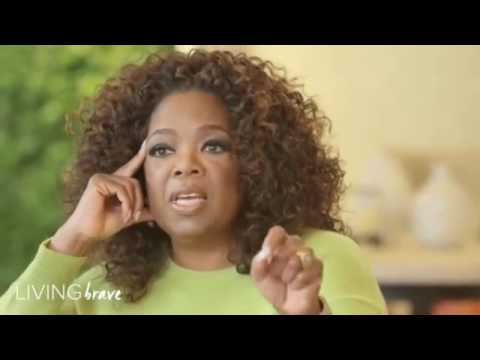
Brené Brown joined Oprah Winfrey on OWN's Super Soul Sunday in 2015 for a conversation about vulnerability, shame, perfectionism, and wholehearted living.
Also known as: Living Brave with Brene Brown and Oprah Winfrey; Brené Brown & Oprah Winfrey interview; Super Soul Sunday conversation.
In this Super Soul Sunday conversation with Oprah Winfrey, Brené Brown defines vulnerability as telling the truth about who you are and what you feel. She shares how vulnerability shows up in her own life, including her ongoing struggle with weight and the pressure to please others.
Brown also explains how she learned to separate meaningful feedback from mean-spirited criticism. She describes her "truth cabinet" of trusted friends who will tell her hard truths with love, and she reflects on how shame, failure, and public scrutiny shaped her growth as a leader.
The conversation broadens into intention, courage, and wholehearted living. Brown says brave living requires disappointing some people, staying open without absorbing everything, and choosing fullness over shrinking in response to shame.
Oprah interviews Brown throughout the conversation.
In her words
“Being willing to express the truth no matter what.”
“I can't pull it together, I can't figure out what's going to work.”
“You cannot live a brave life without disappointing some people.”
“I've lived with who do you think you are my whole life”
“I want to be so full I am overflowing.”
Key points
- Vulnerability is the willingness to express the truth of who you are.
- Her lingering vulnerability is her weight struggle and what it means to be a strong woman while controlling food.
- Clarity of intention helped her move beyond the "disease to please."
- You cannot live a brave life without disappointing some people.
- She filters feedback by trusting a small "truth cabinet" of honest friends.
- Her toughest fall was building the OWN network after The Oprah Show ended.
- Shame shows up as "never good enough" and "who do you think you are."
Full transcript: Brené Brown, Living Brave with Oprah (2015)
(music) Can't F said (music) J. So, welcome to Living Brave. Thank you for doing this with me. I'm going to do it. Yeah. So, these are conversations about courage with people who I believe are living brave lives, who are inspiring me to be braver, and you're one of those people. So, thank you, really. So, we'll start with that. All right, we're going to start with a couple of words that are really important to me and really important in my work. Okay? Definition for me: vulnerability.
(music) is being willing to express the truth no matter what. The truth of who you are, the essence at your core, of what you're feeling in any given moment. It's being able to open up your soul and let it flow so that other people can see their soul in yours. So, this is the first question. I'm getting ready to start crying, so I don't know that this is good. Okay? Yeah. Give me an example from your life. Give me a specific thing that feels really vulnerable for you still after all of your experience. What's still vulnerable for you, not professionally or personally? Uh...
Wait. Um, discuss it. Weight. Not having conquered the whole weight struggle. Figuring out what to eat next, what not to eat. Um, the whole balancing what it means to be a strong, powerful woman in the world juxtaposed trying to control what you're, you're eating. Yeah. That's still a vulnerable space for me. So, I think when people, you know, because we've done work together, people ask me a lot of questions about you and they tell me the stories they've made up about you. Oh, yeah, really? Yeah. And they're, you know, and I, you know, and I have stories too, but I've gotten to know you a little bit, and I know how
dangerous stories are that we tell ourselves about ourselves and about other people, especially when we're in comparison. I think people see you as someone who is fearless, um, who has no more fear, who has conquered all. What do people not know about you in terms of struggles still to be brave? Are there still some struggles you have about being brave with your life? I've worked on the disease to please a lot, and as you've heard me say, in 1989 I had a really big breakthrough with that, reading Gary Zukov's book on intention. So, I started literally, um, living an intentional life where I don't
make any decisions unless I think about what is my true pure motivation for doing it, because I do recognize the law of cause and effect that says the intention informs even the cause, so that before you have an action, there is a reason for you taking that action, and the reason for the action is what's going to actually show up in your life on the other end. That's what's going to come back to you, uh, that intention. So that helped me a lot with the disease to please because I was always giving, giving, giving, giving, giving, and then I was always so thrown when people would come back and ask for more, and I couldn't understand why they were asking for more. Well, people ask for more
because your reason for giving it is so that they think that you're nice. That's your real intention. Well, they do think you're nice. Oh, this is hard to hear. Keep going. They do think you're nice, and that is why they keep coming back. They come back because you're the nice one. You're going to say yes when even you mean no. So, you're the person I'm going to call to go pick up my kids when I can't or don't want to because you're going to say yes even if you don't want to do it. So, that's why people keep coming back when your intention is not really clear. So, that took a lot of fear away from me, but at least for me, a clarity of
intention helped me live, uh, a more fearless life. I love that. So, what if your intention is, I want to lead a brave life and not disappoint anyone? You cannot live a brave life without disappointing some people. I just, I know that in my heart, but it sounds really important. Cannot live a brave life without disappointing some people. Okay, but those people who get disappointed, it's really okay, 'cause the people who really care for you, the people who are rooting for your rise will not be disappointed. The only people who are disappointed are people who
have their own agenda. Yeah, and their agenda is not aligned with your agenda. And that's how I make myself brave. I say, well, the people who really care about you, who want you, who are rooting for your rise, those people who are rooting for your rise, they're going to be okay when you say no. So, let me ask you this question that's related: very tough in this world that can seem very unforgiving, critical, uh, mean-spirited sometimes even. You shut yourself off from all the feedback, and it's dangerous because you need some of it and you need to stay open and connected, but you open yourself up to everything and it will kill you. It will make you less brave because some of it is just not helpful, right? How do you, and
it's, I want a really specific answer, how do you stay open to meaningful feedback that can make you better as a leader at what you do but also filter out the stuff that is just mean-spirited that will hurt you and take you down? Well, first of all, I never read any comments, okay, that are coming from, um, negative people. If I start to read something and just shut her down, shut it down, I will, I will, I will not take, I will not take that in. So, how do you open to feedback that is helpful? Are there people you go to or do you, what, how do you do that? I have a kitchen cabinet, and I've had a kitchen cabinet since, you know, the beginning of my career. Different people have been in
That K kitchen cabinet over the years, but there are a few people who are my resource who I know are going to tell me the truth. Stemman is going to tell me the truth no matter what, hard or even hard truth. Oh, please. Okay, the harder the truther, the harder the truther. I got it. Okay. Uh, Bob Green, my friend, oh my gosh, brutal sometimes. Okay, brutal to the point of the reason why Bob Green, uh, is he's like my brother. But the reason why, uh, you know, we've remained friends over the years and he's the only person that's actually been so brutal.
With the truth he's made me cry but is not afraid to tell me just the brutal truth. Okay. Um, I have Bob Green. I have Stemman. I have Gail who are going to tell me the truth no matter what. These are your truth tellers. These are my truth cabinet for sure and I value them so much because they will tell me what I don't want to hear but need to hear. Yeah. And love and they'll love me through it. But and this is the other thing your cabinet can go through all of those comments, you know, because feedback is great and you can get it immediate now. Your cabinet will go through and they can they can share with you the things even that are negative but that are not mean-spirited. Yes. Yeah. So the physics of vulnerability, if you're brave enough
Often enough you're going to fall, not, you're going to risk falling but you're going to fall. You're going to fall. Right? What has been one of your toughest falls? Oh boy. I would say starting out with this network was a tough fall. Uh, I I'd come off the glory and the victory of 25 years of the Oprah show and and was trying to put together the pieces of building a network without the right pieces. I really was, um, trusting other people's ideas about
How to do it and it wasn't until I had the good sense to bring in my own team of people who I'd been working with whom I'd been working with, um, for you know, the past decade that things start to actually fall into place for me. But that was a real bitter talk about not reading comments. I had spent 25 years of you know sometimes you get negative publicity and certainly had the tabloids and all of that to deal with but I had never dealt with the what felt like vitriolic uh n look at you, you've fallen you're not on top anymore you're not as good as you think you are all of that stuff that
Came in the media immediately after I ended the Oprah show and started the climb to build this network. That was a really, really tough time. Shame. Um, I guess the word shame, yeah, would apply because part of it was I I was thinking wow I can't pull it together, I can't figure out what's going to work. And so part of the shame and embarrassment was was not knowing what I didn't know and coming from a place where and coming from a place where I knew it like the back of my hand, like
Doing that show for 25 years was as easy as breathing to me, right? I literally could close my eyes. You can put me on the set and I could stand there and talk to the I just really it it just was as easy as breathing. So yes, I had some, um, serious come to Jesus talks with myself about it and part of what I understood was happening as I know how the world works is the world is reflecting you back to you. So the the the negative speak the sometimes vitriolic negative speak. I mean people would have panels of discussions sitting up on shows talking about, you know, what
Had happened what has happened to the queen of the postmortem of the fall, the postmortem of the fall, um, so I saw one thing in and I can't even remember the headline now because I was so like I've got to dismiss it but it was like Oprah doesn't own herself anymore or Oprah doesn't and shamed me that headline devastated me shamed me. So I said I'm not going to I'm not going to look at anything else I'm not gonna because I already know what I'm going through I already know what it is and it's happening because you also think all those things nobody's saying anything to you that you haven't felt. Oh my God, you bought into the narrative. Yeah and we're going to turn that
Narrative around. So I had a David Zazo actually said to me one one day, uh, this narrative changes today we're changing this narrative. It's true. So yeah that was a very difficult that was a that was a time that required a lot of courage and and not just courage to keep going but courage of like okay what does this really mean what is this really trying to say to me you know shame has two tapes never good enough and who do you think you are when you're getting ready to do something brave in your life what is the shame gremlin message that you have to be the most cautious about, the one that you have to say uhuh I'm
Turning this down. I've lived with who do you think you are my whole life, um, and not from myself as much as what was reflected to me because who do you think you are? You're, you're a little color girl come from Mississippi who who do you think you are? You're sitting up on National Television. Who do you think you are that you can have who do you think you are that you can so um it's the who do you think you are and what is your response to that? My response is I used to fear hearing the term who do you think you are or you must you must be pretty full of yourself big for your britches too big for your britches. Now I work at
Being full. I want to be so full I am overflowing. So when you see me coming, it ought to make you proud. To borrow a line from Maya Angelou's phenomenal woman, when you see me coming, it ought to make you proud. And what you see is a woman so full, I'm overflowing with enough to share with everybody else. I'm going to own the fullness without ego, without arrogance, but with an amazing sense of gratitude that I've been born at a time where I am female on the planet, and I
have the great pleasure and freedom to fill myself up. Amen, amen, amen, amen to that. We're going to take a really sharp right. Mhm. If you could put anything on a t-shirt, what would it be? It would be "Love is the cure. Love is the cure. Love is the cure." You have a soundtrack for your life. Tell me one song that would absolutely have to be on that soundtrack. Amazing Grace. Amazing Grace. Amazing. Do you have a favorite version? Uh, there is only, in my mind, one version. Wentley Phipps you saying Amazing Grace on my front lawn, uh, in 2005 when I brought all the
legends who had, um, represented what it meant to be excellent in my childhood. So there was Maya Angelou and Coretta Scott King, and there was Dorothy Height, and, um, there was Roberta Flack, there was Diana Ross, and there was Ruby Dee and Cicely Tyson and Wentley Phipps saying Amazing Grace on my front line. On favorite room in your house? Well, first of all, I love my house. I love your house too. I gotta say. I gotta say. Oh my goodness. Favorite room
in my house. Oh God, I love this question. It makes me smile. Uh, favorite room in my house is my, uh, bedroom office sitting room. That is where I spend the most time. First of all, there's light coming in, and usually I'm working from my desk literally with my bare feet up on the desk. You know, that's my power position. When I was filming The Color Purple, I had written—I still have the journal in my journal—that one day I really hope I have enough money to have a home with beautiful things in a
beautiful surrounding that matches my beautiful spirit. I wrote that down in the summer of 1985, and there is the power of intention. And there is a power of intention but having a home surrounded by beautiful things with, you know, that match my beautiful spirit. What's the best thing about being your age? Oh gosh, the best thing about being my age is I have reached a point where I live in the space of awareness of the time that I might have remaining.
You know, you have more time than you have lived, unless there's going to be some big DNA discovery. Uh, then you actually have to live. And so it makes the time that you have right now even more precious, and there's an awareness. And, you know, one of the great, great, great things for me doing TV interviews all these years on the Oprah show and on OWN was that I got to learn from other people's mistakes. So I paid really close attention to the stories. That's powerful. I paid really close attention and I learned. As you know, some people watch a lot of shows, um, I think probably Gail watched
more shows than anybody, uh, because she would watch every day and exercise. But she—not even—she saw every single day. Yeah, I was there every day, and I got to hear everything and everybody, all the theories and all the stories and all the layers and layers of dysfunction along with people's victories and their triumphs and, yeah, wisdom, wisdom. And I took it in. I was a student of it. I wasn't just a talk show host; I was a student. Student. I became a student of life, other people's lives and how to live well by listening to those
stories. So I paid, I paid real attention, and I am at a point in my life when I—where I can literally rejoice in the The Knowing space that I hold. There's a sense of confidence that can only come, I think, when you know and are assured that you are living life well and not from the point of view of having a lot of things, um, but living life from this, from, from the, from the center space. When you're—when you're living bravely, when you're living bravely because you're living your truth. I mean, I really
believe that we make up stories about other people's fearlessness, but no, there's not enough conversation about the falls and the hurt and the climb back up and the shame. And, um, your show was one of the places where people had those conversations. Yeah, and it was during my show that I absolutely learned for sure, for myself, through other people's stories, that there really isn't any such thing as failure. And I could see the thread of, you know, courage that was required every time you fell down. I know, and I could also see—I could also see
that failure was just there to inform you to move in a different direction. It's just there to say, "Hey, not this way, over here, not over there, wrong place." Um, and once I figured that out, it became easier to be brave, ver. You know what I love about you, one of the many things, but what I really love about you is if I had to describe you to someone, I would say above all else you're both a teacher and a student. Me too. I wouldn't have thought of that, but that is, ab—absolutely the truth. You know that, and which I think I may, I really actually believe all good teachers are the best students. Like, all.
Good writers are good readers, usually. Um, but it's weird almost how you straddle that tension, like you have so much to impart, but you are one of the most curious people I've ever met in my life. Thank you. So you are both a student and a teacher? Yeah. Thank you for being brave with your life. Thank you, really. You make You Make Me Brave, and you make the world a braver place. (music) Change
From YouTube captions, lightly punctuated for readability. Timestamps link to the video above. Errors are possible.
Cite this recording
Brené Brown, “Living Brave with Oprah (2015)”, OWN / Super Soul Sunday, 2015. Transcript and video: Thinkers Archive, https://thinkersarchive.com/brene-brown/vulnerability-shame-living-brave-2015/
Quoting a passage? Link to its exact moment: every timestamp above has its own anchor (for example https://thinkersarchive.com/brene-brown/vulnerability-shame-living-brave-2015/#t-132).