Brené Brown on Creativity
For Brené Brown, creativity is not a talent you protect from risk but a vulnerable act of showing up, being seen, and making anyway.
- Creativity depends on vulnerability, not certainty or self-protection.
- Making original work means showing up and being seen without guarantees.
- Shame, comparison, scarcity, and perfectionism are major blocks to creative work.
- Emotional armor may feel safe, but it cuts people off from creativity and connection.
- Criticism matters most when it comes from people who are also taking risks.

Creativity begins where certainty ends
Brown’s core claim is simple: creativity requires vulnerability. She ties creative work to emotional risk, uncertainty, and exposure, arguing that people do not make anything new without stepping into those conditions.123
That is why she treats creativity less as a matter of confidence and more as a matter of courage. In her view, the creative act is not waiting until fear disappears; it is moving forward when the outcome is unknown.456
“…there is no creativity without vulnerability.”Chase Jarvis Live interview, 2013 · full transcript →
To create is to show up and be seen
Brown describes creativity as a public act of exposure, whether the audience is huge or tiny. The central challenge is being willing to show your work, your voice, or your ideas before you can control how they will be received.4
This is why she returns to the language of the arena. What matters is not detached opinion but the willingness to enter the space where failure, criticism, and embarrassment are possible.8910
She also warns that when a person becomes overly defined by other people’s judgments, creative courage collapses. The need for approval can become stronger than the desire to make something true.11
Armor blocks the very thing creators need
Brown sees self-protection as one of the main enemies of creativity. The habits people use to avoid hurt—perfectionism, numbing, cynicism, disconnection, and other forms of armor—may reduce immediate discomfort, but they also shut down openness and invention.1213
Her point is not that vulnerability feels good. She repeatedly says it is tied to fear, anxiety, and shame. But the same doorway that opens to those hard emotions also opens to joy, belonging, faith, and creativity, so refusing vulnerability carries a real creative cost.151316
For makers, this means safety strategies can quietly become creativity strategies in reverse. The more tightly you try to control exposure, the harder it becomes to make brave work.312
Shame and scarcity shrink the creative self
Brown distinguishes shame from guilt because shame attacks identity instead of behavior. In creative life, that difference is huge: guilt can help you improve a draft or repair a mistake, while shame tells you that you are the mistake and should stop showing up.1718
She names two recurring shame messages that are especially destructive for creators: not good enough and who do you think you are. Those inner scripts feed comparison, self-doubt, and hesitation.19
Brown also connects creative paralysis to scarcity—the feeling that there is never enough and that you are not enough. In that atmosphere, people cling to perfectionism and performance instead of experimentation and ordinary practice.2019
Her answer is not to eliminate struggle but to understand it differently. Struggle is part of the process, and creative hope grows through it rather than around it.216
Connection and self-compassion keep creativity alive
Brown does not treat creativity as a solo battle of grit. She argues that shame grows in secrecy, silence, and judgment, which means isolated creators often become harsher and more stuck over time.2223
What interrupts that cycle is empathy and connection. When people feel seen, heard, and valued without judgment, they regain the ground needed to keep making.242526
This also applies inwardly. Brown consistently links wholeheartedness to self-compassion and to releasing the demand to be who you think you should be. For creative work, that means trading self-contempt for honesty, iteration, and the courage to stay in the arena.
Brown on creativity, in her own words
“…there is no creativity without vulnerability.”
“…vulnerability is the birthplace of innovation, creativity and change.”
Where to watch
 Brené Brown on Creative Vulnerability: Show Up and Be Seen2013 · 23 min · full transcriptBest single talk on Brown’s creative philosophy: the arena, criticism, and the demand to show up and be seen.
 Brené Brown on Vulnerability and Creativity: Daring Greatly2013 · 91 min · full transcriptExpands the link between creativity and vulnerability, with practical framing on fear, courage, and exposure.
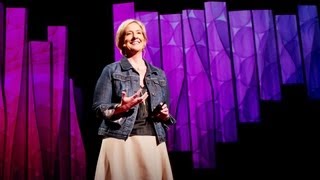 Brené Brown on Shame Resilience: Vulnerability Is Not Weakness2012 · 21 min · full transcriptLays the foundation: vulnerability is courage and the birthplace of innovation, creativity, and change.
 Brené Brown on Invulnerability: The Price of Emotional Armor2013 · 16 min · full transcriptShows why perfectionism, scarcity, and emotional armor block creative life.
 Brené Brown on Wholehearted Living: Shame, Courage, and Joy2015 · 42 min · full transcriptUseful for understanding how shame, play, rest, and connection affect whether creativity gets expressed.
Questions people ask
- What did Brené Brown say about courage?
- What did Brené Brown say about how shame grows and how to stop it?
- What did Brené Brown say about numbing emotions?
- What did Brené Brown say about vulnerability and connection?
- What did Brené Brown say is the antidote to shame?
- What did Brené Brown say vulnerability is in creativity?
Sources
Every quote above, word for word from the transcripts. Numbers match the text.
“Vulnerability is our most accurate measurement of courage…”
“…vulnerability is the birthplace of innovation, creativity and change.”
“…there is no creativity without vulnerability.”
“It's not winning or losing. It's having the guts to show up and be seen when there are no predictions of outcome…”
“You can't get to courage without walking through vulnerability period.”
“…most of us are brave and afraid in the exact same moment all day long.”
“It's not the critic who counts.”
“…if you're not in the arena also getting your ass kicked, I'm not interested in your feedback.”
“Three huge things. First, I spent the last 12 years studying vulnerability, and that quote was everything I know about vulnerability. It is not about winning. It's not about losing. It's about showing up and being seen. The second thing: this is who I want to be. I want to create. I want to make things that didn't exist before I touched them. I want to show up and be seen in my work and in my life. And if you're going to show up and be seen, there is only one guarantee, and that is you will get your ass kicked. That is the guarantee; that's the only certainty you have if you're gonna go in.”
“When we're defined by what people think, we lose the courage to be vulnerable.”
“The second when you armor up, you armor up in this hallway, you shut yourself off from everything that you do and that you love…”
“…vulnerability is also the birthplace of joy, of love, of belonging, of creativity, of faith…”
“Vulnerability is absolutely at the core of fear and anxiety and shame…”
“Vulnerability is absolutely at the core of fear and anxiety and shame and very difficult emotions that we all experience. But vulnerability is also the birthplace of joy, of love, of belonging, of creativity, of faith. And so it becomes very problematic when, as a culture, we lose our capacity to be…”
“Shame is a focus on self, guilt is a focus on behavior.”
“The thing to understand about shame is, it's not guilt. Shame is a focus on self, guilt is a focus on behavior. Shame is "I am bad." Guilt is "I did something bad." How many of you, if you did something that was hurtful to me, would be willing to say, "I'm sorry. I made a mistake?" How many of you would be willing to say that? Guilt: I'm sorry. I made a mistake. Shame: I'm sorry. I am a mistake. There's a huge difference between shame and guilt. And here's what you need to know. Shame is highly, highly correlated with addiction, depression, violence, aggression, bullying, suicide, eating disorders.”
“…shame drives two primary tapes: not good enough and who do you think you are?”
“We live in a culture that tells us that there is never enough…”
“Hope is a function of struggle.”
“Shame needs three things to grow exponentially in our lives secrecy, silence, and judgment.”
“If you put shame in a Petri dish, it needs three things to grow exponentially: secrecy, silence and judgment. If you put the same amount in a Petri dish and douse it with empathy, it can't survive. The two most powerful words when we're in struggle: me too. And so I'll leave you with this thought. If we're going to find our way back to each other, vulnerability is going to be that path.”
“Empathy's the antidote to shame.”
“Connection is the energy that is created between people when they feel seen, heard, and valued, when they can give and receive without judgment.”
“What makes something better is connection.”
How this guide was made: drafted with AI from the full transcripts of the recordings cited, then checked: every quotation must match a transcript word for word and be the speaker's own words, and an independent review gates accuracy. Methodology and corrections.


