Brené Brown on Vulnerability and Creativity: Daring Greatly

What Brown talks about
Brené Brown joined a Chase Jarvis Live interview in 2013 about vulnerability, creativity, shame, and the ideas behind daring greatly.
Also known as: Daring Greatly to Unlock Your Creativity; Chase Jarvis Live interview; Daring Greatly interview.
Brown argues that vulnerability is not weakness but the source of courage, creativity, and authentic connection. She says the work we most admire often happens when people are scared, uncertain, and willing to be seen anyway.
She also explains how shame, fear, and scarcity keep people armored up, cynical, and disconnected. For Brown, daring greatly means showing up with boundaries, telling the truth, and risking failure in service of meaningful work.
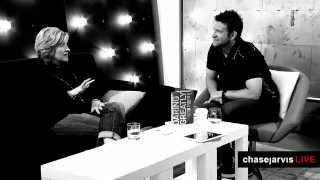
Chase Jarvis hosts and takes audience questions; Brown speaks throughout most of the interview.
In her words
“There is no creativity without vulnerability.”
“Vulnerability is weakness”
“It's not winning or losing. It's having the guts to show up and be seen when there are no predictions of outcome”
“When we're defined by what people think, we lose the courage to be vulnerable.”
Key points
- Vulnerability is the first step to being courageous, not a sign of weakness.
- Creativity requires risk; the best work often comes when people feel most exposed.
- Fear and scarcity push people toward cynicism, blame, and fake bravery.
- Boundaries matter: vulnerability without boundaries is not real vulnerability.
- Brown distinguishes guilt from shame and says shame fuels destructive outcomes.
- Great leadership requires uncertainty, emotional exposure, and accountability.
- People should care what a small circle thinks, not chase universal approval.
Full transcript: Brené Brown, Chase Jarvis Live interview on Daring Greatly (2013)
[music] The old took the new. The new took the old. The old took the new. The new took the old. I'm loud. Hi internet, I'm Chase Jarvis. Welcome to another episode of Chase Jarvis Live. Once a month, I try and sit down with someone who has completely blown my mind, someone who's a huge inspiration, has helped me personally transform, and I have a very strong hunch that they'll be able to help you out there in the
internet world and you folks in the INS audience transform your lives as well. This person is no, uh, exception to that. They're at the top of that list. I will first, before we dive into her, I need to say thank you to a lot of folks who have been helping us promote the show for the last week since we announced it. Basically, they were tweeting and Facebooking and sending people to this show right here, right now, and I got a couple shouts out: one to @Griel House. We're going to give you a signed copy of "Daring Greatly," signed by Brené—not by me—and @BorgeousDesign, you guys did a great job pushing and promoting the show, so thank you very, very much. Huge shout out to the folks that helped me make this show possible: CreativeLive, where the world's top creative experts will teach you anything you want to know, and BorrowLenses, the
place where I get my rental gear as a photographer. So huge shout out to all y'all who've been helping us to date. And now, drum roll please... Don't forget, you can do questions in #CJLive. But now, today's guest: she gave this amazing TED Talk—I think it's one of the most seen TED Talks of all time, about 12 million views the last time I checked, which was a while ago. I've watched the thing at least 10 times myself, and I think she had that epiphany—what she called, she told me earlier—it was sort of like a breakdown afterwards. She gave this amazing talk, and she said, "What in the hell did I just do?" Ironically, that thing was the catapult for her that transformed her career, put her on the New York Times bestseller list with her book most recently, "Daring Greatly." Big
warm CJ Live welcome for Miss Brené Brown. They love you. Thank you so much. You're comfortable? Welcome. It's that good, right? It's that good. They love you that much. It's not the Rolling Stones; it's Brené Brown. Uh, well, I'm no Oprah, but I'm going to do my best. I know you guys are tight friends, and I've seen you on her couch a lot. Maybe you can compare notes afterward. Let me know what I can do better. But this ain't about me; it's about you and this—you have more drinks for sure? I do. I'm a three-beverage minimum.
Here, this is your book. Congratulations. Thank you. Tell me—well, actually, I want to go back. I love that book. Actually, I do. I love it too. Actually, I have it on my iPad here as well. I might pull up a couple of sections that I highlighted and you can tell me if I'm interpreting them right. But what was the impetus? Go ahead and give us the backstory, please. You know, I love that book because, you know, it's probably to date the book that has all of my research in it, and I like it because—well, I like it and I hate it. Like, I really should have called it "Daring, Damn It." I really like it because it
reminds me because it's not like I—I'm not like a guru or a—it's like, like, "Oh, I've had these thoughts and here's how I think we should all live." It's that I went out and researched and found out that I was not doing the things that your research participants, like, really changed my life. And so I love that book because it's a constant reminder to me about why it's hard sometimes when you put yourself out there. Of course it's hard. Yeah. And so I love it because it—I love it. It pisses me off, I love it. Yeah. But it's a good reminder—sort of like life, right? Kind of like life. Yes, like those of us who are everybody, you know, in life. Well, I'm actually—my iPad is just starting to, like, light on fire here because everyone's tweeting and I want
to just take a second and say if you are interested in helping us pimp the show and driving here a huge worldwide audience, I will give away something very important. The thing that I will give away is a Hero Ghost Pro 3 camera. So if, yeah, if you guys out there in the internet world can use the hashtag #CJLive and send anyone to this URL with a funky quote, Brené will be dropping a lot of quote bombs here. I'll give you a camera and that'll make the—that'll make the conversation even more interesting. So it just reminded me—I wanted to get that in here edgewise before we keep diving in. These people have come from far and wide; we've had people come from out of state, travel far to be able to sit here with you to understand the idea
of vulnerability. To me, as a Type A-like male, it was real hard. It was real hard. There was a lot of resistance. Like, I don't need no stinking "Daring Greatly" book. But then inside of your head, there's like—that voice. So I imagine that it's not just Type A males that have that voice—that we all have that voice. What is the voice, and what does "Daring Greatly"—how does "Daring Greatly" help us work through that voice? You know, I had a new thought about that a couple weeks ago. I think it—Type A is for sure, but I think it's really all of us. I think the majority of us were raised with the belief that vulnerability is weakness, that it's best to armor up when we wake.
Up in the morning, go out into the world. Don't put yourself out there, don't let yourself get hurt. Um, really stay closed, um, because it's not worth the risk. It's not worth the criticism, it's not worth, you know, we have this program called The Daring Way, where we train coaches and therapists in our work, and one of the exercises we do is we put up this big poster that says, "Vulnerability is," and then participants fill out a Post-It note about how they would finish that sentence stem: vulnerability is. And then we all look at that. And so there's tons of them that say, "Vulnerability is weakness," "Vulnerability is showing too much of yourself," but one of them just struck me the other day, and it said
Vulnerability is the first step to betrayal. And so it's showing enough of yourself that someone could use it to hurt you. So we all grew up with this myth that vulnerability is weakness, but what's interesting to me, and what I think is the source of a lot of the problems today, is we were also mostly raised to believe that it was important to be brave for sure. So here you've got this thing where vulnerability is weakness, but you need to be brave and courageous. So really, the only thing that can fit through that gauntlet of "You can't be vulnerable, but you need to be brave" is bravado, is that kind of blustery, um, posturing, kind of fake bravery. And I think that's what we see
in the world today. Um, I think what we see—and I'm not talking about badassery, like the good stuff that you can back it up—I'm talking about if I can't be vulnerable but I have to be brave, what's left except to fake being tough? And I think the way we fake being tough in our culture today is we're super cynical; we're super critical of other people who are putting themselves out there. We make fun of things. That's how we fake bravery. But the truth is, if you—you know, when we asked people in the research what is vulnerability, they said things like, I mean, I remember sitting across from someone who said, "It's sitting down with my wife who has stage four breast cancer
and making plans for our young kids." Wow. It's calling hospice and having a conversation with them about my dad. It's the very first date I went on after my divorce. It's trying to get pregnant after my second miscarriage. Vulnerability is never easy, and it feels terrible, but there's no evidence that it's anything but courage. I mean, the best example, I think, and something that I think everyone in here and everyone watching can relate to, is picking up the phone and making that call after something horrible happens to someone we care about. Yeah, right? And we look at the phone and we're like, "I really need to call. I can't believe her husband dropped dead; he was 45. I just, you know what, I'm going to call in an hour. She's probably resting," and then an
hour goes by, then you're like, "You know what? She's probably got family over for dinner. I'll call tomorrow." And we just keep—are you in my brain right now? Yeah. Yeah, right now. I know I—I mean, it's—it's human nature. And then, but the question is, what happens when an hour turns to a week, turns to a month, and then we run into that person at the grocery store and we haven't called? Like, what does that feel like for us? It's shame. Yeah, it feels shameful. It's shame, it's shaming. But what happens when we just pick up the phone and go, "J, there's nothing I can say to make this better except I love you. I care about you, and I'll walk through this with you," and then when we hang up from that call, we know we didn't fix anything because there's
nothing fixable about that situation, but we feel in line with our values, we feel like, I did the courageous right thing—authentic self, the authentic self—and it's not about how this makes me feel; it's about making the call. So, to me, I think the most profoundly dangerous myth is the idea that vulnerability is weakness. I just—there's no evidence. Well, the audience that's here in the studio, um, and primarily the audience that's online, uh, we've got people tuning in from 100 countries worldwide right now. There are largely creatives because that's the audience that we've sort of built the show around. And I, one of the reasons I was really excited to have you on the show is
because I, personally, my personal experience has been that the best stuff that I've ever done, like the best art, the best creativity, has always come when I'm the most scared—the mo like, "I can't believe I'm going to hit send on this," or, "I can't believe I'm going to publish this book," or the—and there's, there's a just a huge preponderance of evidence that the best work that we do is that work, and everything else is sort of—it's flimsy. And we see the—the best, I mean, Mmore is a friend, he's performed right here in this studio, and to watch that guy lay it out there—I can—you imagine a hip-hop artist talking about gay marriage, talking about having an, um, addiction issues, and he's the number one artist in the country right now? That's very different
than hip-hop. And that, my—I have a lot of the folks that I rever, their experience—it can you confirm that? Like, how do you—how can you tie vulnerability and creativity together for us, because that's who's listening today? Yeah, so first, I just say I'm a huge Mmore fan. What? What? Okay, huge. Um, for that? Yeah, I took my kids and like 40 of them, I think, to his concert, and he said, "Ben and Ryan are amazing." Yeah, and I think they were—keep my—my kids are like chill. I'm like—and my kids are like, "Be in the parent section." Um, for the reason that here's
Here's why I think M. Lorre is... he's, they're both Ryan and M. Lorre are very talented people, first and foremost. Secondly, the truth is, we are so sick and tired of being afraid. Yeah, you know, we live in this culture of deep scarcity and, you know, I don't talk about this a lot because it riles up people in this country, but 9/11 was a huge changing point for us, for sure. I had started my research very obviously, coincidentally, six months before 9/11. So, because I'm a qualitative researcher, kind of on the ground, looking in people's eyes, interviewing people about their lived experiences, I have
seen firsthand how that has changed us. It has driven this amazing, just all-consuming culture of scarcity, of fear. We're not safe enough, we're not rich enough, we're not perfect enough, we're not certain enough. And you can always tell when we're in a scarcity culture because the two headlines that drive everything, from the news to our conversations at dinner, are: "What are we supposed to be afraid of?" and "Whose fault is it?" That's the big conversation. Okay, what should I be most afraid of today? I hate admitting that, but that's true. Whose fault is it? Almost all the conversations go to that. I mean, if you turn on any cable
news, they are going to increase their audience ratings by making sure they're telling you what you need to be terrified about and whose fault it is. Yeah, that's how it works. I saw a news bit about shark attacks and how they're up more now than ever before. I also heard that more people die from vending machines falling on them than shark attacks, right? So, like, literally, that's the math. And to me, that's fearmongering. How can we have a society that's driven in culture and in the beautiful things in life when we've got this sort of black cloud being projected above us? The hard thing about it is, and the way where it gets uncomfortable for
everybody here and watching is that we have to own that because media will only elevate and rise to the level that we'll accept it. So when the public sees someone doing something different, they're going to switch it to the channel where they're like, "Here's what you need to be afraid of." And so we tolerate it, we ask for it, otherwise they wouldn't be doing it. They're completely metrics and rating-driven, so people are watching for that reason. And so, to me, when someone like M. Lorre or someone like yourself or anyone who is out there putting it out there, we're fans because we are sick and tired of being afraid. We want to see someone doing something ballsy. We want to believe that can happen. You want
Should I flip over the table now? And, you know what? And that's a great example because that's what we're used to. That's what usually passes for brave, is like, you know, that kind of stuff. But what we want to see is someone singing "Same Love" in a genre that uses, you know, hateful terms like—and queer—every five minutes. That's what's brave. What we want to see is, we want to turn on the television and see someone owning a story that's really hard to own. We want to see a corporation taking responsibility for making a mistake. That's what we want to see. And for all you folks out there
who are art makers or makers or creators or like that, if I was to say something that has unlocked things for me, it's literally going there. And if it's uncomfortable, that usually means it's the right thing for me. And I think that sucks. It does suck. I mean, we were—I mean, I—I do, I mean—I mean, we were talking, you and me and Kate, your wife, were talking before, and I was like, "It's a terrible thing when you realize that it gives you courage in uncomfortable moments." But when I'm doing something, it's easy. Yeah, I'm like, "Whatever, this is not going to be a big thing, this is not going to be important," because, um, you know, and I don't think we have (music)
to look for discomfort. Sure, there's plenty of it, right? There's plenty of it that comes, you know, every time you answer the phone, there's something usually, you know. But I do think for those of you who blog or write, when you hit post on that thing that you're really scared about writing, that's when you're like, "Oh, that was important, I'm glad I did it." When you put the picture out, you know. And creatives, it's interesting to me because there is no creativity without vulnerability. That might get retweeted a couple million times, I'm just guessing. But I mean, there isn't—there is so true. There isn't, which is why, I mean, I think this is really
important. You know, after the TED Talk, I regret—I didn't regret it, but I was afraid. I—I, yeah, I—I regretted it. I was like, "Ah, I don't think I should have done that," you know. It went viral, and then the whole story behind the "Daring Greatly" quote is so, such an important, to me, non-issue for creatives, which is—we're going to go there right now. So I want—you do the quote, because I—I, yeah, yeah, yeah, I can do the quote for sure. Okay, this is an amazing quote, and I have personally used it, and it's incredibly effective defense mechanism and helps me emotionally, and it's a great visual. In fact, the "Daring Way," the certification program we have is built completely around this quote and all the imagery around it. We use arenas and shields. So the quote
Is Theodore Roosevelt, and I'm going to make it a little shorter. But it's not the critic who counts. It's not the man who points out how the strong man stumbles or where the doer of deeds could have done them better. The credit belongs to the man who's actually in the arena, whose face is marred with dust and sweat and blood, who strives valiantly but comes up short again and again, who in the end may know the triumph of high achievement, but when he fails, he does so daring greatly. Damn, yeah, it's just great. It's just wow. It's just, it's just it. It's, and I, I loved it because the three
things I say it changed about me were one, it informed the book and the book title and use. I use that, you know, they say a picture's worth a thousand words, then a metaphor is worth like a thousand pictures, you know. Um, so and we love metaphors. It's how we think. You know, that's why we, we grab onto them. But, you know, the first thing I think it changed in me was this is, this is how I'm going to talk about vulnerability. It's not winning or losing. It's having the guts to show up and be seen when there are no predictions of outcome, you know. That's, and I think the thing that it really dismantled for me was another myth that I, you know, fifth generation Texan, vulnerability was not tolerated in my family at all growing up. I mean, it was, it was buck up little
camper, buck up, suck it up, soldier on. You need to learn how to ride your bike. There'll be no training wheels. What are you going to be? 30 with training wheels? We don't need training wheels, you know. Uh, yeah. I mean, was that, was the thing. You're going to learn how to swim. You don't need goggles. Like, what are you going to get in the middle of the Atlantic a mile from shore and you're going to have all, you're going to need goggles? I'm like, I'm three. If I'm a mile from shore in the Atlantic, it's over, you know, goggles or no goggles. But that's just the way we were raised. And, you know, I look back and there are some things I would do different that I'm doing differently with my own kids and my parents did and some kids some things that I pray to God every day I do as well. Um, they did not, they were not squeamish about us
experiencing adversity, you know, if we had something go on, they were like, we're here, we'll back you at, but you got to take it on, sis, that was my nickname. You got to take it on. Um, yeah, yeah. And so I think that gave me the persistence to have the career I have and the tenacity. Um, but the one myth that I think I was raised that was really dangerous was this idea that you're either brave or you're afraid, and the truth is most of us are brave and afraid in the exact same moment all day long. That's brilliant. And you don't, we don't, you know, I'm, I'm afraid right now. Same. But I just keep showing up. I'm here
y. So I'm being brave too. Y. Um, so that was the first thing. This is how I'm going to talk about vulnerability. The second thing was basically if you're going to live in the arena, you're going to get your ass kicked. It's what you sign up for when you decide to be brave, which is just hard. But, you know, for me personally, my faith is the organizing principle in my life, and I think it calls on me to be courageous as part of my faith. So if I'm going to be a faithful, courageous person, I'm signing
up for, for some butt kicking, you know. If I, I mean, it's true, like, for example, one of the things I'm really working on during Lent is gossip. Yeah, hard. And so one of the things I do is like, now no one in my kids' school ever calls me or tells me anything because, you know, they're like, why? You don't, you know. And it's not that I get judged. I'm like, oh, you should be gossiping. I'm just like, I just try to redirect and get out of it, which is really hard. CU, I love God. I love some good judgy stuff. Um, uh, so, but I've been criticized. They're like, you know, I feel a little bit outgroup sometimes because what do people do when
they don't know each other very well to bond? Yeah, talk bad about somebody else, right? Talk. Some. The last thing is the part where I think creatives really, we need to have this conversation more and more. And I consider myself a creative. I'm a writer, absolutely. And the way, and I'm a grounded theory researcher, which is like very creative-based research, um, is this: if you are not in the arena also getting your ass kicked on a regular basis, I am not open or interested in your feedback. Boom. Spoken. No. It's, and, and here's why, and this is the part that I think people underestimate people, you know, if you're
in the arena and you email me or say something to me at an event and you say, "Look, I'm really questioning your research because you forgot the entire, you know, academic literature on intimacy, and you should be thinking about that." That's, I'm not going to say that to you ever, okay. But, yeah, but if you say that, then I'm going to say, "Wow, okay, we, I should look into that." That's feedback. If you're sitting in the cheap seats doing nothing — these seats are very expensive, by the way — these are, no, these are, these are like to be seen on TV, like on Chase Davis things, seats. No, but if you're in the cheap seats, not contributing, not putting yourself out there, not risking anything, and just criticizing, I can't be
Open to your feedback for this reason, and this is something that creatives, I don't think fully get. It hurts, and it changes who we are, that whole—when I hear people say—and it's often creatives and leaders and organizations who are here—look, I don't give a— with anyone's things, that is its own kind of hustle for sure. I may or may not have used that at one time; I for sure did, right? I mean, but here, it's a tight wire. Here's what—here's the dilemma with that: when you don't care at all what anyone thinks, you lose your capacity for
connection. When you are defined by what people think, you lose the courage to be vulnerable. This is really hurting my brain right now. This is powerful, seriously. So like, can we replay that one more time? So if—go ahead, I'll let you do it ’cause that was too good. So when you stop caring what anyone thinks at all—when we don't care at all what people think, we lose our capacity for connection. Got it. Which what is art if it's not connection and love, right? Yep. So when we stop caring at all what people think, we lose our ability to connect. When we're defined by what people think, we lose the courage to be vulnerable. So what is so important, I think, for all of us and not just
creatives but all of us. I wish I had my wallet, um, it's somewhere in here but I would pull it out and show you. Um, so what I do, what I recommend to people is—can we get—can we get BR’s bag? I think somebody probably knows where it is. I think it’s, yeah, it’s under my empty kombucha bottle. Christy knows where it is. I—I hope it’s in here yet. Yeah, we can make this happen. How about it? Right? I like it. Um, everybody, this is Jeff. Give Jeff a round of applause. Hey Jeff, thanks Jeff. All right, this is what long form does for you, right? This is love. Long form comfortable. She's just like, otherwise you’re like, say something tweetable and smile and then it’s over and yeah, to the next one. Um, let’s see if it’s in here. I’ll be embarrassed if it may not be,
but oh it is. Oh, it’s like that box and pull fiction. I want to know what’s in there now. Okay, so this is what—so the question becomes, the dilemma: if we—we have to care what people think, but we can’t be defined by what people think. So what—what’s the solution? My answer is that you get a very small piece of paper. I suggest one inch by one inch, and not—I mean that’s small, right? How small is that? Like, that’s—yep, yeah, small. And on that piece of paper you put the names of people whose opinions actually matter to you. Wow. And that—and that’s—and so I carry my list with me. I have a little—I do. I carry it in my
wallet. Um, and on it are the people whose opinions of me really, really matter. There’s one, two, three, four, five, six, seven, eight—there’s eight names on my little piece of paper. Don’t zoom in because the people who aren’t on my paper won’t be appreciative. Um, and I’ll tell you why it’s really helpful. It’s helpful because we have a tendency to—so, so when I’m walking my tightrope of I do care what people think but I don’t want to be defined by it. So there are people whose opinions of me matter for sure. So these—the people on my list and the people who I think should be on everyone’s list are the people who love you not despite your vulnerability and imperfections but
because of your vulnerability and imperfections. So when I’m on some tangent trying to hack into the back of Amazon to figure out who left the mean comment so I can put a hit out on—on them, send one of Jeff Bezos’s drones to—yeah, nothing, I wouldn’t do anything Violet but like drop a book on their head or something but, um, what I try to remember is they’re not on my list. Like, what am I doing? So if I look like, you know, I get very nervous about things that are on camera because I don’t like it. Like, there’s no cameras here, um—
no, I get really nervous because then it’s all of a sudden I’m outside of my comfort zone. It’s hair and makeup, who—where is Christe, Christe? Yeah, where are you, Christie? There she is. Taking you everywhere I go the rest of my life. Um, she was amazing. But a lot of times, like, I just had hair and makeup done for something, and this is how it started: “Oh, you have 11. Um, have you thought about Botox?” And I’m like, I have actually thought about it, but you know—and you know—and if you—you—what did? You’ve got Mary and n-lines, like for the first time. I’m like, oh my God, I wish I didn’t know that name ’cause now I—you know, like, this. Okay, and we could fill those. And what are you filling with? Like wood putty? I mean, kind of. Yeah, and I don’t
mind. I mean that’s—and people do, each their own. But I—so I get really insecure about that stuff. You look great. Well, thank you. But in the end, what I do is I’ll come home and see, like, oh man, you look gorgeous and I’ll be like, whatever. You love me, you don’t count. Wait a minute. Right? So whatever. What most of us have a tendency to do is steamroll over the people whose opinion should matter to get acceptance and approval by the people who really should not matter at all. Wow. And I think creatives are notorious at doing that because it’s really
Not, you're not making it for somebody out there. You're not making it for someone out there. You're making it for someone in here, and someone who's very close to you. That, I feel like, that's so—I'm gonna tell you something I've never said this anywhere in public. I'm gonna say, you seat belts on. So, this was my first book, and I wish I could rewrite this book. I think this book has more information about shame—this is a shame, this is the "Shame" book. Then, hold it up so we can see. Oh, this is the "Shame" book. This is like, if you want to know about shame, there's like a thousand stories in here from the research. It's all women and shame. It's great. When I wrote—yeah, great. But, you know, I'm a shame researcher. I—I like different things than y'all. But, um, but you know what, when I wrote this book, I pictured over my
head, the critics. So, the mobile that was over my head when I was writing this were my academic peers, um, the researchers, the academic journal publishers. And I think I could have made this book easier to read, and I think one of the reasons it hasn't resonated as much—I mean, people like the book and I'm proud of the book—but I think one of the reasons is it's got some academic language in it. Because what I tried to do is get my—you know, I use my sisters and my mom as examples. Like, we're all big readers. My mom sends us self-help books as subtle messages, um, but like would my mom and my sisters buy this at the bookstore? Yeah, I think they would. I think they would. But I, but I want the
academics to do it too. So, like, when we say in Texas there's only thing in the middle of the road dead armadillo's in lines, um, then this book, yeah. And this book, like failed greatly and then came back with "Paper" was a long story. Then this book, we're gonna make it un-fail right now. This is—I will tell you this—this is the deep, this is the deep drop into the deep dark swift waters of shame for women. And this, but, but this book gave me the courage, personally and the self, to, to do my, to have my career. Had I not gone through what was in that book I wouldn't have this career. This made me hammer down on those Gremlins for sure. These books I wrote with my friends in mind; that was the
mobile over my head when I was writing. I don't care about the critics for these books. These books—I want my friends to read it and say, the people on my list, she—she left it all out there, she did it, and she was honest. And we know her, and this is who she is. And so, so ’cause I have big academic shame Gremlins. It's really tough. It's a sophisticated group, and they're judging, and they have—well, I, I'll tell you a great story. I thought it was just me. Was I—I could wallpaper this room in rejection letters. People don't—people make up the greatest stories about me. Like, I'm the child of academics, and I wasn't. I mean, I graduated from college when I was 30. I was on the 12E plan. I was seriously—I was on the five
so 12, 5, 12, yeah. And I, and, and a year of it I was hitchhiking through Europe, um, and, and not in like the academic youth hostile way either in the, um, but so, so no one was interested in this book at all. And I mean I'm not king th—I mean not a thousand, probably at least 150 rejection letters. I couldn't even get an agent. Okay? They were like four letters: "Dear Dr. Blank, as sexy as a book on shame sounds," you know? So, I self-published it. Good for you. Yeah, it was great. Except that was for self-publishing was cool, right? Um, hey, and so one of my peers, academic peers, was like, "Oh, I read that book that you
wrote on shame, and it's great. I'm going to include it in my syllabus this fall." I was like, thanks. Then two weeks later he goes, "Okay, did you still publish that?" And I said I did. And he said, "We're taking it off the syllabus. We don't do vanity publishing in my classroom." What? Wait, you need me to kick this guy's ass? Yes. Um, wait then it gets better. This is great. But then, so it fails. It does horrible. I go through my shame storm, blah, blah, blah. Uh, it was bad. This is creativity at work right here. It was really bad. You write a book, you put it out there. Take a picture, you put it out there. Yeah. It's hor—it's horrible. And then someone got, you know, then I met somebody at a party who knew someone
then a couple people were interested in the book. They, a couple publishers bid for the book. They gave me an advance. It was like academic advance is like kind of unheard of, and they published. Nice, dinner. Yeah. So, then I go into a faculty room, a faculty meeting, and the same guy was like, "Oh my God, I heard you got like a trade, not just like an academic publisher but a real publisher." I was like, I did. And he goes, "You are like, you're like the people who did 'El Mariachi,' that movie on their credit card. You're like an indie." I'm like, a what? It's like, you're like an indie, like an independent. I'm like, really? Because two weeks ago it was a vanity publishing book. Yeah. And now I'm a renegade. Now I'm a renegade. And he's like, "I'll put it back." I'm like, you're not allowed. I'm like, no, no.
No, I don't recommend that. That was just— that was shitty, but I— that was not wholehearted. But I'm not all the time wholehearted, just to break, yeah, just— yeah. And then he was like, "What do you mean?" I was like, "I don't want you teaching my content. You clearly don't get it." "Wow, powerful." Yeah, I know that. The world—like, my tweets are coming in like mad questions, and I know the in-studio audience has some questions. They told me before we went live here, so I would love to hear from a couple of folks in the audience. You have Dr. Brené Brown sitting in front of you. This is in a therapy session. But I want you to come clean. Give me something, please. Put your hand in the air if you got— yes, right here in the front. We'll bring a microphone your way. Say who you are and...
It's you and Brené. Hi, B! I'm Erica. Nice to meet you. Is this on? Yeah, this is on. Yeah. So I get the whole vulnerable thing in the personal life with family and friends, but as a business owner and a woman, I'm having trouble transferring that over to that. So I'm wondering how you made that connection and made that leap and if it was a struggle for you as well. It's a great question. Thank you, Erica. So what was interesting about your question is after the TED Talk went viral, the majority of calls I got were from organizations like big Fortune 500 companies saying, "We saw your TED Talk. We really want you to come in and talk to our leaders," or you know. And I said, "Okay, what do you want me to
talk about?" And they'd say, "Anything but shame and vulnerability." Well, that's what the TED Talk was on. They're like, "No, we can't, we can't do that. We don't do that." Women leaders and women business owners were far more resistant than male. Wow. 100%. One of the most vivid experiences I have—remember memories I have of an experience that I had was that I was getting ready to do the opening keynote for a large, large, large corporation who had a female CEO. I was standing right behind her. She had no idea who I was and she said to the person putting on the event, "Let me get this straight, the opening keynote is a woman talking about weakness? How did that happen?" Yeah, I was...
like, "Awesome, awesome." Um, yeah. And the person talking to her obviously could see me, and she was like, you know, and like, right? Yeah. And the woman turned around, I was like, "Hi, I'm Brené," and you know, "What do you say?" "You know." And so I was like, "You know, what? Are you going to be here for the keynote?" She goes, "I wasn't planning on it." I said, "It would be really— I think it would be very helpful and essential for you to be here. Why am I talking to the people who work under you if this is your perception of my work and you're not even going to hear it?" Bam. So yeah. So she said— yeah, so she said, "I will definitely stay." She sat in the front row and cried through the whole entire thing, and yeah, and she was
just like afterwards she came up and she said, "Yeah, I get like really weepy thinking about it as a woman too, and as a strong woman, and as a business owner for myself too." She said, "I thought I was successful because I wasn't vulnerable, and now what I'm realizing is that I was successful because I'm smart and I'm good at what I do. I am stuck here, and with this company, because I'm— I'm unwilling to be vulnerable. I cannot go any further." And so I think what the issue is around work is that, you know, everything that we want more of at work: trust, engagement, accountability, adaptability
to change, innovation, creativity, every single one of those is born of vulnerability. And the problem is that we need to rethink and redefine how, what we mean when we say vulnerable. What does that mean? Does that mean like— like, I was just reading an HBR or, or it was either in HBR or it was Harvard Business Review or Fast Company. I was on a plane last week reading something that had something about vulnerability is okay at work, and I had a picture of a guy in a suit with a big, big teardrop coming down his cheek, like...
Um, what I mean by vulnerability is— I mean to show up. You know, the definition of vulnerability, let's just use that from the data, is uncertainty, risk, and emotional exposure. How can you be a good leader who's not willing to walk into uncertainty, risk, and emotional exposure? What is the difference, I think, between what I would call an armored leader and a vulnerable present leader is the ability to say, "Yeah, this is scary. We don't know how this is going to turn out, but I have confidence in us and I think we can take it on. And if we fail, we will fail by daring greatly. We'll
fail by daring greatly, and then we'll clean that up and we'll learn from it and we'll embed the learning into our culture." It was— I actually, where I was coming back reading from that article, is I was coming back from Facebook. So I did a— never heard of it? Yeah. It's this— it's a really sweet little organization. Um, yay big. Um, but I was— it was almost like being John Malkovich when I was there because they had converted the bottom of this corridor of this hotel to like what their headquarters looks like, and the whole theme was dare. And so at their headquarters they have these posters, all these dare quotes, you know, "Fortune favors the bold," "Be brave," "Screw up," you know, everywhere. And so it was like someone...
Was in my brain, um, but what I really realized is that here's the problem I think with vulnerability at work: in you, vulnerability is courage; in me, it's weakness. It's the first thing I look for in you as someone who works for me and the last thing I want to show you as a leader. But show me, show me—and here's the other thing—the myth that I really want to deconstruct and I've never had the chance. I like the long format; the long format, I'm just like, I'm on for the ride. Right? This is amazing, it's just good. I love it. It is what I hear people say: "Yes, you can be vulnerable at work, but not too
vulnerable." That's like saying, "You can be healthy, but not too healthy." Like, you can't really be too healthy. When people say "too vulnerable," what they mean is there are boundary issues. But there's a very simple equation, which is: vulnerability plus boundaries is not vulnerability at all. There's no such thing. It's like, I get it. One of the things that is why I think of myself as a creative, as a researcher too, is I'm a grounded theory researcher, meaning I start with no theory. I build a theory through long interviews, people's lived experiences, and then the hardest thing for grounded theory research—or the hardest challenge
for me—is we have to come up with words that explain what we're finding in a way that'll capture the minds and hearts of the people reading the research. So the terms—so people ask, "Why do you think your TED Talk was successful?" And for me, or "Why do you think your work is successful?" It's as easy as, I've named something we all experience, I've given it words, and I let people know they're not alone. What does art do? It captures what we all experience and lets people know they're not alone. Exactly—a great song, a great photograph, a great film. Absolutely right. So that's why I'm really sticky about words. It's not like an academic pet peeve, but
when people say so, e.g., when people say "We need more shame in the world," people are so horrible to each other, people are mean-spirited, "We need, you know, you hurt somebody, you should feel shame." No, no, no, no, you should feel guilt; you should feel more empathy, but not shame. Can I try and pass the test? So I've read the book several times. Guilt, yeah, check. But guilt is like "I did a bad thing," right? Shame is "I'm a bad person," right? And there's a strong difference between—huge difference—huge difference. Guilt is... Shame is highly, highly correlated with addiction, depression, uh, violence, bullying, eating disorders, and
that's important to understand, but what's even more important than understanding that is that guilt is inversely correlated with those outcomes. Meaning, if you're someone... So what we do is we can measure whether you're more guilt-prone or more shame-prone by the way you talk to yourself. So if I knock this glass over and I thought—so if your self-talk was, "God, I'm so stupid! God, I'm so stupid! I'm on television, I'm so stupid!"—that shame self-talk. If, on the other hand, your thought process was "God, that wasn't smart to leave the glass on the edge while we're on camera," I pour it on my shoe. Actually, did you
but it's worth a prop, right? It's totally worth a prop. Um, so if you spill it over and your thought was, "Boy, that wasn't smart to put that on the edge," the focus is not on self; it's on behavior. Huge difference. I mean, we find that people who use a lot of guilt self-talk who separate who they are from those choices—"I'm not stupid, I did a stupid thing. I'm not an idiot, that was just not a good choice"—have lower rates of addiction, are less likely up with the outcomes that we see with shame. So to me, it's really important when people say, "Hey, we need more shame," I'm like, I'm calling on that. Why? You know, why is it that we need more shame when we know not just me, other researchers, 50 years of data,
know shame is highly correlated with violence, depression, all these horrible outcomes? So let's get the words right. You know what I mean? Like, we don't—we have an obesity problem; we don't need more starvation, right? That's not the why because it's not the right word. So we don't have an overly vulnerable pro problem because vulnerability without boundaries is not vulnerability. We may have a disclosure issue. We may have an oversharing issue. We may not understand our roles and our boundaries. If I'm sitting in front of a group of venture capitalists, it's not my job—and you're my partner, okay, in this business—it's not my job in front of the VCs and all of our employees to come up and say, um,
I'm in over my head. I'm not sure what's happening, and I'm pretty sure it's all going to go to in the next two weeks. It's not appropriate. I have a really—I have a really mis—a misunderstanding my role there. There are people who have left jobs here. Um, it is my role, however, to do that with someone. I would not want to be led or be invested with someone who's not having that conversation somewhere—with their therapist, maybe, with their partner. For me to say, "Listen, we have this meeting tomorrow with the VCs and our, you know, everybody, but here's how I'm feeling. I'm feeling in over my head; I'm feeling like this whole thing can go down in two weeks." Vulnerability requires an
Understanding of boundaries: where we share, with whom we share, and why we're sharing. But I will go back to the VC thing, which is interesting. I interviewed a VC who happened to be sitting next to me on a plane back from San Francisco. A couple—did you just throw writing this? But oh, you're sitting next to me. Turn on the mic and just interview him? Or, well, no. Yeah, I don't—what's... Well, here's what's interesting. Grounded Theory: we don't record our interviews. Oh, because we have... we believe that when people are recorded, they give what we call "proper line data." They say what they think they're supposed to say. So we were talking about failure and vulnerability, and he said, "Here's the thing with me and my partners: if you haven't failed at least twice at a million dollars each fail, we don't give you any money." Wow. And I was like, "Can you afford that?" Yeah, that was—yeah, that was a legitimate question, right?
And he said, "We can't afford not to, because we can't afford to give money to people who don't know or have the skill set to get out from underneath failure." Brilliant. Absolutely. You know, and that's vulnerability. That is, you know. And another good question I get asked all the time for entrepreneurs is: isn't the entrepreneurial axiom "Failure is not an option?" Isn't that what entrepreneurs say? "Failure is not an option." And I said, "No. Let's just—let's walk through it. I've got a business and I'm an entrepreneur, and things are not going well. I'm bleeding money, lots of turnover, it's not working out. It's the—
entrepreneur who can say, 'Holy crap, failure is an absolute option.' It actually feels like an—in, I mean, it's right there. Yeah, what's the word I'm looking for? Imminent. Imminent. Yes. I was saying intimate, but it's not an intimate option; it's an imminent option. It's that person who says, 'Oh God, failure is absolutely an option right now. I need to turn this stuff around.' Usually, we don't see people starting to make more uncomfortable choices, changing things, unless they recognize, 'Oh, failure is absolutely going to be an option.' Yeah, because otherwise, what you do when you don't really believe that failure is an option is you just start grinding harder on the exact same stuff you're doing. Yeah. That doesn't work. Same input, expecting a different output, I think—
—that's called crazy. Crazy. Yeah. If you're just tuning in, I'm Chase Jarvis. We're here at CJ Live with Dr. Brené Brown, and you can ask her questions at #CJLive on Twitter and Facebook. I know there are tons of them coming in. We're also going to give away a camera at the end of the show if you are taking these amazing quotes that Brené has got, dropping them in a tweet at #CJLive and a link to this show so we can drive as big an audience as possible. Fire away with those questions. I would like to go to what I call the phones right now. This here in Bleeds Inc wants to know: How do you deal with super sweet but passive-aggressive remarks from others?
Oh my God, I have a southern friend, enough said. Is the parentheses: a southern friend? Southern friend. That's what this person—that's what Zinc said. I got a southern friend. That's... I'm like, I'm hearing bathed or compliments bathed in passive aggressiveness. Yeah, to be really, we can joke about that because we all know what that feels like. But that stuff is really hurtful, but more, more dangerous than being hurtful, it's crazy-making. It's what we call in mental health gaslighting. From the old Bergman field "Gaslight," where it's like—I think you know: Angela Lansbury is like 21 in this film. It's like an old black and white film, where this is in black and white. Yeah, perfect OD to—
Gaslighting. Yeah. But it's an interesting story where a millionaire woman marries this really creepy guy, and he's in cahoots with the chambermaid, who every now and then they'll be walking down the stairs or through the hall, and the chambermaid will dim the lights, the gas lights, and the woman will be like, "What's going on?" And then the creepy husband will say, "I don't see anything." And they do that over the course... We use that term in domestic violence work a lot, like, so passive-aggressive can be gaslighting. It can be crazy-making over time because your normal response to it is, "Wow, what?" And then Chase looks back at me and goes, "Nothing." I'm just saying that that was a really interesting choice. I'm—
Like, "But that really hurts me." "Wow, Bear, I didn't know you were so sensitive." "I'm sorry." And then there we are, then we're in the fists to cuffs position, which I'm not recommending. Sure. But, um, so here's the thing: if that's the communication style of someone continuously, they can't be on your little piece of paper. They really can't be on your little piece of paper. And if it's someone you love and care about, it's worth a conversation with them during a non-heated moment. If it's not someone you love and care about? Snip. I mean, it's a filter that it—
Just, it's a great filter. It's a great filter. It's like one of the things, like, I'm going to have a T-shirt made. We should—we should sell it and give the proceeds to charity. We can make a billion dollars doing that. Says, "If you bless my heart, I will kick your ass." We're doing that, yeah, because what happens in Texas is people will say, "Oh, bless your heart." Yeah, she was like, "Oh, did you bring the black beans? They're... they're interesting." Bless your heart. Like one of the worst shaming stories I have was from a woman. I had been out of town and Charlie was still, like, he—he was less than a year and I'd—
Been out of town for a few days, and she confronted me at school. I say, well, she said she was talking to me, but she said, "Um, who takes care of those kids while you're away?" And I said, my husband, and you know, my mom came in town. She said, "Oh, bless your heart, it's got to be so hard letting someone raise those kids for you while you're out working." Yeah, yeah. And so there is that, like to me, to grab the black beans and like, oh, right. I mean, it's like unless you're like Barbara Jordan, she can bless my heart, but it is that Southern, wow, she, she's wearing those white jeans and she just, she just had
that baby, bless her heart. I hope you never say that about me, bless your heart. No, I don't say it at all. I like, I like that T-shirt idea. I think we should do something there. Let me work on that one. Someone's taking notes somewhere. Yeah, so I think here's the thing, if it's worth your relationship, you got to sit down and say, and you got to be really careful in these conversations because they fall into the shame trap. You got to say, "I shared this with you when your response was this. It felt really loaded to me. It felt like, hear the words you were saying, but here's what the emotion behind the words felt like for me." But if those people are chronically like that, it's very easy for them to come back and say, "Whoa, you're super sensitive around that," and then you just
go into the crazy train. So just say, like, like care enough to confront that person. If I'm going to give advice to this caller, it's just you got to care to confront in a meaningful and not confront—you have to have a conversation during a non-emotionally fueled time, like, "Hey, can we talk about something? Here's, you know, it's hard for me to hear what you're saying because how you're saying it is screaming." Wow. I think the same thing could be said for the creatives as well, these, the people not on your list. So, where is this person on that person's list in your world? That's the first question. Yeah. If these people are on your list, then you have a responsibility to talk with them about it in a way that
you can talk with few other people. If they're not on the list, then you're as you did that motion, well, you just have, then you have to—I mean, this is kind of hardcore—you just have to figure out where. I mean, to me, I use that as a filter, but if it's someone I love or care about, I would, I mean, if it's someone I really loved, I'd go to counseling with that person—even if it was a friend—I would say, "Would you mind sitting down with a coach or somebody with me for an hour? We're not communicating in a way that I'm finding is really hurtful for me, and it'd be very helpful if we could sit down with someone and figure out how I'm listening or what's going on where we're not sinking powerful." Yeah, but I really also think it needs to be that passive aggressiveness
is toxic. It is. It's totally toxic. I'm going to have to ask a question. So the way I have thought about this in the past—and this is, I'm putting myself out there a little bit—is if there's a, let's say one, whether it's a 100 people or a thousand people or a million people that are paying attention to your work as an artist maybe in the social sphere or when you're sharing something—you put, create a movie or a book or a photo show or anything—and that, if, if, if all of the commentary is just generally positive, then I, I personally like, there's something wrong. I want to be able to make work that is meaningful to me that I, I try and look in here instead of out there, and in the process, I found that that creates
haters. There can be, if there's a million people, there can be 990,000 people that love what you did, and even if there's a 1% jerk factor—which we all know is probably a lot higher than that—but a 1% jerk factor is, you know, that means there's 10,000 people that hate you, they want to kill you, they hate your guts. Yeah. Is that a fair, like, that's, I'm saying if I don't read these negative things, yes, it hurts, but it means that I'm doing good work, and those people who don't like what I do, what I say, how I am in the world—yes, they're not on my list, yes, they don't matter. But it's still, you read the comments, and then I try and go to the man in the arena quote, like actually, since you're not in the public eye, like
if it's a peer that's saying that, I'm like, I call them up and say, man, thank you, what's going on? How am I doing? How, how has this been? This has been learned. And I used to read all the YouTube comments, which now I can't even read them because not because they're bad, because I don't know what they say. Yeah, but yeah, me neither. I don't know what OMFM, O F F, M G means anymore. I'm sorry. There's two and 40, what are the exclamation points? Something? So how am I doing? And is that a fair mechanism? Am I not putting too much, too many walls up? Or—and I'm trying to also talk about this to create a little bit of a paradigm, like, to give people some actual tools to go out in the world and make great art and put it out there and
When they read shitty things on YouTube, it doesn't get them down. So, can we create a little framework? Is my framework good? If there's enough people that are watching and someone's going to say something bad, they're not in there, right? Don't give them credit. If there's someone you recognize, then you want to have a conversation with them, and if there's someone you don't, then keep making stuff. Because there are people for every person who's talk, there are probably 99 people who love it. I, I, you know what? That, that's actually the framework I use for my work. Um, it, it—no, it really, it's exactly the framework I use for my work. What I want to say that is hard for me is I'm a pretty stubborn, tenacious person and I've got a, I can get a lot of—
Fight energy like I can really—like, there are people who this framework would not work for, okay? And maybe it didn't work for me at different kinds of times in my life. I think I would hate to lose all the art of the people who would be devastated by one or two bad comments. And there are people who can't get out from underneath one or two comments. Yeah, I mean, and what I would say is vet your stuff, have a friend, have your partner. Before I had people working for me, my husband would read every comment and say, "You should, you know, you should read these," and you...
Shouldn't read these, I don't. Now, I have someone who works for me who vets everything. I don't—it's as hard for me to read. Like, I don't read a lot of the, "Oh my God, it's great," or, "Your TED Talk did this for me," and, "I don't want, you know, rot in hell and die." I just want what's constructive that will make the work better. And so that's really the majority of what I read. But I have someone vet them. You know, for someone to say, like, for the comments—for me, you know, after the TED Talk—that really were devastating for me were really personal. They were very much like, "Less research, more Botox," "Of course, you embrace imperfection. What choice would you have if you had to look at yourself every morning and you were..."
You, um, lose 10 pounds before you talk about worthiness. They were super personal, super hurtful, and super shaming because, for women, the number one shame trigger is appearance. So what do people go after that want to hurt you? They go. And the other ones were, "I feel sorry for your children." Um, and so I got out from underneath those because there was a momentum with the TED Talk that I could not—I couldn't stop it. Yeah, it was bigger than me. The ride had—I had been able to control how much of myself I was putting out when those started coming in, my career would have ended there. Wow, that's fascinating. And
So I guess what I want to say to people is, some of the best creatives I know are very tender people who may or may not have the momentum of, you know, a viral TED Talk to keep them pushed out. And may, after reading something that I mean, everyone's sitting in here, everyone watching can, can name two or three things that are so shaming for them that they felt like if they heard other people saying those about them, they would die. People are going to say those things. And the more genuine and authentic your work is, the more people are going to know you, and the more people are going to know what they can say to bring to hurt you. Some people will not survive that. So what I
What I would say is, the framework you discuss—the one I use now—works. I think if you've got some momentum and some success behind you, yeah. If you're new and you're putting your stuff out, vet your comments. That's brilliant. Don't read them. Do not read them. They're, you know, it's like that—it's like that hate. To go back to a cliché, you know, from 12-step rooms: what people think of you is none of your business, you know? Like, it's like that thing. It's like, don't worry about it. And I think it's because— I think if— it's almost—I don't have a choice now, in some ways. I mean, I could shut it all down and go home, but—and I also have enough success.
As people, to have the wind at your back—I got some wind at my back right now—but like, I can tell you, like, I'm getting ready to go off the grid to WR, and I am feeling horrendous pressure right now. I can imagine, like, this is going to be the sophomore album no one listens to, like, oh my God. Um, can we, can we, like—I think that was a beautiful little bow that you put on that. Um, at Low OD Milk L wanted to know, how do you heal afterwards? I think that's a pretty good one. After you get beat up, what's a good—you have a little nugget for healing, not just for creatives but for anyone in the world, when you read one of those comments you shouldn't have read, or someone kicked you while you're down? I'm a big believer in therapy. I go to, just to tell you that, like, I will never—
Continue doing my work and not be in therapy, like, because I need someone, you know, to bounce stuff off of, to talk about it. And I'm like a crazy therapy, like my therapist I write about in The Gifts of Imperfection, Diana Re, I was her last client. She retired. Um, that's awesome. But what I would go in is I would go in and I'd be like, "Fu those people, and I hate everybody, and I'm quitting." This is, and, you know, I would just, and she would just, like, you know, a good therapist, a good coach, is a space holder, is someone who just holds space for you to figure out what, because, you know what? I know what I need more than anyone else. I know what's going on more than anyone else, and so to
Me having an objective person who has the skill set when you're putting your stuff out there for the first time, I think is huge. If you're not a seeker of therapy or coaching or something, um, I would say to get—that's why creative circles, tribes are the bomb. Yeah, and I'm not saying the bomb, they're like the bomb, the B-A-L-M, the bomb. Yeah, they're—I like bomb. The creative community is like, they have been so helpful for me even, especially in that phase of your career when you don't know anybody. Like, you can have a way to bounce ideas off people and there's a little safety and a little, but bomb. Let's go with bomb, B-L-M. Yeah, well, they're the—they're the bomb to the
wound. Like, they are the—we're going to be there for each other. We're bringing our work back. We're going to do open conversations. We're going to meet every two weeks and talk about the hardest thing we heard, the best thing we heard, why we want to quit, why we'll never quit. Those vulnerable, honest conversations. Um, the most dangerous thing you can do is assume that any of us who you think have achieved something—you, me, a lot of people—have done it at all alone. That's—there's, yeah, there's a—I don't know one thing that was done alone. I have—I’ve done nothing alone. It's the biggest myth that people, people
make up these great stories about who I am and how what I, you know, what my work looks like and what my family looks like. But I, um, I've done nothing alone. Absolutely beautiful summary. The—you—you went to a cool place, which is that place that you're going to take a little time off, but it's not time off from working, it's time away from all the noise. I am—tell us about that. I'm fascinated. Steven Stefan Sagmeister, uh, as a designer I respect and admire, he works seven years and then takes an entire year off to think about work process, write books, do projects that are self-driven instead of, uh, instead of client-driven. You're talking about checking out here and it's
like we got you days before you're checking out, April 14th. Tell us about it. Um, which I just picked that day, then I realized it was Passover and then my next-door neighbors are both rabbis, so we're going to go to Passover and that's going to be like the Passover Seder is going to be your—my Passover Seder is going to be my, yeah. Um, yeah. I'm scared. Me too. I don't want you to go away. We just became friends. Yeah, no, I'm—yeah, I'm scared. Like, it's—I well, one thing people don't know about me is I'm extremely intensely introverted, W. Yeah, and so, um, so I can do this, but if this turned into a cocktail
party, you would never be able to find me. Like, I've got my purse right here. I just, um, like, I don't do—or like when people—it's hard too because people call and say, "We want you to speak at this event," and the night before there's, you know, there's a thing like, I don't do things, and I always did things and cried when I got back to the hotel room. I really did. I cry all the time, um, and then I can't believe. Halifax—who knows the Buddhist teacher Joan Halifax? I did an event with her at the Omega Center. She is like—he's like sitting next to God. I was like, wow. Um, because they, like, they were getting my makeup ready. She's like, "I don't wear makeup."
They're like, "Yes ma’am," with me. They're like, you know, um, then they—they said, "We've got a reception and then you're going to speak." She goes, "I don't do receptions." They like, okay. I was like walking around reception going 10, 9, 8 counting down. I had to be there for 30 minutes, um. But she said, "What I do is enough." Wow, what I do is enough. I contri—hear that internet? What you do is enough. What I do is enough and I'm going to give myself permission to both inhale and exhale. And so I'm not good at that. So I'm an introvert, so I can't be creative
and right when I'm putting all your energy into—yeah, when I'm not alone. Like, I'm really like, I'm happiest with my family. Professionally, I'm happiest alone with my data, um, which sounds weird but me and my data get it on. It's just the two of us, um. And—and I'm scared because I know how lucky I am about my work and I—and so my scarcity gremlins come up like maybe there'll be nothing left when I come back or maybe I will have squandered all this great opportunity saying no no no no. So like right now I turn down—they give me a printout of the metrics on Excel. I turn down 97% of the speaking requests that I get because
I have young kids and like I just have a life that I love at home, um. And so, but then I'm like, what if I'm turning down everything? And I'm even going to do an email—something. I don't know what it's going to say yet, but it's going to say something like, I might—take a page from Dan Pink. Dan Pink is always like, Dan Pink, I'm in the salt mines writing right now, take care of it yourself or I don't know what he puts. I don't know what—I—I don't—he doesn't do that gangster, he ganger throw down thought leader badass stuff. I do something like that in my own voice but, um, but yeah, I'm scared. I'm scared because I'm scared of like, yeah, will we be here for her when she gets back? I think so. Scary. I want to go to another place.
So, you've been doing these lovely courses with Oprah. I am, it's incredible. And I just got a, I just got a basic message on my cheat sheet here which says that the course is about e—or it's about journaling. It's an art journal e-course, art journal course. And, the registration has closed, but apparently I just got breaking now, click here, if you email brne@brouroprah.com, they will extend the class for you. It's been closed for some time, but you can register until midnight on Friday. So, you folks out there in the internet world, if you want to take this class, you can register, special allowing you to get into the audience you didn't–
Even know that? I think your manager just sent this in. Yeah, I do. Yeah, I'm like, oh really? Because it just closed, because we just started it last week. And so, it's based on The Gifts of Imperfection, and so The Gifts of Imperfection includes 10 guideposts—the what I found for wholehearted living from the research. And so, part one was the first five guideposts, and now we're in part two. And a lot of people are taking part two who didn't take part one. But we are going—we're this is my new theory and this is one of the new things I'm working on with my data into it. You ready? You and your data? Yeah. I love your data. Love my data. Um, you know that problem, it's like the age-old problem of I learned something and it's in my head, but I can't, I don't–
I can't figure out how to live it, like how to incorporate it into my life. Like, I understand it. I think creativity is the key of how things travel from the head to the heart to the hands. Creativity is the way that's—yeah. Well, let's, let's cheer for that one. That was pretty—yeah. No, I think creativity is the way things travel from the head to the heart to the hand. So, let me give you an example. So, like the first guidepost we're doing, because we're doing guideposts 6 through 10, um, and so the first guidepost is cultivating creativity and letting go of comparison. I think this might be a worthwhile course. Something tells me, well, register for me for this thing.
Please no. It changed me because one of the things I didn't want to do with The Gifts is I wanted to say, you know, fast catch up, two groups of people in my research: men and women who have a deep sense of love and belonging and people who really struggle for it. The only difference between the people who had a deep sense of love and belonging and the people who struggle for it is the people who have it believe they're worthy of it. That's the only difference. That's it. This pissed me off because I'm like, what does that mean? That there—okay, so like is it a moment in time where I'm like, I am worthy of it? Like, but as it turns out there are–
Specific behaviors these people engage in. So, one of the things that they—so these are the 10 guideposts, and one of them was every single person who I interviewed, you'll love this, um, who I would consider wholehearted men and women living and loving with their whole lives, every single one of them engaged in some kind of creative endeavor. That's awesome. So, I thought going into this research that creativity, like, I was one of those people like, I'm not really creative. Um, now you know better. Well, now I know that there's no such thing. There's absolutely no such thing. There's just people who use their creativity and people who don't. And that does not go without penalty, as it turns out. Unused–
Creativity is not benign. It's dangerous. It metastasizes. Unused creativity is dangerous. Yes, it turns into grief and judgment and rage. It poisons. And I was a person, like, I completely remember a really good friend of mine said, "Hey, do you want to take a scrapbooking class?" which I love photographs and I take pictures and I love memory making, and I was like, "That's cute, you go do your art." I got a J-O, like I totally made fun. That's called shaming, by the way, go. I shame. I'm going to wait till we're not in this public place and I'll have a–
Conversation with you about it. If anyone here is a coach and would like to stay to moderate that, yeah. You know, I shamed her. So, my un—I mean, you're the F—I’ve told the story 10 times in my life, maybe not very—you're the first person who's ever named that. I'm—I’m reading, I'm reading Daring Greatly by Brené Brown, but look what just happened. Look at me. I shamed somebody for asking me to go do something artful with them. Unused creativity is dangerous. It changes into things super powerful, right? So now, so, so what? So this is an example; I'll give it away. But so one of the things we're doing in the art e-course is–
We're taking each of these guideposts and we are doing art exercises around them. So, one of the things we have to do is we have to, um, use crayons to do a self-portrait of ourselves in our journal. Guess what? What, we have yours queued up? Yes, we do. Let's bring up Brené's. Yeah, I like the necklace. The necklace is real nice. Yeah, I always wear lots of necklaces, um, you know. And it's really funny because there is nothing that will bring grown people to their tears like a box of crayons. Like when I take leaders sometimes through a day on daring way—
Leadership thing: we have crayons, and people will walk in and immediately, like, like, like, they have such a reaction, like just even the smell of them is — and why? And this leads to our next exercise. So one of the exercises we're doing is we're talking about art wounds. 80, look, follow me on this, okay? You ready? I'm good. 85% of the men and women I've interviewed over 13 years remember something so shaming that happened in school that it changed how they thought of themselves as learners. Wow. Wait, it's worse. 50% of those wounds were around art and
creativity. That is what is wrong with our culture. That is what's wrong with our culture. Wow, we got to fix that. I mean, how many of you — I mean, honestly, how many of you remember something so shaming that happened in school that it changed how you thought of yourself about something? Show hands right there. Right? I think that's pretty much everybody. Yeah. I mean, it's — yeah. And so, so what we're doing is we're writing down all of the messages on our, our, our, our little journals that we have for the class, which you can get anywhere, um, and then we're covering them with Band-Aids and running the truth on the, on the outside on the Band-Aids. Can I tell a little story? My mom's in the audience right there. Do you remember that, that clay pot that I made in ceramics as a, as
a sophomore? Which one? The one that was so bad, it was laughable. And slug? Yeah. There was this bunch of slugs crawling around in the TR. It was so bad. And I remember knowing it wasn't good but putting it out there, and it got totally torn to pieces. I was the captain of the football team, and I had it going on. And I put that out there. This is in an art context, for example, and it was — it was, it was not good, but I was putting it out there, and I, like, that is a scar for me for sure. I had to work through that. I mean, yeah. It really makes me want to cry because I've got a daughter, you know, who's a freshman in high school and who went into middle school thinking, "I'm going to be an artist," and then the only people who got to go into advanced art
were — were people who could do still lives, you know? And, and they're like, "You're not really, you're not destined for a career." And creativity is what they told her. Crazy, she's 12, you know? And now she's at a school where she's in art and she loves it, and she's back. And, but we had to heal that. That happens every day. Stop grading art in school when I, uh, you know — yeah. Stop grading art in school. Come on. Yeah. We both have our, our — you have your open thing. I have CreativeLive trying to make the world a more creative place, um. I gave a keynote at a mutual friend of ours, Chris Guillebeau, yeah, um, called the World Domination Summit, which, if you don't know it, it's an amazing conference. Chris is a great guy. I got to
keynote that last year, and part of my talk was about basically that same — the way that schools systematically grind out creativity, and part of CreativeLive's mission is completely reinventing that, and that schools that are doing that are not actually serving our public interest. And I surveyed a bunch of people in the front 10 rows. It was a 3,000-person auditorium. What was the age where you first started, or actually the age that you have really fond memories of making something? And it was 8, 6, 4, 10, 11, 9, 6, 8. And we're talking a hall of incredibly creative, accomplished people, and the last time they remember making something that was fun, that didn't have
a lot of drama around it, they were almost all single-digit age groups. And I've done this with audiences all over the world now, and it's consistent, it's powerful. That's so terrible. Where is the SCS? Come on. Yeah, it should be. I made this yesterday, right? As opposed to, you know, that, that should be the thing that's there. That, anyway. No, I mean, we can — we can't talk about it in NA. It's like that's a hugely powerful — like, I write in The Gifts of Imperfection, "Fifth grade is the last time I remember really doing something." Now, my data — that's why I love having fun with my data, 'cause we get our creativity on. But, you know, it's a real serious issue because it's not how — that changes how — how that, when you said that's what's wrong with culture today,
you weren't kidding because how that translates itself is in Washington, D.C., in boardrooms where people are making huge decisions that affect all of our lives but are afraid to put themselves out there in a creative, innovative way because of that thing they turned in in third grade. That stuff does not go away. That informs who we are unless we deal with it. Absolutely. And let's not talk like creativity is this thing art is, but a subset of creativity. So painting, drawing, making music, all that stuff that is classically, "Oh, creativity." But creativity is this whole sphere. It's innovation. It's E equals MC squared. You think of it's very scientific. That is theoretical science and creativity coming together. The invention
of the wheel—that's mechanical engineering plus creativity equals the wheel. So creativity literally is the thing that will solve all of human problems from here forward. Creativity is the fundamental building block. So if we're stamping out—yeah, you think about that, someone's going like in the third row right there—you think about that, think about it that way, and more systematically stamping that out in third, fourth, fifth grade—that is having a huge deleterious effect on our culture. So I hope that you folks will go out there in the world and do justice to bringing creativity to a new elevation. The way I talk about it is creativity is the new literacy, and in the same way that the invention of the printing press, UNL, we went from the Dark Ages literally.
To the Period of Enlightenment through prioritizing literacy and what it meant for humanity, the same can be true for creativity. If we go from a period which has been the Dark Ages and we empower the world to be creative, that's what is possible because we're still, we're on the cusp of it. The democratization of creativity tools that were very expensive, right now very cheap. We don't require—there's no gatekeepers. We can share our work at scale. This time is upon us. So let's put that forward as an agenda. That's my personal goal. I'm not sorry soapboxing. This is your show. Um, no, I mean, I'm with you 100%. Take that. No, so wait, I want to stop because it's so important what you're saying. So if creativity is the new literacy and it's how we're going to solve every problem in front of us from, you know,
malaria to poverty, every violence, there is no creativity without vulnerability. There is no creativity without that process of "This is awesome, I'm gonna do this, I'm so excited. Oh my God, this sucks. Oh my God, who do I think I am? This is—oh, this is not." So, okay, that's part of the creative process, sure, which is vulnerable, right? Can we be a one-two punch? Oh my God, yes, I love it, right? Um, well, the questions are still pouring in. Kristen Crawford via Facebook says, "How do you balance being vulnerable with maintaining balanced boundaries?" What's your shortest answer for that one because that's a doozy, but we only got like nine minutes left. We share with people who've earned the right to hear our
story. Papow! Take that! He's got all kinds of—I want some karate moves, I love it. Let's go to the in-studio audience. Anybody got some questions for Brene? We got a hand up here. We need a microphone. Yes, good sir, stand up, tell us who you are, and feel free to ask Brene any question you'd like. I'm Jim Henderson. You made a couple comments about your faith shaping how you're thinking, and you mentioned a couple rabbis, and you said you're leaving us on the 14th. So I thought we'd better get these questions in because there are two rabbis that I think of. One is named Edwin Friedman, and I see resonance in the things you're saying with him; and the other is Jesus. I'd like to know how those two rabbis influence your thinking, how it shapes what you're doing now. That's a hard question. Um, well, I don't know. The first rabbi I—I—I'm a
member of the Episcopal Church. Um, so I don't—how does Jesus shape? Um, he's got your back, I don't know what—(music). Um, you know what? I'll talk about how I see Jesus and how I see a lot of the other—I think spiritual leaders that I look to. Um, I am a proponent of a gritty, dangerous, wildly kind of love. Um, I don't want to live in a don't-ask, don't-tell world. I want to live in a
show-up and beloved world. Um, and so the people who inform, I think, me spiritually and kind of call on me to be courageous are people who say that kind of wild, gritty love that I think is important is not easy. It's not popular. People are—you're going to piss people off, um, but you do it anyway. And so that's kind of how, I guess, spiritual teaching informs me. I love it. Next question. Anything else you want? Go ahead. We got to keep moving because these—I know these people have come from far and wide to speak with you and I wanted to be able to give that an opportunity. Say who you are and what's
your question. Hi, my name is Stacy. Hi. Hi Stacy. And I had all these, what were probably appropriate questions, and I just decided to give that up. So last week I'm out there trying to do very bold work. Yeah, I admire you for that, of bringing emotion and things into the workplace. And last week I had a call where I felt completely shut down by somebody for my own capability, my own experience. So I guess I wonder—you were sort of thrust into the spotlight—how do you keep confidence and courage in what you know to be true about yourself and what you know you're capable of when you're pretty consistently denied that? I mean, you've
got the wind at your back right now, but for many of us, we're still striving to, you know, get a little wind up. How do you handle those moments? It felt—I got angry for the first time, which was great. Um, but I wonder how you handle those moments where people don't respect what you're able to bring because it was a very vulnerable moment for me. I think this is also the benefit of having some success behind me. I don't need everybody to respect it anymore or need it or sign on to it anymore. (music)
Um, I go back—I go back to my list a lot, but I think one of the things that I used to do a lot is I used to hustle a lot and wrap my words around language that would make people more comfortable and make it more palatable for people in the beginning and I just don't do that anymore. I think there's a lot of people who are on similar paths and if they can't hear what I'm saying maybe they can hear what someone else is saying. And so from now on I used to fight when people would call for a conference. I'd have a conference call before a big event and I'd be talking to bankers and they're like, "Well, you know, why should we have you and what relevance does this have for us?" I'm like, you know, and I used to say, "Well, I can do this and this and this." And I'm like, look, you called.
(Laughter) Me, you called me, and I'm not hustling here for my worthiness with you. Here's what I do, here's what I'm going to talk about if I'm going to be there, and this is either a good fit or not. I think my new thing is, if it's not a good fit, then I don't want to be there anymore, and I'm not going to try to win over—it's Scott Stratton, it's quote, "Don't win over the haters, you're not the jackass whisperer." You know, like I just don't try anymore because there's enough people who want to have the conversation that I can't, I can't spend my energy, emotional strength in those areas as much anymore, and there's plenty of them. Yeah, great advice. I'll tack on.
For the photographers out there, people that are trying to make their living through making stuff, um, you actually don't need a million people to like your work. You need a very small subset. As an example, if I get 18 jobs a year, it's a banner year, it's great, and I've just set up the economics that way. You don't have to, but you certainly don't need 10 million. You might need a thousand, you might need a hundred people to like your work, so trying to convince everyone to like your work is a game that you cannot possibly—oh my God, that's so powerful. Say that again? Sorry, I don't even remember. I remember. Say again. So it's so true. You don't need a million people to like your work. You don't need a thousand. You don't even probably need a hundred. You're making your work for you, and there are people in the world—
—who will love you and your work for what it is right now. God, that's so true. I think we recorded it. We got to wind down. I will take one more question if it can take 20 seconds or less because I got to get her out of here and onto her next thing. Is Robert Richard Deli—uh, there's a book Carol D. put out on mindset. Love it. And growth mindset versus fixed. I don't think you can have a growth mindset unless you're vulnerable. I'd like to speak to that. No? Okay. So I love Carol Dweck. I love her book Mindset. I think she and I do similar work. She comes at it cognitively from how we think; I come at it from how we feel and behave, but that whole—
—idea of, you know, it's that test where they gave a bunch of kids a test, and half the kids they said, "Oh my God, you got this great grade. You got an A. You're wonderful." The other group, they said, "You worked so hard on it. Congratulations. Your effort was amazing." They praised effort over achievement. Then they said, "We've got an even harder test. Who wants to take the next test?" Only the kids praised for effort, not achievement, were willing to even try more because these kids had so much to lose. So that's like that growth mindset that we just keep growing instead of, "I failed." It's like staying open, and it totally requires vulnerability. So mindset has—
—been an important workbook in my family life and my work, my parenting. So absolutely. Thank you for helping this show grow. Thank you for— I appreciate it. I want to wrap up here. I want to say huge thanks to the people that have been shouting out tweets and Facebook posts with all the quotes. Um, what you guys win is all kinds of stuff. You win a Hero 3 Black Edition camera. That winner is at Tiffany Eer. You just won a camera for your participation in the show. Thank you. And we're giving away, giving away $200 course credits to Erica Savini and _Sou Callfield. Thank you so much. Email production@chasejarvis.com. You will get a prize in the mail. Huge thanks to CreativeLive for supporting what it is that we do here and helping make the—
—world a more creative place. And to borrow lenses. I couldn't do it without you guys every day. Thank you so much, ladies and gentlemen. This book here, made by this amazing human, Brene (applause) (music) Brown. Thank you so much. That wrapped it up. Another episode. Thank you guys. Oh, (applause) (music) (music).
(Music) The old took the new. The new took the old. The old took the new. The new, the old.
From YouTube captions, lightly punctuated for readability. Timestamps link to the video above. Errors are possible.
Cite this recording
Brené Brown, “Chase Jarvis Live interview on Daring Greatly (2013)”, 2013. Transcript and video: Thinkers Archive, https://thinkersarchive.com/brene-brown/vulnerability-creativity-chase-jarvis-live-2013/
Quoting a passage? Link to its exact moment: every timestamp above has its own anchor (for example https://thinkersarchive.com/brene-brown/vulnerability-creativity-chase-jarvis-live-2013/#t-131).