Vulnerability Is Courage
Redefine vulnerability as risk, exposure, and the birthplace of bravery.
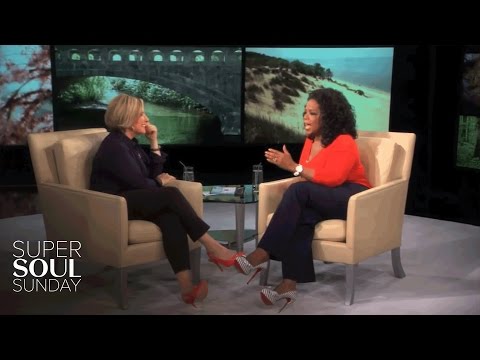
“But that's no—that's it. And so guess what the number one casualty is of a scarcity culture? What? Vulnerability. We shut down. We shut down because I'm not... I'm not going to let you know. No, because I'm—not altogether. Yeah, yeah. And the thing is that, like, oh well, we lose a little vulnerability, but vulnerability is not just about fear and grief and disappointment. It's the birthplace of everything we're hungry for: creativity, joy, creativity, faith, love, innovation, and all of that.”Super Soul Sunday interview with Oprah, 2015 · 3:01
The lesson
Brown’s core reframe is simple: vulnerability is not weakness. She defines it as uncertainty, risk, and emotional exposure, and then argues that these are the conditions present in every real act of courage, not signs that courage is absent. That is why she treats vulnerability as the clearest measure of bravery rather than its opposite.123
This matters because people often imagine courage as confidence, toughness, or control. Brown pushes back: courage is showing up when the outcome is unknown and you may be judged, hurt, or fail. In her account, bravery is not winning; it is being willing to be seen and to act without guarantees.45
Once vulnerability is understood this way, it becomes clear why it sits underneath creativity, innovation, and change. New ideas require risk, and meaningful work usually involves exposure: you make something, say something true, or try something that might not work. Brown’s point is that if you remove vulnerability, you do not get safer creativity—you get no creativity at all.6789
Brown also warns that modern culture trains people away from vulnerability. When people measure themselves through approval, status, or signals of being 'enough,' they become more guarded and less willing to tell the truth or take emotional risks. Scarcity and external validation do not just make people anxious; they shut down the very openness that courage requires.101112
That is why practicing courage is less about becoming fearless and more about staying present in discomfort with clarity and boundaries. Brown distinguishes vulnerability from oversharing: it is not dumping everything, but telling the truth and remaining engaged in hard moments. In work and relationships, that can look like initiating the difficult call, having the clear conversation, or starting again after failure rather than hiding behind armor.1314
5 principles from Brené Brown
Treat vulnerability as the measure of courage
When you feel uncertainty, emotional exposure, or risk, do not read that feeling as proof you should retreat. Brown’s point is that these conditions are exactly where courage appears, so use them as signals that brave action may be required.
“Vulnerability is our most accurate measurement of courage…”
Show up without guarantees
Courage does not depend on knowing the outcome in advance. In practice, this means speaking, creating, helping, or leading even when you cannot control how it will land.
“It's not winning or losing. It's having the guts to show up and be seen when there are no predictions of outcome…”
Expect creativity to require risk
If you want innovation or meaningful work, you must make room for mistakes, failure, and exposure. Do not wait to feel invulnerable before creating; that would block the work entirely.
“…there is no innovation and creativity without failure. Period.”
Resist scarcity and approval-seeking
When your worth depends on likes, praise, or comparison, you become less willing to be seen honestly. Protect courage by noticing where external validation is shaping your choices and pulling you away from what matters.
“…we now live in a culture that measures itself, ourselves, by how many likes we get on Facebook?”
Practice clear, bounded truth-telling
Vulnerability is not indiscriminate disclosure; it is honest engagement in hard moments. Apply it through direct conversations, clear expectations, and truthful action that respects both your boundaries and other people’s dignity.
Moments to watch
In her own words
The quotes behind the lesson, word for word from the transcripts. Numbers match the lesson above.
“Vulnerability is our most accurate measurement of courage…”
“There is no courage without vulnerability.”
“You know, it was interesting because I used to spend a lot of time, led, go into these companies kind of evangelizing about vulnerability, it's important. Then one day, I found myself on a military base talking to Special Forces, and I just asked a simple question: Give me an example of courage that you've seen or witnessed in your life, or that you know you've done yourself, that didn't require uncertainty, risk, and emotional exposure, which is the definition of vulnerability. Give me a single example of courage that…”
“It's not winning or losing. It's having the guts to show up and be seen when there are no predictions of outcome…”
“That vulnerability is the best measure of courage. Wow, that's a good one. Tweet, tweet. That is, I think that's it. I think that's, that's the soul of all the work: the willingness to show up and let ourselves be fully seen and known. It doesn't get braver than that. It just really doesn't, does it?”
“…vulnerability is the birthplace of innovation, creativity and change.”
“…there is no innovation and creativity without failure. Period.”
“…there is no creativity without vulnerability.”
“…it is the birthplace of innovation, creativity, trust, empathy.”
“…we now live in a culture that measures itself, ourselves, by how many likes we get on Facebook?”
“When we're defined by what people think, we lose the courage to be vulnerable.”
“But that's no—that's it. And so guess what the number one casualty is of a scarcity culture? What? Vulnerability. We shut down. We shut down because I'm not... I'm not going to let you know. No, because I'm—not altogether. Yeah, yeah. And the thing is that, like, oh well, we lose a little vulnerability, but vulnerability is not just about fear and grief and disappointment. It's the birthplace of everything we're hungry for: creativity, joy, creativity, faith, love, innovation, and all of that.”
“Vulnerability is never easy, and it feels terrible, but there's no evidence that it's anything but courage. I mean, the best example, I think, and something that I think everyone in here and everyone watching can relate to, is picking up the phone and making that call after something horrible happens to someone we care about. Yeah, right? And we look at the phone and we're like, "I really need to call. I can't believe her husband dropped dead; he was 45. I just, you know what, I'm going to call in an hour. She's probably resting," and then an…”
“Operationalize those in behaviors. Do you know what behaviors support your values? What don't? Three breathing trusts: Can you build trust and be trustworthy? And the last one, which I think was really interesting, was learning how to get back up, learning how to rise, because we found that people are more willing to be courageous upfront if they know how to rise. Yeah, I mean, that's why—I'm sorry John, that's what I called this a masterpiece, because to just sum up everything. And then you write, courage is contagious. To scale daring leadership and build courage in teams and organizations, we have to cultivate a culture in which brave work, tough conversations, whole hearts, the expectation and armor is not unnecessary or rewarded. That's the thing, because people want to know, how do we scale this type of behavior? Yeah.”
Reflect
- Where in your work or life are you calling something 'weakness' that is really uncertainty, risk, or emotional exposure?
- What important conversation, creative act, or decision are you postponing because you cannot control the outcome?
- When do approval, comparison, or the feeling of 'not enough' make you less honest or less willing to be seen?
Check your understanding
Go deeper
 Brené Brown on Shame Resilience: Vulnerability Is Not Weakness2012 · 21 min · full transcript
 Brené Brown on Vulnerability and Courage: The Birthplace of Creativity2015 · 4 min · full transcript
 Brené Brown on Vulnerability and Creativity: Daring Greatly2013 · 91 min · full transcript
 Brené Brown on Daring Leadership: Vulnerability Is the Path to Courage2018 · 6 min · full transcript
 Brené Brown on Vulnerability: Get Back Up and Begin Again2020 · 21 min · full transcript
- What did Brené Brown say about courage?
- What did Brené Brown say about the original definition of courage?
- What did Brené Brown say about vulnerability?
- What did Brené Brown say about why courage requires vulnerability?
- What did Brené Brown say is the best measure of courage?
- What did Brené Brown say vulnerability really is?