Warren Buffett on Insurance
Buffett sees insurance as a rare business that gets paid upfront, creating float that can fund long-term investing if underwriting stays disciplined and the company can survive panic without forced moves.
- Insurance is powerful because premiums arrive before losses are paid, creating float to invest.
- Float is valuable only if underwriting is disciplined and usually costs little or nothing.
- Insurance and investing both require staying inside what you understand and valuing businesses over market noise.
- The real test of an insurer is resilience during panic, when confidence disappears and liquidity matters most.
- Berkshire’s structure is built so it does not have to sell assets or depend on forecasts in bad times.
Insurance matters because float can become investable capital
Buffett’s core idea is simple: insurance companies are paid before they pay many of their claims. That means unpaid losses sit on the balance sheet as funds the insurer can use in the meantime, which is what he means by float. At Berkshire, he treats that float as a major source of investable capital.
What makes this especially attractive is not just the size of the float but its economics. Buffett points out that Berkshire’s float has, in most years, cost the company nothing, which turns insurance from a normal operating business into a funding engine for long-term compounding.
This helps explain why insurance is so central to Berkshire. It is not only a business line; it is part of the architecture that gives Berkshire unusual financial flexibility.
Float is only good if underwriting stays disciplined
Buffett does not treat insurance float as free money by default. The reason float is valuable is that it comes from obligations to pay future losses, so the insurer has to price risk correctly and avoid doing business it cannot understand.
That same discipline shows up in his broader investing standard: if something is too complex to evaluate plainly, he does not want it. Applied to insurance, that means avoiding policies, exposures, or structures where the risk cannot be sensibly judged.
He also thinks in business terms, not market terms. The question is not whether headlines are scary or the stock price moves around, but whether the underlying operation is worth more over time. That owner mindset fits insurance particularly well because insurance liabilities and earnings unfold over years, not days.
Insurance works best inside a structure built for patience
Buffett repeatedly emphasizes that Berkshire does not organize itself around market forecasts. He says they do not pay much attention to markets or forecasts, which matters in insurance because liabilities can be long-dated and investment opportunities appear unpredictably.
That patience is reinforced by Berkshire’s habit of retaining capital. Buffett argues that keeping and reinvesting money, rather than paying it out, has been a major reason Berkshire built so much equity and earning power. Insurance float becomes much more useful when it sits alongside permanent capital and a refusal to make forced decisions.
His preference is to turn available funds into productive assets when the odds are favorable. He would rather own good businesses than hold idle cash, so insurance float becomes valuable partly because it gives Berkshire the capacity to act when opportunities arise.
Insurance teaches Buffett’s broader view of risk
Buffett’s insurance thinking is really a practical theory of risk. He starts from uncertainty: nothing is sure tomorrow or next year, so the job is not to predict perfectly but to be positioned to endure and benefit over time.
That is why he prefers understandable assets with long-term earning power. He argues that if you get your money’s worth from future earning power over 10, 20, or 30 years, you have made a good investment, even though short-term market moves are unknowable.
Insurance fits this worldview because it forces attention to probabilities, reserves, liquidity, and survival. It rewards a company that can accept uncertainty without becoming fragile.
Panic reveals what kind of insurer or financial institution you really are
Buffett’s comments on the financial crisis show why resilience is non-negotiable in insurance and finance. In panic, fear spreads instantly while confidence returns slowly, and institutions discover how interconnected they really are.
He describes the system as freezing when money would not move and the arteries of finance were seizing up. In that environment, the firms that survive are the ones that do not depend on fragile funding or on counterparties staying calm.
This is one reason Berkshire prizes being seen as an asset, not a liability, in times of stress. For Buffett, a great insurance-centered institution is not one that looks best in easy years; it is one that can supply confidence and capital when others are forced into retreat.
Where to watch
 Warren Buffett on Succession and Capital Allocation: Berkshire's Next Era2023 · 165 min · full transcriptBest single source on how Buffett thinks about float, retained earnings, capital allocation, and Berkshire’s insurance-based structure.
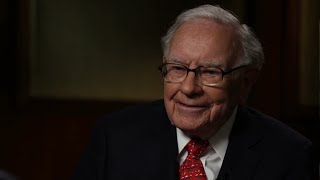 Warren Buffett on the 2008 Financial Crisis: How Panic Spread2008 · 40 min · full transcriptShows why confidence, contagion, and interconnectedness matter so much to insurers and financial institutions.
 Warren Buffett on Financial Crisis: Fannie, Freddie, and TARP2010 · 52 min · full transcriptExplains the liquidity side of crisis risk: what happens when the financial system starts to freeze.
 Warren Buffett on Value Investing: Lessons from the Financial Crisis2009 · 43 min · full transcriptConnects insurance to Buffett’s education, GEICO, and his habit of staying inside his circle of competence.
 Warren Buffett on Market Volatility: Buy Businesses, Not Headlines2019 · 121 min · full transcriptUseful for understanding how Buffett applies owner thinking and long-term valuation to insurance and other businesses.
Questions people ask
- How does Warren Buffett think about capital allocation?
- What did Warren Buffett say about Berkshire Hathaway paying dividends?
- What did Warren Buffett say about float at Berkshire Hathaway?
- What did Warren Buffett say about holding cash versus owning businesses?
- What did Warren Buffett say about Berkshire Hathaway's reputation in a crisis?
- How does Warren Buffett make deals at Berkshire Hathaway?
How this guide was made: drafted with AI from the full transcripts of the recordings cited, then checked: every quotation must match a transcript word for word and be the speaker's own words, and an independent review gates accuracy. Methodology and corrections.

