Warren Buffett on Financial Crisis
Buffett sees financial crises as panics born from leverage and broken trust, dangerous for the system but also moments when disciplined investors and decisive government action matter most.
- Crises start when leverage meets a collapse in confidence.
- Panic moves faster than business reality, so investors must stay rational.
- He supported emergency government action to stop systemic collapse.
- He invests by understanding businesses, not by predicting macro variables.
- Even after severe shocks, he remains strongly optimistic about America’s long-run future.
A financial crisis is really a crisis of trust
Buffett describes the 2008 episode not just as falling prices but as a breakdown in confidence across the financial system. In his view, fear spreads instantly, while trust returns slowly, which is why markets can freeze so suddenly once counterparties stop believing one another.12
He also emphasizes how interconnected the system had become. When institutions are heavily linked, one failure can threaten many others, turning isolated trouble into systemwide danger.34
That helps explain why a crisis can feel disproportionate to the original trigger. Once fear dominates, normal funding and lending can stop, and the problem becomes less about valuation and more about whether the plumbing of finance still works.52
Leverage turns a bad mistake into a catastrophe
Buffett traces the 2008 collapse back to a housing bubble supported by easy borrowing and the belief that a single asset class could not fail. The core danger was not just that housing prices were wrong, but that so many people and institutions were leveraged on the same assumption.32
That is why he is especially wary of structures he cannot judge clearly. His approach in crisis is not to reach for complexity but to avoid what he does not understand and to stay inside his circle of competence.67
The practical lesson is simple: fragility often comes from financing, not just from the asset itself. If an investment depends on heroic assumptions, complex models, or unstable funding, Buffett treats that as a warning sign.89
Government action can be necessary when the system is freezing
Buffett is a defender of markets, but he does not think markets should simply be left alone during a full-scale panic. He argues that the market system is enormously productive, yet can also be brutal if left entirely to itself, especially when breakdowns threaten the broader public.1011
That is why he viewed the emergency response in 2008 as necessary, even if imperfect. When money markets and credit channels were seizing up, he believed officials had to act fast to prevent a far worse collapse.4212
His view is not that bailouts are inherently good. It is that when the financial arteries are freezing, preserving the system can be more important than punishing every error in real time.210

“If money doesn't loosen up, this sucker can go down.”On the Brink interview, 2010 · full transcript →
For investors, crisis is a test of discipline, not prediction
Buffett does not approach crises by trying to forecast interest rates, short-term market moves, or the exact path of the economy. He says plainly that he cannot predict rates and does not organize his investing around that kind of macro call.137
Instead, he thinks like a buyer of whole businesses. That matters most in a panic, because market prices can swing violently while the underlying question remains whether the business is understandable, durable, and worth owning.15
This discipline also means passing on things that are too hard to value. Buffett would rather miss an opportunity than depend on complexity he cannot explain simply.86
Crises create opportunity, but only for prepared capital
Buffett sees severe dislocations as rare moments when disciplined capital allocation can matter enormously. He is patient most of the time and does not need constant action; even one strong idea in a year can be enough.
But he also prefers owning good businesses to sitting on idle cash for long periods. When conditions create understandable opportunities, he wants capital ready to be deployed.18
The key is that opportunity in a crisis does not come from bravery alone. It comes from prior preparation, clear judgment, and the ability to act without depending on fragile assumptions or borrowed confidence.86
His bottom line: never bet against America after a crisis
Even when he describes crisis in the starkest terms, Buffett keeps returning to the same long-run conclusion: America recovers. He argues that the country has endured terrifying shocks before and still moved forward through innovation, productivity, and the power of its economic system.122021
That does not mean recovery is immediate or painless. He is clear that the return can take time and that the economy may not come back in exactly the same form or on anyone's preferred timetable.222324
Still, his core conviction is that long-term progress remains the dominant fact. That is why panic does not change his basic orientation toward investing and why he continues to favor productive assets over fear-driven paralysis.252218
Buffett on financial crisis, in his own words
“If money doesn't loosen up, this sucker can go down.”
Where to watch
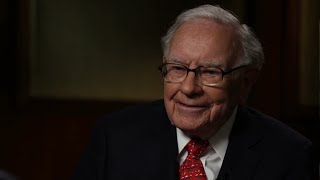 Warren Buffett on the 2008 Financial Crisis: How Panic Spread2008 · 40 min · full transcriptBest concise account of how the 2008 panic spread through leverage, counterparties, and fear.
 Warren Buffett on Financial Crisis: Fannie, Freddie, and TARP2010 · 52 min · full transcriptShows why Buffett thought the system was close to seizure and why emergency intervention was necessary.
 Warren Buffett on Crisis Investing: Derivatives, Bailouts, and Bargains2009 · 270 min · full transcriptBest for Buffett’s investor lens on crisis bargains, derivatives, and why simplicity matters.
 Warren Buffett on Never Bet Against America: Berkshire and Crisis2020 · 268 min · full transcriptBest long-run framing: crisis is real, but America’s productive capacity survives it.
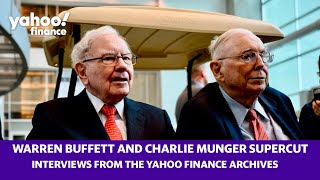 Warren Buffett on Markets in Crisis: Buying Through Panic2021 · 150 min · full transcriptUseful for applying Buffett’s crisis mindset to newer shocks, uncertainty, and market volatility.
 Warren Buffett on the American Economy: Recovery, Risk, and Opportunity2010 · 51 min · full transcriptBest for understanding Buffett’s view of the slow recovery after panic has passed.
Questions people ask
- What did Warren Buffett say about capitalism and the market system?
- What did Warren Buffett say about his circle of competence?
- What did Warren Buffett say about holding cash versus owning businesses?
- What did Warren Buffett say about whether the American economy would recover?
- Why does Warren Buffett say never bet against America?
- What did Warren Buffett say about fairness and wealth in America?
Sources
Every quote above, word for word from the transcripts. Numbers match the text.
“Confidence comes back one at a time, but fear is instantaneous…”
“…the arteries of the financial system were freezing up…”
“What we really learned in that particular panic was the fact that we're all dominoes and we're all very close together now…”
“If money doesn't loosen up, this sucker can go down.”
“…people are afraid, they are afraid…”
“I don't worry about things I don't understand.”
“The the question is, is the box that says knowns and important... Knowable and important Mhmm. Is there anything in that box? And can you tell what's in that box and what isn't in that box? And it's what I call knowing your circle of competence. And my circle of competence doesn't include the ability to predict interest rates a day from now or a year from now or five years from now. So I say, can I function without knowing that? Same way as predicting what business is going to do or the stock market's going to do. I can't do any of those things, But that doesn't mean that I can't do well investing over time.”
“If you need to use a computer or calculator to make the calculation, you shouldn't buy it.”
“We would not buy them at any price.”
“The market system works wonders, and it's also brutal if left entirely to itself.”
“Well, the market system works wonders, and it's also brutal if left entirely to itself. And we wouldn't be the country we are if the market system hadn't been allowed to function. And to some extent, you can say that other countries around the world that have improved their way of life dramatically, to some extent, have have have copied us. So the the the market system is marvelous, in many respects, but it needs government. And it it, you know, it is creative destruction. But for the ones who are destroyed, it can be it can be a very brutal game and and for the people who work in the industries and all of that sort of thing.”
“I described it actually on CNBC as an economic Pearl Harbor…”
“I have never been able to predict interest rates, and I've never tried…”
“Well, when I buy 100 shares of XYZ company, I look at it as buying the whole company. And so I've always looked at buying stocks as buying businesses. So it really wasn't a different situation. Now, I couldn't resell it, and I couldn't, if I own the stock, I couldn't change management, which I could if I own the whole company, but it was basically the same approach.”
“…we'll come out better on the other end…”
“You'd pick today, and you would pick America.”
“And it's been true all along. It may have been interrupted One of the scariest of scenarios when you had a war with one group of states fighting another group of states, and it may have been tested again in the Great Depression, and it may be tested now to some degree. But in the end, the answer is never bet against America. And that, in my view, is is true today as it was in 1789 and even was true at the... During the civil war and the depths of the depression.”
“The longer term is pretty darn certain.”
“The American—the American economy will come back, and it won't be tomorrow, and, you know, it won't be exactly the same, but in the end, we have not, we've not changed the American people in their capacity to innovate or their excitement about, about becoming more prosperous and coming up with new ideas. Businesses will be formed. Businesses will expand, but not, not much tomorrow.”
“So if you think about the fact that we're enduring a few months, and we'll endure some many more months, but... And we don't know how it comes out. And people in the thirties didn't know how it was gonna come out, but they endured, persevered, prospered, and the American miracle continued. But it's interesting in that... I actually don't have a slide for the next one because last night, I was thinking after all the slides have been prepared.”
“The United States is kind of going to do well.”
How this guide was made: drafted with AI from the full transcripts of the recordings cited, then checked: every quotation must match a transcript word for word and be the speaker's own words, and an independent review gates accuracy. Methodology and corrections.
