Warren Buffett on Economics
Buffett treats economics as background, not a forecasting tool: own strong businesses, ignore macro predictions, and stay rational through panics and recoveries.
- He does not invest based on macro or market forecasts.
- He focuses on the long-term earning power of businesses, not headlines.
- Panics spread faster than confidence, so crises create both danger and opportunity.
- He is broadly optimistic about America’s long-run economic progress.
- He admits the limits of prediction, especially on interest rates and short-term conditions.

Macro forecasts should not drive investment decisions
Buffett’s basic view is that economics is too uncertain to use as a reliable decision engine for investing. He says he does not know what the market will do, does not try to predict interest rates, and does not let a macro view stop him from buying a business he understands and likes.1234
That does not mean economics is irrelevant. It means macro opinions are usually less useful than investors think. Buffett prefers to ask whether an asset offers good value and whether its future earning power justifies the price, instead of pretending to know the next move in rates, GDP, or the stock market.678
Think like a business owner, not an economist on television
When Buffett looks at stocks, he reframes the whole problem. A stock is not a flashing quote or a vote on the latest economic story; it is ownership in a real business. That is why he says he bought a business, not a stock, and why he keeps returning to long-term earning power as the key test.967
This owner’s mindset changes how economic news should be handled. A recession, a virus shock, or a scary headline can hurt near-term results, but the central question is whether the business will be worth more over 10, 20, or 30 years. In his view, investors get into trouble when they react to macro noise instead of estimating durable business value.673
Panic moves faster than the real economy
Buffett sees financial crises as episodes where fear outruns analysis. He describes panic as contagious and immediate, while trust returns slowly. In that kind of environment, markets can freeze because participants stop believing one another, even before the full economic damage is understood.10111213
This is one of his most practical economic lessons. Because fear is instantaneous, prices can disconnect from long-run value. That is why crises are dangerous for leveraged or fragile players, but potentially attractive for investors with liquidity, discipline, and a clear understanding of what they own.11121415
Interest rates matter, but prediction is outside his circle
Buffett clearly understands that rates affect asset values. He also says very plainly that he has never been able to predict interest rates and has never tried. Even unusual conditions like negative rates strike him as puzzling rather than something he believes he can forecast with confidence.21617
That combination is important. He does not deny that economics shapes markets; he denies that he has an edge in forecasting the path of macro variables. His answer is to stay inside his circle of competence, compare opportunities that he can understand, and avoid acting as if unknowable things are knowable.18
His long-run economic bet is on productive businesses and America
Buffett’s macro stance is skeptical in the short run but optimistic in the long run. He expects interruptions, slow recoveries, and changing conditions, yet still believes the broader American economy will come back and continue creating prosperity through innovation, productive enterprise, and a market system supported by rules and institutions.1920212223
That optimism leads directly to action. He would rather own good businesses than hold excess cash, and he generally prefers productive assets to long-term cash or bonds, especially when rates are very low. His view is not that every year will be easy, but that betting against American business over time is a mistake.242526
“It does not make sense to bet against America.”Berkshire Hathaway annual meeting, 2005 · full transcript →
Economics matters most as a test of temperament and judgment
Buffett’s deeper point is that economics often tempts people into false precision. He is wary of complicated setups that depend on delicate assumptions, and he prefers decisions that can be justified with plain reasoning about value, resilience, and earning power.1527
So the practical application is behavioral as much as analytical: do not let economists, headlines, or market chatter push you into acting on predictions you cannot make. Focus on what you can understand, welcome lower prices if you are a net buyer, and keep your attention on durable value rather than short-term commentary.2848
Buffett on economics, in his own words
“It does not make sense to bet against America.”
“The longer term is pretty darn certain.”
Where to watch
 Warren Buffett on Macro Forecasting: Focus on Value, Not Predictions2005 · 260 min · full transcriptBest single statement of his anti-macro approach: ignore forecasts and focus on value.
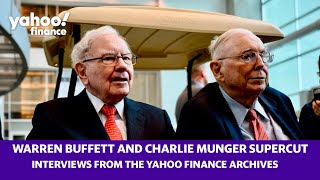 Warren Buffett on Markets in Crisis: Buying Through Panic2021 · 150 min · full transcriptShows how he thinks about uncertainty, interest rates, and staying inside his circle of competence.
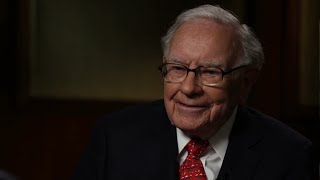 Warren Buffett on the 2008 Financial Crisis: How Panic Spread2008 · 40 min · full transcriptExplains the economics of panic: how fear spreads faster than confidence in a crisis.
 Warren Buffett on the American Economy: Recovery, Risk, and Opportunity2010 · 51 min · full transcriptBest for his long-run optimism about recovery, productive assets, and the American economy.
 Warren Buffett on Market Volatility: Buy Businesses, Not Headlines2019 · 121 min · full transcriptApplies his economic thinking directly to stocks, bonds, and headline-driven volatility.
Questions people ask
- What did Warren Buffett say about betting against America?
- What did Warren Buffett say about capitalism and the market system?
- What did Warren Buffett say about forecasting the stock market?
- What did Warren Buffett say about his circle of competence?
- What did Warren Buffett say about whether the American economy would recover?
- Why did Warren Buffett say America is still the best place to invest?
Sources
Every quote above, word for word from the transcripts. Numbers match the text.
“I don't think anybody knows what the market's going to do.”
“I have never been able to predict interest rates, and I've never tried…”
“We've never decided not to buy a business we like because of a macro view.”
“We have no—we're not good at forecasting market, so I mean, we knew that we were getting enormous bargains in the mid-'70s. We knew that the market went crazy to some extent in the late '90s, but we don't have much—we don't spend any time. Charlie and I spend no time thinking or talking about what the stock market is gonna do because we don't know. We do know sometimes that we're getting very good value for our money when we buy some stocks or some bonds, as it may be, but we are not operating on the basis of any kind of macro forecasts about stocks.”
“The real question is whether the company's worth more or less than $100 billion.”
“If you get your money's worth in terms of future earning power over the next 10 or 20 or 30 years, you're going to have made a good investment. And you can't pick them from day to day. If you can do that, you can. Well, I haven't met anybody yet that knows how to do it.”
“If you told me I had to invest 50,000,000,000 every year till we got down to 50,000,000,000, that would be the dumbest thing in the world to invest in that manner. Things get extraordinarily attractive very occasionally. The long term trend is up. Nobody knows. And I certainly don't know. Greg doesn't know. Ajit doesn't know. Nobody knows what the market is going to do tomorrow, next week, next month. Nobody knows what business is gonna do tomorrow, next week, or next month, but they spend all their time talking about it because it's it's easy to talk about. And... But it it it has no value. I've I've never found anybody I wanted to listen to on the subject.”
“I bought a business today, not a stock today.”
“…people are afraid, they are afraid…”
“Confidence comes back one at a time, but fear is instantaneous…”
“What we really learned in that particular panic was the fact that we're all dominoes and we're all very close together now…”
“…the arteries of the financial system were freezing up…”
“If money doesn't loosen up, this sucker can go down.”
“If you need to use a computer or calculator to make the calculation, you shouldn't buy it.”
“They puzzle me, but they don't scare me…”
“I've been surprised by all kinds of things in the last ten years about the economy. I mean, I don't think there was any economist I've ever read that talked about negative interest rates for long periods of time. I mean, if you go back and read Keynes or you read you read Samuelson, read any of them, they do not get into a negative rate environment. I think now there's still 11,000,000,000,000 that's of government debt around the world that's at a negative rate. So we've never seen it before. And we've never seen, at least, conventional wisdom on it, the sustained period of long and growing deficits while the economy is getting better, extremely low interest rates, and we need very little inflation. So something different is happening, but something different happens all the time. So... And that's one reason economic predictions just don't enter into our decisions.”
“Well, you look at everything and relate one to another. I mean, that's the nature of market. So you're always trying to think about, a, what's in my circle of confidence, and then what makes the most sense that's within that circle. But the important thing is know where the perimeter of the circle is. I mean, that's way more important than how big the circle is or a whole bunch of other factors. So I think Apple is within my circle of commerce. I think it's an incredible business run by a fellow who's one of the great managers of all time, and he was underrated for a while, but now he's being seen for what he really is. It's it's an assound... You you could almost... You know, if we had…”
“…we'll come out better on the other end…”
“The United States is kind of going to do well.”
“The longer term is pretty darn certain.”
“The American—the American economy will come back, and it won't be tomorrow, and, you know, it won't be exactly the same, but in the end, we have not, we've not changed the American people in their capacity to innovate or their excitement about, about becoming more prosperous and coming up with new ideas. Businesses will be formed. Businesses will expand, but not, not much tomorrow.”
“Absolutely. In terms of American companies, in terms of everything. I mean, you know, if you look back a couple hundred years, we've gotten where we are not because we've gotten smarter or not because we work harder. We've got it because we found ways to unleash more of the human potential. And, and what does that, well, a rule of law helps, a market system helps, equality of opportunity helps all, all of these things that are still a fundamental part of the American system.”
“Stocks are way better than 30-year bonds.”
“It does not make sense to bet against America.”
“But anytime we have surplus cash around, I’m unhappy. I mean, I would much rather have good businesses than cash. And we found a chance in the last year thereabouts to deploy. We came in with something over 40 billion of cash, and we’ve got about 20 billion now. And we’ve had some earnings, so we put a lot of cash to work. And I like that. No, I’d much rather own a good business than have cash.”
“We would not buy them at any price.”
“…if I'm a net buyer, I will do better if prices are lower.”
How this guide was made: drafted with AI from the full transcripts of the recordings cited, then checked: every quotation must match a transcript word for word and be the speaker's own words, and an independent review gates accuracy. Methodology and corrections.

