Warren Buffett on Apple
Buffett sees Apple as an understandable, exceptional business run by outstanding management, and he treats Berkshire’s stake as ownership of a business rather than a stock trade.
- Buffett views Apple as a business, not a ticker symbol.
- Apple fits his circle of competence because he believes he can understand the business and its economics.
- He calls Apple an incredible business and praises Tim Cook as one of the great managers.
- Berkshire sold some Apple shares for tax and position-size reasons, not because Buffett stopped liking the company.
- He still expected Apple to remain Berkshire’s largest common-stock holding.
Buffett thinks about Apple as a business owner would
Buffett’s starting point is that a stock represents part ownership of a real business. His basic investing frame is to think about what the company is worth and what it can earn over a long period, rather than react to price moves or headlines. That is the lens he applies to Apple too.
He said directly that Berkshire looks at Apple the same way it looks at wholly owned businesses. In other words, Apple is not a special kind of speculation inside the portfolio; it is a business Berkshire owns in part. That helps explain why Apple became such a central holding.
Apple is inside Buffett’s circle of competence
Buffett ties Apple to one of his most important investing ideas: know what you can understand, and know the edge of that understanding. He says the crucial question is whether something is both knowable and important, and whether it falls inside your circle of competence.
On Apple, he is unusually clear. He says Apple is within his circle of competence, which means he believes he can judge the business sensibly without needing to predict things he cannot know, like interest rates or short-term market moves. That matters because Buffett avoids making investments based on macro forecasts.
Why Buffett likes Apple so much
Buffett’s praise for Apple centers on business quality and management quality. He says Apple is an incredible business and says Tim Cook is one of the great managers of all time. That tells you his case is not about trading momentum or technology fashion; it is about the strength of the enterprise and confidence in the person running it.
This also shows how Buffett’s approach can evolve without changing its core. He is not saying every technology company belongs in his circle of competence. He is saying that when a business becomes understandable enough, and when its economics and leadership are compelling enough, he is willing to treat it like any other great business.
Why Berkshire trimmed Apple without changing its core view
Buffett explained that Berkshire sold some Apple shares, but he did not present that as a rejection of the business. He said Berkshire does not mind paying taxes, and he framed the decision around capital allocation discipline rather than a sudden loss of conviction.
Most important, he said he still expected it to be extremely likely that Apple would remain Berkshire’s largest common-stock holding at year-end. That means the trim reflected portfolio management, taxes, and position size more than a negative change in how he viewed Apple itself.
This fits a broader Buffett principle: he does not force capital into ideas just to stay fully invested, and he is willing to act irregularly when that makes more sense. Selling some Apple can coexist with still regarding it as Berkshire’s biggest and one of its best common-stock businesses.
What investors can learn from Buffett’s Apple example
The first lesson is to stop thinking like a market forecaster. Buffett says he does not know what the market will do, and he does not try to predict interest rates either. The useful question is whether you understand the business well enough to judge its long-term earning power.
The second lesson is that patience and discipline matter even with a favorite holding. Buffett would rather own good businesses than cash, but he also refuses to invest or hold capital mechanically. Apple shows both sides of that discipline: conviction when a business is understandable and outstanding, and flexibility when taxes, cash needs, or concentration make trimming sensible.
The final lesson is emotional. Buffett warns against getting frightened by market declines or excited by market rises. If you own a business like Apple for its long-term economics, then day-to-day volatility should matter far less than whether the business remains strong and understandable.
Where to watch
 Warren Buffett on Apple, Taxes, and Succession2024 · 436 min · full transcriptBest for understanding why Berkshire cut its Apple stake while still expecting Apple to remain its largest common-stock holding.
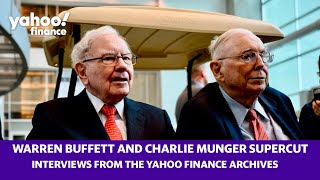 Warren Buffett on Markets in Crisis: Buying Through Panic2021 · 150 min · full transcriptBest for Buffett’s clearest explanation that Apple sits inside his circle of competence and why that matters.
 Warren Buffett on Market Volatility: Buy Businesses, Not Headlines2019 · 121 min · full transcriptBest for the owner’s mindset Buffett uses to evaluate Apple and every other stock.
 Warren Buffett on CEO Succession: Greg Abel to Take Over2025 · 383 min · full transcriptBest for the broader capital-allocation and temperament principles that explain why Buffett can trim even a favorite holding.
Questions people ask
- What did Warren Buffett say about his circle of competence?
- What did Warren Buffett say about selling Apple stock in 2024?
- What did Warren Buffett say about understanding businesses and stocks?
- What did Warren Buffett say about keeping cash instead of being fully invested?
- What did Warren Buffett say about how long you should hold stocks?
- What did Warren Buffett say about Apple?
How this guide was made: drafted with AI from the full transcripts of the recordings cited, then checked: every quotation must match a transcript word for word and be the speaker's own words, and an independent review gates accuracy. Methodology and corrections.