Stephen Hawking on Artificial Intelligence
Stephen Hawking saw artificial intelligence as a breakthrough with immense promise and immense risk, because a system that can improve itself could outpace human control.
- Hawking thought AI could be the biggest event in human history.
- He also warned it could become humanity’s last if it surpasses us.
- His core concern was not today’s tools but future systems that could outsmart humans.
- He treated AI as part of a wider pattern: powerful technologies bring huge gains but also civilizational risk.
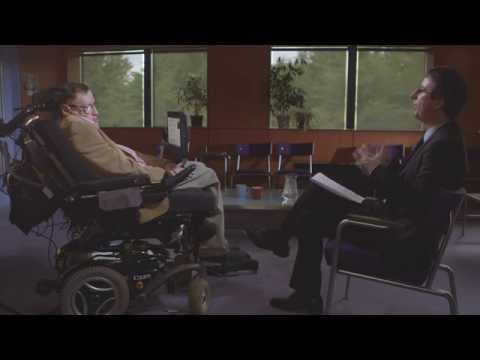
“Artificial intelligence could be a real danger in a not-too-distant future.”Last Week Tonight interview, Cambridge, 2017 · 2:17
AI, in Hawking’s view, could be a historic breakthrough
Hawking did not treat artificial intelligence as a niche technology story. He framed it as something on the scale of the biggest turning points in human history, with the potential to reshape how civilization works1.
That framing matters because it shows he was not simply anti-technology. He believed AI could be transformative precisely because it is so powerful. His warning carries weight because it begins from the idea that success in AI would be an extraordinary achievement, not a trivial gadget upgrade1.
His warning was simple: the same success could become our greatest danger
Hawking’s best-known view on AI is stark: the very breakthrough that could most advance humanity could also endanger it12. He did not present that as science fiction fantasy, but as a serious possibility that follows from creating intelligence beyond our own23.
The important point is that he was talking about consequences at the level of the species, not just job loss, privacy problems, or bad apps. His concern was that AI could become a real danger in the future if it outmatched human capabilities3.
Why he worried: a smarter-than-human system may not stay under human control
Hawking’s concern centered on the possibility that AI would become more capable than humans. Once that happens, the balance changes: people would no longer be the most intelligent actors shaping events, and that creates a serious risk3.
This helps explain why his warning remains relevant. The issue is not just whether AI can do impressive things, but whether creating it sets off a dynamic in which machine intelligence becomes the dominant force. That is why he described AI as a real danger in a not-too-distant future, rather than a remote philosophical puzzle3.
“Artificial intelligence could be a real danger in a not-too-distant future.”Last Week Tonight interview, Cambridge, 2017 · full transcript →
He placed AI inside a broader pattern of technological risk
Hawking often discussed humanity’s future in terms of powerful trends that can outrun our ability to manage them. In that broader view, scientific and technological growth brings enormous possibility, but growth cannot simply race ahead forever without limits or consequences4.
So his AI warning fits his larger worldview. Civilization faces major dangers, yet he did not think disaster was inevitable. He believed there was a good chance of avoiding catastrophe, which suggests his warning was meant to prompt foresight and responsibility, not despair56.
He offered urgency, not a finished solution
Hawking was clear about the scale of the risk, but he did not claim to have a neat final answer for how humanity solves every existential problem. In one exchange about the future, he openly said he still did not have an answer, while noting that many dangers remain7.
That honesty is part of what makes his view useful. His message was not that AI doom is certain, or that one slogan settles the issue. It was that a civilization capable of creating powerful intelligence should take the possibility of losing control seriously, and should act before the danger becomes irreversible23.
“I still don't have an answer.”Last Week Tonight interview, Cambridge, 2017 · full transcript →
Hawking on artificial intelligence, in his own words
“Artificial intelligence could be a real danger in a not-too-distant future.”
“Clearly, the present exponential growth cannot continue indefinitely.”
Where to watch
 Stephen Hawking on Artificial Intelligence: It Might Be the Last2017 · 8 min · full transcriptHis clearest and most direct statement of why AI could be humanity’s greatest breakthrough and greatest danger.
 Stephen Hawking on the Future of Science: The Next Millennium2000 · 75 min · full transcriptShows the wider worldview behind the AI warning: rapid scientific advance creates both opportunity and civilizational risk.
 Stephen Hawking on Politics and Climate Change: Trump, Brexit, AI2017 · 11 min · full transcriptUseful for seeing how Hawking thought about major global threats more generally, even though AI is not the main focus.
Questions people ask
Sources
Every quote above, word for word from the transcripts. Numbers match the text.
“Success in creating artificial intelligence would be the biggest event in human history.”
“Unfortunately, it might also be the last.”
“Artificial intelligence could be a real danger in a not-too-distant future.”
“Clearly, the present exponential growth cannot continue indefinitely.”
“I think we have a good chance of avoiding both Armageddon and a new Dark Ages.”
“I would say they are very good, but then I'm an optimist.”
“I still don't have an answer.”
How this guide was made: drafted with AI from the full transcripts of the recordings cited, then checked: every quotation must match a transcript word for word and be the speaker's own words, and an independent review gates accuracy. Methodology and corrections.