Start With Why
The foundation of Sinek’s entire philosophy.
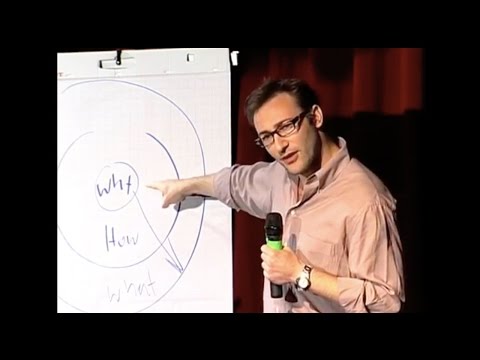
“The neocortex is responsible for all of our rational and analytical thought and language. The middle two sections make up our limbic brains, and our limbic brains are responsible for all of our feelings, like trust and loyalty. It's also responsible for all human behavior, all decision-making, and it has no capacity for language. In other words, when we communicate from the outside in, yes, people can understand vast amounts of complicated information like features and benefits and facts and figures. It just doesn't drive behavior. When we can communicate from the inside out, we're talking directly to the part of the brain that controls behavior, and then we allow people to rationalize it with the tangible things we say and do. This is where gut decisions come from.”TEDxPugetSound talk, 2010 · 6:17
The lesson
Sinek’s central idea is simple: inspiring leaders and organizations start by making their purpose clear, not by leading with products, features, or credentials. He organizes this as the Golden Circle: why, how, then what. The key claim is that people respond most deeply to the belief behind the work, not just the work itself123.
In this chapter, “why” means purpose, cause, or belief. It is not just a goal like profit or growth, because those can motivate transactions without creating attachment. Sinek argues that the real aim is to attract people who share your beliefs, whether they are customers, employees, or supporters, because shared belief creates a stronger bond than mere utility456.
He also explains why this pattern works by tying it to how people make decisions. Facts, features, and rational arguments matter, but they do not by themselves drive behavior; the deeper drivers are feelings such as trust, loyalty, and belonging. In Sinek’s account, communication that starts with why reaches those drivers first, and people then use reason to explain a choice they already feel good about78.
This is why Sinek distinguishes inspiration from manipulation. Pressure tactics can produce a sale, a vote, or short-term compliance, but they do not build loyalty. Loyalty appears when people feel that choosing you says something about who they are and what they believe, which is why trust and belonging matter so much in leadership and organizations91011.
For Sinek, this makes Start With Why a leadership idea, not just a messaging trick. Leadership is about having willing followers, not merely holding authority, and people follow when they feel inspired rather than compelled. That is also why discovering your why matters personally: it gives direction, helps you stay aligned, and lets you lead in a way that serves others instead of chasing empty milestones12131415.
5 principles from Simon Sinek
Start with purpose before tactics
When you explain your work, begin with the belief or cause behind it before describing process or output. In practice, rewrite your introduction, pitch, or team message so the purpose comes first and the what comes last.
“People don't buy what you do they buy why you do it.”
Seek shared belief, not broad appeal
The strongest relationships come from alignment in values, not just from meeting a need. Apply this by attracting customers, teammates, or partners who genuinely believe what you believe instead of trying to persuade everyone.
“The goal is to do business with people who believe what you believe.”
Build loyalty through trust, not manipulation
Discounts, pressure, and fear can move people temporarily, but they do not create lasting commitment. If you want loyalty, communicate in a way that helps people feel trust, belonging, and identity in the relationship.
“The problem is none of them breed loyalty.”
Lead people by inspiring willing followership
Authority alone does not make someone a leader; leadership exists when people want to follow. Ask whether your way of leading creates voluntary commitment or only compliance.
“All leaders have one thing and one thing only: followers.”
Discover a why that serves others
Your why is not something you fabricate for branding; it is something you uncover in the contribution you want to make. A strong why points beyond self-interest and connects your effort to other people’s benefit.
“The opportunity is not to invent a why. It's to discover a why.”
Moments to watch
In his own words
The quotes behind the lesson, word for word from the transcripts. Numbers match the lesson above.
“People don't buy what you do they buy why you do it.”
“People don't buy what you do; they buy why you do it.”
“Why, I mean what's your purpose, what's your cause, what's your belief? Why does your organization exist? Do we really need another company to do what you're doing? Do we really need another one? Why did you get out of bed this morning, and why should anyone care? As a result, the way we think, the way we act, the way we communicate is from the outside in. It's obvious. We go from the clearest thing to the fuzziest thing. We tell people what we do. We tell them how we're different or how we're better or how we're special, and we expect some sort of behavior—a vote, a purchase, support, whatever it is. But not those leaders with the capacity to inspire. Regardless of their size,…”
“The goal is to do business with people who believe what you believe.”
“The goal is not to surround yourself with people who need what you have.”
“Again, the goal is not just to sell to people who need what you have, the goal is to sell to people who believe what you believe. The goal is not just to hire people who need a job, it's to hire people who believe what you believe. I always say that, you know, if you hire people just because they can do a job, they'll work for your money, but if you hire people who believe what you believe, they'll work for you with blood and sweat and tears. And nowhere else is there a better example of this than with the Wright brothers. Most people don't know about Samuel Pierpont Langley. And back in the early 20th century, the pursuit of powered man flight was like the dot com of the day. Everybody was trying it. And Samuel Pierpont Langley had, what we assume, to be the recipe for success.”
“The neocortex is responsible for all of our rational and analytical thought and language. The middle two sections make up our limbic brains, and our limbic brains are responsible for all of our feelings, like trust and loyalty. It's also responsible for all human behavior, all decision-making, and it has no capacity for language. In other words, when we communicate from the outside in, yes, people can understand vast amounts of complicated information like features and benefits and facts and figures. It just doesn't drive behavior. When we can communicate from the inside out, we're talking directly to the part of the brain that controls behavior, and then we allow people to rationalize it with the tangible things we say and do. This is where gut decisions come from.”
“Um, so the human brain, brain, the, the, there's a part of the brain called the neocortex, which is our Homo sapiens brain. It's the newest part of our brain. It's responsible for all of our rational thought and language. It's just not responsible for decisions. This is where the what exists, right? It's very rational, easy to see, tangible. The limbic part of our brain is responsible for all of our feelings, like trust and loyalty. This is where gut decisions come from. It's also responsible for all of our behavior, but it has no capacity for language, which is why it's hard to put feelings into words. This is why we use analogies and metaphors all the time. Um, and so when we start with why, you're actually talking to the decision-making part of the brain.”
“The problem is none of them breed loyalty.”
“Trust is a feeling. Trust is a human experience.”
“There are a million reasons why people will do business with you that have nothing to do with you. You happen to meet some checklist that they have. They happen to hate your competition more. There's a difference between repeat business and loyalty. You see, repeat business means I'll do business with you over and over and over again. Loyalty means I'm willing to turn down a better product at a better price to continue to do business with you. And it's the loyal ones, those who feel like they belong, those who, doing business with you, gives them some sense of identity or belonging—those are the ones. Those are the ones who do great, and the reason is it becomes personal. It becomes personal.”
“All leaders have one thing and one thing only: followers.”
“We follow those who lead, not because we have to, but because we want to.”
“I didn't realize, um, when I first started writing that I was writing a leadership book.”
“The opportunity is not to invent a why. It's to discover a why.”
Reflect
- How do you usually explain your work: starting with what you do, or with the belief behind why you do it? Rewrite that explanation in Golden Circle order.
- Where in your work are you relying on convenience, price, pressure, or habit instead of trust and shared belief?
- What cause or contribution to others best explains why your work matters beyond income or achievement?
Check your understanding
Go deeper
 Simon Sinek on Purpose-Driven Leadership: Start With Why2010 · 18 min · full transcript
 Simon Sinek on Start With Why: Leadership, Loyalty, and Trust2012 · 61 min · full transcript
 Simon Sinek on Start With Why: Book Club Q&A on purpose and leadership2017 · 57 min · full transcript
 Simon Sinek on Purpose at Work: Finding Your Why74 min · full transcript
 Simon Sinek on Start With Why: Purpose, Trust, and Leadership2020 · 50 min · full transcript