Biology of Belief
Why inspiration, trust, and loyalty are felt before they are explained.
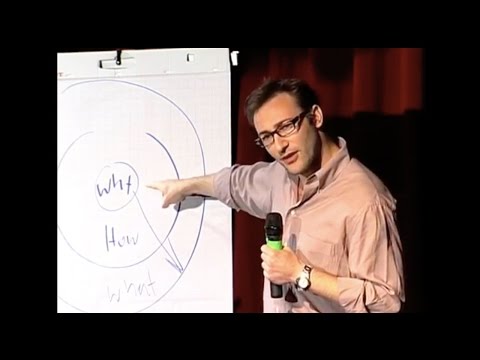
“The neocortex is responsible for all of our rational and analytical thought and language. The middle two sections make up our limbic brains, and our limbic brains are responsible for all of our feelings, like trust and loyalty. It's also responsible for all human behavior, all decision-making, and it has no capacity for language. In other words, when we communicate from the outside in, yes, people can understand vast amounts of complicated information like features and benefits and facts and figures. It just doesn't drive behavior. When we can communicate from the inside out, we're talking directly to the part of the brain that controls behavior, and then we allow people to rationalize it with the tangible things we say and do. This is where gut decisions come from.”TEDxPugetSound talk, 2010 · 6:17
The lesson
Sinek’s account of belief starts with a distinction between two kinds of explanation. We can explain what we do with facts, features, and rational arguments, but that is not the same as moving someone to act. In his model, the part of the brain tied to analysis and language can understand information, while the part tied to trust, loyalty, and decision-making is what actually drives behavior12. That is why people often feel a decision before they can fully explain it.
This is the logic behind starting with why. Purpose, cause, and belief speak more directly to the systems that govern behavior, and then people use rational thought to justify the choice afterward12. That helps explain why Sinek says people respond most strongly not to the product alone but to the belief behind it34. The aim is not broad appeal to anyone with a need, but resonance with people who share the underlying belief56.
This also clarifies the limit of manipulation. Transactions can be produced by pressure, incentives, or other outside-in tactics, but those methods do not create the kind of attachment Sinek cares about. He distinguishes repeat business from loyalty: one is continued purchase, the other is a sense of identity and belonging strong enough to survive better prices or better features elsewhere78. Loyalty grows when the relationship feels personal and belief-based, not merely efficient8.
In Sinek’s broader biological picture, motivation is shaped by different chemical rewards. Dopamine supports achievement and goal-chasing, which is useful but can become addictive when people are trained to seek constant hits of progress or validation9. By contrast, trust and belonging grow more slowly through human contact and repeated small interactions, which is why he emphasizes oxytocin-rich environments and warns that technology is good for information exchange but weak at forming deep human connection101112. Trust is not an event; it is built through steady, ordinary moments over time1311.
The practical implication is that inspiration, trust, and loyalty cannot be engineered by argument alone. Leaders must create conditions where people feel shared purpose, human care, and belonging, because leadership is about people, not just structures or outputs1415. When that happens, followers choose commitment rather than mere compliance, and they do so because the work connects to something they believe in and to people they trust161718.
5 principles from Simon Sinek
Start with belief, not just explanation
Lead with purpose, cause, or belief before moving to methods and outputs. Rational detail helps people justify a decision, but belief is what makes the decision feel meaningful and motivating.
“The neocortex is responsible for all of our rational and analytical thought and language. The middle two sections make up our limbic brains, and our limbic brains are responsible for all of our feelings, like trust and loyalty. It's also responsible for all human behavior, all decision-making, and it has no capacity for language. In other words, when we communicate from the outside in, yes, people can understand vast amounts of complicated information like features and benefits and facts and figures. It just doesn't drive behavior. When we can communicate from the inside out, we're talking directly to the part of the brain that controls behavior, and then we allow people to rationalize it with the tangible things we say and do. This is where gut decisions come from.”
Aim for shared belief, not universal appeal
Do not try to persuade everyone who could use what you offer. Focus on the people who already resonate with your values, because that is the basis of stronger commitment and fit.
“The goal is to do business with people who believe what you believe.”
Do not confuse transactions with loyalty
A sale, a click, or even repeat business does not automatically mean trust. Loyalty appears when people feel that choosing you expresses who they are or where they belong.
“The problem is none of them breed loyalty.”
Use achievement carefully
Goals and rewards can energize performance, but they can also train people to chase short-term stimulation. Balance achievement with environments that build patience, trust, and real human support.
“Dopamine is the exact same chemical that makes us feel good when we smoke, when we drink, and when we gamble.”
Build trust through repeated human contact
Trust grows in small conversations, mutual help, and time spent together, not in one-off events or purely digital exchange. If a conversation carries emotion, handle it in person when you can.
“Relationships are formed this way. We're waiting for a meeting to start and we go, "How's your dad? I heard he was in the hospital." "Oh, he's really good. Thanks for asking. He's actually at home now." "Oh, I'm really glad." "It was really amazing." "I know. It was really scary for a while." That's how you form relationships. "Hey, did you ever get that report on—" "Oh my god, no, I didn't. I'll help you out." "I totally—I can help you out with that." "Really?" That's how trust forms. Trust doesn't form in an event, in a day. Even bad times don't form trust immediately. It's the slow, steady consistency. And we have to create mechanisms where we allow for those little innocuous interactions to happen. But when we allow cell phones in conference rooms, we just—Okay, have the meeting.”
In his own words
The quotes behind the lesson, word for word from the transcripts. Numbers match the lesson above.
“The neocortex is responsible for all of our rational and analytical thought and language. The middle two sections make up our limbic brains, and our limbic brains are responsible for all of our feelings, like trust and loyalty. It's also responsible for all human behavior, all decision-making, and it has no capacity for language. In other words, when we communicate from the outside in, yes, people can understand vast amounts of complicated information like features and benefits and facts and figures. It just doesn't drive behavior. When we can communicate from the inside out, we're talking directly to the part of the brain that controls behavior, and then we allow people to rationalize it with the tangible things we say and do. This is where gut decisions come from.”
“Um, so the human brain, brain, the, the, there's a part of the brain called the neocortex, which is our Homo sapiens brain. It's the newest part of our brain. It's responsible for all of our rational thought and language. It's just not responsible for decisions. This is where the what exists, right? It's very rational, easy to see, tangible. The limbic part of our brain is responsible for all of our feelings, like trust and loyalty. This is where gut decisions come from. It's also responsible for all of our behavior, but it has no capacity for language, which is why it's hard to put feelings into words. This is why we use analogies and metaphors all the time. Um, and so when we start with why, you're actually talking to the decision-making part of the brain.”
“People don't buy what you do they buy why you do it.”
“People don't buy what you do; they buy why you do it.”
“The goal is to do business with people who believe what you believe.”
“Again, the goal is not just to sell to people who need what you have, the goal is to sell to people who believe what you believe. The goal is not just to hire people who need a job, it's to hire people who believe what you believe. I always say that, you know, if you hire people just because they can do a job, they'll work for your money, but if you hire people who believe what you believe, they'll work for you with blood and sweat and tears. And nowhere else is there a better example of this than with the Wright brothers. Most people don't know about Samuel Pierpont Langley. And back in the early 20th century, the pursuit of powered man flight was like the dot com of the day. Everybody was trying it. And Samuel Pierpont Langley had, what we assume, to be the recipe for success.”
“The problem is none of them breed loyalty.”
“There are a million reasons why people will do business with you that have nothing to do with you. You happen to meet some checklist that they have. They happen to hate your competition more. There's a difference between repeat business and loyalty. You see, repeat business means I'll do business with you over and over and over again. Loyalty means I'm willing to turn down a better product at a better price to continue to do business with you. And it's the loyal ones, those who feel like they belong, those who, doing business with you, gives them some sense of identity or belonging—those are the ones. Those are the ones who do great, and the reason is it becomes personal. It becomes personal.”
“Dopamine is the exact same chemical that makes us feel good when we smoke, when we drink, and when we gamble.”
“For the exchange of information and the exchange of ideas, technology is absolutely wonderful for speeding transactions, it's wonderful for resourcing and finding people, but it is terrible for creating human connections. You cannot form trust through the internet. There's something called a mirror-neuron which they've recently discovered that is one of the things that contributes to how people relate to each other and how we empathize. It's the feeling you get, it's the same part of the brain that lights up -- they did these pictures-- they did MRIs. They gave people a picture of someone smiling. And then in our own brain, when we see someone smiling, the same part of the brain lights up when we smile. It's what creates empathy and it is necessary to create trust. Again this very human bond.”
“Relationships are formed this way. We're waiting for a meeting to start and we go, "How's your dad? I heard he was in the hospital." "Oh, he's really good. Thanks for asking. He's actually at home now." "Oh, I'm really glad." "It was really amazing." "I know. It was really scary for a while." That's how you form relationships. "Hey, did you ever get that report on—" "Oh my god, no, I didn't. I'll help you out." "I totally—I can help you out with that." "Really?" That's how trust forms. Trust doesn't form in an event, in a day. Even bad times don't form trust immediately. It's the slow, steady consistency. And we have to create mechanisms where we allow for those little innocuous interactions to happen. But when we allow cell phones in conference rooms, we just—Okay, have the meeting.”
“The next time you want to tell somebody something, email is fantastic for the exchange of information, right? It's fantastic. Here's the report you wanted. The meeting's at 4:00. Fantastic. What did you think of my idea? Do not reply on an email. That's an emotional question. Email is a rational tool. You get up from your desk, you walk the 30 feet, and you say, "Wanted to tell you what I thought of your idea," and I promise you, not only will that information be better received, but you will start to create relationship because oxytocin starts to get released.”
“Trust doesn't form in an event, in a day.”
“Company, which is to lead the people. You know, you can't lead nobody leads a company. You lead people. You manage a company. A company is nothing more than a structure. And the funny thing is, when companies start to have financial problems, they hire somebody to fix this, but it's this that went fuzzy. And so the opportunity for succession is not to hire the brilliant engineer, but to hire somebody who doesn't want to reinvent the why, but simply take the torch that was already lit and say, now I will carry it into the next generation.”
“Leadership is not a rank. Leadership is not a position. Leadership is a decision.”
“We follow those who lead, not because we have to, but because we want to.”
“Leaders hold a position of power or authority, but those who lead inspire us. Whether they're individuals or organizations, we follow those who lead, not because we have to, but because we want to. We follow those who lead, not for them, but for ourselves. And it's those who start with "why" that have the ability to inspire those around them or find others who inspire them. Thank you very much.”
“We want to work in a place with purpose.”
Reflect
- Where in your work do you rely on features, facts, or credentials when you really need to communicate purpose and belief first?
- Which of your relationships with customers, colleagues, or teammates are merely transactional, and what would have to change for them to become loyalty-based?
- What regular habits in your team or life help trust grow slowly over time, and what habits interrupt it by replacing human contact with convenience?
Check your understanding
Go deeper
 Simon Sinek on Purpose-Driven Leadership: Start With Why2010 · 18 min · full transcript
 Simon Sinek on Leadership and Trust: Why Leaders Eat Last2014 · 46 min · full transcript
 Simon Sinek on Start With Why: Leadership, Loyalty, and Trust2012 · 61 min · full transcript
 Simon Sinek on Millennial Work Expectations: Loyalty, Purpose, and Patience2017 · 15 min · full transcript
 Simon Sinek on Purpose at Work: Finding Your Why74 min · full transcript