How Movements Spread
Why belief, not plans, tips ideas into movements.
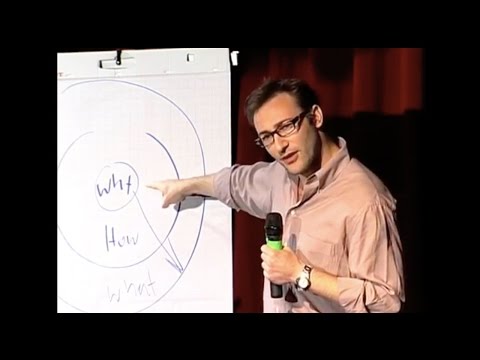
The lesson
Sinek’s central claim is simple: people join a cause because of what it means, not just because of what it does. He argues that decisions and loyalty are driven less by features and plans than by belief, which is why he keeps returning to purpose first. In his terms, people respond most strongly when they understand the cause, belief, or purpose behind the action, not only the action itself123.
That is why movements spread differently from ordinary transactions. A transaction happens when someone needs what you offer, but a movement begins when people feel that supporting you expresses something about who they are and what they believe. Sinek draws a hard line between repeat business and loyalty: loyalty means people stay with you because it feels personal and gives them a sense of belonging4567.
He also explains why this works at the level of human decision-making. Rational explanation matters, but facts and features alone do not drive behavior; they mainly help people explain decisions after the fact. Purpose-led communication works because it speaks first to the part of us tied to trust, loyalty, feeling, and action, which is why a clear why can attract followers in a way a detailed plan often cannot8910.
This is the logic behind his examples of the Wright brothers, Langley, and Martin Luther King Jr. The Wright brothers matter because they show that shared belief can mobilize unusual commitment, while Langley represents a more conventional pursuit built on resources and achievement alone11. King’s power, in Sinek’s framework, came from articulating a belief people wanted to be part of; people followed not because they were forced, but because they wanted to join something bigger than themselves121314.
For Sinek, a movement spreads when a leader makes an invisible idea visible enough for others to recognize themselves in it. Vision starts as something only one person can see, but once it is expressed clearly, others can gather around it and help carry it forward. The practical lesson is not to begin with your plan for changing the world; begin with the belief that would make others choose to join you1516.
4 principles from Simon Sinek
Start with belief, not the plan
Lead with the cause or conviction behind your work before explaining tactics or features. If people connect with the belief first, they are more likely to care about the plan and support it.
“People don't buy what you do they buy why you do it.”
Build belonging, not just demand
Do not aim only at people who can use what you offer. Aim at people who feel that joining you reflects what they believe and who they are.
“The goal is to do business with people who believe what you believe.”
Inspire followers instead of chasing transactions
A movement requires willing followers, not just customers or compliance. People commit more deeply when they are inspired to participate rather than pushed by need alone.
“All leaders have one thing and one thing only: followers.”
Make the invisible vision visible
A cause begins as something hard to see, so your job is to give it enough shape that others can recognize it and join in. Articulate the idea clearly enough that people can carry it with you.
“And this is the importance of vision and cause, which is, you know, when I got started and I said, "Wouldn't this be amazing if work worked like this?" you know, and people are like, "I think you're completely unrealistic." I'm like, "No, no, I think I have an idea." And an idea is an iceberg beneath the ocean, which is you're the only one who can see it. That's literally what an idea or a vision is. It's a figment of your imagination, and if you do some work that brings that idea some tangibility, some life—I gave a talk, I wrote a book, whatever it was, I did some consulting, whatever it was—just added a little bit of tangibility. That's like a little bit of iceberg popping up so that a few people be like, "Oh, I see what you're talking about now." And so throughout my whole career, somebody be like, "Hey, nice job." I'd be like, "Tip of the iceberg," and then…”
In his own words
The quotes behind the lesson, word for word from the transcripts. Numbers match the lesson above.
“People don't buy what you do they buy why you do it.”
“People don't buy what you do; they buy why you do it.”
“Why, I mean what's your purpose, what's your cause, what's your belief? Why does your organization exist? Do we really need another company to do what you're doing? Do we really need another one? Why did you get out of bed this morning, and why should anyone care? As a result, the way we think, the way we act, the way we communicate is from the outside in. It's obvious. We go from the clearest thing to the fuzziest thing. We tell people what we do. We tell them how we're different or how we're better or how we're special, and we expect some sort of behavior—a vote, a purchase, support, whatever it is. But not those leaders with the capacity to inspire. Regardless of their size,…”
“The goal is not to do business with everybody who needs what you have.”
“The goal is to do business with people who believe what you believe.”
“The goal is not to surround yourself with people who need what you have.”
“There are a million reasons why people will do business with you that have nothing to do with you. You happen to meet some checklist that they have. They happen to hate your competition more. There's a difference between repeat business and loyalty. You see, repeat business means I'll do business with you over and over and over again. Loyalty means I'm willing to turn down a better product at a better price to continue to do business with you. And it's the loyal ones, those who feel like they belong, those who, doing business with you, gives them some sense of identity or belonging—those are the ones. Those are the ones who do great, and the reason is it becomes personal. It becomes personal.”
“The neocortex is responsible for all of our rational and analytical thought and language. The middle two sections make up our limbic brains, and our limbic brains are responsible for all of our feelings, like trust and loyalty. It's also responsible for all human behavior, all decision-making, and it has no capacity for language. In other words, when we communicate from the outside in, yes, people can understand vast amounts of complicated information like features and benefits and facts and figures. It just doesn't drive behavior. When we can communicate from the inside out, we're talking directly to the part of the brain that controls behavior, and then we allow people to rationalize it with the tangible things we say and do. This is where gut decisions come from.”
“Um, so the human brain, brain, the, the, there's a part of the brain called the neocortex, which is our Homo sapiens brain. It's the newest part of our brain. It's responsible for all of our rational thought and language. It's just not responsible for decisions. This is where the what exists, right? It's very rational, easy to see, tangible. The limbic part of our brain is responsible for all of our feelings, like trust and loyalty. This is where gut decisions come from. It's also responsible for all of our behavior, but it has no capacity for language, which is why it's hard to put feelings into words. This is why we use analogies and metaphors all the time. Um, and so when we start with why, you're actually talking to the decision-making part of the brain.”
“Trust is a feeling. Trust is a human experience.”
“Again, the goal is not just to sell to people who need what you have, the goal is to sell to people who believe what you believe. The goal is not just to hire people who need a job, it's to hire people who believe what you believe. I always say that, you know, if you hire people just because they can do a job, they'll work for your money, but if you hire people who believe what you believe, they'll work for you with blood and sweat and tears. And nowhere else is there a better example of this than with the Wright brothers. Most people don't know about Samuel Pierpont Langley. And back in the early 20th century, the pursuit of powered man flight was like the dot com of the day. Everybody was trying it. And Samuel Pierpont Langley had, what we assume, to be the recipe for success.”
“Leaders hold a position of power or authority, but those who lead inspire us.”
“We follow those who lead, not because we have to, but because we want to.”
“Leaders hold a position of power or authority, but those who lead inspire us. Whether they're individuals or organizations, we follow those who lead, not because we have to, but because we want to. We follow those who lead, not for them, but for ourselves. And it's those who start with "why" that have the ability to inspire those around them or find others who inspire them. Thank you very much.”
“And this is the importance of vision and cause, which is, you know, when I got started and I said, "Wouldn't this be amazing if work worked like this?" you know, and people are like, "I think you're completely unrealistic." I'm like, "No, no, I think I have an idea." And an idea is an iceberg beneath the ocean, which is you're the only one who can see it. That's literally what an idea or a vision is. It's a figment of your imagination, and if you do some work that brings that idea some tangibility, some life—I gave a talk, I wrote a book, whatever it was, I did some consulting, whatever it was—just added a little bit of tangibility. That's like a little bit of iceberg popping up so that a few people be like, "Oh, I see what you're talking about now." And so throughout my whole career, somebody be like, "Hey, nice job." I'd be like, "Tip of the iceberg," and then…”
“All leaders have one thing and one thing only: followers.”
Reflect
- Think of a project you are trying to win support for. Are you leading with what you will do, or with the belief that would make others want to join?
- Where in your work are you settling for repeat participation instead of real loyalty or belonging?
- If your idea is still mostly visible only to you, what could you say or show that would make the underlying cause easier for others to see?


