Naval Ravikant on Artificial Intelligence
Naval treats current AI as powerful and useful, but not a mind: real intelligence requires explanation, creativity, and agency, not just prediction.
- Current AI is impressive and useful, but Naval does not treat it as AGI or a person.
- He sees real intelligence as tied to explanation, creativity, and solving problems, not just producing outputs.
- AI should be judged by whether it can form genuine new ideas, because ideas are what change the world.
- His view is optimistic about what humans can build, but careful about confusing a different kind of capability with human-like agency.

Current AI is a powerful tool, not a mind
Naval’s starting point is that today’s AI systems are highly capable and useful, but that does not make them AGI, a person, or even the same kind of thing as a human mind. He explicitly rejects the idea that scaling these systems should be casually equated with some all-powerful superintelligence1.
That distinction matters because the system can generate valuable outputs without understanding in the human sense. In Naval’s frame, calling something intelligent is already slippery, because intelligence can describe many different capacities, and not all of them amount to having a life, goals, or inner agency2.
“I don't think there's such a thing as an ASI…”The Naval Podcast, 2023 · full transcript →
Creativity is the real test of whether AI is becoming general
Naval’s AI view becomes clearer when you ask what would count as genuine general intelligence. His answer points toward creativity: not remixing what already exists, but generating explanatory leaps and new ideas that solve real problems.
That standard is consistent with how he thinks change happens in the world. He says that ideas are what change the world, so an intelligence worthy of the name would need to do more than imitate style or predict likely next tokens; it would need to originate meaningful new knowledge4.
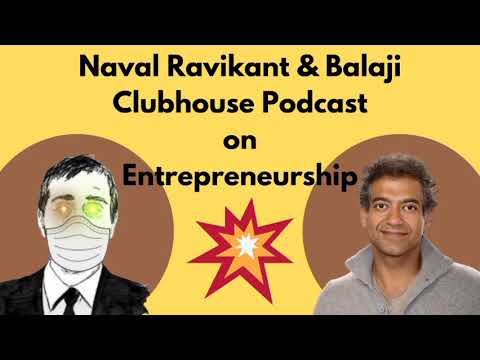
“What changes the world are ideas.”Clubhouse podcast on entrepreneurship, 2021 · full transcript →
Personhood requires agency, not just capability
Naval separates capability from personhood. A system can be competent in narrow or even surprising ways and still not qualify as the kind of being that wants things, chooses, or lives a life from the inside2.
That is why he is careful with the word intelligence. He allows that there are many forms of intelligence in nature, but he does not automatically grant agency or personhood to a system simply because it performs well on tasks that look cognitive to us2.

“It's a different form of intelligence. It's like if you see a jaguar in the jungle, it has a different form of intelligence, you're like a plant has a form of intelligence, how it can, like, photosynthesize and grow. It's a different form of intelligence. It's not... And intelligence, again, like love or, like, happiness is overloaded word that means many things to many people. But by my definition, where, you know, the true test is you get what you want out of life, doesn't it even have a life. It doesn't even want anything.”Modern Wisdom interview, 2025 · full transcript →
Be optimistic about building, but precise about what has been built
Naval is not anti-AI. His deeper posture is optimistic: reality is understandable, problems are soluble, and humans can keep building as long as physics does not forbid it.
At the same time, optimism is not the same as anthropomorphism. The practical lesson is to use AI aggressively where it is useful, while staying clear-eyed about its limits and not pretending that usefulness, fluency, or scale automatically add up to understanding or personhood12.
This also fits his broader creator-first worldview. He consistently values removing obstacles so people can build, experiment, and turn ideas into products, including in frontier areas like AI4.
Naval on artificial intelligence, in his own words
“I don't think there's such a thing as an ASI…”
“It's a different form of intelligence. It's like if you see a jaguar in the jungle, it has a different form of intelligence, you're like a plant has a form of intelligence, how it can, like, photosynthesize and grow. It's a different form of intelligence. It's not... And intelligence, again, like love or, like, happiness is overloaded word that means many things to many people. But by my definition, where, you know, the true test is you get what you want out of life, doesn't it even have a life. It doesn't even want anything.”
“What changes the world are ideas.”
Where to watch
 Naval Ravikant on AI Creativity and Personhood: Why ChatGPT Isn't AGI2023 · 55 min · full transcriptBest for Naval’s clearest distinction between current AI, AGI, creativity, and personhood.
 Naval Ravikant on Fabric of Reality: How Knowledge Grows2023 · 108 min · full transcriptExplains the epistemology behind his AI view: why explanation and problem solving matter more than pattern matching.
 Naval Ravikant on Entrepreneurship in India: Celebrate Creators2021 · 99 min · full transcriptShows how his AI thinking connects to creators, startups, and the primacy of ideas.
 Naval Ravikant on Simulation And Internet Truth: Fall, the miasma, and free minds2019 · 60 min · full transcriptUseful for understanding his concerns about digital reality, shared truth, and judgment in online systems.
Questions people ask
Sources
Every quote above, word for word from the transcripts. Numbers match the text.
“I don't think there's such a thing as an ASI…”
“It's a different form of intelligence. It's like if you see a jaguar in the jungle, it has a different form of intelligence, you're like a plant has a form of intelligence, how it can, like, photosynthesize and grow. It's a different form of intelligence. It's not... And intelligence, again, like love or, like, happiness is overloaded word that means many things to many people. But by my definition, where, you know, the true test is you get what you want out of life, doesn't it even have a life. It doesn't even want anything.”
“What changes the world are ideas.”
How this guide was made: drafted with AI from the full transcripts of the recordings cited, then checked: every quotation must match a transcript word for word and be the speaker's own words, and an independent review gates accuracy. Methodology and corrections.