Naval Ravikant on Philosophy
Naval treats philosophy as a practical operating system for truth, freedom, and peace: understand reality clearly, choose desires carefully, and train attention toward the present.
- Philosophy should improve judgment, not just vocabulary or status.
- A good life comes from wanting less, escaping status games, and becoming free of the games you win.
- Truth grows through explanation, criticism, and revisiting first principles.
- Inner peace is philosophical practice: weaken unnecessary desire, quiet the mind, and return to the present.
- Attention, not money alone, is the core resource of life.

“Understanding is the thing to strive for, not the words.”Tim Ferriss Show interview, 2016 · 24:43
His core ethical move is to want less and choose desires carefully
A central thread in Naval's worldview is that many forms of suffering come from unexamined desire. He returns to the old philosophical idea that freedom is not only getting what you want, but also not needing so much in the first place. That is why he highlights the power of looking at the world and noticing how much of it you do not need.45
He treats desire as costly, so philosophy begins with selection. If you choose fewer desires, you can focus better, suffer less, and pursue the few things that really matter. Success may still require ambition, but he wants ambition to be deliberate rather than scattered across endless wants picked up from other people.67
This also explains his view that the point of winning worldly games is eventually to become free of them. Achievement has a place, but it should lead to detachment, not permanent enslavement to the next round of status and craving.9
He separates truth from consensus and returns to first principles
Naval's philosophy leans heavily toward truth-seeking rather than social agreement. He prefers explanations that survive criticism and can be rebuilt from the ground up, which is why he emphasizes understanding over terminology and celebrates books that sharpen judgment across domains.123
In his discussions of knowledge, he is drawn to the view that progress comes from problems, conjectures, and criticism rather than passive data collection or deference to authority. That outlook supports intellectual optimism: if reality is understandable, humans can keep improving their explanations and their world.
This is also why he is wary of environments that flood the mind with borrowed urgency and weak signals. A philosophy of truth requires enough independence to think for yourself rather than inheriting every panic, narrative, or fashionable opinion.2
Inner peace comes from training the mind and living in the present
Naval's philosophy is not just epistemology; it is also mental practice. He wants the mind to become a tool rather than a tyrant, which is why he talks about muting mental noise and loosening identification with compulsive thought. Peace is not mainly produced by external rearrangement but by reducing the sense that something is missing.111213
That leads him again and again to the present moment. He argues that life is not waiting at the destination but happening along the way, and that reality is encountered now rather than in fantasy, regret, or anticipation. Attention matters because experience only becomes life when you are actually present for it.14151617
Reflection still matters, but it has a purpose. He recommends observing your reactions so you can resolve problems and reduce anxiety, not so you can endlessly rehearse your pain. Philosophy, here, becomes a discipline of awareness and correction.18
His practical philosophy aims at freedom, not withdrawal from life
Naval does not frame philosophy as an excuse to avoid the world. Money, work, and achievement all matter because they can buy independence and reduce needless suffering, even if they are not the final point. He is explicit that money is for freedom, and that practical success can create the space in which a deeper life becomes possible.19
But he also insists that the highest resource is not money. Attention is more fundamental, because even time can be wasted if your awareness is fragmented. A philosophical life therefore means organizing your commitments, media diet, habits, and ambitions around what deserves your finite attention.1517
At its best, this becomes a modern ideal: be effective in the world, but not trapped by it; be successful, yet inwardly free; build capability, then use that freedom to enjoy life rather than merely escalate the game.9
Naval on philosophy, in his own words
“Understanding is the thing to strive for, not the words.”
“How many things there are in this world that I do not want?”
Where to watch
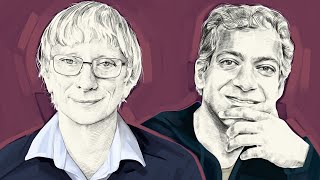 Naval Ravikant on Fabric of Reality: How Knowledge Grows2023 · 108 min · full transcriptBest for his truth-seeking philosophy: how knowledge grows through explanation, criticism, and optimism.
 Naval Ravikant on Happiness and Status: Enjoy the journey2025 · 196 min · full transcriptBest for his lived philosophy of desire, freedom, status, and why the journey matters.
 Naval Ravikant on Happiness and Anxiety: Self-Reflection, Not Noise2016 · 122 min · full transcriptBest for understanding why he values first principles, self-reflection, and freedom over noise and consensus.
 Naval Ravikant on Reading and Happiness: Habits, Decisions, Meaning2018 · 122 min · full transcriptBest for his inner philosophy of habits, reading, present-moment awareness, and quieting the mind.
 Naval Ravikant on Simulation And Internet Truth: Fall, the miasma, and free minds2019 · 60 min · full transcriptUseful for his thinking on reality, intersubjectivity, simulation, and how shared belief shapes what feels real.
Questions people ask
- How does Naval Ravikant decide what to focus on?
- What did Naval Ravikant say about David Deutsch's books changing how he thinks?
- What did Naval Ravikant say about choosing to be happy?
- What did Naval Ravikant say about desire and suffering?
- What did Naval Ravikant say about happiness and wanting less?
- What did Naval Ravikant say about anxiety and reflection?
Sources
Every quote above, word for word from the transcripts. Numbers match the text.
“Understanding is the thing to strive for, not the words.”
“But overall, they sort of just upgraded my thinking, upgraded my brain into making better decisions and having a more honest view of the world. So to anybody who is a truth seeker, who is truth oriented and wants to make sense of the world and make better judgments and better decisions and, you know, what is life but a series of decisions, then I think you want to have the strongest thinking on your side. And I think these two books contain our best theories and combine them into a a single whole. So I can't recommend them highly enough.”
“This is a very deep point. Yep. And I think that a lot of times that we just define something with another definition or we just throw out a piece of jargon as if that means we know something. And, you know, it's a difference between memorization and understanding. Understanding is a thing that you want. You wanna be able to describe it in 10 different ways in simple sentences from the ground up and rederive whatever you need. If you just memorize, you're lost. So I think this is one of the things that I get stuck on a lot, which is, just keep going back and reading the basics over and over trying to understand them. So don't necessarily have that tall edifice of knowledge that is very seductive in academia. But as anyone who's operated much in the real world knows, in the real world, you get paid for making good judgments and decisions based on the basics.”
“How many things there are in this world that I do not want?”
“Happiness. Okay. So very complicated topic, but I always like the Socrates story where he goes into the marketplace, and they show him all these luxuries and fineries. And he says, how many things there are in this world that I do not want? Right? And that's a form of freedom. So not wanting something is as good as having it. In the old story with Alexander Dionysius, right, Alexander goes out and conquers the world, and he meets Dionysius who's living in a barrel. And Dionysius says, get out of the way. You're blocking my son. And Alexander says, oh, how I wish I, you know, could be like Dionysius in the next life. And Dionysius says, that's the difference. I don't wish that I could... Sorry. Diogenes. Diogenes. Diogenes says, I I I don't wish to be Alexander. So two paths to happiness, and, one path is for success.”
“You could focus. You could decide that I don't want most things. I I think we have a lot of unnecessary desires that we just pick up everywhere. We have opinions on everything, judgments on everything. So I think just knowing that those are the source of unhappiness will make you be choosy about your desires. And frankly, if you wanna be successful, you have to be choosy about your desires. You have to focus.”
“One one message that really stuck with me when I figured this out was that what is desire? And desire is a contract you make with yourself to be unhappy until you get what you want. And I don't think most of us realize that's what it is. I think we go about desiring things all day long and then wondering why why we're unhappy. So I like to stay aware of that because then I can choose my desires very carefully. Mhmm. I try not to have more than one big desire in my life at any given time. And I also recognize that as the axis of my suffering. I realize that that's where I've chosen to be unhappy.”
“It depends on the person, but I I I think you have to try that path. If you want something, go get it. You know, like, I I I quipped that the reason to win the game is to be free of it. So you you play the games, you win the games, and then you get... Hopefully, you get bored of the games. You don't wanna just keep looping on the same game over and over, although a lot of these games are very enticing and have many levels that are relatively open ended. And then you become free of the game in a sense that you're no longer trying to win it. You know you can win it, and either you move to a different game, or you play the game for the sheer joy of it.”
“I want it to be weaker and more muted so that I can live much more in present everyday reality…”
“The mind should be a servant or a tool, my master.”
“The best... My definition keeps evolving. So the answer I would've given you a year ago would be different than what I tell you now. But today, I believe that happiness is... It's really a default state. It's what's there when you remove the sense that something is missing in your life. And we are highly judgmental survival and replication machines. We're constantly walking around thinking, I need this, I need that, trapped in the web of desires. And happiness is that state when nothing is missing. And when nothing is missing, your mind shuts down, and your mind stops running into the future or running into the past to regret something or to plan something. And then in that absence for a moment, you have internal silence. And when you have internal silence, then you are content and you're happy.”
“The journey is the only thing there is.”
“…the real currency of life is attention.”
“There is actually nothing but this moment.”
“You know, the the currency of life. Right? People think it's money. And, yes, money is important, and it does let you trade certain things for time. But it doesn't really buy you time. Ask Warren Buffett how much time money can buy you or Michael Bloomberg. They're, you know, rich as Scrooge and and and Chris's, but they can't buy more time. Right? Brian Johnson notwithstanding. So you can't trade money for time. Money is not the real currency of life. And time itself doesn't even mean that much because as we talked about before, a lot of time can be wasted because you're not really present for it. You're not paying attention. So the real currency of life is attention. It's what you choose to pay attention to and, and and what you do about it.”
“If you can kind of identify and unravel and resolve these issues, then I think that helps get rid of anxiety. A lot of the anxiety is piled up because we move through life too quickly, not observing our own reactions to things. We don't resolve them. So this goes counter to what I was saying earlier about not reflecting too much on things. But you reflect on the problems to observe them and solve them. You don't reflect on them to feel better about them.”
“The purpose of money is freedom.”
How this guide was made: drafted with AI from the full transcripts of the recordings cited, then checked: every quotation must match a transcript word for word and be the speaker's own words, and an independent review gates accuracy. Methodology and corrections.