Naval Ravikant on Leverage
Naval sees leverage as the force that breaks the link between hours worked and results, letting specific knowledge and judgment scale into wealth and freedom.
- Leverage lets outputs scale far beyond your hours, which is why it matters for wealth.
- The goal is not money for status but wealth that works while you sleep and buys freedom.
- You usually need ownership, not just wages, because renting time keeps income tied to effort.
- The best modern leverage is permissionless: code, media, and internet distribution.
- Leverage works best when it amplifies authentic specific knowledge and a reputation people trust.
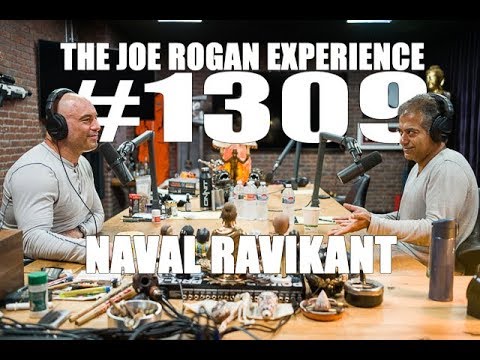
Leverage is how you stop trading hours for outcomes
Naval’s basic point is that most jobs tie inputs tightly to outputs: you work an hour, you get paid for an hour. That makes income linear, which means it stops when you stop working and rarely compounds in a meaningful way. Leverage matters because it breaks that link and lets one decision, one product, or one creation reach far beyond the time that produced it.123
He treats this as a defining fact of modern life. In a digital world, results are highly nonlinear, so judgment and leverage matter more than visible effort. That is why the old model of simply working harder is not enough if your goal is wealth rather than just income.23
“We live in an age of infinite leverage…”Joe Rogan Experience #1309, 2019 · full transcript →
The point of leverage is wealth, and the point of wealth is freedom
Naval draws a sharp distinction between money, status, and wealth. Wealth is productive assets that keep generating value without your constant presence, and that is what makes leverage so important. If what you build cannot keep working when you are asleep, it does not fully solve the problem he is trying to solve.456
He is also explicit that this is not mainly about luxury. The end goal is freedom: freedom from money stress, freedom from dependence on a paycheck, and eventually freedom from sacrificing today for some imagined later reward. Leverage matters because it creates the kind of wealth that can buy that freedom.786
Ownership is the lever that turns work into wealth
Naval repeatedly argues that renting out your time will not usually make you wealthy, even when the hourly rate is high. Professionals can make good incomes, but their earnings still depend on continued labor unless they build businesses or own assets. That is why he pushes people toward equity and ownership.91
This is also why leverage is not just about working efficiently. You can create value and still miss most of the upside if you do not own a piece of what you are helping build. In Naval’s framework, ownership is what lets your judgment and effort accumulate into lasting wealth rather than disappearing into wages.916
Code and media are powerful because they are permissionless leverage
Naval gives special weight to code and media because they scale without needing someone’s permission. A line of software, a podcast episode, a book, or a piece of online content can be created once and distributed widely at very low marginal cost. That makes these forms of leverage unusually attractive in the internet era.1011
He also sees the internet as expanding the number of viable markets. When there are countless niches, more people can find an audience, customers, or collaborators based on output instead of credentials, geography, or status. That makes modern leverage more available to individuals than older forms that depended heavily on gatekeepers or capital.1213
The broader pattern is that ideas and knowledge can now travel farther and faster. Since ideas change the world, the tools that spread them are themselves a form of leverage.10
Leverage only works well when it amplifies something uniquely yours
Naval does not present leverage as a standalone trick. It works best when it scales specific knowledge, which he describes as the kind of know-how that is hard to formalize and usually learned through doing. If your work can be reduced to a generic checklist, it is less likely to be the kind of edge that compounds.15
He also connects leverage to authenticity and accountability. In a world of many niches, being genuinely yourself is an advantage because no one can compete with that directly, and a strong reputation lowers friction and attracts opportunities. Leverage then multiplies the reach of that authenticity and trust.1711
This is why he often points people toward work that feels natural and absorbing to them. When the underlying work feels like play to you but looks like work to others, you are more likely to build the rare knowledge and sustained output that leverage can magnify.21
Naval on leverage, in his own words
“We live in an age of infinite leverage…”
“By definition, no one can compete with is being yourself…”
Where to watch
 Naval Ravikant on How To Get Rich: Wealth, leverage, and luck2019 · 216 min · full transcriptHis clearest full explanation of leverage, ownership, wealth, and why code and media matter most now.
 Naval Ravikant on Happiness and Wealth: Calm, Leverage, and Freedom2019 · 132 min · full transcriptA strong overview tying leverage to calm judgment, freedom, and not renting out your life.
 Naval Ravikant on Wealth and Happiness: Make Money, Then Seek Joy2021 · 82 min · full transcriptA concise framework: specific knowledge, accountability, and leverage as the ingredients of wealth.
 Naval Ravikant on Creator Economy: Authenticity, Niches, and Tinkering2021 · 126 min · full transcriptShows how leverage plays out for creators through niches, authenticity, tinkering, and internet distribution.
 Naval Ravikant on Entrepreneurship in India: Celebrate Creators2021 · 99 min · full transcriptExtends the idea to entrepreneurship and the internet’s ability to reward output over status or location.
 Naval Ravikant on Wealth, Knowledge & Happiness: Inner Peace2025 · 215 min · full transcriptAdds Naval’s deeper view that wealth is ultimately the power to cause valuable change through knowledge.
Questions people ask
- How did Naval Ravikant define specific knowledge?
- How does Naval Ravikant say reputation creates luck?
- What did Naval Ravikant say about earning money from a job versus owning equity?
- What did Naval Ravikant say about judgment and accountability?
- What did Naval Ravikant say about productizing yourself?
- What did Naval Ravikant say about Scott Adams and specific knowledge?
Sources
Every quote above, word for word from the transcripts. Numbers match the text.
“People seem to think that you can create wealth and make money through work, and it's probably not going to work. There are many reasons for that, but the most basic is just that your inputs are very closely tied to your outputs. In almost any salaried job, even at one that's paying a lot per hour like a lawyer or a doctor, you're still putting in the hours and every hour you get paid. So what that means is when you're sleeping, you're not earning. When you're retired, you're not earning. When you're on vacation, you're not earning. And you can't earn nonlinearly. If you look at even doctors who get rich, like really rich, it's because they open a business. They open like a private practice, and that private practice builds a brand, and that brand attracts people, or they build some kind of a medical device or a procedure or a process with an intellectual property.”
“The entire structure of rewarding people comes from the agricultural and industrial age where your inputs and your outputs matched up very closely. The amount of hours that you put into doing something was a good rough proxy for what kind of output you're going to get. Today, it's extremely nonlinear. One good investment decision can make a company 10 or $100,000,000. One good product feature can be difference between product market fit and complete failure. So judgment and accountability matter much, much more. And you want the accountability because sometimes the best engineers or the best salespeople are the ones who don't work very hard, but then they'll ship that one critical product at just the right time or they'll make that one huge sale or that one huge deal that will make the company or at least make the numbers for the quarter.”
“We live in an age of infinite leverage…”
“Wealth is assets that earn while you sleep.”
“My definition of wealth was assets that earn while you sleep.”
“Wealth is the thing that you really want. Wealth is assets that earn while you sleep. Wealth is the factory that... With the robots that's cranking out things. Wealth is the computer program that's running at night that's serving other customers. Wealth is even money in the bank that is being reinvested into other assets and into other businesses. Even a house can be a form of wealth because you can rent it out, although that's probably a lower use of productivity in the land than actually doing some commercial enterprise. So my definition of wealth is much more businesses and assets that can earn while you sleep. But really the reason you want wealth is because it buys you freedom. You don't have to wear a tie like a collar around your neck. So you don't have to wake up at 7AM and rush to work and sit in commute traffic.”
“The purpose of wealth is freedom.”
“What you really want is freedom. You want freedom from your money problems. Right. And I think that's okay. So people... Once someone can solve their money problems, either by lowering their lifestyle or by making enough money, and, you know, essentially, what you want to get everybody to is retirement, But not retirement in the, I'm 65 years old sitting in a nursing home collecting a check retirement. Different definition. Retirement is when you stop sacrificing today for some imaginary tomorrow.”
“You must own a piece of a business if you want a path to financial freedom.”
“Coding, writing books, recording podcasts, tweeting, YouTubing, these kinds of things, these are permissionless.”
“Productize and yourself. Yourself has uniqueness. Productize has leverage. Yourself has accountability. Productize has specific knowledge. Yourself also has specific knowledge in there. So all of these pieces, you can combine them into these two words. Whenever you're doing anything in business, if you're looking towards a long term of getting wealthy, you should ask yourself, is this authentic to me? Is it myself that I am projecting? And then am I productizing it? Am I scaling it? Am I scaling with labor or with capital or with code or with media?”
“The internet creates millions and billions of niches…”
“There's nothing to add. There are things to take away that are in the way of people who want to create things.”
“But the office hours are incredibly useful. It just reinforces that this is one of those skills that can only be learned on the job. And when you find a skill that can only be learned on the job by doing it, that is a good indicator that you're dealing with specific knowledge. Another good indicator when you're dealing with specific knowledge is when you ask the person who's doing it, what do you do every day? And they can't give you a straight answer or it's something along the lines of, every day is different based on what's going on. That's a good indicator you're learning specific knowledge. The thing is so complicated and it's so dependent upon circumstances that it can't be boiled down into a textbook form or communicated by a make money consultant.”
“By definition, no one can compete with is being yourself…”
“Most successful creators are ultimately tinkerers…”
How this guide was made: drafted with AI from the full transcripts of the recordings cited, then checked: every quotation must match a transcript word for word and be the speaker's own words, and an independent review gates accuracy. Methodology and corrections.