Naval Ravikant on Happiness
Naval sees happiness not as pleasure or achievement, but as a trainable state of peace that grows when desire, judgment, and inner conflict loosen.
- Happiness is a skill and a choice, not just a result of success.
- Lasting happiness is closer to peace and the absence of suffering than to pleasure.
- Desire creates suffering, so wanting less is a direct path to freedom.
- Judgment, mental noise, and living in past or future pull you out of happiness; presence restores it.
- Money helps by solving money problems and buying freedom, but it does not create happiness by itself.

“…happiness is a skill that you develop and a choice that you make.”The Tim Ferriss Show Q&A, 2016 · 20:13
Happiness is a skill you practice, not a prize you wait for
Naval treats happiness as something trainable. He says it is both a skill and a choice, which means it can be developed deliberately rather than postponed until external conditions improve123.
That view changes the whole problem. Instead of asking what achievement will finally make you happy, the better question becomes what patterns of mind keep producing unhappiness and how to unlearn them45.
He also frames happiness as a default state that appears when the feeling that something is missing falls away. In that sense, happiness is less about adding more experiences and more about removing the inner agitation that makes life feel incomplete6.
“…happiness is a skill that you develop and a choice that you make.”The Tim Ferriss Show Q&A, 2016 · full transcript →
Peace matters more than pleasure
Naval makes a sharp distinction between pleasure and happiness. Pleasure can be intense and temporary, but what people usually want more deeply is peace, a stable inner quiet that does not depend on constant stimulation78.
He often describes happiness in negative terms: the absence of suffering, the absence of the sense that something is missing, the stopping of compulsive mental motion into past and future86. That is why he links happiness to calm, self-understanding, and a quieter mind rather than to excitement alone910.
This also explains why he values presence so highly. If happiness is what remains when mental conflict subsides, then living in the present is not a cliché but a practical route to feeling more alive and less divided1112.
“I actually think happiness is the absence of suffering.”The Tim Ferriss Show Q&A, 2016 · full transcript →
Desire is the main source of unhappiness
One of Naval's central ideas is that desire creates suffering. He says desire is an agreement to remain unhappy until a condition is met, which means many people spend their days continually renewing dissatisfaction through endless wants131415.
His answer is not total passivity but selectivity. Want fewer things, choose desires carefully, and focus intensely on the few that truly matter, because both happiness and effectiveness improve when your wants become narrower and more deliberate1617.
This is why not wanting can feel like freedom. If you do not need every status symbol, outcome, or opinion to go your way, you recover a kind of independence that looks a lot like happiness17.
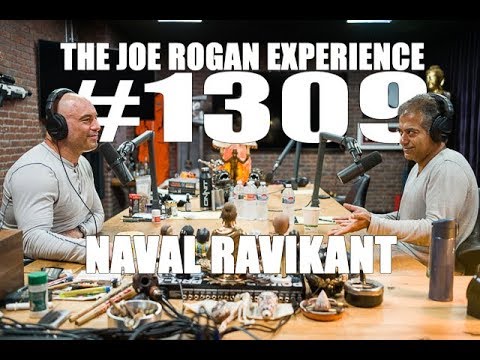
“…desire to me is a contract that you make with yourself to be unhappy until you get what you want…”Joe Rogan Experience #1309, 2019 · full transcript →
Judgment and mental noise separate you from life
Naval argues that judgment creates separation. When you are constantly labeling, resisting, and reacting, you are no longer simply experiencing life; you are fighting with it, and that fight becomes suffering19.
He pairs this with a broader warning about noise. Media, opinions, and inherited desires can fill the mind with borrowed problems and borrowed conflicts, making it harder to see clearly and harder to be at ease2016.
His practical alternative is awareness and understanding. Notice your reactions, study your own conditioning, and aim for genuine understanding rather than slogans or self-deception212223. Over time, that self-observation can reduce anxiety and create more inner space10.
“The act of judging something separates you from that thing.”The Tim Ferriss Show Q&A, 2016 · full transcript →
Success and happiness are different games
Naval does not pretend wealth and happiness are the same thing. Money can solve money problems and create freedom, but it does not automatically produce peace, presence, or freedom from desire252627.
He often separates the achievement path from the renunciation path. You may pursue success, but the point of winning is eventually to become free of the game rather than trapped in an endless loop of comparison and status2829.
That is also why he stresses the journey. Most of life is not the trophy moment but the ongoing experience of living, paying attention, and inhabiting your days. If you cannot enjoy that, no later outcome will save the present303132.

“The journey is the only thing there is.”Modern Wisdom interview, 2025 · full transcript →
Naval on happiness, in his own words
“…happiness is a skill that you develop and a choice that you make.”
“I actually think happiness is the absence of suffering.”
“…desire to me is a contract that you make with yourself to be unhappy until you get what you want…”
“How many things there are in this world that I do not want?”
“The journey is the only thing there is.”
“…to live in the present moment is the highest calling.”
Where to watch
 Naval Ravikant on Happiness and Habits: Peace, Judgment, and Growth2016 · 65 min · full transcriptBest single overview of Naval's happiness framework: peace over pleasure, desire, judgment, habits, and daily practice.
 Naval Ravikant on Happiness and Status: Enjoy the journey2025 · 196 min · full transcriptBest for understanding wanting less, avoiding status traps, and why the journey matters more than the destination.
 Naval Ravikant on Happiness and Wealth: Calm, Leverage, and Freedom2019 · 132 min · full transcriptShows how Naval connects happiness to desire, calm judgment, and the difference between wealth and inner freedom.
 Naval Ravikant on Reading and Happiness: Habits, Decisions, Meaning2018 · 122 min · full transcriptBest for his view that happiness is a default state uncovered through presence, quieter thinking, and daily habits.
 Naval Ravikant on Parenting Sovereign Children2025 · 183 min · full transcriptUseful for how honesty, self-awareness, and living in the present support happiness as a long-term skill.
Questions people ask
- How does Naval Ravikant decide what to focus on?
- What did Naval Ravikant say about desire and suffering?
- What did Naval Ravikant say about happiness and habits?
- What did Naval Ravikant say about happiness and wanting less?
- What did Naval Ravikant say about happiness?
- What did Naval Ravikant say about anxiety and reflection?
Sources
Every quote above, word for word from the transcripts. Numbers match the text.
“…happiness is a skill that you develop and a choice that you make.”
“I think happiness is a skill.”
“And I think that just comes from having stacked on a bunch of good habits and having gotten rid of a bunch of bad habits. So I would say the power to make and break habits, learning how to do that is really important. And if you're gonna if you're gonna leave this podcast and pick up two skills in life, I would say... And it depends on the person because many of you... I mean, Tim's entire audience is a bunch of overachievers. So, many of you are way ahead of me on on both of these. But for those of you who who may be behind on one of them, I would say first realize that happiness is a choice and it is a skill, and you can dedicate yourself to learning that skill and making that choice and telling people about it and working on it. And you can slowly but steadily over the course of years make yourself happier. And similarly, I would say that habits are... Breaking habits is a skill, and it is something you can learn and start with a small habit and try different techniques to break it.”
“You have a whole set of sensory experiences and stimulations and lights and colors and sounds and then you die. Yeah. And how you choose to interpret that is up to you. You do have that choice. So this is what I meant, that happiness is a choice. If you believe it's a choice, then you can start working on it. And I can't tell you how to find it because it's your own conditionings that are making you unhappy, so you have to uncondition yourself. It's just like, can't fix your eating habits for you. I can give you some general guidelines, but you gotta go through the hard habit forming of how to eat right. But you have to believe it's possible and it is absolutely possible. I was miserable, I'm happy as a clam. And it's not just the money, I got there before the money.”
“And these kinds of skills are extremely hard to build. They're not things you're gonna build by reading one book and then you're like, So I don't believe in the epiphany theory of self development where you read some book, you have an incredible epiphany, you read one phrase, you're like, okay, that's great. This changes my life. And then you scroll it down a piece of paper and you keep looking at it or you put it as a backdrop to your computer screen. Life doesn't work that way. What you kinda have to do is you have to build skills. And I think happiness is a skill. Nutrition is a skill. Diet is a skill. Investing is a skill. Self awareness is a skill. And skills get built up over decades with feedback loops, and you just have to constantly keep working at it on it. So the books that have helped me a lot, I think there's a class of books that I would kinda put in the stoicism category. And I know you've been a big advocate of these in the past, and I sort of discovered them independently, but they were very influential.”
“The best... My definition keeps evolving. So the answer I would've given you a year ago would be different than what I tell you now. But today, I believe that happiness is... It's really a default state. It's what's there when you remove the sense that something is missing in your life. And we are highly judgmental survival and replication machines. We're constantly walking around thinking, I need this, I need that, trapped in the web of desires. And happiness is that state when nothing is missing. And when nothing is missing, your mind shuts down, and your mind stops running into the future or running into the past to regret something or to plan something. And then in that absence for a moment, you have internal silence. And when you have internal silence, then you are content and you're happy.”
“The happiness one is a very complex topic. I actually don't think happiness is its own thing. I think a lot of what we think of as happiness is actually just pleasure. It's physical pleasure either from, oh, that tasted good or it might be momentary pleasure from, oh, she loves me or he loves me. But I think true happiness comes out of peace. And peace comes out of many things, but it comes out of fundamentally understanding yourself.”
“I actually think happiness is the absence of suffering.”
“I want it to be weaker and more muted so that I can live much more in present everyday reality…”
“The mind should be a servant or a tool, my master.”
“There is actually nothing but this moment.”
“…to live in the present moment is the highest calling.”
“…desire to me is a contract that you make with yourself to be unhappy until you get what you want…”
“One one message that really stuck with me when I figured this out was that what is desire? And desire is a contract you make with yourself to be unhappy until you get what you want. And I don't think most of us realize that's what it is. I think we go about desiring things all day long and then wondering why why we're unhappy. So I like to stay aware of that because then I can choose my desires very carefully. Mhmm. I try not to have more than one big desire in my life at any given time. And I also recognize that as the axis of my suffering. I realize that that's where I've chosen to be unhappy.”
“One one message that really stuck with me when I figured this out was that what is desire? And desire is a contract you make with yourself to be unhappy until you get what you want. And I don't think most of us realize that's what it is. I think we go about desiring things all day long and then wondering why why we're unhappy. So I like to stay aware of that because then I can choose my desires very carefully. Mhmm. I try not to have more than one big desire in my life at any given time. And I also recognize that as the axis of my suffering.”
“You could focus. You could decide that I don't want most things. I I think we have a lot of unnecessary desires that we just pick up everywhere. We have opinions on everything, judgments on everything. So I think just knowing that those are the source of unhappiness will make you be choosy about your desires. And frankly, if you wanna be successful, you have to be choosy about your desires. You have to focus.”
“How many things there are in this world that I do not want?”
“The act of judging something separates you from that thing.”
“The goal of the media these days is to make every problem your problem.”
“Understanding is the thing to strive for, not the words.”
“…you must never ever fool yourself and you are the easiest person to fool.”
“If you can kind of identify and unravel and resolve these issues, then I think that helps get rid of anxiety. A lot of the anxiety is piled up because we move through life too quickly, not observing our own reactions to things. We don't resolve them. So this goes counter to what I was saying earlier about not reflecting too much on things. But you reflect on the problems to observe them and solve them. You don't reflect on them to feel better about them.”
“Money solves all your money problems…”
“The purpose of money is freedom.”
“What you really want is freedom. You want freedom from your money problems. Right. And I think that's okay. So people... Once someone can solve their money problems, either by lowering their lifestyle or by making enough money, and, you know, essentially, what you want to get everybody to is retirement, But not retirement in the, I'm 65 years old sitting in a nursing home collecting a check retirement. Different definition. Retirement is when you stop sacrificing today for some imaginary tomorrow.”
“…the reason to win the game is to be free of it.”
“It depends on the person, but I I I think you have to try that path. If you want something, go get it. You know, like, I I I quipped that the reason to win the game is to be free of it. So you you play the games, you win the games, and then you get... Hopefully, you get bored of the games. You don't wanna just keep looping on the same game over and over, although a lot of these games are very enticing and have many levels that are relatively open ended. And then you become free of the game in a sense that you're no longer trying to win it. You know you can win it, and either you move to a different game, or you play the game for the sheer joy of it.”
“The journey is the only thing there is.”
“…the real currency of life is attention.”
“You know, the the currency of life. Right? People think it's money. And, yes, money is important, and it does let you trade certain things for time. But it doesn't really buy you time. Ask Warren Buffett how much time money can buy you or Michael Bloomberg. They're, you know, rich as Scrooge and and and Chris's, but they can't buy more time. Right? Brian Johnson notwithstanding. So you can't trade money for time. Money is not the real currency of life. And time itself doesn't even mean that much because as we talked about before, a lot of time can be wasted because you're not really present for it. You're not paying attention. So the real currency of life is attention. It's what you choose to pay attention to and, and and what you do about it.”
How this guide was made: drafted with AI from the full transcripts of the recordings cited, then checked: every quotation must match a transcript word for word and be the speaker's own words, and an independent review gates accuracy. Methodology and corrections.