Nassim Nicholas Taleb on Pandemics
Taleb treats pandemics as fat-tailed systemic risks where uncertainty is a reason for early, forceful precaution, because survival matters more than average-case forecasting.
- Pandemics are fat-tailed risks, so extreme outcomes drive the real danger.
- He rejects average-case and point-forecast thinking for pandemics; the key is to study tail properties and fragility.
- Uncertainty is a reason to act earlier, not later, when losses can become irreversible and systemic.
- His policy instinct is survival first: reduce spread fast, cut connectivity, and use layered defenses such as masks, testing, ventilation, and vaccines.
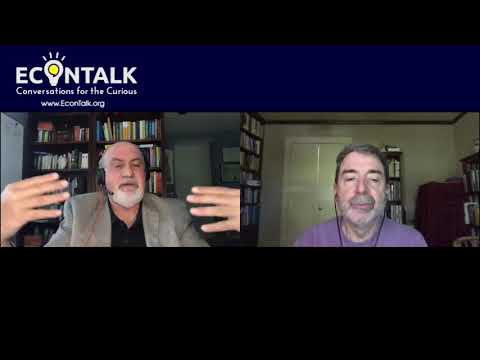
“Science is not about evidence. Science is about properties.”EconTalk interview, July 3, 2020 · 22:49
Pandemics belong to the world of fat tails, not routine risk
Taleb’s starting point is that pandemics are not ordinary fluctuations around a stable average. They belong to the class of fat-tailed phenomena, where a small number of extreme outcomes account for most of the harm, so the main policy question is not the average case but the possibility of runaway loss12.
That changes the whole frame. In a fat-tailed domain, a society cannot reason from typical days or typical cases to the true risk, because the tail dominates the outcome and can overwhelm normal intuition about frequency and scale23.
“Science is not about evidence. Science is about properties.”EconTalk interview, July 3, 2020 · full transcript →
Why Taleb distrusts forecasts in pandemics
Taleb argues that pandemic policy should focus on structural properties rather than precise prediction. His point is that when a process is fat-tailed and nonlinear, a single forecast or average estimate can look scientific while missing the part that matters most: how bad things can get if spread escapes control45.
This is tied to a broader statistical claim he makes across domains: averages can be misleading when the system is nonlinear or heavy-tailed. What holds at the aggregate level does not automatically guide the right decision for a fragile system facing extreme outcomes678.

“…you should study properties rather than just issue forecasts…”TV / online interview with Pasquale Cirillo, 2020 · full transcript →
Uncertainty makes precaution more urgent, not less
A hallmark of Taleb’s view is that uncertainty should simplify the decision when downside is potentially catastrophic. If the losses can be irreversible or society-wide, incomplete knowledge is not an excuse for delay; it is exactly why precaution should dominate optimism910.
This is the logic behind his pandemic stance: if early spread can amplify into systemic damage, then waiting for perfect evidence is backward. In his framework, the right move is to stop the dangerous process while it is still cheap and local, before compounding and connectivity turn it into a much larger problem11.
His practical rule is survival first
Taleb’s deepest principle is that risk should be judged dynamically: first preserve survival, then pursue optimization. In pandemics, that means avoiding strategies that may look efficient in the short run but expose society to absorbing-barrier outcomes later, where losses cannot easily be undone1314.
He applies the same logic personally and politically. The central test is whether the policy keeps you around for tomorrow, because once a system is broken by an extreme event, averages and retrospective arguments no longer matter1516.
What follows for policy: act early, reduce spread, layer defenses
From that framework, Taleb favors early suppression or elimination over slow accommodation. His instinct is to reduce connectivity and transmission before growth compounds, because the danger in pandemics is not just individual illness but systemwide spread across a connected world17.
That is why he supports layered measures rather than one silver bullet. Vaccines matter, but he treats them as one tool among others, alongside masks, testing, ventilation, and broader efforts to interrupt transmission if the goal is elimination rather than passive coexistence1819.
The broader lesson is that robustness beats narrow efficiency. For Taleb, a society should build buffers and stress tolerance into public health just as it should in finance or infrastructure, because connected fragile systems are where tail events do the most damage2021.

“…we have the ability to eliminate again…”Conversation with Yaneer on Covid, 2020 · full transcript →
Taleb on pandemics, in his own words
“Science is not about evidence. Science is about properties.”
“If we don't stop this pandemic, it will affect everyone.”
Where to watch
 Nassim Nicholas Taleb on Pandemic Risk: Why Tail Events Matter2020 · 67 min · full transcriptBest single overview of his pandemic framework: fat tails, masks, uncertainty, and why early action beats forecast-watching.
 Nassim Nicholas Taleb on Contagious Disease Tail Risk2020 · 28 min · full transcriptMost direct discussion of pandemic tail risk and why worst-case properties matter more than point estimates.
 Nassim Nicholas Taleb on Covid Elimination Strategy: Vaccines, Masks, Testing2020 · 24 min · full transcriptShows how his abstract risk logic turns into concrete Covid strategy: vaccines plus testing, masks, ventilation, and elimination.
 Nassim Nicholas Taleb on Connectivity and Fragility: AI, Pandemics, and Tail Risks2023 · 84 min · full transcriptExplains how connectivity and fragility make pandemics predictable in spread even when exact timing is unknown.
 Nassim Nicholas Taleb on Precautionary Principle: Fat Tails and Risk2023 · 124 min · full transcriptUseful for the bigger principle behind his pandemic stance: precaution under asymmetric, irreversible risk.
Questions people ask
- What did Nassim Nicholas Taleb say about fat tails and what to do when you face them?
- What did Nassim Nicholas Taleb say about the precautionary principle and uncertainty?
- What does Nassim Nicholas Taleb say about how to take risks without blowing up?
- What did Nassim Nicholas Taleb say about why tail risks matter more than frequency?
Sources
Every quote above, word for word from the transcripts. Numbers match the text.
“…fat tailed. Must be fat tailed.”
“Fat tail distributions are one in which extreme events, the ones away from the center of the distribution, play a very large role.”
“…you should never, never ever compare the means of fat tail distributions with thin tail distributions…”
“Science is not about evidence. Science is about properties.”
“…you should study properties rather than just issue forecasts…”
“…the function of an average is not an average of a function…”
“…you're missing a layer of dimensionality in economics…”
“Things will never average out for you…”
“The central idea of the incerto is that when you have uncertainty in the system, it makes your decision-making much, much easier rather than harder.”
“You're Tim Ferriss flying to go to Mexico. You go to JFK, and they tell you that you have uncertainty about the skills of the pilot. But we think he's good, but there's uncertainty. What do you do? You're not gonna get on that plane. I'm not gonna get that life is too important for me. You'll take a train, walk, maybe you'll ride a bicycle, know, take a few months, but you're not gonna get on that plane. Okay, you change your plans and say, okay, there are other plans or other countries too, and other planes. So that's Warren Buffett and his investments. And that's my Krupesh Kosher principle, the idea that there's an asymmetry, is that uncertainty about certain things is not good. So the climate, for example, if you have uncertainty about the climate, stop these models. Alright, just don't pollute, you get it or try to use something else, try to mitigate.”
“It is imperative to kill the thing in the egg…”
“…every single surviving trader or surviving risk-taking person knows that in order to succeed, you must first survive…”
“…first survive, because it's a condition…”
“Make sure you're in tomorrow.”
“To make sure that survival comes first and everything else later. Take all the risks you want but make sure you're there tomorrow. It's a different class of risk taking than the one that takes risks for small return but can blow you up completely. It's [INAUDIBLE]. So last chapter of the book, The Logic of Risk Taking, it's actually should be a book on its own.”
“If we don't stop this pandemic, it will affect everyone.”
“…vaccines, admittedly not perfectly, focus on that…”
“…we have the ability to eliminate again…”
“…what I think I contributed to mostly is fragility…”
“…whatever is fragile, instead of focusing on random events, once you know it's fat tails, you forget about the values, just focusing on how things react to random events.”
How this guide was made: drafted with AI from the full transcripts of the recordings cited, then checked: every quotation must match a transcript word for word and be the speaker's own words, and an independent review gates accuracy. Methodology and corrections.


