Mark Zuckerberg on Privacy
Mark Zuckerberg treats privacy as a core responsibility: people should know how their data is used, control their experience, and get stronger protections as technology becomes more powerful.
- He says Facebook failed by not taking a broad enough responsibility for protecting people’s data.
- He argues privacy requires clear explanation of how information will be used.
- He pairs privacy with user control, including who sees content and whether an account is deactivated or deleted.
- He increasingly frames privacy as something to build into products from the start, including messaging, AI, and the metaverse.
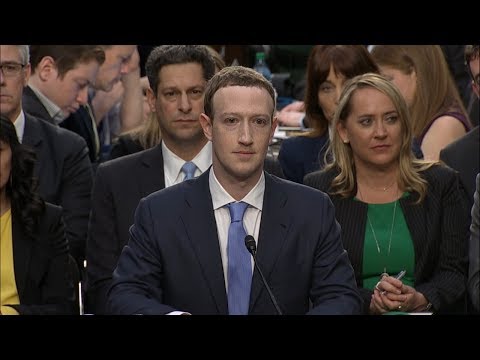
“I believe it's important to tell people exactly how the information that they share on Facebook is going to be used.”Congress hearing before the U.S. Senate, 2018 · 1:59:53
Privacy starts with responsibility, not just connection
Zuckerberg’s clearest position is that privacy failures came from thinking too narrowly about Facebook’s job. He says connecting people was not enough, and that the company needed a broader responsibility for how its tools could be misused, including around developers and data privacy. He presents this as both a company failure and his own responsibility.1234
That matters because it changes the standard he says a platform should meet. On this view, a company cannot treat privacy as a side setting or a legal checkbox. It has to anticipate harm, govern the ecosystem around its products, and accept accountability when those systems fail.124
People should understand how their information is used
A central theme in Zuckerberg’s privacy view is transparency. He says it is important to tell people exactly how the information they share will be used, which implies that privacy depends not only on internal safeguards but also on clear explanation to the person using the service.5
He also later reflects that the company was not direct enough in addressing concerns and explaining how seriously it took them. That admission suggests he sees trust as partly a communication problem: even if a product is useful, people judge it through whether the company is candid and understandable about sensitive issues.6
“I believe it's important to tell people exactly how the information that they share on Facebook is going to be used.”Congress hearing before the U.S. Senate, 2018 · full transcript →
Privacy is tied to user control
Zuckerberg’s account of privacy is not just secrecy. It is also about giving people controls over their content and account. In the 2018 hearing, he defends the idea that users can decide who sees what they share and how advertising uses their information.
He makes the same control-based argument when discussing account status. He distinguishes deactivation from deletion, and says deletion wipes everything and cannot be undone. That framing treats privacy as the ability to leave, pause, or erase your presence on your own terms.7
“If they delete their account, the answer is no. That's why we actually offer two options. We offer deactivation, which allows you to shut down or suspend your account but not delete the information because actually a lot of people wanna, at least for some period of time... I mean, we hear students with exams coming up wanna not be on Facebook because they they wanna make sure that they can focus on the exam. So they deactivate their account temporarily, but then want the ability to turn it back on when they're ready. You can also delete your account, which is wiping everything. And if you do that, then you can't get it back.”Congress hearing before the U.S. Senate, 2018 · full transcript →
Privacy must be built into new technologies from the start
As Zuckerberg talks about newer products, he increasingly treats privacy as a design requirement rather than a later fix. In AI and messaging, he points to systems where even the company cannot see message contents, showing a model where technical architecture itself creates privacy protection.8
He makes a similar point about the metaverse, where privacy and safety need to be designed in from the beginning. That suggests he believes the lesson from social media is to embed protections early, before a platform reaches massive scale and misuse forces reactive changes.

“…even Meta can't see the messages that people send…”Huge Conversations with Cleo Abram, 2024 · full transcript →
His privacy view balances openness, safety, and authenticity
Zuckerberg does not present privacy as the only value. He also strongly defends voice and broad expression, while arguing that platforms should act conservatively when there is an imminent threat of harm. His approach is to maximize expression but intervene where safety risks become concrete.910
That creates tension with another part of his worldview: authenticity. He argues for verifying identities for people seeking wide distribution and for removing fake accounts. In practice, his view of privacy is therefore not anonymity above all, but a balance between personal protection, accountability, and safety in public-facing parts of the platform.1112

“So the solution here is to verify the identities of anyone who's getting a wide amount of distribution and to get a lot better at identifying and taking down fake accounts. So we now require you to provide a government ID and to prove your location if you want to run political ads or if you're going to run a large page. You can still say controversial things if you want, but you have to stand behind them with your real identity and face accountability. Our AI systems have also gotten a lot more advanced at detecting clusters of fake accounts that aren't behaving the way that people would. So we now remove billions of fake accounts a year, mostly within minutes of signing up and before they really have a chance to…”Georgetown University speech, 2019 · full transcript →
Zuckerberg on privacy, in his own words
“And it was my mistake, and I'm sorry.”
“I believe it's important to tell people exactly how the information that they share on Facebook is going to be used.”
“…even Meta can't see the messages that people send…”
“If they delete their account, the answer is no. That's why we actually offer two options. We offer deactivation, which allows you to shut down or suspend your account but not delete the information because actually a lot of people wanna, at least for some period of time... I mean, we hear students with exams coming up wanna not be on Facebook because they they wanna make sure that they can focus on the exam. So they deactivate their account temporarily, but then want the ability to turn it back on when they're ready. You can also delete your account, which is wiping everything. And if you do that, then you can't get it back.”
Where to watch
 Mark Zuckerberg on Data Privacy: Facebook's Duty to Protect Users2018 · 382 min · full transcriptHis most direct statement on privacy failures, responsibility, user controls, and what he says should change.
 Mark Zuckerberg on Meta AI Agents: Muse, Privacy, and Open Source2024 · 70 min · full transcriptShows how his privacy thinking extends into AI agents and private messaging architecture.
 Mark Zuckerberg on The Metaverse: Meta's Next Chapter2021 · 81 min · full transcriptExplains why he thinks privacy should be designed into new platforms like the metaverse from the start.
 Mark Zuckerberg on Free Expression: Voice, Safety, and Democracy2019 · 78 min · full transcriptUseful for understanding how he balances privacy with voice, authenticity, and public accountability.
 Mark Zuckerberg on Scaling Social Networks: Harvard CS50 Lecture2005 · 66 min · full transcriptGives early context on Facebook’s original identity-based model, which shaped later privacy tradeoffs.
Questions people ask
- What did Mark Zuckerberg say about Facebook's responsibility for privacy and misuse of data?
- What did Mark Zuckerberg say about deleting a Facebook account?
- What did Mark Zuckerberg say about fake accounts and political ads?
- What did Mark Zuckerberg say about the purpose of AI?
- What did Mark Zuckerberg learn about privacy and trust from building social media?
- What did Mark Zuckerberg say about political content moderation on Facebook?
Sources
Every quote above, word for word from the transcripts. Numbers match the text.
“We didn't take a broad enough view of our responsibility, and that was a big mistake.”
“And it was my mistake, and I'm sorry.”
“It's not enough to just connect people.”
“But it's clear now that we didn't do enough to prevent these tools from being used for harm as well, and that goes for fake news, for foreign interference in elections and hate speech, as well as developers and data privacy. We didn't take a broad enough view of our responsibility, and that was a big mistake. And it was my mistake, and I'm sorry. I started Facebook. I run it, and I'm responsible for what happens here. So now we have to go through our... All of our relationship with people and make sure that we're taking a broad enough view of our responsibility.”
“I believe it's important to tell people exactly how the information that they share on Facebook is going to be used.”
“I don't think we were as direct as we probably should have been about addressing some of those concerns, and it didn't necessarily stop people from using the products, but I think it colors how people think about them today. And I think it would have been possible to have kind of explained along the way how seriously we took those issues, and we just didn't because we thought, "Okay, well, people are showing that by using the product so much they like, are they still still like the products?" But I actually think it's possible to get to a better state than where we've gotten. >> Mhm. >> with with, um, with the social media products, which is both people liking it…”
“If they delete their account, the answer is no. That's why we actually offer two options. We offer deactivation, which allows you to shut down or suspend your account but not delete the information because actually a lot of people wanna, at least for some period of time... I mean, we hear students with exams coming up wanna not be on Facebook because they they wanna make sure that they can focus on the exam. So they deactivate their account temporarily, but then want the ability to turn it back on when they're ready. You can also delete your account, which is wiping everything. And if you do that, then you can't get it back.”
“…even Meta can't see the messages that people send…”
“I believe that we must continue to stand for free expression…”
“Senator, yes. That's our that's our approach. If there is an imminent threat of harm, we're going to take a conservative position on that and make sure that we flag that and understand that more broadly. But overall, I wanna make sure that we provide people with the most voice possible. I I want the widest possible expression, and I don't want anyone at our company to make any decisions based on the the, political ideology of the content.”
“So the solution here is to verify the identities of anyone who's getting a wide amount of distribution and to get a lot better at identifying and taking down fake accounts. So we now require you to provide a government ID and to prove your location if you want to run political ads or if you're going to run a large page. You can still say controversial things if you want, but you have to stand behind them with your real identity and face accountability. Our AI systems have also gotten a lot more advanced at detecting clusters of fake accounts that aren't behaving the way that people would. So we now remove billions of fake accounts a year, mostly within minutes of signing up and before they really have a chance to…”
“Democracy depends on the idea that we hold each other's right to express ourselves and be heard…”
How this guide was made: drafted with AI from the full transcripts of the recordings cited, then checked: every quotation must match a transcript word for word and be the speaker's own words, and an independent review gates accuracy. Methodology and corrections.

