Mark Zuckerberg on Long-Term Thinking
Mark Zuckerberg treats long-term thinking as building toward a future you can already see dimly, then taking risks, investing early, and creating systems that let many people participate in it.
- Start with a big mission, not just a short-term win.
- Make bold bets before the path is fully clear, because ideas sharpen through building.
- Invest ahead of visible demand so you can build what is coming next.
- He ties long-term progress to broad access: more people should have tools, freedom to try, and ownership.
Long-term thinking starts with a mission bigger than yourself
For Zuckerberg, long-term thinking begins with purpose. He defines purpose as feeling needed, belonging to something larger than yourself, and working toward a better future, so a durable strategy has to be anchored in more than quarterly performance.1
He pushes that idea beyond individual ambition to a generational task: building a world where more people can find that sense of purpose. That makes long-term thinking social as well as strategic; it is about what you are building for other people, not only what you achieve yourself.2
This also helps explain how he talks about Facebook's origin. He says he did not start it mainly to create a company, which suggests that in his view the strongest long-term efforts begin with a problem or mission people care deeply enough to keep pursuing.34

“The challenge for our generation is to create a world where everyone has a sense of purpose.”Harvard commencement speech, 2017 · full transcript →
You have to act before the plan is fully formed
A core part of Zuckerberg's long-term view is that you cannot wait for complete certainty. He argues that ideas become clear through the process of working on them, so the right posture is iterative commitment rather than perfect upfront planning.5
That is why he treats risk as necessary, not optional. In a fast-changing world, he says the bigger danger is refusing to take risks, and he favors making mistakes on both sides rather than becoming frozen by caution.67
He also frames big visions as socially difficult to pursue because ambitious builders will be misunderstood and criticized for moving too quickly. In his view, long-term thinking requires the emotional stamina to keep building anyway.8
Invest early in capabilities you will need later
Zuckerberg's version of long-term thinking is not abstract patience; it is concrete capacity building. He says he wants enough capacity to build things that are only partly visible on the horizon, which captures a willingness to spend and organize ahead of fully proven opportunities.9
That mindset shows up in how he talks about AI. He sees progress as gradual rather than one single jump, which supports investing steadily in infrastructure, models, and products before the end state is obvious.10
The same pattern appears in hardware. He argues that glasses are the ideal future form factor and treats current devices as steps toward that goal, just as he describes the metaverse as the next platform after today's screens. Long-term thinking here means building transitional products while aiming at a much larger destination.1112
He bets on platforms that change how people connect
Zuckerberg's longest-range bets are usually about interaction, not just software features. He argues that the next major medium will be more immersive and embodied, because current screens are too limited for the kind of presence and communication he wants technology to enable.121314
That same logic drives his focus on glasses and richer digital presence. The goal is not merely another app, but a new computing layer that can understand context and make interaction feel more natural.1115
Seen this way, his long-term thinking is about building for shifts in human behavior and interface design. He is less interested in optimizing the present device stack than in preparing for what comes after it.1112
The future should be widely distributed, not tightly controlled
Another consistent theme is that long-term progress is stronger when more people have access to powerful tools. In AI, he argues that broad distribution creates prosperity and that invention matters more than simple automation.1617
He extends this into a theory of safety. Rather than concentrating capability in a small number of institutions, he says the better protection comes from checks, balances, and broad access, including capable personal agents for individuals.181917
He applies a similar principle to digital platforms more broadly. In the metaverse, he emphasizes that people should own their items rather than being trapped by a platform, which fits his larger pattern of wanting future systems to be open enough for creators, developers, and users to participate directly.20
Long-term thinking needs freedom to try, fail, and start small
Zuckerberg does not present long-term thinking as only a leadership trait at the top. He argues that people need the freedom to fail, because major successes come from environments where trying and missing is acceptable.21
He also stresses that meaningful change usually begins locally and grows from small starts. That makes long-term ambition compatible with humble first steps: begin with something specific, learn from it, and expand.22
This matters at the social level too. He argues that societies lose out when only a narrow group can afford to take shots on big ideas, so a real long-term orientation must widen who gets to experiment and build.23
Zuckerberg on long-term thinking, in his own words
“The challenge for our generation is to create a world where everyone has a sense of purpose.”
Where to watch
 Mark Zuckerberg on Purpose For Everyone: Harvard Commencement Address2017 · 46 min · full transcriptBest overview of how long-term thinking begins with purpose, freedom to fail, and building things larger than yourself.
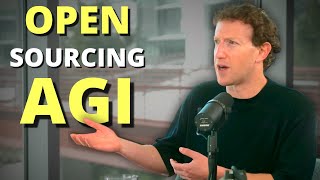 Mark Zuckerberg on Open Source AI: Llama 3, Scale, and Safety2024 · 79 min · full transcriptShows how he translates long-term thinking into early capacity investment and patient bets on AI progress.
 Mark Zuckerberg on Meta AI Agents: Muse, Privacy, and Open Source2024 · 70 min · full transcriptExplains why he thinks broad access, open systems, and personal AI agents are the right long-run direction.
 Mark Zuckerberg on The Metaverse: Meta's Next Chapter2021 · 81 min · full transcriptLays out his clearest case for betting on the next computing platform before it is mainstream.
 Mark Zuckerberg on the Future of Human Connection: AI Glasses and Holograms2024 · 146 min · full transcriptConnects the metaverse vision to a more specific hardware roadmap centered on glasses.
 Mark Zuckerberg on Startup Strategy: Move Fast, Take Risks2012 · 35 min · full transcriptBest for his operating philosophy: risk-taking, learning by doing, and avoiding stagnation.
Questions people ask
- How does Mark Zuckerberg think CEOs should run a large company?
- What did Mark Zuckerberg say about Meta AI and Llama 3?
- What did Mark Zuckerberg say about being called crazy for a big vision?
- What did Mark Zuckerberg say about the purpose of AI?
- What did Mark Zuckerberg say about who gets to start a business?
- What did Mark Zuckerberg say about risk and why entrepreneurs should take it?
Sources
Every quote above, word for word from the transcripts. Numbers match the text.
“Purpose is that feeling that you are a part of something bigger than yourself, that you are needed, and that you have something better ahead to work for.”
“The challenge for our generation is to create a world where everyone has a sense of purpose.”
“Facebook, I didn't start it to start a company…”
“…we just kind of cared more than those other companies about making it exist…”
“Ideas don't come out fully formed. They only become clear as you work on them.”
“…the biggest risk is not taking any risk…”
“…you want to make mistakes evenly on both sides…”
“It's really good to be idealistic. But be prepared to be misunderstood. Anyone working on a big vision is going to get called crazy, even if you end up right. Anyone taking on a complex problem is going to get blamed for not fully understanding it, even though it's impossible to know everything up front. Anyone taking initiative will always get criticized for moving too fast because there's always someone who wants to slow you down. In our society, we often don't take on big things because we're so afraid of making mistakes that we ignore all the things wrong today if we do nothing.”
“…we always wanna have enough capacity to build something that we can't quite see that were on the horizon yet.”
“I think it's progressive. And I don't think AGI is one thing.”
“I think what you ideally have is glasses.”
“The next platform and medium will be even more immersive: an embodied internet…”
“This isn't about spending more time on screens.”
“It's about making the time that we already spend better.”
“But there are a lot of social and psychological things that go along with that experience that was previously only physical presence. Right? I think there's, like, an intimacy, a trust. You know, there's a a level of communication because so much of communication is nonverbal and is based on expressions that you're kind of... You know, you're you're sharing with with someone when you're in this kind of environment. And before those things would have only been possible, you know, had, you know, I gotten on a plane and and flown to Austin and and sat, you know, physically with you in the same place. So I I think we're we're basically shortcutting those laws of physics and delivering the social and psychological benefits of being able to be present and and feel like you're there with another person, which have good real benefits, to anyone in the world.”
“…the primary purpose for AI is going to be invention of new things, not automation…”
“And that's based on three major principles that we have. One is that empowering people is the source of prosperity in the world, and it has been throughout history. Two is that the primary purpose for AI is going to be invention of new things, not automation. And then the third principle is that the foundation for safety for the future is basically establishing the right checks and balances and balance of power rather than restricting access.”
“…give every person in the world a very capable personal agent that can understand their goals…”
“…the best antidote to someone having an AI that could potentially hack into systems is having everyone have access to an AI…”
“You want to know that you own your items, not a platform.”
“The greatest successes come from having the freedom to fail.”
“Change starts local. Even global change starts small with people like us.”
“Now today, we have a level of wealth and equality that hurts everyone. When you can't... When you don't have the freedom to take your idea and turn it into a historic enterprise, we all lose. And right now, today, our society is way over indexed on rewarding people when they're successful. And we don't do nearly enough to make sure that everyone can take lots of different shots. Now let's face it. There is something wrong with our system when I can leave here and make billions of dollars in ten years while millions of students can't even afford to pay off their loans, let alone start a business.”
How this guide was made: drafted with AI from the full transcripts of the recordings cited, then checked: every quotation must match a transcript word for word and be the speaker's own words, and an independent review gates accuracy. Methodology and corrections.
