Mark Zuckerberg on Data Privacy: Facebook's Duty to Protect Users

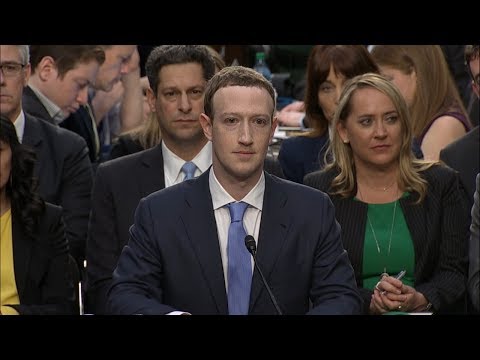
What Zuckerberg talks about
Mark Zuckerberg testified before a U.S. Senate hearing in 2018 about Facebook’s privacy failures, data misuse, foreign interference, and the company’s responsibility to better protect users.
Also known as: testimony on data privacy before Senate committee; Mark Zuckerberg testifies before Congress; Facebook CEO Mark Zuckerberg testimony before Senate committee.
Zuckerberg opens by apologizing for Facebook’s failures around privacy, foreign interference, and misuse of data. He says the company did not take a broad enough view of its responsibility and that he is personally accountable for what happened.
He explains what Facebook is doing in response: investigating apps with large data access, auditing misuse, banning violators, and tightening developer access. He also defends Facebook’s ad-supported model and argues that users need simpler controls and clearer in-product choices.
The hearing centers on whether Facebook can be trusted to protect users, how much control people really have over their data, and whether the company should do more proactively to prevent abuse before harm spreads.
Congressional chairs, senators, and ABC News correspondents also speak; Zuckerberg gives opening remarks and answers questions throughout.
In his words
“We didn't take a broad enough view of our responsibility, and that was a big mistake.”
“And it was my mistake, and I'm sorry.”
“It's not enough to just connect people.”
“I believe it's important to tell people exactly how the information that they share on Facebook is going to be used.”
“I think Facebook is safe.”
Key points
- Zuckerberg says Facebook made a mistake and that he is responsible for it.
- He says Facebook is investigating every app that had access to large amounts of user information.
- He pledges to ban developers who misused data and notify affected users.
- He argues that Facebook gives users controls over who sees their content and how ads use their information.
- He says long privacy policies are hard for people to understand, so controls should be built into the product.
- He defends Facebook’s free, ad-supported model as aligned with its mission to connect people.
- He says the company needs to do more to stop harmful content and misuse proactively, including with AI and more reviewers.
Full transcript: Mark Zuckerberg, Senate hearing on data privacy (2018)
Committee chair / hearing moderatorThe committees on the judiciary and commerce, science, and transportation will come to order. We welcome everyone to today's hearing on Facebook's social media privacy and the use and dish... And abuse of data. Although not unprecedented, this is a unique hearing. The issues we will consider range from data privacy and security to consumer protection and the Federal Trade Commission enforcement, touching on jurisdictions of these two committees. We have 44 members between our two committees. That may not seem like a large group by Facebook standards, but it is significant here for a hearing in The United States Senate.
We will do our best to keep things moving efficiently given our circumstances. We will begin with opening statements from the chairman and ranking members of each committee, starting with chairman Thune, and then proceed with mister Zuckerberg's opening statement. We will then move on to questioning. Each member will have five minutes to question witnesses. I'd like to remind the members of both committees that time limits will be and must be strictly enforced given the numbers that we have here today. If you're over your time, chairman Thune and I will make sure to let you know there will not be a second round as well. Of course, there will be the usual follow-up written questions for the record.
Questioning will alternate between majority and minority and between committees. We will proceed in order based on respective committee seniority. We will anticipate a couple short breaks later in the afternoon, And so it's my pleasure to recognize the chairman of the commerce committee, chairman Thune, for his opening statement.
Senator John ThuneThank you, chairman Grassley. Today's hearing is extraordinary. It's extraordinary to hold a joint committee hearing. It's even more extraordinary to have a single CEO testify before nearly half of the United States Senate. But then Facebook is pretty extraordinary. More than 2,000,000,000 people use Facebook every month. 1,400,000,000 people use it every day. More than the population of any country on Earth except China and more than four times the population of The United States. It's also more than 1,500 times the population of my home state of South Dakota. Plus, roughly 45% of American adults report getting at least some of their news from Facebook. In many respects, Facebook's incredible reach is why we're here today.
We're here because of what you, mister Zuckerberg, have described as a breach of trust. A quiz app used by approximately 300,000 people led to information about 87,000,000 Facebook users being obtained by the company Cambridge Analytica. There are plenty of questions about the behavior of Cambridge Analytica, and we expect to hold a future hearing on Cambridge and similar firms. But as you've said, this is not likely to be an isolated incident, a fact demonstrated by Facebook's suspension of another firm just this past weekend. You promised that when Facebook discovers other apps that had access to large amounts of user data, you will ban them and tell those affected. And that's appropriate. But it's unlikely to be enough for the 2,000,000,000 Facebook users.
One reason that so many people are worried about this incident is what it says about how Facebook works. The idea that for every person who decided to try an app, information about nearly 300 other people was scraped from your services, to put it mildly, disturbing. And the fact that those 87,000,000 people may have technically consented to making their data available doesn't make most people feel any better. The recent revelation that malicious actors were able to utilize Facebook's default privacy settings to match email addresses and phone numbers found on the so called dark web to public Facebook profiles, potentially affecting all Facebook users, only adds fuel to the fire. What binds these two incidents is that they don't appear to be caused by the kind of negligence that allows typical data breaches to happen.
Instead, they both appear to be the result of people exploiting the very tools that you've created to manipulate users' information. I know Facebook has taken several steps and intends to take more to address these issues. Nevertheless, some have warned that the actions Facebook is taking to ensure that third parties don't obtain data from unsuspecting users, while necessary, will actually serve to enhance Facebook's own ability to market such data exclusively. Most of us understand that whether you're using Facebook or Google or some other online services, we are trading certain information about ourselves for free or low cost services. But for this model to persist, both sides of the bargain need to know the stakes that are involved.
Right now, I'm not convinced that Facebook's users have the information that they need to make meaningful choices. In the past, many of my colleagues on both sides of the aisle have been willing to defer to tech companies' efforts to regulate themselves. But this may be changing. Just last month, in overwhelming bipartisan fashion, Congress voted to make it easier for prosecutors and victims to go after websites that knowingly facilitate sex trafficking. This
Speaker 3should
Senator John Thunebe a wake up call for the tech community. We want to hear more, without delay, about what Facebook and other companies plan to do to take greater responsibility for what happens on their platforms. How will you protect users' data? How will you inform users about the changes that you are making? And how do you intend to proactively stop harmful conduct instead of being forced to respond to it months or years later. Mister Zuckerberg, in many ways, you and the company that you've created, the story that you've created represent the American dream. Many are incredibly inspired by what you've done. At the same time, you have an obligation, and it's up to you, to ensure that that dream doesn't become a privacy nightmare for the scores of people who use Facebook.
This hearing is an opportunity to speak to those who believe in Facebook and to those who are deeply skeptical about it. We are listening. America is listening. And quite possibly, the world is listening too.
Committee chair / hearing moderatorThank you. Now ranking member Feinstein.
Senator Dianne FeinsteinThank you very much, mister chairman. Chairman Grassley, chairman Thune, thank you both for holding this hearing. Mister Zuckerberg, thank you for being here. You have a real opportunity to hit... This afternoon to lead the industry
Senator Bill Nelsonreally do the...
Senator Dianne FeinsteinAnd demonstrate a meaningful commitment to protecting individual privacy. We have learned over the past few months, and we've learned a great deal that's that's alarming. We've seen how foreign actors are abusing social media platforms like Facebook to interfere in elections and take millions of Americans' personal information without their knowledge in order to manipulate public opinion and target individual voters. Specifically, on February 16, special counsel Mueller issued an indictment against the Russia based Internet Internet Research Agency and 13 of its employees for interfering operations targeting targeting The United States.
Through this 37 page indictment, we learned that the IRA ran a coordinated campaign through 470 Facebook accounts and pages. The campaign included ads and false information to create discord and harm secretary Clinton's campaign, and the content was seen by an estimated a 157,000,000 Americans. A month later, on March 17, news broke that Cambridge Analytica exploited the personal information of approximately 50,000,000 Facebook users without their knowledge or permission. And last week, we learned that number was even higher, 87,000,000 Facebook users who had their private information taken without their consent.
Specifically, using a personality quiz he created, professor Kogan collected the personal information of 300,000 Facebook users and then collected data on millions of their friends. It appears the information collected included everything these individuals had on their Facebook pages, and according to some reports, included private direct messages between users. Professor Cogan is said to have taken data from over 70,000,000 Americans. It has also been reported that he sold this data to Cambridge Analytica for $800,000. Cambridge Analytica then took this data and created a psychological welfare tool to influence United States elections.
In fact, the CEO, Alexander Nix, declared that Cambridge Analytica ran all the digital campaign, the television campaign, and its data informed all the strategy for the Trump campaign. The reporting has also speculated that Cambridge Analytica worked with the Internet Research Agency to help Russia identify which American voters to target with its prop... With its propaganda. I'm concerned that press reports indicate Facebook learned about this breach in 2015, but appears not to have taken significant steps to address it until this year. So this hearing is important, and I appreciate the conversation we had yesterday.
And I believe that Facebook, through your presence here today and the words you're about to tell us, will indicate how strongly your industry will regulate and or reform the platforms that they control. I believe this is extraordinarily important. You lead a big company with 27,000 employees, and we very much look forward to your comments. Thank you, mister chairman.
Committee chair / hearing moderatorThank you, senator Feinstein. The history and growth of Facebook mirrors that of many of our technological giants. Founded by mister Zuckerberg in 2004, Facebook has exploded over the past fourteen years. Facebook currently has over 2,000,000,000 monthly active users across the world, over 25,000 employees and offices in 13 US cities and various other countries. Like their expanding user base, the data collected on Facebook users has also skyrocketed. They have moved on from schools, likes, and relationship statuses. Today, Facebook has access to dozens of data points ranging from ads that you've clicked on, events you've attended, and your location based upon your mobile device.
It is no secret that Facebook makes money off this data through advertising revenue, although many seem confused by or all I get... Altogether unaware of this fact. Facebook generates... Generated 40,000,000,000 in revenue in 2017 with about 98% coming from advertising across Facebook and Instagram. Significant data collection is also occurring at Google, Twitter, Apple, and Amazon, and even an ever expanding portfolio of products and services offered by these companies grant endless opportunities to collect increasing amounts of information on their customers. As we get more free or extremely low cost services, the trade off for the American consumer is to provide more personal data.
The potential for further growth and innovation based on collection of data is unlimited list. However, the potential for abuse is also significant. While the condors of the Cambridge Analytica situation are still coming to light, there was clearly a breach of consumer trust and a likely improper transfer of data. The judiciary committee will hold a separate hearing exploring Cambridge and other data privacy issues. More importantly, though, these events have ignited a larger discussion on consumers' expectations and the future of data privacy in our society. It is exposed that consumers may not fully understand or appreciate the extent to which their data is collected, protected, transferred, used, and misused.
Data has been used in advertising and political campaigns for decades. The amount and type of data obtained, however, has seen a very dramatic change. Campaigns, including presidents Bush, Obama, and Trump, all use these increasing amounts of data to focus on micro targeting and personalization over numerous social media platforms and especially Facebook. In fact, president Obama's campaign developed an app utilizing the same Facebook feature as Cambridge Analytica to capture the information of not just the app's users, but millions of their friends. The digital director for that campaign for 02/2012 described the data scraping app as something that would, quote, wind up being the most groundbreaking piece of technology developed for this campaign, end of quote.
So the effectiveness of these social media tactics can be debated, but their use over the past years across the political spectrum and their increased significance cannot be ignored. Our policy towards data privacy and security must keep pace with these changes. Data privacy should be tethered to consumer needs and expectations. Now at a minimum, consumers must have the transparency necessary to make an informed decision about whether to share their data and how it can be used. Consumers ought to have clearer information, not opaque policies and complex click through consent pages. The tech industry has an obligation to respond to widespread and growing concerns over data privacy and security and to restore the public's trust.
The status quo no longer works. Moreover, congress must determine if and how we need to strengthen privacy standards to ensure transparency and understanding for the billions of consumers who utilize these products. Senator Nelson.
Senator Bill NelsonThank you, mister chairman. Mister Zuckerberg, good afternoon. Let me just cut to the chase. If you and other social media companies do not get, your act in order, none of us are gonna have any privacy anymore. That's what we're facing. We're talking about personally identifiable information that if not kept by the social media media companies from theft, a value that we have in America being our personal privacy, we won't have it anymore. It's the advent of technology, and, of course, all of us are part of it. From the moment that we wake up in the morning until we go to bed, we're on those handheld tablets.
And online companies like Facebook are tracking our activities and collecting information. Facebook has a responsibility to protect this personal information. We had a good discussion yesterday. We went over all of this. You told me that the company had failed to do so. It's not the first time that Facebook has mishandled its users' information. The FTC found that Facebook's privacy policies had deceived users in the past. And in the present case, we recognize that Cambridge Analytica and an Now reporting, George Stephanopoulos.
George StephanopoulosGood afternoon. We're coming in the air because Mark Zuckerberg, the CEO and founder of Facebook, is about to appear on Capitol Hill in wake of that privacy scandal flowing from the 2016 campaign. There you see him right there as he entered the senate judiciary and commerce committee's hearing room. This scandal, of course, is when the personal information of 87,000,000 Facebook users was compromised, improperly taken by a company working for the Trump campaign, Cambridge Analytica. There's the hearing room right there. It is a joint committee hearing, some 44 senators in attendance, and there is mister Zuckerberg, his first appearance on Capitol Hill, one he has practiced for and one where there is a lot on the line. I wanna bring in our congressional correspondent, Mary Bruce. And, Mary, as I said, this is his first first appearance on Capitol Hill, and he's got a big job to do to fend off new regulation.
Mary BruceYeah, George. This is Mark Zuckerberg's first appearance before a congressional committee like this, and the stakes could not be higher both for Facebook and the tech world at large. He is about to be questioned by 44 lawmakers, nearly half of the entire US senate, and they are likely to grill him on both sides of the aisle about the user privacy, about Russian meddling in the US election, and about his plan to protect your data going forward. Now Zuckerberg, we know, comes armed with an apology. He is going to take responsibility. He's going to admit that he made mistakes, and he's going to try to convince congress that his company can be trusted. But, George, that may not be enough for lawmakers. Many we've talked with are demanding more robust oversight, and today they want to know if Mark Zuckerberg is going to get on board.
George StephanopoulosOkay, Mary. Opening statements on the committee wrapping up. Right now, the senator Bill Nelson from Florida, Democrat of Florida speaking right now as Zuckerberg is waiting patiently there for that to end. We're told he's gonna have an opening statement about five five to seven minutes long and then take questions from all 44 senators, in attendance. He's flanked there by his deputies, his vice president of public policy who worked
Committee chair / hearing moderatorThank you, my colleague.
George StephanopoulosFor president George w Bush. And now we're gonna hear
Committee chair / hearing moderatorfrom mister Zuckerberg. Today is Mark Zuckerberg, founder, chairman, chief executive officer of Facebook. Mister Zuckerberg launched Facebook 02/04/2004 at the age of 19. And at that time, he was a student at Harvard University. As I mentioned previously, his company now has over 40,000,000,000 of annual revenue and over 2,000,000,000 monthly active users. Mister Zuckerberg, along with his wife, also established the Chan Zuckerberg Initiative to further philanthropic causes. I now turn to you. Welcome to the committee. And, whatever your statement is orally, if you have a longer one, it'll be included in the record.
So proceed, sir.
Mark ZuckerbergChairman Grassley, chairman Thune, ranking member Feinstein, and ranking member Nelson, and members of the committee, we face a number of important issues around privacy, safety, and democracy, and you will rightfully have some hard questions for me to answer. Before I talk about the steps we're taking to address them, I want to talk about how we got here. Facebook is an idealistic and optimistic company. For most of our existence, we focused on all of the good that connecting people can do. And as Facebook has grown, people everywhere have gotten a powerful new tool for staying connected to the people they love, for making their voices heard, for building communities and businesses. Just recently, we've seen the Me Too movement and the March for our lives organized at least in part on Facebook.
After hurricane Harvey, people came together to raise more than $20,000,000 for relief, and more than 70,000,000 small businesses use Facebook to create jobs and grow. But it's clear now that we didn't do enough to prevent these tools from being used for harm as well, and that goes for fake news, for foreign interference in elections and hate speech, as well as developers and data privacy. We didn't take a broad enough view of our responsibility, and that was a big mistake. And it was my mistake, and I'm sorry. I started Facebook. I run it, and I'm responsible for what happens here. So now we have to go through our... All of our relationship with people and make sure that we're taking a broad enough view of our responsibility.
It's not enough to just connect people. We have to make sure that those connections are positive. It's not enough to just give people a voice. We need to make sure that people aren't using it to harm other people or to spread misinformation. And it's not enough to just give people control over their information. We need to make sure that the developers they share it with protect their information too. Across the board, we have a responsibility to not just build tools, but to make sure that they're used for good. It will take some time to work through all the changes we need to make across the company, but I'm committed to getting this right. This includes the basic responsibility of protecting people's information, which we failed to do with Cambridge Analytica. So here are a few things that we are doing to address this and to prevent it from happening again.
First, we're getting to the bottom of exactly what Cambridge Analytica did and telling everyone affected. What we know now is that Cambridge Analytica improperly accessed some information about millions of Facebook members by buying it from an app developer. That information, this was information that people generally share publicly on their Facebook pages like names and their profile picture and the pages they follow. When we first contacted Cambridge Analytica, they told us that they had deleted the data. About a month ago, we heard new reports that suggested that wasn't true. And now we're working with governments in The U. S, The UK, and around the world to do a full audit of what they've done and to make sure they get rid of any data they may still have. Second, to make sure no other app developers out there are misusing data, we're now investigating every single app that had access to a large amount of information in the past.
And if we find that someone improperly used data, we're gonna ban them from Facebook and tell everyone affected. Third, to prevent this from ever happening again going forward, we're making sure that developers can access as much information now. The good news here is that we already made big changes to our platform in 2014 that would have prevented this specific situation from with Cambridge Analytica from occurring again today. But there's more to do, and you can find more details on the steps we're taking in my written statement. My top priority has always been our social mission of connecting people, building community, and bringing the world closer together. Advertisers and developers will never take priority over that as long as I'm running Facebook. I started Facebook when I was in college.
We've come a long way since then. We now serve more than 2,000,000,000 people around the world, and every day, people use our services to stay connected with the people that matter to them most. I believe deeply in what we're doing, and I know that when we address these challenges, we'll look back and view helping people connect and giving more people a voice as a positive force in the world. I realize the issues we're talking about today aren't just issues for Facebook and our community. They're issues and challenges for all of us as Americans. Thank you for having me here today, and I'm ready to take your questions.
George StephanopoulosStreamline statement there.
Senator Bill NelsonRemind Facebook
George StephanopoulosCEO, Mark Zuckerberg, taking responsibility for what went wrong during the two thousand sixteen campaign, saying he founded the company. It was his mistake, and he's got the responsibility now to fix it. He's gonna take questions now About five minutes from each senator on the podium. Senator Chuck Grassley, the chairman of the senate judiciary, now speaking.
Committee chair / hearing moderatorWith you, Facebook handles extensive amounts of personal data for billions of users. A significant amount of that data is shared with third party developers who utilize your platform. As of this... Early this year, you did not actively monitor whether that data was transferred by such developers to other parties. Moreover, your policies only prohibit transfers by developers to parties seeking to profit from such data. Number one, besides professor Cogan's transfer and now potentially cube you, do you know of any instances where user data was improperly transferred to third party in breach of Facebook's terms? If so, how many times has that happened, and was Facebook only made aware of that transfer by some third party?
Mark ZuckerbergMister chairman, thank you. As I mentioned, we're now conducting a full investigation into every single app that had access to a large amount of information before we locked down platform to prevent developers from accessing this information around 2014. We believe that we're going to be investigating many apps, tens of thousands of apps. And if we find any suspicious activity, we're going to conduct a full audit of those apps to understand how they're using their data and if they're doing anything improper. And if we find that they're doing anything improper, we'll ban them from Facebook, and we will tell everyone affected. As for past activity, I I don't have, all the examples of apps that we've banned here. But if you'd like, I can have my team follow-up with you after this. K. Have you ever required an audit to ensure the deletion of improperly transferred data?
And if so, how many times? Mister chairman, yes, we have. I don't have the exact figure on how many times we have. But overall, the way we've enforced our platform policies in the past, is we have looked at patterns of how apps have have used our APIs and accessed information as well as looked into, reports that people have made to us about apps that might be doing sketchy things. Going forward, we're going to take a more proactive position on this, and and do much more regular spot checks and other reviews of apps, as well as increasing the amount of audits that we do. And, again, I can make sure that our team follows up with you on on anything about the the specific past stats that would be interesting.
George StephanopoulosWanna bring in our chief congressional correspondent Mary Bruce again. And, Mary, boy, you see the strategy of contrition there from Mark Zuckerberg saying his company did not do enough to protect people from fake news, from foreign interference and elections, from hate speech, did not do enough to protect people's privacy and that he's determined to fix it.
Mark ZuckerbergMister chairman, I...
Mary BruceGeorge, he's clearly trying to convey the message that he knows the buck stops with him, that he's willing and open to make changes. The question is just how many changes? What kinds of changes? As we mentioned earlier, congress is really looking to make some larger, more robust changes when it comes to oversight. Whether that's politically feasible in this climate remains to be seen, but that is going to be at the crux of so much of the questioning here today. Just how far is Mark Zuckerberg really willing to go?
George StephanopoulosThat question expected to go on now for several hours, at least 43 more senators, prepared to question Mark Zuckerberg. Okay, Mary. Thanks very much. You can all follow this hearing online at abcnews.com or by downloading the ABC News app. And, of course, there'll be a full report tonight on World News Tonight with David Muir. Have a good afternoon.
Senator Bill NelsonThis has been a special report from ABC News....
Committee chair / hearing moderatorEmphasize benign uses such as connecting with friends, but your policy does not give any indication for more controversial issues of such data. My question, why doesn't Facebook disclose to its users all the ways the data might be used by Facebook and other third parties, and what is Facebook's responsibility to inform users about that information? Mister chairman,
Mark ZuckerbergI I believe it's important to tell people exactly how the information that they share on Facebook is going to be used. That's why every single time you go to share something on Facebook, whether it's a photo in Facebook, or a message in in Messenger or WhatsApp, every single time, there's a control right there about who you're gonna be sharing it with, whether it's your friends or public or a specific group, and you can you can change that and control that in line. To your broader point about the privacy policy, this gets into an an issue that I think we and others in the tech industry have found challenging, which is that long privacy policies are very confusing. And if you make it long and spell out all the detail, then you're probably going to reduce the percent of people who read it and make it accessible to them. So one of the things that we've struggled with over time is to make something that is as simple as possible so people can understand it as well as giving them controls in line in the product in the context of when they're trying to actually use them, taking into account that we don't expect that most people will wanna go through and read a full legal document.
Committee chair / hearing moderatorSenator
Senator Bill NelsonNelson. Thank you, mister chairman. Yesterday, when we talked, I gave the relatively harmless example that I'm communicating with my friends on Facebook and indicate that I love a certain kind of chocolate. And all of a sudden, I start receiving advertisements for chocolate. What if I don't want to receive those commercial advertisements? So your chief operating officer, miss Sandberg, suggested on the NBC Today show that Facebook users who do not want their personal information used for advertising might have to pay for that protection, pay for it.
Are you actually considering having Facebook users pay for you not to use that information?
Mark ZuckerbergSenator, people have a control over how their information is used in ads in the product today. So if you want to have an experience where your ads aren't... You aren't targeted using, all the information that we have available, you can turn off third party information. What we found is that even though some people don't like ads, people really don't like ads that aren't relevant. And while there is some discomfort for sure with using information and making ads more relevant, the overwhelming feedback that we get from our community is that people would rather have us show relevant content there than not. So we offer this control that you're referencing. Some people use it. It's not the majority of people on Facebook. And I think that that's a good level of control to offer.
I think what Cheryl was saying was that in order to not run ads at all, we would still need some sort of business model.
Senator Bill NelsonAnd that is your business model. So I take it that, and I use the harmless example of chocolate. But if it got into more personal thing, communicating with friends, and I wanna cut it off, I'm gonna have to pay you in order not to send me using my personal information something that I don't want. That, in essence, is what I understood miss Sandberg to say. Is that correct?
Mark ZuckerbergYes, senator. Although to be clear, we don't offer an option today for people to pay to not show ads. We think offering an ad supported service is the most aligned with our mission of trying to help connect everyone in the world because we wanna offer a free service that everyone can afford. Okay. That's the only way that we can reach billions of people.
Senator Bill NelsonSo, therefore, you consider my personally identifiable data the company's data, not my data. Is that it?
Mark ZuckerbergNo, senator. Actually, at the first line of our terms of service say that you control and own the information and content that you put on Facebook.
Senator Bill NelsonWell, the recent scandal, is obviously frustrating, not only because it affected 87,000,000, but because it seems to be part of a pattern of lax data practices by the company going back years. So back in 2011, it was a settlement with the FTC, and now we discover yet another instance where the data was failed to be protected. When you discovered the Cambridge Analytica that had fraudulently obtained all of this information, why didn't you inform those 87,000,000?
Mark ZuckerbergWhen we learned in 2015 that Cambridge Analytica had bought data from an app developer on Facebook that people had shared it with, we did take action. We took down the app, and we demanded that both the app developer and Cambridge Analytica delete and stop using any data that they had. They told us that they did this. In retrospect, it was clearly a mistake to believe them. And we should have followed up and done a full audit then, and that is not a mistake that we will make.
Senator Bill NelsonYes. You did that, and you apologize for it, but you didn't notify them. And do you think that you have an ethical obligation to notify 87,000,000 Facebook users?
Mark ZuckerbergSenator, when we heard back from Cambridge Analytica that they had told us that they weren't using the data and had deleted it, we considered it a closed case. In retrospect, that was clearly a mistake. We shouldn't have taken their word for it, and we've updated our policies and how we're gonna operate the company to make sure that we don't make that mistake again.
Senator Bill NelsonDid anybody notify the FTC?
Mark ZuckerbergNo, senator. For the same reason, that we'd considered it a closed closed case.
Committee chair / hearing moderatorSenator Thune.
Senator John ThuneAnd mister Zuckerberg, would you that... Do that differently today, presumably, that... Response to senator Nelson's question? Yes. Having to do it over. This may be your first appearance before congress, but it's not the first time that Facebook has faced tough questions about its privacy policies. Wired magazine recently noted that you have a fourteen year history of apologizing for ill advised decisions regarding user privacy, not unlike the one that you made just now in your opening statement. After more than a decade of promises to do better, how is today's apology different? And why should we trust Facebook to make the necessary changes to ensure user privacy and give people a clearer picture of your privacy policies?
Mark ZuckerbergThank you, mister chairman. So we have made a lot of mistakes in running the company. I think it's it's pretty much impossible, I I believe, to start a company in your dorm room and then grow it to be at the scale that we're at now without making some mistakes. And because our service is about, helping people connect and information, those mistakes have been different in in how they... We try not to make the same mistake multiple times. But in general, a lot of the mistakes are around how people connect to each other just because of the nature of the service. Overall, I would say that we're going through a broader philosophical shift in how we approach our responsibility as a company. For the first ten or twelve years of the company, I viewed our responsibility as primarily building tools that if we could put those tools in people's hands, then that would empower people to do good things. What I think we've learned now across a number of issues, not just data privacy, but also fake news and foreign interference and elections, is that we need to take a more proactive role and a broader view of our responsibility.
It's not enough to just build tools. We need to make sure that they're used for good. And that means that we need to now take a more active view in policing the ecosystem, and in watching and kind of looking out and and making sure that all of the members in our community are using these tools in a way that's going to be good and healthy. So, at the end of the day, this is going to be something where people will measure us by our results on this. It's not that I expect that anything I say here today to necessarily change people's view, but I'm committed to getting this right. And I believe that over the coming years, once we fully work all these solutions through, people will see real real differences.
Senator John ThuneK. Well... And I'm I'm glad that, you all have gotten that message. As we discussed in my office yesterday, the line between legitimate political discourse and hate speech can sometimes be hard to identify, and especially when you're relying on artificial intelligence and other technologies for the initial discovery. Can you discuss what steps that Facebook currently takes when making these evaluations, the challenges that you face, and any examples of where you may draw the line between what is and what is not hate speech?
Mark ZuckerbergYes, mister chairman. I'll I'll speak to hate speech, and then I'll talk about enforcing our content policies more broadly. So, actually, maybe if if if you're okay with it, I'll go in the other order. So from the beginning of the company in 2004, I started in my dorm room. It was me and my roommate. We didn't have AI technology that could look at the content that people were sharing. So, so we basically had to, enforce our content policies reactively. People could share what they wanted, and and then if someone in the community found it to be offensive or against our policies, they'd flag it for us, and we'd look at it reactively. Now increasingly, we are developing AI tools that can identify certain classes of bad activity proactively and flag it for our team at Facebook.
By the end of this year, by the way, we're gonna have, more than 20,000 people working on security and content review, working across all these things. So when when content gets flagged to us, we have those those people look at it. And if it violates our policies, then we take it down. Some problems lend themselves more easily to AI solutions than others. So hate speech is one of the hardest because determining if something is hate speech is very linguistically nuanced. Right? It's... You need to understand, you know, what is a slur and what, whether something is hateful, not just in English, but the majority of people on Facebook use it in languages that are different across the world. Contrast that, for example, with an area like finding terrorist propaganda, which we've actually been very successful at deploying AI tools on already. Today, as we sit here, 99% of the ISIS and Al Qaeda content that we take down on Facebook, our AI systems flag before any human sees it.
So that's a success in terms of of rolling out AI tools, that can that can proactively police and enforce safety across the community. Hate speech, I am optimistic that over a five to ten year period, we will have AI tools that can, get into some of the nuances, the linguistic nuances of of of different types of content to be more accurate and flagging things for our systems. But today, we're just not there on that. So a lot of this is still reactive. People flag it to us. We we have people look at it. We have policies to try to make it as not subjective as possible. But until we get it more automated, there's a higher error rate than I'm happy with. Thank
Committee chair / hearing moderatoryou. Senator Feinstein.
Senator Dianne FeinsteinThanks, mister chairman. Mister Zuckerberg, what is Facebook doing to prevent foreign actors from interfering in US elections?
Mark ZuckerbergThank you, senator. This is one of my top priorities in 2018, is to get this right. I, one of my greatest regrets in running the company is that we were slow in identifying the Russian information operations in 2016. We expected them to do a number of more traditional cyber attacks, which we did identify and notify, the campaigns that they were trying to hack into them, but we were slow at identifying the type of of new information operations.
Senator Dianne FeinsteinWhen did you identify new operations?
Mark ZuckerbergIt was right around the time of the twenty sixteen election itself. So since then, we... 2018 is is an incredibly important year for elections, not just in... With the US midterms, but around the world. There are important elections in India, in Brazil, in Mexico, in Pakistan, and in Hungary that we wanna make sure that we do everything we can to protect the integrity of those elections. Now I have more confidence that we're gonna get this right because since the twenty sixteen election, there have been several important elections around the world where we've had a better record. There's the French presidential election. There's the German election. There was The US, Senate Alabama special election last year.
Senator Dianne FeinsteinExplain what is better about the record.
Mark ZuckerbergSo we've deployed new AI tools, that do a better job of identifying fake accounts that may be trying to interfere in elections or spread misinformation. And between those three elections, we were able to proactively remove tens of thousands of accounts that before they they could, contribute significant harm. And the nature of these attacks, though, is that, you know, there are people in Russia whose job it is is to try to exploit our systems and other Internet systems and other systems as well. So this is an arms race. Right? I mean, they're gonna keep on getting better at this, and we need to invest in keeping on getting better at this too, which is why, one of the things I mentioned before is we're gonna have, more than 20,000 people by the end of this year working on security and content review across the company.
Senator Dianne FeinsteinSpeak for a moment about automated bots that spread disinformation. What are you doing to punish those who exploit your platform in that regard?
Mark ZuckerbergWell, you're not allowed to have a fake account on Facebook. Your content has to be authentic. So we build technical tools to try to identify when people are creating fake accounts, especially large networks of fake accounts like the Russians have, in order to remove all of that content. After the twenty sixteen election, our top priority was protecting the integrity of other elections around the world. But at the same time, we had a parallel effort to trace back to Russia, the IRA activity, the Internet Research Agency activity, was the part of the Russian government that, that did this activity in in in 2016. And just last week, we were able to determine, that a number of Russian media organizations that were sanctioned by the Russian regulator were operated and controlled by this Internet research agency.
So we took the step last week. It was a pretty big step for us of taking down, sanctioned news organizations in Russia as part of an operation to remove 270, fake accounts and pages part of their broader network in Russia, that was that was actually not targeting international interference as much as... I'm sorry. Let let me correct that. It was primarily targeting, spreading misinformation in Russia itself as well as certain Russian speaking neighboring countries.
Senator Dianne FeinsteinHow many accounts of this type have you taken down?
Mark ZuckerbergAcross... In the IRA specifically, the ones that we've pegged back to the IRA, we can identify the four seventy in the American elections and the two seventy that we specifically went after in Russia last week. There are many others that our systems catch, which are, more difficult to attribute specifically to Russian intelligence. But the number would be in the tens of thousands of fake accounts that we remove, and I'm happy to have my team follow-up with you on more information if that would be helpful.
Senator Dianne FeinsteinWould you please? I think this is very important. If you knew in 2015 that Cambridge Analytica was using the information of professor Cogan's, why didn't Facebook ban Cambridge in 2015? Why'd you wait another year?
Mark ZuckerbergThat's a a great question. Cambridge Analytica wasn't using our services in 2015 as far as we can tell. So this is this is clearly one of the questions that I asked our team as soon as I learned about this is why why did we wait until we found out about the reports last month to to to ban them? It's because as of the time that we learned about their activity in 2015, they weren't an advertiser. They weren't running pages. So we actually had nothing to ban. Thank you. Thank you, mister chairman.
Committee chair / hearing moderatorYeah. Thank you, senator Feinstein. Now senator Hatch.
Speaker 10Well, in my opinion, this is the most this is the most intense public scrutiny I've seen for a tech related hearing since the Microsoft hearing that I chaired back in the late nineteen nineties. The recent stories about Cambridge Analytica and data mining on social media have raised serious concerns about consumer privacy. And, naturally, I know you understand that. At the same time, these stories touch on the very foundation of the Internet economy and the way the websites that drive our Internet economy make money. Some have professed themselves shocked shocked that companies like Facebook and Google share you... User data with advertisers. Did any of these individuals ever stop to ask themselves why Facebook and Google didn't... Don't change... Don't charge for access?
Nothing in life is free. Everything involves trade offs. If you want something without having to pay money for it, you're gonna have to pay for it in some other way, it seems to me. And that's where... What we're seeing here. And these great websites that don't charge for access, they extract value in some other way. And there's nothing wrong with that as long as they're upfront about what they're doing. To my mind, the issue here is transparency. It's consumer choice. Do users understand what they're agreeing to when they access a website or agree to terms of service? Are websites upfront about how they extract value from users, or do they hide the ball? Do consumers have the information they need to make an informed choice regarding whether or not to visit a particular website. To my to my mind, these are questions that we should ask or be focusing on.
Now, mister Zuckerberg, I remember well your first visit to Capitol Hill back in 2010. You spoke to the Senate Republican High-tech Task Force, which I chair. You said back then that Facebook would always be free. Is that still your objective?
Mark ZuckerbergSenator, yes. There will always be a version of Facebook that is free. It is our mission to try to help connect everyone around the world and to bring the world closer together. In order to do that, we believe that we need to offer a service that everyone can afford, and we're committed to doing that.
Speaker 10Well, if so, how do you sustain a business model in which users don't pay for your service?
Mark ZuckerbergSenator, we run ads.
Speaker 10I see. That's great. Whenever a controversy like this arises, there's always a danger that congress's response will be to step in and overregulate. Now that's been the experience that I've had in my forty two years here. In your view, what sorts of legislative changes would help to solve the problems the Cambridge Analytica story has revealed, and what sorts of legislative changes would not help to solve this issue?
Mark ZuckerbergSenator, I think that there are a few categories of legislation that that make sense to consider. Around privacy specifically, there are a few principles that I think it would be useful to to discuss and and potentially codify into law. One is around having a simple and practical set of of ways that you explain what you're doing with data. And we talked a little bit earlier around the complexity of laying out these these long privacy policy. It's hard to say that people, you know, fully understand something when it's only written out in a long legal document. This need... This stuff needs to be, implemented in a way where people can actually understand it, where consumers can can understand it. But that can also capture all the nuances of how these services work in a way that does it... That's not overly restrictive on on providing the services.
That's one. The second is around giving people complete control. This is the most important principle for Facebook. Every piece of content that you share on Facebook, you own, and you have complete control over who sees it and and how you share it, and you can remove it at any time. That's why every day, about a 100,000,000,000 times a day, people come to one of our services and either post a photo or send a message to someone because they know that they have that control, and that who they say it's gonna go to is gonna be who who sees the content. And I think that that control is something that's important that I think should apply to, to every service. And
Speaker 10Go ahead.
Mark ZuckerbergThe the third point is is just around enabling innovation because some of these use cases that that are are very sensitive like face recognition for example. And I think there's a balance that's extremely important to strike here where you obtain special consent for sensitive features like face recognition, but don't... But we still need to make it so that American companies can innovate in those areas or else we're gonna fall behind Chinese competitors, and others around the world who have different regimes, for for different new, feed that.
Committee chair / hearing moderatorSenator Cantwell?
Mark ZuckerbergThank you, mister chairman. Welcome, mister Zuckerberg. Do you know who Palantir is?
I do.
Some people have referred to them as a Stanford Analytica. Do you agree?
Senator, I have not heard that.
Okay. Do you think Palantir taught Cambridge Analytica's press reports are saying how to do these tactics?
Senator, I don't know.
Do you think that Palantir has ever scraped data from Facebook?
Senator, I'm not aware of that.
K. Do you think that during the twenty sixteen campaign as Cambridge Analytica was providing support to the Trump campaign under project Alamo. Were there any Facebook people involved in that sharing of technique and information?
Senator, we provided support to the Trump campaign similar to what we provide to any advertiser or campaign, who who asks for it?
So that was a yes. Is that a yes?
Senator, can you repeat the specific question? I I just wanna make sure I I I guess specifically what you're asking.
During the twenty sixteen campaign, Cambridge Analytica worked with the Trump campaign to refine tactics, and were Facebook employees involved in that?
Senator, I'm... I don't know that our employees were involved with Cambridge Analytica. Although I know that we did help out the Trump campaign overall in sales support in the same way that we do with other campaigns.
So they may have been involved in all working together during that time period. Maybe that's something your investigation will find out.
Senator, my... I can certainly have my team get back to you on any specifics there that I don't know sitting here today.
Have you heard of total information awareness? Do you know what I'm talking about?
No. I do not.
Okay. Total information awareness was 2003. John Ashcroft and others trying to do similar things to what I think is behind all of this. Geopolitical forces trying to get data and information to influence a process. So when I look at Palantir and what they're doing and I look at WhatsApp, which is another acquisition, and I look at where you are from the 2011 consent decree and where you are today, I'm thinking, is this guy outfoxing the foxes, or is he going along with what is a major trend in an information age to try to harvest information for political forces? And so my question to you is, do you see that those applications, that those companies Palantir and even WhatsApp are going to fall into the same situation that you've just fallen into over the last several years?
Senator, I'm not I'm I'm not sure specifically. Overall, I I do think that these issues around information access are challenging. To the specifics about those apps, I'm not really that familiar with what Palantir does. WhatsApp collects very little information and I think is less likely to have the kind of issues because of the way that the service is architected. But certainly, think that these are broad issues across the tech industry.
Well, I guess, given the track record where Facebook is and why you're here today, I guess people would say that they didn't act boldly enough. And the fact that people like John Bolton basically was an investor in New York Times article earlier, I guess it was actually last month, that the Bolton pact was obsessed with how America was becoming limp wristed and spineless, and it wanted research and messaging for national security issues. So the fact that, you know, there are a lot of people who are interested in this larger effort. And what I think my constituents wanna know is was this discussed at your board meetings, and what are the applications and interests that are, being discussed without putting real teeth into this.
We don't want to come back to this situation again. I believe you have all the talent. My question is whether you have all the will to help us solve this problem.
Yes, senator. So data privacy and foreign interference in elections are certainly topics that we have discussed at the board meeting. These are some of the biggest issues that the company has faced, and we feel a huge responsibility to get these right.
Do you believe the European regulation should be applied here in The US?
Senator, I think everyone in the world deserves good privacy protection. And regardless of whether we implement the exact same regulation, I would guess that it would be somewhat different because we have somewhat different sensibilities in The US as the other countries. We're committed to rolling out the controls and the affirmative consent and the special controls around sensitive types of technology like face recognition that are required in GDPR, we're doing that around the world. So I think it's certainly worth discussing whether we should have something similar in The US. But what I would like to say today is that we're going to go forward and implement that regardless of what the regulatory outcome is.
Committee chair / hearing moderatorSenator Wicker. Senator Thun will chair next. Senator Wicker.
Speaker 12Thank you, mister chairman. And mister Zuckerberg, thank you for being with us. My question is gonna be sort of a follow-up on what senator Hatch was talking about. And let me agree with, basically, his his advice that we don't want to overregulate to the to the point where we're stifling innovation and investment. I understand with regard to suggested rules or suggested legislation, there are at least two schools of thought, out there. One would be the ISPs, the inner... Internet service providers, who are advocating for privacy protections for consumers that apply to all online entities equally across the entire Internet ecosystem. Now, Facebook is an edge provider on the other hand.
It's my understanding that many edge providers such as Facebook may not support that effort because edge providers have different business models than the ISPs and should not be considered like services. So, do you think we need consistent privacy protections for consumers across the entire Internet ecosystem that are based on the type of consumer information being collected, used, or shared regardless of the entity doing the collecting or using or sharing?
Mark ZuckerbergSenator, this is an important question. I would differentiate between ISPs, which I consider to be the pipes of the Internet, and the platforms like Facebook or Google or Twitter or YouTube that are the, apps or or platforms on top of that. I think in general, the expectations that people have of the pipes, are somewhat different from the platforms. So there might be areas where there needs to be more regulation in one and less than the other. But I think that there are going to be other places where there needs to be more regulation of the other type. Specifically though, on the pipes, one of the important issues that that I think we face and and have debated is is When
Speaker 12you when you say pipes, you mean
Mark ZuckerbergISPs. The ISPs. Yeah. And I know net neutrality has been a a hotly debated topic. And one of the reasons why I have been out there, saying that I think that that should be the case is because, you know, I look at my own story of when I was getting started building Facebook at Harvard. You know, I only had one option for an ISP to use. And if I had to pay extra in order to, make it so that my app could potentially be seen or used by other people, then, then we probably wouldn't be here today.
Speaker 12Okay. Well well, I'm... But we're talking about privacy concerns. And and let me just say we'll we'll have to follow-up on this, but I I I think you and I agree this is gonna be one of the major items of debate if we have to go forward and and do this from a governmental standpoint. Let me just move on to another couple of items. Is it true that, as was recently publicized, that Facebook collects the call and text histories of its users that use Android phones?
Mark ZuckerbergSenator, we have an app called Messenger, for sending messages to your Facebook friends, and that app offers people an option to sync, their their text messages into the messaging app and to make it so that... So basically, so you can have one app where it has both your texts and and your Facebook messages in one place. We also allow people the option of
Speaker 12You could opt in or out of that.
Mark ZuckerbergYes. Is it It is opt in.
Speaker 12Opt out?
Mark ZuckerbergIt is opt in. You you you have to affirmatively say that you want to sync that information before we get access
Speaker 12to it. Unless you opt in, they... You don't collect that call and text history.
Mark ZuckerbergThat is correct.
Speaker 12And is that true for... Is this practice done at all with minors, or do you make an exception there for persons aged 13 to 17?
Mark ZuckerbergI do not know. We can follow-up. Okay.
Speaker 12Do that. Let's do that. And one other thing. There have been reports that Facebook can track a user's Internet browsing activity even after that user has logged off of the Facebook platform. Can you confirm whether or not this is true?
Mark ZuckerbergSenator, I I wanna make sure I get this accurate, so it'll probably be better to have my team follow-up.
Speaker 12So you don't know? I
Mark Zuckerbergknow that the people use cookies on the Internet and that you can probably correlate activity between, between sessions. We do that for a number of reasons, including security and including measuring ads to make sure that the ad experiences are the most effective, which, of course, people can opt out of. But I want to make sure that I'm precise in my answer.
Speaker 12So let me follow-up with sir. Would would you also let us know how Facebook discloses to its users that engaging in this type of tracking gives us that result. Yes. Thank... And thank you very much.
Senator John ThuneThank you, senator Wicker. Senator Leahy is up next.
Senator Bill NelsonThank you, mister Zuckerberg. I I assume Facebook's been served as subpoenas from the special counsel Mueller's office. Is that correct? Yes. Have you or anyone at Facebook been interviewed by the special counsel's office? Yes. Have you been interviewed?
Mark ZuckerbergI have not. I I I have not.
Senator Bill NelsonOthers have.
Mark ZuckerbergI I believe so. And I wanna be careful here because that... Our work with the special counsel is confidential, and I wanna make sure that in an open session, I'm not revealing something that's confidential.
Senator Bill NelsonI understand. That's why I made clear that you have been contacted. You have had subpoenas.
Mark ZuckerbergActually, let me clarify that. I I actually am not aware of of a subpoena. I believe that there may be, but I know we're working with them.
Senator Bill NelsonThank you. Six months ago, your general counsel, promised us you were taking steps to prevent Facebook for serving what I would call an unwitting co conspirator in Russian interference. But these these unverified divisive pages are on Facebook today. They look a lot like the anonymous groups of Russian agents used to spread propaganda during the twenty sixteen election. Are you able to confirm whether they're Russian created groups? Yes or no?
Mark ZuckerbergSenator, are you asking about those specifically? Yes. Senator, last week, we actually announced a a major change to our ads and pages policies that we will be verifying the identity of, every single advertiser. Specific ones.
Senator Bill NelsonDo you know whether they are?
Mark ZuckerbergI am not familiar with those pieces of content specifically.
Senator Bill NelsonBut if you decide this policy a week ago, you'd be able to verify them?
Mark ZuckerbergWe are working on that now. What we're doing is we're going to verify the identity of any advertiser who's running a political, or issue related ad. This is basically what the Honest Ads Act is proposing, and we're following that. And we're also gonna do that for pages.
Senator Bill NelsonBut you can't answer on these.
Mark ZuckerbergI... I'm not familiar with those specific cases.
Senator Bill NelsonFind Will out the answer and get back to me?
Mark ZuckerbergI'll have my team get back to you. Mhmm. I I do think it's worth adding though that we're going to do the same verification of the identity and location of admins who are running large pages. So that way, even if they aren't gonna be buying ads in our system, that will make it significantly harder for Russian, interference efforts or other inauthentic efforts For some to try to spread misinformation through the network.
Senator Bill NelsonAnd surprise, it's been going on for some time. Some might say that's about time. You know, six months ago, I asked your general counsel about Facebook's role as a breeding ground for hate speech against Rohingya refugees. Recently, UN investigators blamed Facebook, for playing a role in citing possible genocide in Myanmar, and there has been genocide there. Now you say you use a... AI to find this. This is a type of content I'm referring to. It calls for the death of a Muslim journalist. Now that threat went straight through your detection systems. It spread very quickly. And then it took attempt after attempt after attempt and the involvement of civil society groups to get you to remove it.
Why couldn't it be removed within twenty four hours?
Mark ZuckerbergSenator, what's happening in Myanmar is a terrible tragedy, and we need to do more.
Speaker 13We all agree with that. Okay.
Senator Bill NelsonBut you and investigators have blamed... You blame Facebook for playing a role in their genocide. We all agree it's terrible. How can you dedicate and will you dedicate resources to make sure sure such hate speech is taken down within twenty four hours?
Mark ZuckerbergYes. We're working on this. And there are three specific things that we're doing. One is we're hiring dozens of more Burmese language content reviewers because hate speech is very language specific. It's hard to do it without people who speak the local language, and we need to ramp up our effort there dramatically. Second is we're working with civil society in Myanmar to identify specific hate figures so we can take down their accounts rather than specific pieces of content. And third is we're standing up a product team to do specific product changes in Myanmar and other countries that that may have similar issues in the future, to prevent this from from happening.
Senator Bill NelsonWhen senator Cruz and I, sent a letter to Apple, asking what they're gonna do about Chinese censorship. My question, I'll place... That'd be great. Thank you,
Senator John Thunesenator Lee.
Senator Bill NelsonJust for the record, I wanna know what you would do about Chinese censorship when they come to you.
Senator John ThuneSenator Graham's up next.
Committee memberThank you. Are you familiar with Andrew Bosworth?
Mark ZuckerbergYes, senator. I am.
Committee memberHe said, so we connect more people. Maybe someone dies in a terrorist attack coordinated on our tools. The ugly truth is that we believe in connecting people so deeply that anything that allows us to connect more people more often is de facto good. Do you agree with that?
Mark ZuckerbergNo, senator. I do not. And as context, Boz wrote that... Boz is what we call him internally. He wrote that as an internal note. We have a lot of discussion internally. I disagreed with it at the time that he wrote it. If you looked at the comments on the internal discussion, the vast majority of people internally did too.
Committee memberThat you did a poor job as a CEO communicating your displeasure with such thoughts. Because if he had understood where you where you were at, he would never said it to begin with.
Mark ZuckerbergWell, senator, we try to run our company in a way where people can express different opinions internally. Well, this is
Committee memberan opinion that really disturbs me. And if somebody worked for me that said this, I'd fire them. Who's your biggest competitor?
Mark ZuckerbergSenator, we have a lot of competitors. Who's your biggest? I think the categories of... Do do want just one? I... I'm not sure I can give one, but can I give a a a bunch? Mhmm. So there are three categories that I would focus on. One are the other tech platforms. So Google, Apple, Amazon, Microsoft. We overlap with them in different ways.
Committee memberDo they do... Do they provide the same service you provide?
Mark ZuckerbergIn different ways, different parts of
Committee memberit. Yes. If I buy a Ford and it doesn't work well and I don't like it, I can buy a Chevy. If I'm upset with Facebook, what's the equivalent product that I can go sign up for?
Mark ZuckerbergWell, there's... The second category that I was gonna talk about are
Senator Bill NelsonI'm not
Committee membertalking about categories. I'm talking about is the real competition you face because car companies face a lot of competition. If they make a defective car, it gets out in the world. People stop buying that car. They buy another one. Is it an alternative to Facebook in the private sector?
Mark ZuckerbergYes, senator. The average American uses eight different apps to communicate with their friends and stay in touch with people Okay. Ranging from texting apps to email. Service you provide? Well, we provide a number of different
Committee memberservices.
Is Twitter the same as what you do?
Mark ZuckerbergIt overlaps with a portion
Committee memberof both do. Have a monopoly?
Mark ZuckerbergIt certainly doesn't feel like that to me.
Committee memberOkay. So it doesn't. So Instagram, you bought Instagram. How did you buy Instagram?
Mark ZuckerbergBecause they were very talented app developers who are making good use of our platform and understood our values.
Committee memberIt's a good business decision. My point is that one way to regulate a company is through competition, through government regulation. Here's the question that all of us got an answer. What do we tell our constituents given what's happened here? Why we should let you self regulate? What would you tell people in South Carolina that given all the things we've just discovered here, it's a good idea for us to rely upon you to regulate your own business practices?
Mark ZuckerbergWell, senator, my position is not that there should be no regulation. Okay. I think the Internet is increasingly regulation? I I think the real question as the Internet becomes more important in people's lives is what is the right regulation, not whether there should But be you as a company welcome regulation? I think if it's the right regulation, then yes.
Committee memberYou think the Europeans have it right?
Mark ZuckerbergI think that they get things right.
Committee memberHave you ever submitted... That's true. So would you work with us in terms of what regulations you think are necessary in your industry? Absolutely. Okay. Would you submit to us some proposed regulations?
Mark ZuckerbergYes. And I'll have my team follow-up with you so that way we can have this discussion across the different categories where I think that this discussion needs to happen.
Committee memberForward to it. When you sign up for Facebook, you sign up, for terms of service. Are you familiar with that? Yes. Okay. It says the terms govern your use of Facebook and the products, features, apps, services, technology, software we offer Facebook's products or products, except for we expressly state that separate terms and not these apply. I'm a lawyer. I have no idea what that means. But when you look at terms of service, this is what you get. Do you think the average consumer understands what they're signing up for?
Mark ZuckerbergI don't think that the average person likely reads that whole document. Yeah. But I think that there are different ways that we can communicate that and have a responsibility to do so.
Committee memberDo you do you agree with me that you better come up with different ways because this ain't working?
Mark ZuckerbergWell, senator, I think in certain areas, that is true. And I think in other areas, like the core part of what we do. But if you if you think about just at the most basic level, people come to Facebook, Instagram, WhatsApp, Messenger about a 100,000,000,000 times a day to share a piece of content or a message with a specific set of people. And I think that that basic functionality, people understand because we have the controls in line every time. And given the volume of the activity and the value that people tell us that they're getting from that, I think that that control in line does seem to be working fairly well. Now we can always do better, and there are other... The services are complex, there are... There's more to it than just, you know, you go and you post a photo. So I I I agree that that in many places, could do better. But I think for the core of the service, it actually is, quite clear.
Senator John ThuneThank you, senator Graham. Senator Klobuchar.
Committee memberThank you, mister chairman. Mister Zuckerberg, I think we all agree that what happened here was bad. You acknowledged it was a breach of trust. And the way I explain it to my constituents is that if someone breaks into my apartment with a crowbar and they take my stuff, it's just like if the manager gave them the keys or if they didn't have any locks on the doors. It's still a breach. It's still a break in. And I believe we need to have laws and rules that are sophisticated as the brilliant products that you've developed here, and we just haven't done that yet. And one of the areas that I focused on is the election, and I appreciate the support that you and Facebook and now Twitter, actually, have given to the Honest Ads Act, a bill that you mentioned that I'm leading with senator McCain and senator Warner. And I just wanna be clear as we work to pass this law so that we have the same rules in place to disclose political ads and issue ads as we do for TV and radio as well as disclaimers that you're gonna take early action as soon as June, I heard, before this election so that people can view these ads including issue ads.
Is that correct?
Mark ZuckerbergThat is correct, senator. And I just wanna take a moment before I go into this in more detail to thank you for your leadership on this. This, I think, is an important area for the whole industry to move on. The two specific things that we're doing are... One is around transparency. So now you're going to be able to go and click on any advertiser or any page on Facebook and see all of the ads that they're running. So that actually brings advertising online on Facebook to an even higher standard than what you would have on TV or print media because there's nowhere where you can see all of the TV ads that someone is running, for example, whereas you will be able to see now on Facebook, whether this, campaign or or third party is saying different messages to different types of people. I know that's a really important element of transparency. Mhmm. Then the other really important piece is around verifying every single, advertiser who's gonna be running political, or issue ads.
Committee memberI appreciate that. And senator Warner and I have also called on Google and the other platforms to do the same. So memo to the rest of you. We have to get this done, or we're gonna have a patchwork of ads. And I, hope that you'll be working with us to pass this bill. Is that right?
Mark ZuckerbergWe will.
Committee memberOkay. Thank you. Now on the subject of Cambridge Analytica, were these people, the 87,000,000 people users, concentrated in certain states? Are you able to figure out where they're from?
Mark ZuckerbergI do not have that information with me. But you... But we can follow-up with your your office.
Committee memberOkay. Because as we know, that election was close, and it was only thousands of votes in certain states. You've also estimated that roughly 126 people, million people may have been shown content from a Facebook page associated with the Internet research agency. Have you determined when... Whether any of those people were the same Facebook users whose data was shared with Cambridge Analytica? Are you able to make that determination?
Mark ZuckerbergSenator, we're investigating that now. We believe that it is entirely possible that there will be a connection there.
Committee memberOkay. That seems like a big deal as we look back at that last election. Former Cambridge Analytica employee Christopher Wiley has said that the data, that it improperly obtained... That Cambridge Analytica improperly obtained from Facebook users could be stored in Russia. Do you agree that that's a possibility?
Mark ZuckerbergSorry. Are you are you asking if Cambridge Analytica's data could be stored in Russia?
Committee memberThat's what he said this weekend on a Sunday show.
Mark ZuckerbergSenator, I don't have any specific knowledge that would suggest that, but one of the steps that we need to take now is go do a full audit of all of Cambridge Analytica systems to understand, what they're doing, whether they still have any data to make sure they remove all the data. If they don't, we're gonna take legal action against them to do so. That audit, we have temporarily seeded that in order to let the UK government complete their government investigation first because, of course, the government investigation takes precedence over a company doing that. But we are committed to completing this full audit and getting to the bottom of what's going on here so that way we can have more answers to this.
Committee memberOkay. You, earlier stated publicly and here, that you would support some privacy rules, so that everyone's, playing by the same rules here. And you also said here that you should have notified customers earlier. Would you support a rule, that would require you to notify your users of a breach within seventy two hours?
Mark ZuckerbergSenator, that makes sense to me, and I think we should, have our team follow-up with with yours to to discuss the details around that more.
Committee memberThank you. I just think part of this was when people don't even know that their data has been breached, that's a huge problem. And I also think we get to solutions faster when we get that information out there. Thank you, and we look forward to passing this bill. We'd love to pass it before the election on the honest ads, and, looking forward to better disclosure of this election. Thank you.
Senator John ThuneThank you, senator Klobuchar. Senator Bluntz, I'm next.
Speaker 17Thank you, mister chairman. Mister Duckenberg, nice to see you. When I saw you not too long after I entered the senate in 2011, I told you when I sent my business cards down to be printed, they came back from the senate print shop with the message that was the first business card they'd ever printed a Facebook, address on. There are days when I've regretted that, but more days when we get lots of information that we need to get. There are days when I wonder if Facebook friends is a little misstated. That doesn't seem like I have those every single day. But, you know, the the platform you've created is really important. Now my son, Charlie, who's 13, is dedicated to Instagram, so he'd wanna be sure I mentioned him while I was here with, with you. I haven't printed that on my card yet. I I will will say that, but I think we have that account as well.
Lots of ways to connect people. And the the information, is an important commodity, and it's what makes your business work. I get that. However, I wonder about some of the collection efforts, and maybe we can go through largely just even yes and no and then we'll get back to more expensive discussion of this. But do you, collect user data through cross device tracking?
Mark ZuckerbergSenator, I believe we do link people's accounts between devices in order to make sure that their Facebook and Instagram and their other experiences can be synced between their devices.
Speaker 17And that would also include offline data, data that's tracking that's not necessarily linked to Facebook but linked to one some device they went through Facebook on. Is that right?
Mark ZuckerbergSenator, I want to make sure we get this right. So I want to have my team follow-up with you on that afterwards.
Speaker 17Well, that doesn't seem that complicated to me. Now you you understand this better than I do, but maybe maybe you can explain to me why that's that... Why that's complicated. Do you track devices that an individual who uses Facebook has that is connected to the device that they use for their Facebook connection but not necessarily connected to Facebook?
Mark ZuckerbergI'm not I'm not sure of the answer to that question.
Speaker 18Really?
Mark ZuckerbergYes. There there may be some data that, is necessary to provide the service that we do, but I don't I don't have that on sitting here today. So that's something that I would want to follow-up.
Speaker 17Now the FTC last year flagged cross device tracking as one of their concerns. Generally, that people are tracking devices that the users of something like Facebook don't know that are being tracked, how do you disclose your collected... Collection methods? Is that all in this document that I would see and agree to before I entered into a Facebook... Yes, senator.
Mark ZuckerbergSo there are there are two ways that we do this. One is we try to be exhaustive in the legal documents around the terms of service and privacy policies. But more importantly, we try to provide inline controls so that peep... That are in plain English that people can understand. They can either go to settings or we can show them at the top of the app, periodically so that people understand all the controls and settings they have, and can can configure their experience the way that they want.
Speaker 17So do people do people now give you permission to track specific devices in their contract? And if they do, is that a relatively new addition to what you do?
Mark ZuckerbergSenator, I'm sorry. Don't I don't have that. Am I
Speaker 17able to opt out? Am I able to say it's okay for you to track what I'm saying on Facebook, but I don't want you to track what I'm texting to somebody else off Facebook on an Android phone?
Mark ZuckerbergOkay. Yes, senator. In in general, Facebook is not collecting data from other apps that you use. There may be some specific things about the device that you're using that Facebook needs to understand in order to offer the service. But if you're using Google or you're using some texting app, unless you specifically opt in that you want to share the texting app information, Facebook wouldn't see that.
Speaker 17Has it always been that way?
Speaker 19Or is
Speaker 17that a recent addition to how you deal with those other ways that I might communicate?
Mark ZuckerbergSenator, my understanding is that that is how the mobile operating systems are architected.
Speaker 17The so do you you don't have bundled permissions for how I can agree to what devices I may use that you may have contact with? Do you have... You bundle that permission, or am I able to want it individually say what I'm willing for you to con... To to watch and what I don't want you to watch? And I think we may have to take that for the record based on everybody else's time.
Senator John ThuneThank you, senator Blunt. Next up, Senator Durbin.
Speaker 20Thank you very much, Mr. Chairman. Mr. Zuckerberg, would you be comfortable sharing with us the name of the hotel you stayed in last night?
Mark ZuckerbergNo.
Speaker 20If you've messaged anybody this week, would you share with us the names of the people you've messaged?
Mark ZuckerbergSenator, no. I would probably not choose to do that publicly here.
Speaker 20I think that may be what this is all about. Your right to privacy, the limits of your right to privacy, and how much you give away in modern America in the name of, quote, connecting people around the world. Question, basically, of, what information Facebook's collecting, who they're sending it to, and whether they ever ask me in advance my permission to do that. Is that a fair thing for a user of Facebook to expect?
Mark ZuckerbergYes, senator. I think everyone should have control over how their information is used. And as we've talked about in in some of the other questions, I think that that is laid out in some of the documents. But more importantly, you want to give people control in the product itself. So the most important way that this happens across our services is that every day people come to our services to choose to share photos or send messages. And every single time they choose to share something, they're... They have a control right there about who they wanna share it with. But that level of control is extremely important.
Speaker 20They certainly know within the Facebook pages who their friends are, but they may not know, as has happened, and you've conceded this point in the past, that sometimes that information is going way beyond their friends, and sometimes people have made money off of sharing that information. Correct?
Mark ZuckerbergSenator, you're referring, I think, to our developer platform, and it may be useful for me to give some background on how we set that up, if that's useful.
Speaker 20I have three minutes left. So maybe you can do that for the record. Because I have a couple of the questions I'd like to ask. You have recently announced something that is called Messenger Kids. Facebook created an app allowing kids between the ages of six and 12 to send video and text messages through Facebook as an extension of their parents' account. They have cartoon like stickers and other features designed to appeal to little kids, first graders, kindergartners. On January 30, the campaign for commercial free childhood and lots of other child development organizations warned Facebook. They pointed to a wealth of research demonstrating that excessive use of digital devices and social media is harmful to kids and argued that young children simply are not ready to handle social media accounts at age six.
In addition, there are concerns about data that's being gathered about these kids. Now there are certain limits in the law. We know It's the Children's Online Privacy Protection Act. What guarantees can you give us that no data from messenger kids is or will be collected or shared with those that might violate that law?
Mark ZuckerbergAlright. Senator, so a number of things I think are are important here. The background on Messenger Kids is we heard feedback from thousands of parents that they wanna be able to stay in touch with their kids and call them, use apps like FaceTime when they're working late or not around and want to communicate with their kids, but they want to have complete control over that. So I think we can all agree that if you... When your kid is six or seven, even if they have access to a phone, you want to be able to control everyone who they can contact. And there wasn't an app out there that did that, so we built this service to do that. The app collects a minimum amount of information that is necessary to operate the service. So for example, the messages that people send is something that we collect in order to operate the service. But in general, that data is not going to be shared with third parties. It is not connected to the broader Facebook experience.
Speaker 20As a lawyer, I picked up on that word in general, the phrase in general. It seems to suggest that in some circumstances, it will be shared with third parties.
Mark ZuckerbergNo. It will not.
Speaker 20Alright. Would you be open to the idea that someone having reached adult age, having grown up with messenger kids, should be allowed to delete the data that you've collected?
Mark ZuckerbergSenator, yes. As a matter of fact, when you become 13, which is our legal limit or limiter, we we don't allow people under the age of 13 to use Facebook. You don't automatically go from having a Messenger Kids account to a Facebook account. You have to start over and get a Facebook account. So, so I think it's a it's a good idea to consider making sure that all that information is deleted. And in general, people are gonna be starting over when they get their their Facebook or other accounts.
Speaker 20I'll close because I just have a few seconds. Illinois has a biometric information privacy act, our state does, which is to regulate the commercial use of facial, voice, finger, and iris scans and the like. We're now in a fulsome debate on that, and I'm afraid Facebook has come down to the position trying to carve out exceptions to that. I hope you'll fill me in on how that is consistent with protecting privacy. Thank you.
Senator John ThuneThank you, senator Durbin. Senator Cornyn.
Speaker 21Thank you, mister Zuckerberg, for being here. I note... And up until 2014, the mantra or motto of Facebook was move fast and break things. Is that correct?
Mark ZuckerbergI don't know when we changed it, but the mantra is currently move fast with stable infrastructure, which is a much less sexy mantra.
Speaker 21Sounds much more boring, but my question is, during the time that it was Facebook's mantra or motto to move fast and break things, do you think some of the misjudgments, perhaps mistakes that you've admitted to here were as a result of that culture or that attitude, particularly as regards to personal privacy of information of your subscribers?
Mark ZuckerbergSenator, I do think that we made mistakes because of that, but the broadest mistakes that we made here are not taking a broad enough view of our responsibility. And that wasn't a matter... The the move fast cultural value is more tactical around whether engineers can ship things and and and different ways that we operate. But I think the big mistake that we've made looking back on this is viewing our responsibility as just building tools rather than viewing our whole responsibility as making sure that those tools are used for good.
Speaker 21Well, I... And I appreciate that because previously or early in the past, we've been told that platforms like Facebook, Twitter, Instagram, the like are neutral platforms, and the people who own and run those for profit, and I'm not criticizing doing something for profit in this country, but they bore no responsibility for the content. You agree now that Facebook and other other social media platforms are not neutral platforms but bear some responsibility for the content.
Mark ZuckerbergI agree that we're responsible for the content. And I think that there's... One of the big societal questions that I think we're gonna need to answer is the current framework that we have is based on this reactive model that assumed that there weren't AI tools that could proactively, tell whether something was terrorist content or something bad. So it naturally relied on, requiring people to flag for a company and then the company needing to take reasonable action. In the future, we're gonna have tools that are going to be able to identify more types of bad content. And I think that there's there are moral and legal obligation questions, that I think we'll have to wrestle with as a society about when we want to require companies to take action proactively on certain of those things
Speaker 19I...
Mark ZuckerbergAnd when that gets in the way of...
Speaker 21I appreciate that. I have two minutes left Alright. To ask you questions. So you you... Interestingly, the terms of the... What do you call it? The terms of service is a legal document which discloses to your subscribers how their information is gonna be used, how Facebook is gonna operate. And, but you concede that you doubt, everybody reads or understands, that legalese, those terms of service. So are... Is that to suggest that the consent that people give, subject to that terms of service is not informed consent? In other words, they may not read it, and even if they read it, they may not understand it?
Mark ZuckerbergI just think we have a broader responsibility than what the law requires. So I No.
Speaker 21I'm talking I'm talking... I appreciate that. What I'm asking about in terms of what your subscribers understand in terms of how their data is going to be used. But let me go to the terms of service under paragraph number two. You say you own all of the content and information you post on Facebook. That's what you've told us here today a number of times. So if I choose to terminate my Facebook account, can I bar Facebook or any third parties from using the data that I had previously supplied, for any purpose whatsoever?
Mark ZuckerbergYes, senator. If you delete your account, we should get rid of all of your information.
Speaker 21You should or
Mark ZuckerbergWe do. Do you? We do.
Speaker 21How about third parties that you have, contracted with to use some of that underlying information perhaps to target advertising, for themselves. You can't... Do you do... With... Do you claw back that information as well, or does that remain in their custom?
Mark ZuckerbergSenator, this is actually a very important question. I'm glad you brought this up because there's a a very common mis perception about Facebook that we sell data to advertisers, and we do not sell data to advertisers.
Senator Bill NelsonWe don't sell data
Speaker 21to any rent it.
Mark ZuckerbergWhat we allow is for advertisers to tell us who they wanna reach, and then we do the placement. So if an advertiser comes to us and says, alright. I'm a ski shop, and I wanna sell skis to women, then we might have some sense because people shared skiing related content or said they were interested in that. They shared whether they're a woman. And then we can show the ads to the right people without that data ever changing hands and going to the advertiser. That's a very fundamental part of how our model works and something that is often misunderstood. So I'm I'm I appreciate that you brought that up.
Senator John ThuneThank you, Senator Cornyn. We had indicated earlier on that we would take a couple of breaks, give our witness an opportunity. And I think we've been going now for just under two hours. I think we'll do a...
Mark ZuckerbergCan you do a few more? Are you want to keep going? Maybe fifteen minutes. Okay. Does that
Senator John ThuneAll right. We'll keep going. Senator Blumenthal is up next, and we will commence.
Speaker 13Thank you, Mr. Chairman. Thank you for being here today, mister Zuckerberg. You have told us today and you've told the world that Facebook was deceived by Alexander Kogan when he sold user information to Cambridge Analytica. Correct? Yes. I want to show you, the terms of service that Alexander Kogan provided to Facebook. And note for you that, in fact, Facebook was on notice that he could sell that user information. Have you seen these terms of service before?
Mark ZuckerbergI have not.
Speaker 13Who in Facebook was responsible for seeing those terms of service that put you on notice
Mark Zuckerbergthat that information could be sold? Senator, our app review team would be responsible for that.
Speaker 13Has anyone been fired on that app review review team?
Mark ZuckerbergSenator, not because of this.
Speaker 13Doesn't that term of service conflict with the FTC order that Facebook was under at that very time that this term of service was, in fact, provided to Facebook. And you'll note that the face... The FTC order specifically requires Facebook to protect privacy. Isn't there a conflict there?
Mark ZuckerbergSenator, it certainly appears that we should have been aware that this app developer submitted a term that was in conflict with the rules of the platform.
Speaker 13Well, what happened here was in effect willful blindness. It was heedless and reckless, which in fact amounted to a violation of the FTC consent decree. Would you agree?
Mark ZuckerbergNo, senator. My understanding is that is is not that this was a violation of the consent decree. But as I've said a number of times today, I think we need to take a broader view of our responsibility around privacy than just what is mandated, in the current laws that...
Speaker 13Here is my reservation, mister Zuckerberg, and I apologize for interrupting you, but my time is limited. We've seen the apology tours before. You have refused to acknowledge even an ethical obligation to have reported this violation of the FTC consent decree. And we have letters. We've had contacts with Facebook employees. And I'm going to submit a letter for the record from Sandy Parakelas, with your permission, that indicates not only a lack of resources but lack of attention to privacy. And so my reservation about your testimony today is that I don't see how you can change your business model unless there are specific rules of the road.
Your business model is to monetize user information to maximize profit over privacy. And unless there are specific rules and requirements enforced by an outside agency, I have no assurance that these kinds of vague commitments are going to produce action. So I wanna ask you a couple of very specific questions, and they are based on legislation that I've offered, the My Data Act, legislation that Senator Markey is introducing today, the Consent Act, which I'm joining. Don't you agree that companies ought to be required to provide users with clear, plain information about how their data will be used and specific ability to consent to the use of that information?
Mark ZuckerbergSenator, I do generally agree with with what you're saying. And I laid that out earlier when I talked about what...
Speaker 13Would you agree to an opt in as opposed to an opt out?
Mark ZuckerbergSenator, I think that that certainly makes sense to discuss, and I think the details around this matter a lot.
Speaker 13Would you agree that users should be able to access all of their information?
Mark ZuckerbergSenator, yes. Of course.
Speaker 13All the information that you collect as a result of purchases from data brokers as well as tracking them?
Mark ZuckerbergSenator, we have already a download your information tool that allows people to see and to take out all of the information that Facebook... That they've put into Facebook or that Facebook knows about them. So, yes, I agree with that. We already have that.
Speaker 13I have a number of other specific requests that you agree to support as part of legislation. I think legislation is necessary. The rules of the road have to be the result of congressional action. We have... Facebook has participated recently in the fight against scourge... The scourge of sex trafficking and the bill that we've just passed. It will be signed into law tomorrow. CESA, the Stop Exploiting Sex Trafficking Act, was the result of our cooperation. I hope that we can cooperate on this kind of measure as well.
Mark ZuckerbergSenator, I look forward to having my team work with you on this.
Senator John ThuneThank you, senator Blumenthal. Senator Cruz.
Speaker 22Thank you, Mr. Chairman. Mr. Zuckerberg, welcome. Thank you for being here. Mr. Zuckerberg, does Facebook consider itself a neutral public forum?
Mark ZuckerbergSenator, we consider ourselves to be a platform for all ideas.
Speaker 22Let me ask the question again. Does Facebook consider itself to be a neutral public forum and representatives of your company have given conflicting answers on this? Are you a First Amendment speaker expressing your views or are you a neutral public forum allowing everyone to speak?
Mark ZuckerbergSenator, here's how we think about this. I don't believe that... There are certain content that clearly we do not allow. Right? Hate speech, terrorist content, nudity, anything that makes people feel unsafe in in the community. From that perspective, that's why we generally try to refer to what we do as a platform for all IT
Speaker 22try just because the time is constraint. It's just a simple question. The predicate for for section two thirty immunity under the c d... CDA is that you are a neutral public forum. Do you consider yourself a neutral public forum? Are you engaged in political speech, which is your right under the First Amendment?
Mark ZuckerbergWell, senator, our goal is certainly not to engage in political speech. I'm not that familiar with the specific legal language of the the law that you that you speak to, so I I would need to follow-up with you on that. I'm just trying to lay out how broadly I think about this.
Speaker 22Well, mister Zuckerberg, I will say there are a great many Americans who I think are deeply concerned that that Facebook and other tech companies are engaged in a pervasive pattern of bias and political censorship. There have been numerous instances with Facebook. In May 2016, Gizmodo reported that Facebook had purposely and routinely suppressed conservative stories from trending news, including stories about CPAC, including stories about Mitt Romney, including stories about the Lois Lerner IRS scandal, including stories about Glenn Beck. In addition to that, Facebook has initially shut down the Chick fil A Appreciation Day page, has blocked a post of a Fox News reporter, has blocked over two dozen Catholic pages, and most recently blocked Trump supporters Diamond and Silk's page with 1,200,000 Facebook followers after determining their content and brand were, quote, unsafe to the community.
To a great many Americans, that appears to be a pervasive pattern of political bias. Do you agree with that assessment?
Mark ZuckerbergSenator, let me say a few things about this. First, I understand where that concern is coming from because Facebook and the tech industry are located in Silicon Valley, which is an extremely left leaning place. And this is actually a concern that I have and that I try to root out in the company is making sure that we don't have, any bias in the work that we do. And I think it is a fair concern that that people would would So let
Speaker 22me let this question. Are are you aware of any ad or page that has been taken down from Planned Parenthood?
Mark ZuckerbergSenator, I'm I'm not, but let me just How about moveon.org? Sorry?
Speaker 22How about moveon.org?
Mark ZuckerbergI... I'm not specifically aware of those.
Speaker 22How about any democratic candidate for office?
Mark ZuckerbergI'm I'm not specifically aware. I mean, I... I'm I'm not I'm not sure.
Speaker 22In your testimony, you say that you have 15 to 20,000 people working on security and content review. Do you know the political orientation of those 15 to 20,000 people engaged in content review?
Mark ZuckerbergNo, senator. We do not generally ask people about their political orientation when they're joining the company.
Speaker 22So as CEO, have you ever made hiring or firing decisions based on political positions or what candidates they supported?
Mark ZuckerbergNo. Why was Palmer Luckey fired? That is a specific personnel matter that seems like it would be inappropriate to
Speaker 22You just speak made a specific representation that you didn't make decisions based on political views.
Mark ZuckerbergWell, I can I can commit that it was not because of a political view? Do
Speaker 22you know of those 15 to 20,000 people engaged in content review, how many, if any, have ever supported financially a Republican candidate for office?
Mark ZuckerbergSenator, I do not know that.
Speaker 22Your testimony says it is not enough that we just connect people. We have to make sure those connections are positive. It says we have to make sure people aren't using their voice to hurt people or spread misinformation. We have a responsibility not just to build tools, to make sure those tools are used for good. Mister Zuckerberg, do you feel it's your responsibility to assess users whether they are good and positive connections or ones that those 15 to 20,000 people deem unacceptable or deplorable?
Mark ZuckerbergSenator, you're asking me personally? Facebook. Senator, I think that there are a number of things that we would all agree are clearly bad. Foreign interference in our elections, terrorism, self harm. Talking about censorship. Well, I think that you would probably agree that we should remove terrorist propaganda from the service. So that, I I agree, I think is is clearly bad activity that we wanna get down, and we're generally proud of of how well we we do with that. Now what I can say, and I and I do want to get this in before the end here, is that I am I am very committed to making sure that Facebook is a platform for all ideas. That is a very important founding principle of of what we do. We're proud of the discourse and the different ideas that people can share on the service. And that is something that as long as I'm running the company, I'm gonna be committed to making sure is the case.
Thank you.
Senator John ThuneThank you. Senator Cruz, do you want a break now?
Speaker 23Or do want
Senator John Thuneto keep going?
Mark ZuckerbergSure. I mean, that was pretty good. Alright.
Senator John ThuneAlright. We have... Senator White House is up next. But if you want to take five minute break right now, we have now been going a good two hours. So we'll be we'll recess for five minutes and reconvene.
Speaker 24Bush tapping these trees since 1981. And until two years ago, he was operating out of this nineteenth century sugar house. So what is this? What are we looking at?
Speaker 25This is the old evaporator. It's all dirty. Hadn't been used in a couple of years. Steam would come out of here, just billow out of here. Pure steam everywhere. It'd rise up out of here.
Committee memberBut if you didn't have that
Speaker 25in an old sugar house, it would just be like a rainstorm in here all the time.
Speaker 24Thirty five years later, Chris is helping his dad double their business, moving from that historic sugar house to this high-tech sugar operation.
Committee chair / hearing moderatorThe committee will come to order. Yeah. Okay. I go and read this for
Speaker 23her. Okay.
Committee chair / hearing moderatorComputing machinery public policy and public knowledge. Senator White house.
Thank you, chairman.
Senator Ed MarkeyMister chairman. Thank
Mark Zuckerbergyou. Mister chairman, I I wanna correct one thing that I said earlier in response to a question from senator Leahy. He had asked if, why we didn't ban Cambridge Analytica at the time when we learned about them in 2015, and I answered that what my what my understanding was was that they were not on the platform, were not a app developer or advertiser. When I went back and and met with my team afterwards, they let me know that Cambridge Analytica actually did start as an advertiser later in 2015, so we could have, in theory, banned them then. We made a mistake by not doing so, but I just wanted to make sure that I updated that and... Because I I I misspoke or got that wrong earlier.
Committee chair / hearing moderatorWhite House. Thank you, chairman. Welcome back, mister Zuckerberg. On the subject of, bans, I just wanted to explore a little bit what these bans mean. Obviously, Facebook has been done considerable reputational damage by its association with Alexander Kogan and with Cambridge Analytica, which is one of the reasons you're having this enjoyable afternoon with us. Your testimony says that Alexander Cogan's app has been banned. Has he also been banned?
Mark ZuckerbergYes. My understanding is he has.
Committee chair / hearing moderatorSo if he were to open up another account under a name and you were able to find it out, that would be taken... That would be closed down?
Mark ZuckerbergSenator, I believe we we are preventing him from building any more apps.
Committee chair / hearing moderatorDoes he have a Facebook account still?
Mark ZuckerbergSenator, I believe the answer to that is no, but I can follow-up with you afterwards.
Committee chair / hearing moderatorOkay. And with respect to Cambridge Analytica, your testimony is that, first, you required them to formally certify that they had deleted all improperly acquired data. Where did that formal certification take place? That sounds kind of like a quasi official thing to formally certify. What did that entail? Senator, first,
Mark Zuckerbergthey sent us an email notice from their chief data officer, telling us that they didn't have any of the data anymore, that they deleted it and weren't using it. And then later, we followed up with, I I believe, a full legal, contract where they certified that they had deleted the data.
Committee chair / hearing moderatorIn a legal contract?
Mark ZuckerbergYes. I believe so.
Committee chair / hearing moderatorOkay. And then, you ultimately said that you have banned Cambridge Analytica. Who exactly is banned? What if they opened up Cranston, Rhode Island Analytica? Different corporate form, same enterprise. Would that enterprise also be banned?
Mark ZuckerbergSenator, that is certainly the intent. Cambridge Analytica actually has a parent company, and we banned the parent company. And recently, we also banned a firm called AIQ, which I think is also associated with them. And if we find other firms that are associated with them, we will block them from the platform as well.
Committee chair / hearing moderatorAre individual principles, PALS principles of the firm also banned?
Mark ZuckerbergSenator, my understanding is we're blocking them from doing business on the platform, but I do not believe that we're blocking people's personal accounts.
Committee chair / hearing moderatorOkay.
Can any customer amend your terms of service? Or is the terms of service a take it or leave it proposition for the average customer?
Mark ZuckerbergSenator, I think the terms of service are what they are, but the service is really defined by people because you get to choose what information you share, and the whole service is about which friends you connect to, which people you choose to connect to.
Committee chair / hearing moderatorMy question would relate to senator Graham held up that big fat document. It's easy to put a lot of things buried in a document that then later turn out to be of consequence. And all I wanted to establish with you is that that document that senator Graham held up, that is not a negotiable thing with individual, customers. That is a take it or leave it proposition for your customers to sign up to or not use the service.
Mark ZuckerbergSenator, that's right on the terms of service. Although we offer a lot of controls so people can configure the experience how they want.
Committee chair / hearing moderatorSo last question on a different subject having to do with the authorization process that you are undertaking for entities that are putting up political content or is still called issue ad content. You've said that they all have to go through an authorization process before they do it. You said here, we will be verifying the identity. How do you look behind a shell corporation and find who's really behind it through your authorization process? Well, step back. Do you need to look behind shell corporations in order to find out who is really behind the content that's being posted? And if you may need to look behind a shell corporation, how will you go about doing that? How will you get back to the true, what lawyers would call, beneficial owner of the site that is putting out the, political material?
Mark ZuckerbergSenator, are you referring to the verification of political and issue ads?
Committee chair / hearing moderatorYes. And before that, political ads. Yes.
Mark ZuckerbergYes. So what we're gonna do is require a valid government identity, and we're going to verify, the location. So we're going to do that so that way someone sitting in Russia, for example, couldn't say that they're in America and therefore able to run an election ad.
Committee chair / hearing moderatorBut if they were running through a corporation domiciled in Delaware, you wouldn't know that they were actually a Russian owner.
Mark ZuckerbergSenator, that's that's correct.
Committee chair / hearing moderatorOkay. Thank you. My time has expired, and I appreciate the courtesy of the chair for the extra seconds. Thank you,
Committee membermister Zuckerberg. Thank you, mister chairman. Mister Zuckerberg, I wanted to follow-up on a statement that you made shortly before the break just a few minutes ago. You said that there are some categories of speech, some types of content that Facebook would never want to have any part of and takes active steps, to avoid disseminating, including hate speech, nudity, racist speech. I assume you also meant terrorist acts, threats of physical violence, things like that. Beyond that, would you agree that Facebook ought not be putting its thumb on the scale with regard to the content of speech, assuming it fits out of one of those categories that... That's prohibited?
Mark ZuckerbergSenator, yes. There are generally two categories of content that that we're very worried about. One are things that could cause real world harm. So terrorism certainly fits into that. Self harm fits into that. I would consider election interference to fit into that. And those are the types of things that we I I don't really consider there to be much discussion around whether those are good or bad topics.
Committee memberYeah. No. And and I'm not disputing that. What I'm asking is once you get beyond those categories of things that are prohibited and should be, Is it Facebook's position that it should not be putting its thumb on the scale? It should not be favoring or disfavoring speech based on its content, based
Mark Zuckerbergon the viewpoint of that speech. Senator, in general, that's our position. What we one of the things that is really important, though, is that in order to create a service where everyone has a voice, we also need to make sure that people aren't bullied or, or basically intimidated or the environment feels unsafe for them.
Committee memberOkay. So when when you say in general, that's that's the the exception that you're referring to. The exception being that if someone feels bullied, even if it's not a terrorist act, nudity, terrorist threats, racist speech, or something like that, you might step in there. Beyond that, would you step in and put your thumb on the scale as far as the viewpoint, of the content being posted?
Mark ZuckerbergSenator, no. I mean, in general, our our goal is to allow people to have as much expression as possible.
Committee memberOkay. So subject to the exceptions we've discussed, you would stay out of that. Let me ask you this. Isn't there a significant free market incentive that a social media company, including yours, has in order to safeguard the data of your users? Don't you have free market incentives in
Mark Zuckerbergthat respect? Yes.
Committee memberDon't don't your interests align with with those of us here who want to see data safeguarded? Absolutely. Do you have the technological means, available at your disposal to make sure that that doesn't happen and to to protect, say, an app developer, from transferring Facebook data to a third party?
Mark ZuckerbergSenator, a lot of that we do, and some of that happens outside of our systems and will require new measures. So, for example, what we saw here was people chose to share information with an app developer. That worked according to how the system was designed. That information was then transferred out of our system to servers that this developer, Alexander Kogan, had, and then that person chose to then go sell the data, to Cambridge Analytica. That is going to require much more active intervention and auditing from us to prevent going forward because once it's out of our system, it is a lot harder for us to have a full understanding of what's happening.
Committee memberFrom what you've said today and from previous statements made by you and and other officials at your company, data is at the center of your business model. It's it's how you make money. Your ability, to run your business effectively given that you don't charge your users, is based on monetizing data. And so the the the real issue, it seems to me, really comes down to what you tell the public, what you tell users of Facebook about what you're going to do with the data, about how you're going to use it. Can you can you give me a couple of examples, maybe two examples of ways in which data is collected by Facebook, in a way that people are not aware of? Two examples of types of data that Facebook collects that might be surprising to to Facebook users.
Mark ZuckerbergWell, senator, I would hope that what we do with data is not surprising to people.
Committee memberAnd has it been at times?
Mark ZuckerbergWell, senator, I think in in this case, people certainly didn't expect this developer to sell the data to Cambridge Analytica. In general, there there are two types of data that, that Facebook has. The vast majority, and then the first category, is content that people chose to share on the service themselves. So that's all the photos that you share, the posts that you make, what you think of as the Facebook service. Mhmm. Right? That's... Everyone has control every single time that they go to share that. They could delete that data anytime they want. Full control, the majority of the data. The second category is around specific data that we collect in order to make the advertising experiences better and more relevant and work for businesses. And those often revolve around measuring, okay, if you... If we showed you an ad, then you click through and you go somewhere else, we can measure, that you actually...
That that the that the ad worked. That helps make the experience more relevant and better for, for people who are getting more relevant ads and better for the businesses because they perform better. You also have control completely of that second type of data. You can turn off the ability for Facebook to collect that. Your ads will get worse, so a lot of people don't wanna do that. But you have complete control over what you do there as well.
Committee chair / hearing moderatorSenator Schatz.
Speaker 29Thank you, mister chairman. I wanna follow-up on the questions around the terms of service. Your terms of service are about 3,200 words with 30 links. One of the links is to your data policy, which is about 2,700 words with 22 links. And I think the point has been well made that people really have no earthly idea what they're signing up for. And I understand that at the present time, that's legally binding, but I'm wondering if you can explain to the billions of users in plain language, what are they signing up for?
Mark ZuckerbergSenator, that's a a good and important question here. In general, you know, you signed up for the Facebook. You get the ability to share the information that you want with with people. That's what the service is. Right? Is that, you can connect with the people that you want, and you can share whatever content, matters to you, whether that's photos or links or posts. And you get control over who you share it with, and you can take it down if you want, and you don't need to put anything up in the first place if you don't want.
Speaker 29What about the part that people are worried about, not the fun part?
Mark ZuckerbergWell, what's that?
Speaker 12The
Speaker 29part that people are worried about is that the data is gonna be improperly used. So people are trying to figure out, are your DMs informing the ads? Are your browsing habits, being collected? Everybody kinda understands that when you click like on something or if you say you like a certain movie or have a a particular political proclivity that I think that's fair game. Everybody understands that. What we don't understand exactly because both as a matter of practice and as a matter of not being able to decipher those terms of service and the privacy policy is what exactly are you doing with the data, and do you draw a distinction between, data collected in the process of utilizing the platform and that which we clearly volunteer to the public to present ourselves to other Facebook users?
Mark ZuckerbergSenator, I'm not sure I I fully understand this. In general, you're you're... You... People come to Facebook to share content with other people. We use that in order to also inform how we rank services like news feed and ads to provide more relevant experience.
Speaker 29Let let me let me try a couple of specific examples. If I'm email... If I'm emailing emailing within WhatsApp, does that ever inform your advertisers?
Mark ZuckerbergNo. We don't see any of the content in WhatsApp. It's fully encrypted.
Speaker 29Right. But the... Is there some algorithm that spits out some information to your ad platform? And then let's say I'm emailing about Black Panther within WhatsApp. Do I get a WhatsApp... Do I get a Black Panther, banner ad?
Mark ZuckerbergSenator, we don't... Facebook systems do not see the content of messages being transferred over WhatsApp.
Speaker 29Yeah. I know, but that's that's not what I'm asking. I'm asking about whether these systems talk to each other without a human being touching it.
Mark ZuckerbergSenator, I think the answer to your specific question is if you message someone about Black Panther and WhatsApp, it would not inform, any ads.
Speaker 29Okay. I wanna follow-up on senator Nelson's original question, which is the question of ownership of the data. And I understand as a sort of matter of principle, you're saying, you know, we want our customers to have more rather than less control over the data. But I can't imagine that it's true as a legal matter that I actually own my Facebook data because you're the one monetizing it. Do you wanna modify that to sort of express that as a statement of principle, a sort of aspirational goal? But it doesn't seem to me that, we own our own data. Otherwise, we'd be getting a cut.
Mark ZuckerbergWell, senator, you own it in the sense that you choose to put it there. You could take it down anytime and you completely control the terms under which it's used. When you put it on Facebook, you are granting us a license to be able to show it to other people. I mean, that's necessary in order for the service to operate.
Speaker 29Right. But the... So the the... So your definition of ownership is I sign up, I voluntarily... And I may delete my account if I wish, but that's basically it.
Mark ZuckerbergWell, senator, I I think that the control is much more granular than that. You can choose each photo that you wanna put up or each message, and you can delete those. And you don't need to delete your whole account. You have specific control. You can share different posts with different people.
Speaker 29In the time I have left, I wanna I wanna propose something to you and take it for the record. I read an interesting article this week by professor Jack Balkin at Yale, that proposes a concept of an information fiduciary. People think of fiduciaries as responsible primarily in the, economic sense, but this is really about a trust relationship like doctors and lawyers, tech companies, should hold in trust our personal data. Are you open to the idea of information fiduciary enshrined in statute?
Mark ZuckerbergSenator, I think it's certainly an interesting idea, and Jack is very thoughtful in this space. So I do think it deserves consideration. Thank you.
Senator Bill NelsonRuha Feisher.
SenatorThank you, mister chairman. Thank you, mister Zuckerberg, for being here today. I appreciate your testimony. The full scope of Facebook users activity can print a very personal picture, I think. And, additionally, you have those 2,000,000,000, users that are out there every month, and so we all know that's larger than the population in most countries. So how many data categories do you store? Does Facebook store on the categories that you collect?
Mark ZuckerbergSenator, can you clarify what you mean by data categories?
There are
Senatorsome past reports that have been out there that indicate that it... That Facebook collects about 96 data categories for those 2,000,000,000 active users. That's 192,000,000,000 data points that are being generated, I think, at any time, from consumers globally. So how many do you... Does Facebook store out of that? Do you store any?
Mark ZuckerbergSenator, I'm I'm not actually sure what that is referring to.
SenatorOn on the points that you collect, information, if we call those categories, how many do you store of information that you are collecting?
Mark ZuckerbergSenator, the the way I think about this is there are two broad categories. I I... This probably doesn't line up with whatever the the specific report that you were seeing is, and I can make sure that we follow-up with you afterwards to get you the information you need on that. The two broad categories that I think about are content that a person has chosen to share and that they have complete control over. They get to control when they put it into the service, when they take it down, who sees it. And then the other category are data that are connected to, making the ads relevant. You have complete control over both. You could turn off the data related to ads. You You can choose not to share any content or control exactly who sees it or take down the content in the former category.
SenatorAnd do you... Does Facebook store any of that?
Mark ZuckerbergYes.
SenatorHow much do you store of that? All of it? All of it? Everything we click on, is that in storage somewhere?
Mark ZuckerbergSenator, we store data about what people share on the service and information that's required to do ranking better to show you what you care about a news feed.
SenatorDo you do you store a text history, user content, activity, device location?
Mark ZuckerbergSenator, some of that content with people's permission, we do store.
SenatorDo you, disclose any of that?
Mark ZuckerbergYes. Senator, in order to... For people to share that information with Facebook, I I believe that almost everything that you just said would be opt in.
SenatorRight. And the privacy settings, it's my understanding that they limit the sharing of that data with other Facebook users. Is that correct?
Mark ZuckerbergSenator, yes. Every person gets to control who gets to see their content.
SenatorAnd does that also limit the ability for Facebook to collect and use it?
Mark ZuckerbergSenator, yes. There are other, there are controls that determine what Facebook can do as well. So, for example, people have a control about face recognition. If people don't want us to, be able to help identify when they're in photos that their friends upload, they can turn that off. Right. And then we won't store that kind of template for them.
SenatorAnd and there was, some action taken by the FTC in 2011. And you wrote a Facebook post at the time on a public page on the Internet that it used to seem scary to people. But as long as they could make their page private, they felt safe sharing with their friends online. Control was key. And you just mentioned control. Senator Hatch, asked you a question and you responded there about complete control. So you and your company have used that term repeatedly, and I believe you use it to reassure users. Is that correct? That you do have control and complete control over this information?
Mark ZuckerbergWell, senator, this is how the service works. It is... I mean, the core thing that Facebook is that all of our services, WhatsApp, Instagram, Messenger.
SenatorSo is this a... Is this then a question of, Facebook is about feeling safe, or are users actually safe? Is Facebook is Facebook being safe?
Mark ZuckerbergSenator, I think Facebook is safe. I use it and my family use it and all the people I love and care about use it all the time. These controls are not just to make people feel safe. It's actually what people want in the product. The reality is is that when you... I mean, just think about how you use this yourself. You don't wanna share... Like, you take a photo, you're not gonna always send that to the same people. Sometimes you're gonna wanna text it to one person. Sometimes you might send it to a group. I bet you have a page. You'll probably wanna put stuff... Some stuff out there publicly so you can communicate with your constituents. There are all these different groups of people that someone might wanna connect with, and those controls are very important in practice for the operation of the service, not just to build trust, although I think that they... Providing people with control also does that, but actually in order to make it so that people can fulfill their goals with the service.
Senator Bill NelsonSenator Coombs.
SenatorThank you.
Speaker 31Thank you, chairman Grassley. Thank you, mister Zuckerberg, for joining us today. I think the whole reason we're having this hearing is because of a tension between two basic principles you've laid out. First, you've said about the data that users post on Facebook. You control and own the data that you put on Facebook. You've said some very positive, optimistic things about privacy and data ownership. But it's also the reality that Facebook is a for profit entity that generated $40,000,000,000 in ad revenue last year by targeting ads. In fact, Facebook claims that advertising makes it easy to find the right people, capture their attention, and get results, and you recognize that an ad supported service is, as you said earlier today, best aligned with your mission and values. But the reality is there's a lot of examples where ad targeting has led to results that I think we would all disagree with or dislike or would concern us.
You've already admitted that Facebook's own ad tools allowed Russians to target users, voters based on racist or anti Muslim or anti immigrant views and that that may have played a significant role in an election here in The United States. Just today, Time Magazine posted a story saying that wildlife traffickers are continuing to use Facebook tools to advertise illegal sales of protected animal parts. And I am left questioning whether your ad targeting tools would allow other concerning practices like diet pill manufacturers targeting teenagers who are struggling with their weight or allowing a liquor distributor to target alcoholics or a gambling organization to target those with gambling problems. I'll give you one concrete example. I'm sure you're familiar with ProPublica back in 2016 highlighted that Facebook lets advertisers exclude users by race in real estate advertising.
There was a way that you could say that this particular ad, I only want to be seen by white folks, not by people of color. And that clearly violates fair housing laws and our basic sense of fairness in The United States. And you promptly announced that, that was a bad idea. You were gonna change the tools and that you would build a new system to spot and reject discriminatory ads that violate our commitment to fair housing. And yet a year later, a follow-up story by ProPublica said that those changes hadn't fully been made, and it was still possible to target, housing advertisement in a way that was racially discriminatory. And my concern is that this practice of making bold and and engaging promises about changes in practices and then the reality of how Facebook has operated in the real world, are in persistent tension. Several different senators have asked earlier today about the 2011 FTC consent decree that required Facebook to better protect users' privacy.
And there are a whole series of examples, where there have been things brought to your attention, where Facebook has apologized and has said we're gonna change our practices and our policies, and yet, there doesn't seem to have been as much follow-up as would be called for.
Committee memberAt the end of
Speaker 31the day, policies aren't worth the paper they're written on if Facebook doesn't enforce them. And I'll close with a question that's really rooted in an experience I had today as an avid Facebook user. I woke up this morning, and was notified by a whole group of friends across the country, asking if I had a new family or if there was a fake Facebook post of Chris Coombs. I went to the one they suggested. It had a different middle initial than mine. And there's my picture with senator Dan Sullivan's family. Same schools I went to, but a whole lot of Russian friends. Dan Sullivan's got a very attractive family, by the way.
Speaker 32And Keep that for the record there,
Committee membermister chairman.
Speaker 31The friends who brought this to my attention included, people I went to law school with in Hawaii and our own attorney general in the state of Delaware. And, fortunately, I've got, know, great folks who work in my office. I brought it to their attention. They pushed Facebook, and it was taken down by midday. But I'm left worried about what happens to Delawareans who don't have these resources. It's still possible to find Russian trolls operating in the platform. Hate groups thrive in some areas of Facebook even though your policies prohibit hate speech, you've taken strong steps against extremism and terrorists. But is a Delawarean who's not in the senate gonna get the same sort of quick response? I've already gotten input from other friends who say they've had trouble getting a positive response when they've brought to Facebook's attention a page that's, frankly, clearly violate of your basic principles. My core question is, isn't it Facebook's job to better protect its users?
And why do you shift the burden to users to flag inappropriate content and make sure it's taken down?
Mark ZuckerbergSenator, there are a number of important points in there, and I I think it's clear that this is an area, content policy enforcement, that we need to do a lot better on over time. Mhmm. The history of how we got here is we started off, in my dorm room with not a lot of resources and not having the AI technology to be able to proactively identify a lot of this stuff. So just because of the sheer volume of content, the main way that this works today is that people report things to us, and then we have our team review that. And as I said before, by the end of this year, we're gonna have more than 20,000 people at the company working on security and content review because this is important. Over time, we're gonna shift increasingly to a method where more of this content is flagged upfront by AI tools that we develop.
We've prioritized the most important types of content that we can build AI tools for today, like terror related content, where I mentioned earlier that, our systems that we deploy, I think, are taking down 99% of the ISIS and Al Qaeda related content that we take down before a person even flags them to us. If we fast forward five or ten years, I think we're gonna have more AI technology that can do that in more areas. And I think we need to get there as soon as possible, which is why we're investing in
that.
Speaker 31Couldn't agree more. I just think we can't wait five years to get housing discrimination and personally offensive material out of Facebook.
Committee memberThank
Committee chair / hearing moderatoryou, Senator Zuckerberg, you, mister chairman.
Speaker 33Mister Zuckerberg, thanks for being here. At current pace, you're due to be done with first round of questioning by about 1AM, so congratulations. I like Chris Koons a lot, with his own family or with Dan Sullivan's family. Both are great photos. But I want to ask a similar set of questions from the other side maybe. I think the line, the conceptual line between mere tech company, mere tools, and an actual content company, I think it's really hard.
Committee memberI think you guys have
Speaker 33a hard challenge. I think regulation over time will have a hard challenge. And you're a private company, so you can make policies, that may be less than First Amendment full spirit embracing in my view, but I worry about that. I worry about a world where when you go from violent groups to hate speech in a hurry, in one of your responses to one of the opening questions, You may decide or Facebook may decide it needs to police a whole bunch of speech, that I think America might be better off not having policed by one company that has a really big and powerful platform. Can you define hate speech?
Mark ZuckerbergSenator, I think that this is a really hard question, and I I think it's one of the reasons why we struggle with it. There are certain definitions that that we that we have around, you know, calling for for violence or... Let's just agree on that.
Speaker 33If somebody's calling for violence, we... That shouldn't be there. I'm worried about the psychological categories around speech. You you used language of safety and protection earlier. We see this happening on college campuses all across the country. It's dangerous. 40% of Americans 35 tell pollsters they think the First Amendment is dangerous because you might use your freedom to say something that hurts somebody else's feelings. Guess what? There are some really passionately held views about the abortion issue on this panel today. Can you imagine a world, where you might decide that pro lifers are prohibited from speaking about their abortion views on your content... On your platform?
Mark ZuckerbergI certainly would not want that to be the case.
Speaker 33But it it might really be unsettling to people who've had an abortion to have an open debate about that, wouldn't it? It might be, but I don't think that that would
Mark Zuckerbergwould fit any of the definitions of of of what we have. But I do generally agree with the point that you're making, which is as we... As we're able to technologically shift towards especially having AI proactively look at content, I think that that's gonna create massive questions for society about what obligations we wanna require companies to to fulfill. And and I do think that that's a question that, we need to struggle with as a country because I know other countries are, and they're putting laws in place. And I I think that America needs to figure out and create the set of principles that we want American companies to operate under.
Speaker 33Thanks. I I wouldn't want you to leave here today and think there's sort of a unified view in the congress that you should be moving toward policing more and more and more speech. I think violence has no place on your platform. Sex traffickers and human traffickers have no place on your platform. But vigorous debates, adults need to engage in vigorous debates. I I have only a little less than two minutes left, so I wanna shift gears a little bit. But that was about adults. You're a dad. I'd like to talk a little bit about social media addiction. You started, your comments today by talking about how Facebook is and was founded as an optimistic company. You and I have had conversations separate from here. I don't wanna put words in your mouth, but I think as you've aged, you might be a little bit less idealistic and optimistic, than you were when you when you started Facebook. As a dad, do you worry about social media addiction as a problem for America's teens?
Mark ZuckerbergWell, my hope is is that we can be idealistic but have a broad view of our responsibility. To your your point about teens, this is certainly something that I think any parent thinks about is how much do you want your kids using technology. It it... At Facebook specifically, I view our responsibility as not just building services that people like, but building services that are good for people and good for society as well. So we study a lot of effects of well-being of our of our tools and broader technology. And, you know, like any tool, there are good and and bad uses of it. What we find in general is that if you're using social media, in order to build relationships. Right? So you're you're sharing content with friends. You're interacting. Then that is associated with all of the long term measures of well-being that you would intuitively think of, long term health, long term happiness, long term feeling connected, feeling less lonely.
But if you're using the Internet and social media, primarily to just passively consume content and you're not engaging with other people, then it doesn't have those positive effects, it could be negative.
Speaker 33We're we're almost at time, so I wanna I wanna ask you one more. Do social media companies hire consulting firms to help them figure out how to get more dopamine feedback loops so that people don't wanna leave the platform?
Mark ZuckerbergNo, senator. That's not how we talk about this or or or how we, set up our product teams. We want our products to be valuable to people. And if they're valuable, then people choose to use them.
Speaker 33Are you aware about their social media companies that do hire such consultants?
Mark ZuckerbergNot sitting here today. Thanks.
Senator Ed MarkeySenator Markey? Thank you, mister chairman.
Committee chair / hearing moderatorYes, sir.
Senator Ed MarkeyIn response to senator Blumenthal's pointed questions, you refused to answer whether Facebook should be required by law to obtain clear permission from users before selling or sharing their personal information. So I'm gonna ask it one more time. Yes or no? Should Facebook get clear permission from users before selling or sharing sensitive information about your health, your finances, your relationships? Should you have to get their permission? That's essentially the consent decree with the Federal Trade Commission that you signed in 2011. Should you have to get permission? Should the consumer have to opt in?
Mark ZuckerbergSenator, we do require permission to use the the system and to to put information in there and for for all the uses of it. I I wanna be clear. We don't sell information. So regardless of whether we could get permission to do that, that's just not a thing that we're gonna go do.
Senator Ed MarkeySo would you support legislation? I have a bill, senator Blumenthal referred to it, the consent act, that would just put on the books a law that said that Facebook and any other company that gathers information about Americans has to get their permission, their affirmative permission before it can be reused for other purposes. Would you support that legislation to make it a national standard for not just Facebook, but for all the other companies out there? Some of them bad actors. Would you support that legislation?
Mark ZuckerbergSenator, I I... In general, I think that that principle is exactly right, and I think we should have a a discussion around how to best Would
Senator Ed Markeywould you support legislation to back that general principle that opt in, that getting permission is the standard? Would you support legislation to make that the American standard? Europeans have passed that as a lie. Facebook's gonna live, with that law beginning on May 25. Would you support that as the law in The United States?
Mark ZuckerbergSenator, as a principle, yes, I would. I think the details matter a lot.
Senator Ed MarkeyRight. But assuming that we work out the details, you do support opt in as the standard, getting permission affirmatively as the standard for The United States. Is that correct?
Mark ZuckerbergSenator, I think that that's the right principle. And a 100,000,000,000 times a day in our services when people go to share content, they choose who they wanna share So you affirmatively.
Senator Ed MarkeyYou could support a law that enshrines that as the promise that we make to the American people that permission has to be, obtained before their information is used. Is that correct?
Mark ZuckerbergSenator, yes. I I said that in principle, I think that that makes sense, and the details matter. And I look forward to having our team work with you on on fleshing that out.
Senator Ed MarkeyRight. So, the next subject, because I want to, again, I wanna make sure that we kinda drill down here. You you earlier made reference to the Child Online Privacy Protection Act of 1999, which I am the author of. So that is the constitution for child privacy protection online in the country, and I'm very proud of that. But there are no protections additionally for a 13, a 14, or a 15 year old. They get the same protections that a 30 year old or a 50 year old get. So I have a separate piece of legislation to ensure that kids who are 16 absolutely have a privacy bill of rights and that permission has to be received from their parents or their children before any of their information is reused for any other purpose other than that which was originally intended.
Would you support a child online privacy bill of rights for kids 16 to guarantee that that information, is not reused for any other purpose without explicit permission from the parents or the kids?
Mark ZuckerbergSenator, I think the... As a general principle, I think protecting protecting minors and protecting their privacy is extremely important. And we do a number of things on Facebook to do that already, which I'm happy
Senator Ed Markeyto get your job. I'm talking about a law. I... I'm talking about a law. Would you support a law to ensure that kids under 16 have this piracy bill of rights? I had this conversation with you in your office seven years ago about this specific subject in Palo Alto. And and I think that's really what the American people wanna know right now. What is the protections of this... What are the protections that are going to be put on the books for their families, but especially for their children? Would you support a privacy bill of rights for kids where opt in is the standard? Yes or no?
Mark ZuckerbergSenator, I think that that's an important principle. And I appreciate that. And I think we should
Senator Ed MarkeyDo we need a law to protect those children? That's my question too. Do you believe we need a law to do so? Yes or no?
Mark ZuckerbergSenator, I'm not sure if we need a law, but I think that this is certainly a thing that that that that deserves a lot of discussion.
Senator Ed MarkeyAnd I I I I couldn't disagree with you more. Other... We're leaving these children
Committee chair / hearing moderatorto the most
Senator Ed Markeyrapacious commercial predators in the country who will exploit these children unless we absolutely have a law on the books. And and I think it is absolutely
Committee chair / hearing moderatorPlease give a short please give a short answer.
Mark ZuckerbergSenator, I look forward to having my team follow-up to flesh out the details of it.
Senator Ed MarkeyI don't think the the difficulty Blake.
Committee chair / hearing moderatorSenator Blake.
Senator Ed MarkeyTo get a correct answer.
Speaker 19Thank you, mister chairman. Thank you, mister Zuckerberg. Thanks for enduring so far. And, I'm sorry if I plow old ground. I had to be away for a bit. I... Myself and, senator Coons, senator Peters, and a few others were in the country of Zimbabwe just a few days ago. We met with opposition figures who had talked about, you know, their goal is to be able to have access to state run media in many African countries, many countries around the world, third world countries, small countries. The only traditional media is state run. And we ask them how they get their message out, and it's through social media. Facebook provides a very valuable service, in many countries for opposition leaders or others who simply don't have access unless maybe just before an election, to traditional media.
So that's that's very valuable, and I think we all recognize that. On the flip side, we've seen with the Rohingya, an example of, you know, where the state can use similar data or use this platform to go after people. You talked about, what you're doing in that regard, hiring more, you know, traditional or local language speakers. What else are you doing in that regard to ensure that, these states don't, or these governments go go after, opposition figures or others?
Mark ZuckerbergSenator, there are three main things that we're doing in Myanmar specifically, and that will apply to to other situations like that. The first is hiring enough people to do local language support because the definition of hate speech or things that can be racially coded to, incite violence are very language specific, and we can't do that with just English speakers for people around the world. So we need to grow that. The second is in these countries, there tend to be active civil society who can help us identify, the figures who are, who are spreading hate. And we can work with them in order to make sure that those figures don't have a place on our platform. The third is that there are specific product changes, that we can make in order to, that that might be necessary in some countries but not others, including things around, news literacy.
Right? And, like, encouraging, people in different countries, about ramping up or down, things like that we might do around fact checking, of of content, specific product type things, that we would wanna implement in different places. But I think that that's something that we're gonna have to do in a number of countries.
Speaker 19There are obviously limits of, you know, native speakers that you can hire or, people that have eyes on the page. Artificial intelligence is... We have to take the bulk of this. How, you know, how much are you investing and working on on, that tool to to do what really, we don't have or can't hire enough people to do?
Mark ZuckerbergSenator, I think you're absolutely right that over the long term, building AI tools is going to be the scalable way to identify and root out most of this harmful content. Mhmm. We're investing a lot in doing that as well as scaling up the number of people who are doing content review. One of the things I've mentioned is in this year, we're, or in the last year, we've basically doubled the number of people doing security and content review. We're gonna, have more than 20,000 people working on security and content review by the end of this year. So it's going to be coupling, continuing to grow the people who are doing review in these places with, building AI tools, which is... We're we're working as quickly as we can on that, but some of the stuff is just hard. That, think, is going to help us get to a better place on eliminating more of this harmful content.
Speaker 19Thank you. You've talked some about this, I know. Do you believe that, Russian and or Chinese governments, have harvested Facebook data and have detailed data sets on Facebook users. Has your forensic analysis, shown you who else other than Cambridge Analytica downloaded this kind of data?
Mark ZuckerbergSenator, we have kicked off an investigation of every app that had access to a large amount of people's data before we locked down the platform in 2014. That's underway. I imagine we'll find some things, and we are committed to telling the people who are affected when we do. I don't think sitting here today that we have specific knowledge of of other, efforts by by those nation states. But in general, we assume that a number of countries are trying to, abuse our systems.
Speaker 19Alright. Thank you. Thank you, mister chairman.
Committee chair / hearing moderatorPerson is senator Horano. Thank
Speaker 34you, mister chairman. Mister Zuckerberg, the US Immigration and Custom Enforcement has proposed a new extreme vetting initiative, which they have renamed v... Visa Lifecycle vetting. That sounds less scary. They have already held an industry day that they advertised on the federal contracting web... Website to get input from tech companies on the best way to, among other things, and I'm quoting ICE, exploit publicly available information such as media, blogs, public hearings, conferences, academic websites, social media websites such as Twitter, Facebook, and LinkedIn to extract pertinent information regarding targets. And, basically, what they what they want to do, with these targets is to determine, and again, I'm quoting the... ICE's own, document. They want...
ICE has been directed to develop processes that determine and evaluate an applicant's, I. E, target's probability of becoming a positively contributing member of society as well as their ability to contribute to national interest in order to meet the executive order, that is the President's Executive Order. And then ICE must also develop a mechanism or methodology that allows them to assess whether an applicant intends to commit criminal or terrorist acts after entering The United States. A question to you is, does Facebook plan to cooperate with this extreme vetting initiative and help the Trump administration target people for deportation or other ICE enforcement?
Mark ZuckerbergSenator, I don't know that we've had specific conversations around that. In general
Speaker 34But you were asked to provide or cooperate with ICE so that they could determine whether somebody's gonna commit a crime, for example, or become fruitful members of our society, would you cooperate
Mark Zuckerbergwith proactively them? Do that. We cooperate with law enforcement in two cases. One is if we become aware of an imminent threat of harm, then we will proactively reach out to law enforcement as we believe is our responsibility to do. The other is when law enforcement reaches out to us with a valid, legal subpoena or or, request for data. In those cases, if their request is overly broad or we believe it's not a legal request, then we're gonna push back aggressively.
Speaker 34Well, let's assume that ICE doesn't have a a law... There's no law or rule that requires that Facebook cooperate to to allow them to get this kind of information so that they can make those kinds of assessments. It sounds to me as though, you would decline.
Mark ZuckerbergSenator, that is correct.
Speaker 34Is there some way that... Well, I know that you determine what kind of content would be deemed harmful. So do you believe that ICE can even do what they are talking about, namely through a combination of various kinds of information, including information that they would hope to obtain from entities such as yours, predict who will commit crimes or present a national security problem? Do you think that that... That's even doable?
Mark ZuckerbergSenator, I'm not familiar enough with what they're doing to offer an informed opinion on that.
Speaker 34Well, you you have to make assessments as to what constitutes hate speech. That's pretty hard to do. You have to assess what election interference is. So these are rather difficult to identify, but wouldn't trying to predict whether somebody's gonna commit a crime fit into a category of a pretty difficult to assess.
Mark ZuckerbergSenator, it sounds difficult to me. All of these things, like you're saying, are difficult. I don't know without having worked on it or thinking about it.
Speaker 13How much progress one
Speaker 34could take? Us that that's pretty difficult, and yet that's what ICE is proceeding to do. You were asked about discriminatory advertising. And in February 2017, Facebook announced that it would no longer allow certain kinds of ads that discriminated on the basis of race, gender, family status, sexual orientation, disability, or veteran status, all categories prohibited by federal law and housing. And yet, after 2017, it was discovered that you could, in fact, place those kinds of ads. So what is the status of whether or not these ads can currently be placed on Facebook? And have you followed through on your February 27 team promise to address this problem? And is there a way for the public to verify that you have, or are we just expected to trust that you've done this?
Mark ZuckerbergSenator, those are all important questions. And in in general, it is against our policies to just... To have any ads that are discriminatory.
Speaker 34You said that you wouldn't allow it, but then, what is it? ProPublica could place these ads even after you said you would no longer allow these kinds of ads. So what assurance do we have from you that, this is stuff... Going to stop?
Mark ZuckerbergWell, two things. One is that we've removed the ability to exclude, ethnic groups and other sensitive categories from ad targeting. So that just isn't a feature that's even available anymore. For some of these cases, where it may make sense to target proactively a group, the enforcement today is is still... We we review ads. We screen them upfront. But most of the enforcement today is still that our community flags issues for us when they come up. So if the community flags that issue for us, then, our team, which has thousands of people working on it, should take it down. We'll make some mistakes, but we try to make as few as possible. Over time, I think the strategy would be to develop more AI tools that can more proactively identify those types of content and do that filtering upfront.
Senator John ThuneSo it's a work in progress. Thank you, senator Verona. Senator Sullivan Thank is up
Speaker 32you, mister chairman and, mister Zuckerberg. Quite a story. Right? Dorm room to the global behemoth that you guys are only in America. Would you agree with that?
Mark ZuckerbergSenator, mostly in America. You couldn't do
Speaker 32this in China, right, or what you did for ten years?
Mark ZuckerbergWell, senator, there are there are some very strong Chinese Internet companies.
Speaker 32Right. But you're supposed to answer yes to this question. Okay. Come on. I'm trying
Speaker 33to help you.
Speaker 32Right? I mean, give me a break. You're in front of a bunch of... The answer is yes. Okay? So thank you. Now your your testimony, you have talked about a lot of power. You've been involved in, elections. I I thought your your testimony was very interesting. All... Really all over the world. The Facebook, 2,000,000,000 users, over 200,000,000 Americans, 40,000,000,000 in revenue. I believe you and Google have almost 75% of the digital advertising in The US. Is face... One of the key issues here is is Facebook too powerful? Are you too powerful? And do you think you're too powerful?
Mark ZuckerbergWell, senator, I think most of the time when people talk about our scale, they're referencing that we have 2,000,000,000 people in our community. And I think one of the big questions that we need to think through here is the vast majority of those 2,000,000,000 people are outside of The US. And I think that that's something that, to your point, that Americans should be proud of. And when I brought up the Chinese Internet companies, I think that that's a real, a real strategic and competitive threat that in in American technology
Speaker 32policy be thinking about. I I wanna... I I don't wanna interrupt, but, you know, when when you look at kind of the history of this country and you look at the history of these kind of hearings, right, you're a smart guy, you read a lot of history. When companies become big and powerful and accumulate a lot of wealth and power, what typically happens from this body is there's an... There's a, instinct to either regulate or break up. Right? Look at the history of this nation. Do you have any thoughts on those two policy approaches? Well, senator, I'm not the type of
Mark Zuckerbergperson who thinks that all regulation is bad. So I think the Internet is becoming increasingly important in people's lives, and I think we need to have a full conversation about what is the right regulation, not whether it should be or shouldn't be.
Speaker 32Let me let me talk about the tension there because I I think it's a good point, and I appreciate you mentioning that. You know, my... One of my worries on regulation, again, with a company of your size, you're saying, hey. We might be interested in being regulated. But as you know, regulations can also cement the dominant power. So what do I mean by that? You know, you have a lot of lobbyists. I think every lobbyist in town is involved in this hearing in some way or another, a lot of powerful interests. You look at what happened with Dodd Frank, that was supposed to be aimed at the big banks. The regulations ended up empowering the big banks and keeping the small banks down. Do you think that that's a risk given your influence that if we regulate, we're actually gonna regulate into... You into a position of cemented authority when one of my biggest concerns about what you guys are doing is that the next Facebook, which we all want, the guy in the dorm room, we all want that to start it, that you are becoming so dominant that we're not able to have that next Facebook.
What what what are your views on that?
Mark ZuckerbergWell, Sundar, I agree with the point that when you're thinking through regulation across all industries, you need to be careful that it doesn't cement in the current companies that are that are winning.
Speaker 32But would you try to do that? Isn't that the normal inclination of a company to say, hey. I'm gonna hire the best guys in town, I'm gonna cement cement in an advantage. You wouldn't do that if we were regulating you?
Mark ZuckerbergSenator, that that certainly wouldn't be our approach. It would. But I think I think part of the challenge with regulation in general is that when you add more rules that companies need to follow, that's something that a larger company like ours inherently just has the resources to go do, and that might just be harder for a smaller company getting started to be able to comply with. Correct. So it's not something that, like, going into this, I would look at the conversation as what is the right outcome? I think there are real challenges that we face around, content and privacy and, in a number of other areas, ads transparency, elections.
Speaker 35Let me get, I'm
Speaker 32sorry to interrupt, but let me get to one final question that kind of relates to what you're talking about in terms of content regulation and what exactly what exactly Facebook is. You know, you you mentioned you're a tech company, a platform, but there's some who are saying that you're the world's biggest publisher. You think about a 140,000,000 Americans get their news from Facebook. And when you talk to cent... When you mentioned the center corn... Cornyn, I... You said you are responsible for your content. So which are you? Are you a tech company? Are you the world's largest publisher? Because I think that goes to a really important question on what form of regulation or government action, if any, we would take.
Mark ZuckerbergSenator, this is a really big question. I view us as a tech company because the primary thing that we do is build technology and products.
Speaker 32You said you're responsible for your content, which makes Exactly. Kind of a publisher. Right?
Mark ZuckerbergWell, I agree that we're responsible for the content, but we don't produce the content. I I think that when people ask us if we're a media company or a publisher, my understanding of what the heart of what they're really getting at is do we feel responsibility for the content on our platform? The answer to that, I think, is clearly yes. And... But I don't think that that's incompatible with fundamentally at at our core being a technology company where the main thing that we do is have engineers and build products.
Senator John ThuneThank you, senator Sullivan. Senator Udall.
Committee memberThank you, mister chairman, and and, thank you very much, mister Zuckerberg, for being here today. You you spoke very idealistically about your company, and you talked about the strong values. And you said you wanted to be a positive force in the community and the world. And you were hijacked by Cambridge Analytica for political purposes. Are you angry about that? Absolutely. And and you're determined, and I assume you want changes made in the law. That's what you've talked about today.
Mark ZuckerbergSenator, the most important thing that I care about right now is making sure that no one interferes in the various twenty eighteen elections around the world. We have an extremely important US midterm. We have major elections in India, Brazil, Mexico, Pakistan, Hungary coming up, And we're gonna take a a number of measures from building and deploying new AI tools that take down fake news to growing our security team to more than 20,000 people to making it so that we verify every advertiser who's doing political and issue ads to make sure that that kind of interference that the Russians were able to do in 2016 is gonna be much harder for anyone to pull off in the future.
Committee memberAnd and I think you've said earlier that you support the Honest Ads Act, and so I assume that means you want changes in the law in order to to effectuate exactly what you talked about.
Mark ZuckerbergSenator, yes. We support the Honest Ads Act. And so you gonna...
Committee memberAre you gonna come back up here and be a strong advocate to see that that law is passed?
Mark ZuckerbergSenator, the biggest thing that I think we to come back here and
Committee memberbe an advocate for that law. That's what I wanna see. I mean, you're upset about this. We're upset about this. I... I'd like a yes or no answer on that one.
Mark ZuckerbergSenator, I'm I'm posting and speaking out publicly about how important this is. I don't come to Washington DC too often. I'm gonna direct my team to focus on this. And the biggest thing that I feel like we can do is implement it,
Committee memberwhich we're doing. Well, the biggest thing you can do is to be a strong advocate yourself personally here in Washington. Just let me make that clear. But many of us have seen the kinds of images shown earlier by senator Leahy. You saw those images that he held up. Can you guarantee that any of those images that can be attributed or associated with the Russian company Internet Research Agency have been purged from your platform?
Mark ZuckerbergSenator, no. I can't guarantee that because this is an ongoing arms race. As long as there are people sitting in Russia whose job it is is to try to interfere with elections around the world, this is going to be an ongoing conflict. What I can commit is that we're going to invest significantly because this is a top priority to make sure that people aren't spreading misinformation or trying to interfere in elections on Facebook. But I don't think it would be a realistic expectation to assume that as long as there are people who are employed in Russia for whom this is their job, that we're going to have zero amount of that or that we're going to be a 100% successful at preventing that.
Committee memberNow beyond disclosure of online ads, what specific steps are you taking to ensure that foreign money is not financing political or issue ads on Facebook in violation of US law? Just because someone submits a disclosure that says paid for by some five zero one c three or pack, if that group has no real person in
Mark ZuckerbergThe US, how can we ensure it is not foreign inter... Foreign interference? Senator, our verification program involves two pieces. One is verifying the identity of the person who's buying the ads that they have a valid government identity. The second is verifying their location. So if you're sitting in Russia, for example, and, you say that you're in The US, then we'll be able to, to make it a lot harder to do that because what we're actually gonna do is mail a code to the address that you say you're at. And if you can't get access to that code, then you're not gonna be able to run ads.
Committee memberYeah. Now Facebook is creating an independent group to study the abuse of social media and elections. You've talked about that. Will you commit that all findings of this group are made public no matter what they say about Facebook or its business model? Yes or no answer.
Mark ZuckerbergSenator, that's the purpose of this group is that Facebook does not get to control what these folks publish. These are gonna be independent academics, and Facebook has no prior publishing, control. They'll be able to do the studies that that, that they're doing and publish the results.
Committee memberAnd you're fine with them being public. And what's the timing on getting those out?
Mark ZuckerbergSenator, we're we're kicking off the research now. Our goal is to focus on both providing ideas for preventing interference in 2018 and beyond and also for holding us accountable to making sure that the measures that we put in place, are are successful in doing that. So I would hope that we will start to see the first results, later this year.
Committee memberThank you, mister chairman.
Senator John ThuneThank you, senator Udall. Senator Moran is up next, and I would just say again for the benefit of those who are here that after a couple of more questioners, we'll probably give the witness another short break.
Mark ZuckerbergThank you.
Senator John ThuneWe're getting about almost two thirds through the, the list of, members who are here to ask questions. Senator Moran?
Speaker 36Mister chairman, thank you. Mister Zuckerberg, thank you for your... I'm over here. Thank you for your testimony, and thank you for your presence here today. On March 20, sixth of this year, the FTC confirmed that it was investigating Facebook to determine whether its privacy practices violated the FTC act or the consent order that Facebook entered into with the agency in 2011. I chair the Commerce Committee... Subcommittee that has jurisdiction over the Federal Trade Commission. I remain interested in Facebook's assertion that it rejects any suggestion of violating that consent order. Part two of that consent order requires that Facebook, quote, clearly and prominently display notice and obtain users' affirmative consent before sharing their information with, quote, any third party. My
Committee memberquestion
Speaker 36is how does the case of approximately 87,000,000 Facebook friends having their data shared with a third party due to the consent of only 300,000 consenting users not violate that agreement?
Mark ZuckerbergWell, senator, like I said earlier, I mean, our our view is that is that we believe that we are are in compliance with the consent order, but I think that we have a broader responsibility to protect people's privacy even beyond that. And in in this specific case, the way that the platform worked or that you could sign into an app and bring some of your information and some of your friends' information is how we explained it would work. People had settings to that effect. They, we explained them, and they consented to to it working that way. And the the system basically worked as it was designed. The issue is that we designed the system in a way that wasn't good. And now we, starting in 2014, have changed the design of the system so that way it just massively restricts the amount of of data access that a developer can get.
Speaker 36The 300 I'm sorry. The 300,000 people, they were treated in a way that, it was appropriate. They consented, but you're not suggesting that the friends consented.
Mark ZuckerbergSenator, I believe that that we, rolled out this developer platform and that we explained to people, how it worked and that they did consent to it. It it makes sense, I think, to to go through the way the platform works. I mean, it's, in 2007, we we announced the Facebook developer platform, and the idea was that you wanted to make, more experiences social. Right? So, for example, if you... Like, you might wanna have a calendar that can have your friends' birthdays on it, or you might want your address book to have your friends' pictures in it, or you might want a map that can show your friends' addresses on it. In order to do that, we needed to build a tool that allowed people to sign into an app and bring some of their information and some of their friends' information to those apps. We made it very clear that this is how it worked.
And and when people signed up for Facebook, they signed up for that as well. Now a lot of good use cases came from that. I mean, there were games that were built. There were integrations with companies that I think we're familiar with, like Netflix and Spotify. But over time, what became clear was that that also enabled some abuse. And that's why in 2014, we took the step of changing the platform. So now when people sign in to an app, you do not bring some of your friends' information with you. You're only bringing your own information, and you're able to connect with friends who have also authorized that app directly.
Speaker 36Let me, turn to the bug... Your bug bounty program. Our subcommittee has had hearings in... A hearing in regard to bug bounty. Your press release indicated that was one of the six changes that Facebook initially offered to crack down on platform abuse... Abuses was to reward outside parties who find vulnerabilities. One concern I have regarding the utility of this approach is that the vulnerability disclosure programs are normally geared toward identifying unauthorized access to data, not pointing out data sharing arrangement that likely could harm someone, but technically abide by complex consent agreements. How do you see the bug bounty program that you've announced, addressing the issue of that?
Mark ZuckerbergSorry. Could you could you clarify what what specifically?
Speaker 36How do how do you see that the bug bounty program that you are... And have announced will deal with the sharing of information not permissible as compared to just unauthorized access to data?
Mark ZuckerbergSenator, I'm not, I'm not actually sure I I understand this enough to to speak to to that specific point, and I can have my team follow-up with you on the details of that. In general, bounty programs are an important part of the security arsenal for hardening a lot of systems. I think we should expect that we're going to invest a lot in hardening our systems ourselves and that we're going to audit and investigate a lot of the folks in our ecosystem. But even with that, having the ability to enlist other third parties outside of the company to be able to help us out by giving them an incentive to point out when they see issues, I think, is likely going to help us improve the security of the platform overall, which is why we did this.
Senator John ThuneThank you, mister Zuckerberg. Thank you, senator Moran. Next up, senator Booker.
Speaker 35Thank you, mister chairman. Hello, mister Zuckerberg. As you know, much of my life has been focused on low income communities, poor communities, working class communities, and trying to make sure they have a fair shake. This country has a very bad history of discriminatory practices towards low income Americans and Americans of color from the redlining, FHA practices, even to more recently, really discriminatory practices in the mortgage business. I've always seen technology as a promise to democratize our nation, expand access, expand opportunities. But, unfortunately, we've also seen how platforms, technology platforms like Facebook, can actually be used to double down on discrimination and and give people more sophisticated tools with which to discriminate. Now in in '19... In 2000... In 2016, ProPublica revealed that advertisers could use ethnic affinity, a user's race, to market categories to potentially discriminate overall against Facebook users in the areas of housing, employment, and credit, echoing a dark history in this country and by...
And also in violation of federal law. In 2016, Facebook committed to fixing this, that the advertisers who have access to this data to fixing it. But unfortunately, a year later, as as as ProPublica's article showed, they found that the system Facebook built was still allowing housing ads without applying to go forward without applying these new restrictions that were put on. Facebook then opted in a system that's very similar to what we've been talking about with Cambridge Analytica that they could self certify that they were not engaging in these practices and complying with federal law using the self certification way to to overcome and to comply with rather Facebook's anti discrimination policy. Unfortunately, in a recent lawsuit, as of February 2018, alleges that discriminatory ads were still being created on Facebook, still disproportionately impacting low income communities and communities of color.
Given the fact that you allowed Cambridge Analytica to self certify in a way that I think, at least I think you've expressed regret over, is self certification the best and strongest way to safeguard against the misuse of your platform and protect the data of users and not let it be manipulated in such a discriminatory fashion?
Mark ZuckerbergSenator, this is a a a very important question. And, you know, in general, I think over time, we're going to move towards more proactive review with more AI tools to help flag problematic content. In the near term, we have a lot of content on the platform, and we it's it's hard to review every single thing up front. We do a quick screen. But I I agree with you that I think in in this specific case, I'm not happy with where we are. And I I think it makes sense to to really focus on making sure that these areas get more reviews sooner.
Speaker 35And and I know you understand that there is a growing, distrust. I know a lot of civil rights organizations have met with you, about Facebook's sense of urgency to address these issues. There's a distrust that stems from the fact that I know I've had conversations with leaders in Facebook about the lack of diversity in the tech sector as as well. People who are writing these algorithms, people who are actually policing for this data or policing for these problems, are they going to be a part of a more diverse group that's looking at this? You're looking to hire, as you said, 5,000 new positions for, among other things, reviewing content.
Committee chair / hearing moderatorBut we
Speaker 35know in your industry, the inclusivity that... It's a real serious problem that you are an industry that lacks diversity in a very dramatic fashion. It's not just true with Facebook. It's true with the tech area as well. And and so it's very important for me to to communicate that larger sense of urgency and and what a lot of civil rights organizations are concerned with. And and we should be working towards more, a more collaborative approach. And I'm wondering if you'd be open to opening your platform for for civil rights organizations to really audit, a lot of these companies dealing in areas of credit and housing to really audit what is actually happening and better have more transparency in working with your platform.
Mark ZuckerbergSenator, I think that's a very good idea, and I think we should follow-up on the details of that.
Speaker 35I also wanna say that that there was an investigation. Something very disturbing to me is the fact that there have been law enforcement organizations that use Facebook's platform to to to sue... To surveil African American organizations like Black Lives Matter. I know you've expressed support for the group and Philando Castile's killing was broadcast live on Facebook. But there are a lot of communities of color worried that that data could be used to surveil groups like Black Lives Matter, like folks who are trying to organize against substantive issues and discrimination in this country. Is this something that you're committed to addressing and to ensuring that the freedoms that civil rights activists and others are not targeted or their work not being undermined or people not using your platform, to unfairly surveil, and try to, undermine the activities that those groups are doing?
Mark ZuckerbergYes, senator. I think that that's very important. We're we're committed to that. And in general, unless law enforcement has a very clear, subpoena or ability or or reason to get access to information, we're gonna push back on that across the board.
Speaker 35And then I just like for the record, since my time has expired Yeah. But there's a lawsuit against Facebook about discrimination, and you move for the lawsuit to be dismissed because no harm was shown. Could you please submit to the record? Could you believe that people of color were not recruited for various economic opportunities or being harmed? Can you please clarify why you moved for... Dismissed that lawsuit for the record?
Senator John ThuneFor the record. Thank you.
Speaker 17Senator Heller is up next.
Committee memberGo to you.
Speaker 37Alright, mister chairman. Thank you. Appreciate the time, and thank you for being here. I'm over here. Thanks. And thank you for taking time. I know it's been a long day, and, I think you're at the, at the final stretch here, but I'm glad that you are here. Yesterday, Facebook sent out a notification to 87,000,000 users that information was given to Cambridge Analytica without their consent. My daughter was one of the 87,000,000, and six of my staff, all from Nevada, received this notification. Can you tell me, how many Nevadans were among the 87,000,000, that received this notification?
Mark ZuckerbergSenator, I don't have this broken out by state right now, but I can have my team follow-up with you to get you the information.
Speaker 37Okay. Okay. I figured that would be the answer. If, after hearing this, going through this hearing and Nevadans no longer wanna have a Facebook account, if if that's the case, if a Facebook user deletes their account, do you delete their data?
Mark ZuckerbergYes.
Speaker 37My kids have been on Facebook and Instagram for years. How long do you keep a user's data?
Mark ZuckerbergSorry.
Senator John ThuneCan
Speaker 37How long do you keep a user's data once they, after after they've left? If they if they, choose to delete their account, how long do you keep their data?
Mark ZuckerbergI don't know the answer to that off the top of my head. I know we try to delete it as quickly as is reasonable. We have a lot of complex systems, and it work... Takes a while to work through all that. But I think we try to move as quickly as possible, and I can follow-up or have my team follow-up to get you the the data on that.
Speaker 37Okay. Have you ever said that you won't sell an ad based on, personal information, simply that that you wouldn't sell this data because of the, usage of it goes too far?
Mark ZuckerbergSenator, could you clarify that?
Speaker 37Have you ever drawn the line on selling data to an advertiser?
Mark ZuckerbergYes, senator. We don't sell data at all. So the the way the ad system works is advertisers can come to us and say, I I have a message that I'm trying to reach a certain type of people. They might be interested in something. They might live in a place, and then we help them get that message in front of people. But this is one of the... It's widely mischaracterized about our system that we sell data, and it's actually one of the most important parts of how Facebook works is we do not sell data. Advertisers do not get access to people's individual data.
Speaker 37Have you ever collected the content of phone calls or messages, through any Facebook application or service?
Mark ZuckerbergSenator, I don't believe we've ever collected the content of of phone calls. We have an app called Messenger that allows people to message their, mostly their Facebook friends. And we do, on the Android operating system, allow people to use that app as their client for both Facebook messages and texts. So we do allow people to import their texts into that.
Speaker 37Okay. Let me ask you about government surveillance. For years, Facebook said that there'd be... That there should be strict limits on the information the government can access on Americans. And, by the way, I agreed with you, that, privacy... Because privacy is important to Nevadans. You argued that Facebook users wouldn't trust you if they thought you were giving their private information to the intelligence community, yet you use and sell the same data to make money. And in the case of Cambridge Analytica, you don't even know how it's used after you sell it. Can you, tell us why this isn't hypocritical?
Mark ZuckerbergWell, senator, once again, we don't sell any data to anyone. We don't sell it to advertisers, and we don't sell it to developers. What we do allow is for people to sign into apps and bring their data. And it used to be the data of some of their friends, but now it isn't, with them. And that, I think, makes sense. I mean, that's basic data portability. The ability that you own the data, you should be able to take it, from one app to another if you'd like.
Speaker 37Do you believe you're more responsible with millions of Americans' personal data than the federal government would be?
Mark ZuckerbergYes. But, senator, the your point about surveillance, I think that there's a very important distinction to draw here, which is that when when organizations do surveillance, people don't have control over that. But on Facebook, everything that you share there, you have control over. You can, you can say, I don't want this information to be there. You have full access to understand all... Every piece of information that Facebook might know about you, and you can get rid of all of it. And I I don't know of any other sir... Any surveillance organization in the world that operates that way, which is why I think that that comparison just isn't really apt
Speaker 32here.
Speaker 37With you here today, do you think you're a victim? No. Do you think, Facebook as a company is a victim?
Mark ZuckerbergSenator, no. I think we have a responsibility to protect everyone in our community from anyone in in our ecosystem who is, going to potentially harm them. And I think that we haven't done enough historically
Speaker 23You consider
Mark Zuckerbergwe need to step up and
Speaker 35do more.
Speaker 37Consider the 87,000,000 users? Do you consider them victims?
Mark ZuckerbergSenator, I think yes. I mean, they they did not want their information to be sold to Cambridge Analytica by a developer. And and that happened, and it happened on our watch. So even though we didn't do it, I think we have a responsibility to be able to prevent that and be able to take action sooner. And we're committing to make sure that we do that going forward, which is why the steps that that I announced before are now they're... The two most important things that we're doing are locking down the platform to make sure that developers can't get access to that much data. So this can't happen again going forward, which I think is largely the case since 2014. And going backwards, we need to investigate every single app that might have had access to a large amount of people's data to make sure that no one else was misusing it. And if we find that they are, we're going to get into their systems, do a full audit, make sure they delete it, and we're gonna tell everyone who's affected.
Committee chair / hearing moderatorMister chairman,
Committee memberthank you.
Senator John ThuneSenator Hill. We'll go to senator Peters and then into the break, and then senator Tillis coming out of the break. So senator Peters.
Speaker 18Thank you, mister chairman. Mister Zuckerberg, thank you for being, here today. You've, talked about your very humble beginnings in starting, Facebook in in your dorm room, which I appreciated, that story. But certainly, Facebook has changed an awful lot over a relatively short period of time. When Facebook launched its, timeline feature, consumers saw their friends post chronologically was the process. But Facebook has since then changed to a timeline driven by some very sophisticated algorithms. And I think it has left many people as a result of that asking, you know, why why am I seeing this this feed? And why am I seeing this right now? And now in light of the the Cambridge Analytica issue, Facebook users are asking, I think, some new questions right now. Can I believe what I'm seeing? And who has access, to this information, about me?
So I think it's safe to say, very simply that, Facebook is losing the trust, of an awful lot of, Americans, as a result of this, incident. And think an example of this is something that I've been hearing a lot from folks who have been coming up to me and talking about, really kind of experience they've had, where they're having a conversation with friends, not on the phone, just talking. And then they see ads popping up fairly quickly, on their Facebook. So I've heard constituents fear that Facebook is mining audio from, their mobile devices, for the purpose of ad targeting, which I think speaks to this lack of trust that we're seeing here. But and I understand there's some technical issues and logistical issues for that to happen. But for the record, I think it's clear, seeing I hear it all the time, including from my own staff. Yes or no, does Facebook use audio obtained from mobile devices to enrich personal information about its users?
No. K.
Mark ZuckerbergThe, well, senator, let let me be... Let me be clear on this. I mean, so you're you're talking about this, conspiracy theory that gets passed around that we listen to what's going on on your microphone and use that for ads. Right. We don't do that. To be clear, we do allow people to take videos on their on their devices and, and share those. And, of course, videos also have audio. So, so we do, while you're taking a video, record that and use that to make the service better by making sure that your videos have audio. But I I mean, that, I think, is is pretty clear, but I just wanted to make sure I was exhaustive there.
Speaker 18Well, I appreciate that. And, hopefully, that'll dispel a lot of what I've been hearing. So thank you for saying that. Certainly, today, in the era of megadata, we are finding that data drives everything, including consumer behavior. So consumer information is probably the most valuable information you can get in the data ecosystem. And certainly folks, as you've mentioned in your testimony here, people like the fact that they can have targeted ads that they're going to be interested in as opposed to being bombarded by a lot of ads that they don't have any interest in. And that consumer information is important in order for you to tailor that. But also people are now beginning to wonder, is there an expense to that, when it comes to perhaps exposing them to being manipulated or through, deception. You've talked about artificial intelligence. You brought that up many times during your testimony. And I know you're, you've employed some new algorithms to target bots, bring down fake accounts, deal with terrorism, things that you've talked about in this hearing.
But you also know that artificial intelligence is not without its risk that you have to be very transparent about how those, algorithms are constructed. How do you see, artificial intelligence, more specifically, dealing with the ecosystem by helping to get consumer insights, but also keeping consumer privacy safe?
Mark ZuckerbergSenator, I think the the core question you're asking about AI transparency is a really important one that people are just starting to very seriously study, and that's ramping up a lot. And I think this is gonna be a very central question for how we think about AI systems over the next decade and beyond. Right now, lot of our AI systems, make decisions in ways that, people don't really understand.
Speaker 18Right.
Mark ZuckerbergAnd I don't think that in ten or twenty years in the future that we all wanna build, we wanna end up with systems that people don't understand how they're making decisions. So having... Doing the research now, to make sure that the... That these systems can have those principles as we're developing them, I think, is certainly an extremely important thing.
Speaker 18Well, you bring up the the principles because, as you... As you're well aware, AI systems, especially in very complex, environments when you have machine learning, It's sometimes very difficult to understand, as you mentioned, exactly how those decisions were arrived at. There's examples of how decisions are made in a discriminatory basis and that they can can compound if you're not very careful about how that occurs. And so is your company... You mentioned principles. Is your company developing a set of principles that are gonna guide that development? And would you provide details to us as to what those principles are and how they will help deal with this issue?
Mark ZuckerbergYes, senator. I can make sure that our team follows up and gets you the information on that. And we have a whole AI ethics team that is working on developing, basically, the technology. It's not just about philosophical principles. It's also a technological foundation for making sure that this goes in the direction that we want.
Senator John ThuneThank you. Thank you, senator Peters. We'll recess for five and, come back in. So I'll give, mister Zuckerberg a quick break here. Thanks.
Speaker 21Back by the stretch,
Senator John Thuneand, senator Tillis is recognized.
Speaker 3Thank you, mister Zuckerberg, for being here. I think you've done a good job. I've been here for most of it... The session except for about twenty minutes. I watched on television back in my office. I I was googling earlier, actually going on my Facebook app on my phone earlier, and I found one of your Facebook page or, yeah, one of your Facebook presences. It was the same one on March 30. I think you posted a pic of a first satyr. But further down, you listed out the facts since the new platform was released in 2007, sort of a timeline. You start with 2007, then you jump to the Cambridge Analytica issue. I actually think that we need to fully examine what Cambridge Analytica did. They either broke a kind of code of conduct. If they broke any other rules or agreements with you all, I hope that they suffer the consequences. But I think that timeline needs to be updated.
And it really needs to go back. I've read a series of three articles that were published in the MIT Technology Review back in 2012, and it talks about how proud the Obama campaign was of exploiting data on Facebook in the two thousand twelve campaign. In fact, somebody asked you earlier if it made you mad about what Cambridge Analytica did, and you rightfully answered yes. But I think you should probably be equally mad when a former campaign director of the Obama campaign proudly tweeted, Facebook was surprised. We were able to suck out the whole social graph, but they didn't stop us once they realized that was what we were doing. So you clearly had some people in your employ that apparently knew it. At least that's what this person said on Twitter, and thank goodness for way back in some of the other history grabber machines. I'm sure we can get this tweet back and get in the right context.
I think when you do your research, it's important to get the whole view. I've worked in data analytics practice for a good part of my career. And for anybody to pretend that Cambridge Analytica was the first person to exploit data clearly doesn't work or hasn't worked in the data analytics field. So when you go back and do your research on Cambridge Analytica, I would personally appreciate it if you'd start back from the first known high profile national campaign that exploited Facebook data. In fact, they published an app that said it would grab information about my friends, their birth dates, locations, and likes. So presumably, if I downloaded that app that was published by the Obama campaign, I've got 4,900, friends on my Facebook page. I delete the haters and save room for family members and true friends on my personal page, as I'm sure everybody does. Then that means if I click just on that app, I would have approved the access of birth dates, locations, and likes of some 4,900 people without their consent.
So as you do the chronology, I think it'd be very helpful so that we can take away the partisan rhetoric that's going on, like this is a Republican only issue. It's a it's a broad based issue that needs to be fixed. And bad actors at either end of the political spectrum need to be held accountable, and I and I trust that you all are gonna work on that. I think the one thing that I... So for that, I just wanna get to the facts and there's no way you can answer any of the questions. I'm not gonna burden you with that. But I think getting that chronology would be very helpful. The one thing I would encourage people to do is go to Facebook. I'm I'm a proud member of Facebook. Just got a post from my sister on this being National Sibling Day, so I've connected with four or five of my staff while I was giving you my undoubt... Undivided... Or family undivided attention. But go to the privacy tab. If you don't wanna share something, don't share it. This is a free service. Go on there and say, don't wanna allow third party search engines to get to my Facebook page.
Go on there and say only my friends can look at it. Go in there and understand what you're signing up for. It's a free app. Now you need to do more, and I think it would be helpful. I didn't read your disclaimer page or the terms of use because I didn't see anywhere in there that I could get an attorney and negotiate the terms. So it was a terms of use. I went on there, then I used the privacy settings to be as safe as I could be with the presence on Facebook. Last thing, we talked about all these proposed legislation. Good ideas. But I have one question for you. When you were developing this app in your dorm, how many people did you have in your regulatory affairs division? Exactly. So if government takes a handy... Heavy handed approach to fix this problem, then we know very well that the next Facebook, the next thing that you're gonna wake up and worry about how you continue to be relevant as the behemoth that you are today is probably not gonna happen.
So we've... I think that there's probably a place for some regulatory guidance here, but there's a huge place for Google, Snapchat, Twitter, all the other social media platforms to get together and create standards. And I also believe that that person who may have looked the other way when the whole social graph was extracted for the Obama campaign, if they're still working for you, they probably shouldn't. Or at least there should be a business code of conduct that says you don't play favorites. You're trying to create a fair place for for people to share their ideas. Thank you for being here.
Senator John ThuneThank you, senator Tillis. Senator Harris.
Speaker 38Thank you. Thank you for being here. I... I've been here for for... On and off for the last four hours that you've been testifying. And I have to tell you, I'm I'm concerned about how much Facebook values trust and transparency. If we agree that a critical component of a relationship of trust and transparency is we speak truth and we get to the truth. During the course of this hearing, these last four hours, you've been asked several critical questions for which you don't have answers. And those questions have included whether Facebook can track users browsing activity even after the user has logged off of Facebook, whether Facebook can track your activity across devices even when you aren't logged into Facebook, who is Facebook's biggest competition, whether Facebook may store up to 96 categories of users' information, whether you knew whether Kogan's terms of service and whether you knew if...
That Kogan could sell or transfer data. And then another case in point specifically as it relates to Cambridge Analytica is... And a concern of mine is that you, meaning Facebook, and I'm gonna assume you personally as CEO, became aware in December 2015, that doctor Kogan and Cambridge Analytica misappropriated data from 87,000,000 Facebook users. That's twenty seven months ago that that you became as Facebook and perhaps you personally became aware. However, a decision was made not to notify the users. So my question is, did anyone at Facebook have a conversation at the time that you became aware of this breach and have a conversation wherein the decision was made not to contact the users?
Mark ZuckerbergSenator, I I don't know if there were any conversations at Facebook overall because I was in in a lot of them. But,
Speaker 38On that subject.
Mark ZuckerbergYeah. I mean, I... I'm I'm not sure what other people discussed. Our... At the time, in 2015, we heard the report that this developer, Alexander Kogan, had sold data to Cambridge Analytica. That's in violation of our terms.
Speaker 38Correct. And were you a part of a decision? Were you part of a discussion that resulted in a decision not to inform your users?
Mark ZuckerbergI don't remember a conversation like that. But the reason why...
Speaker 38Are you aware of anyone in leadership at Facebook who was in a conversation where a decision was made not to inform your users, or do you believe no such conversation ever took place?
Mark ZuckerbergI... I'm not sure whether there's a conversation about that, but I can tell you the thought process at the time of the company, which was that in 2015, when we heard about this, we banned the developer, and we demanded that they delete all the data and stop using it and same with Cambridge Analytic. And I I... Told us they had......
Speaker 38Testimony in that regard, but I'm talking about notification of the users. And and and this relates to the issue of transparency and the relationship of trust informing the user about what you know in terms of how their personal information has been misused. And I'm also concerned that when you personally became aware of this, did you or senior leadership do an inquiry to find out who at Facebook had this information, and did they not have a discussion about whether or not the users should be informed back in December 2015?
Mark ZuckerbergSenator, in retrospect, I think we clearly view it as a mistake that we didn't inform people, and we did that based on false information that we thought that the case was closed and that the data had been deleted.
Speaker 38So there was a decision made on that basis not to inform the users. Is that correct?
Mark ZuckerbergThat's my understanding. Yes.
Speaker 38Okay. And...
Mark ZuckerbergBut I I... In retrospect, I think that was a mistake. And knowing what we know now, we should have handled a lot of things here differently.
Speaker 38I appreciate that point. Do you know when that when that decision was made not to inform the users?
Mark ZuckerbergI don't.
Speaker 38Okay. Last November, the Senate Intelligence Committee held a hearing on social media influence. I was a part of that hearing. I submitted 50 written questions to Facebook and other companies, and the responses that we received were unfortunately evasive and some were, frankly nonresponsive. So I'm gonna ask the question again here. How much revenue did Facebook earn from the user engagement that resulted from foreign propaganda?
Mark ZuckerbergWell, senator, what we do know is that the IRA, the Internet Research Agency, the the Russian firm, ran about a $100,000 worth of ads. I can't say that we've identified all of the foreign actors who are involved here. So I I I can't say that that's all of the money, but that is what we have identified.
Speaker 38Okay. My time is up. I'll submit more questions for the record. Thank you.
Senator John ThuneThank you, senator Harris. Next up is senator Kennedy.
Speaker 23Mister Zuckerberg,
Speaker 25I come in peace. I I don't wanna vote to have to regulate Facebook, but, by God, I will. That... A lot of that depends on you. I'm a little disappointed in this hearing today. I just don't feel like that we're connecting. So so let me try to lay it out for you from my point of view. I think you're a really smart guy, and I think you have built an extraordinary American company. And you've done a lot of good. Some of the things that you've been able to do are magical. But our our promised digital utopia, we have discovered, has minefields.
There... There's some impurities in the Facebook punch bowl, And they gotta be fixed, and I think you can fix them. Now here... Here's what's gonna happen. There are gonna be a whole bunch of bills introduced to regulate Facebook. It's up to you whether they pass or not. You can go back home, spend $10,000,000 on lobbyists and fight us, or you can go back home and, help us solve this problem. And there are two. One's a privacy problem. The other one is what I call a propaganda problem. Let's start with the privacy problem first. Let's start with the user agreement. Here's what everybody's been trying to tell you today, and I I I say this gently. Your user agreement sucks.
You're... You you you can spot me 75 IQ points. I can figure it out, you can figure it out. The purpose of that user agreement is to cover Facebook's rear end. It's not to inform your users about their rights. Now you know that, and I know that. I'm gonna suggest to you that you go back home and rewrite it and tell your $1,200 an hour lawyers no disrespect. They're good. But but tell them you want it written in English, in non Swahili so the average American can understand it. That would be a start. Are you willing... As a Facebook user, are you are you willing to give me more control over my data?
Mark ZuckerbergSenator, as someone who uses Facebook, I believe that you should have complete control over your data.
Speaker 25Okay. Are are you willing to, go back and and and work on on giving me a greater right to erase my data?
Mark ZuckerbergSenator, you can already delete any of the data that's there or delete all
Speaker 25the expand that... Work on expanding that.
Mark ZuckerbergSenator, I think we already do what you're referring to, but, certainly, we're always working on trying to make these controls easier.
Speaker 25Are are you willing to expand my right to know who you're sharing my data with?
Mark ZuckerbergSenator, we already give you a list of apps that that you're using, and you signed into those yourself and provided affirmative consent. Right. As I've said before, we don't share
Speaker 25any data with user agreement. Are are you willing to, expand my right to prohibit you from sharing my data?
Mark ZuckerbergSenator, again, I believe that you already have that control. So, I mean, I think people have that that full control in the system already today. If we're not communicating this clearly, then that's a big thing that we should work on because I think the principles that you're articulating are the ones that we believe in and try to codify in the product that we build.
Speaker 25Are are you willing to give me the right to take my data on Facebook and move it to another social media platform?
Mark ZuckerbergSenator, you can already do that. We have a download your information tool where you can go, get a file of all the content there, and then do whatever you want with it.
Speaker 25And you're... Are you... Then I assume you're willing to give me the right to say, I'm gonna go on your platform, and you're going to be able to tell a lot about me as a result, but I don't want you to share it
Mark Zuckerbergwith anybody. Yes, senator. And I believe you already have that ability today. People can sign on and choose to not share things and just follow some friends or some pages and read content if that's what they wanna do. Okay.
Speaker 25Let me be sure I under... I'm about out of time. Well, it goes fast, doesn't it? Let me ask you one final question in my twelve seconds. Could somebody call you up and say, I wanna see John Kennedy's file? Absolutely not. Could you... If... Not not... Could you... Not would you do it? Could you do it?
Mark ZuckerbergIn in theory Do you have the right
Speaker 25to put my data... A name on my data and share it with somebody?
Mark ZuckerbergI do not believe we have the right to do that.
Speaker 25Do you have the ability?
Mark ZuckerbergSenator, the data is in the system.
Speaker 25So have the ability?
Mark ZuckerbergTechnically, I think someone could do that, but that would be a massive breach. So we would never do that.
Speaker 25It would be a breach. Thank you, mister chairman.
Senator John ThuneThank you, senator Kennedy. Senator Baldwin is up next.
Speaker 39Thank you, mister chairman. Thank you for, being here and, enduring a long day, mister Zuckerberg. I wanna start with what I hope can be a quick round of of questions just so I, make sure I understand your previous testimony. Specifically with regard to, the process by which Cambridge Analytica, was able to purchase, Facebook users' data. So it was an app developer, Alexander, Kogan. He collected data via a personality quiz. Is that correct?
Mark ZuckerbergYes.
Speaker 39Okay. And he thereby is able to gain access of not only the people who took the quiz, but their network. Is that correct too?
Mark ZuckerbergSenator, yes. The terms of the platform at the time allowed for people to share their information and some basic information about their friends as well. And we've since changed that as of 2014. Now that's not possible.
Speaker 39And so, in total, about 87,000,000, Facebook users. You earlier testified about the two types of ways you gain data. One is what is voluntarily shared by Facebook members and users. And the other is, in order to, I think you said, improve your advertising experience, whatever that exactly means, the data that Facebook collects in order to customize or focus on that. Did... Was Alexander Kogan able to get both of those sets of data or just what was voluntarily entered by the user?
Mark ZuckerbergYes. That's a good question. It was just a subset of what was entered by the person. And
Speaker 39so a subset of the 95, categories of data that you keep?
Mark ZuckerbergYes. When you sign in for an app, you... The app developer has to say, here are the types of data that... From you that I'm asking for Mhmm. Including public information like your name and profile, the pages you follow, other interests on your profile, that kind of content. Okay. The app developer has to disclose that upfront, and you agree to it.
Speaker 39Okay. So in answer to a couple of other senators' questions, specifically senator Fisher, you, talked about Facebook storing this data, and I think you just talked about the data being in the system. I wonder if outside of the way in which, Alexander Kogan was able to access this data, whether you, could Facebook be vulnerable to a data breach or hack? Why or why not?
Mark ZuckerbergWell, there are many kinds of security threats that a company like ours faces, including people trying to break into our security systems.
Speaker 39And if you believe that you had been hacked, do you believe you would have the duty to inform those who were impacted? Yes. Okay. Do you know whether Alexander Cogan sold any of the data he collected with anyone other than Cambridge Analytica?
Mark ZuckerbergSenator, yes. We do. He sold it to a couple of other firms.
Speaker 39Can you identify them?
Mark ZuckerbergYes. There's one called, Unoia, and there may have been a couple of others as well. And I can follow-up
Speaker 39with after?
Speaker 34Thank you.
Speaker 39I appreciate that. And then how much do you know or have you tried to find out, how Cambridge Analytica used the data while they had it before, you believe they deleted it?
Mark ZuckerbergSince we just heard that they didn't delete it about a month ago, we've kicked off an internal investigation to see if they use that data in any of their ads, for example. That investigation is still underway, and we will... We can come back to you with the results of that once we have that.
Speaker 39Okay. Wanna switch to my home state of Wisconsin. According to press reports, my home state of Wisconsin was a major target of Russian bought ads on Facebook in the twenty sixteen election. These divisive ads, touching on a number of very polarizing issues, were designed to interfere with our election. We've also learned that, Russian actors using another platform, Twitter, similarly targeted Wisconsin with divisive content aimed at sowing, division and descent, including in the wake of a police involved shooting in Milwaukee's Sherman Park neighborhood in August 2016. Now I I find some, encouragement in the steps you've outlined today to provide greater transparency regarding political ads.
I do want to get further information on how you can be confident, that you have, excluded entities based outside of The United States.
Mark ZuckerbergWe'll follow-up on that.
Speaker 39And then I think on that topic, if you require disclosure of a political ads sponsor, what
Speaker 40sort
Speaker 39of transparency, will you be able to provide with regard to people who weren't the subject of that ad seeing its content?
Mark ZuckerbergSenator, you'll be able to go to any page and see all of the ads that that page has run. So if someone is running a political campaign, for example, and they're targeting one district with one ad and another district with another, historically, it's been hard to track that down, but now it'll be very easy. You'll just be able to look at all of the ads that they've run, the targeting associated with each to see what they're saying to different to different folks, and in in some cases, how much they're spending on on the ads and all of the relevant information. This is an area where I think more transparency will really help discourse overall and root out foreign interference in elections.
Senator John ThuneThank you, Larry Baldwin. Senator Johnson.
Speaker 41Thank you, mister chairman. Thank thank you, mister Zuckerberg, for testifying here today. Do you have any idea how many of your users actually read the terms of service, the privacy policy, the statement of rights and responsibilities? I mean, actually read it? Senator, I do not. Would you imagine it's a very small percentage?
Mark ZuckerbergSenator, who read the whole thing? I would imagine that probably most people do not read the whole thing, but everyone has the opportunity to and consents to it.
Speaker 41Well, I agree. But that's kinda true of every application where, you know, you wanna get to it and you have to agree to it and people just press that agree. The vast majority. Correct?
Mark ZuckerbergSenator, it's really hard for me to make a full assessment, but
Speaker 41Common sense would tell you that'd be probably the case. With all this publicity, have you documented any kind of backlash from Facebook users? I mean, has there been a dramatic falloff in the number of people who utilize Facebook because of these concerns?
Mark ZuckerbergSenator, there has not.
Speaker 41You haven't even witnessed any?
Mark ZuckerbergSenator, there there was a movement where some people were encouraging their friends to, delete their account, and I think that that got shared a bunch.
Speaker 41So so it's kinda safe to say that Facebook users don't seem to be overly concerned about all these revelations, although, obviously, congress apparently is.
Mark ZuckerbergWell, senator, I think people are concerned about it. And I think these are incredibly important issues that people want us to address, and I think people have told us that very clearly.
Speaker 41Well, it seems like Facebook users still wanna use the platform because they enjoy sharing photos, they they share the connectivity with the family members, that type of thing, and that overrides their concerns about privacy. You talk about the user owns the data. There are number... Been a number of proposals of having that data stay at the user and allow the user to monetize it themselves. Your COO, miss Sandberg, mentioned possibly if if you can't utilize that data to sell advertising, perhaps we charge people to go onto Facebook. Have you thought about that model where the user data is actually monetized by the actual user?
Mark ZuckerbergSenator, I'm not sure exactly how how it would work for it to be monetized by the the the person directly. In general, we're... We believe that the ads model is the right one for us because it aligns with our social mission of trying to connect everyone and bring the world closer together.
Speaker 41But but you're aware of people making that kind of proposal. Correct?
Mark ZuckerbergYeah. I... Senator, a number of people, suggest that that we should offer a version where people cannot have ads if they pay a monthly subscription. And, certainly, we consider ideas like that. I think that they're reasonable ideas to to think through. But overall, the... I I think that the ads experience is going to be, the best one. I think, in general, people like not having to pay for a service. A lot of people can't afford to pay for a service around the world, and this aligns with our mission the best.
Speaker 41You you asked for senator Graham when he asked you if you thought you're a monopoly that you didn't think so. You're obviously a big player in this space. That might be an area for competition. Correct? If somebody else wants to create a social platform that allows a user to monetize their own data?
Mark ZuckerbergSenator, yes. There are lots of new social apps all the time. And as I said before, the average American, I think, uses eight different communication and social apps. So there's a lot of different choice and a lot of innovation and activity going on in this space.
Speaker 41I want, in a very short period of time, you talk about the difference between advertisers and application developers because those... Again, you you said in earlier testimony that advertisers have no access to data whatsoever, but application developers do. Now is that only through their own service agreements with their customers, or do they actually access data as they're developing applications?
Mark ZuckerbergSenator, this is an important distinction, so thanks for giving me the opportunity to clarify this. People... We give people the ability to take their data to another app if they want. And this is a question that senator Kennedy asked me, just a few minutes ago. The reason why we designed the platform that way is because we we thought it would be very useful to make it so that people could easily bring their data to other to other services. Some people inside the company argued against that at the time because they were worried that, they said, hey. We should just make it so we can be the only ones who develop this stuff.
Speaker 41And that's that's the
Mark Zuckerbergthat was a a useful thing for people to agreeing
Speaker 41to allow you to share... When they're using that app to allow Facebook share data, does the developer ever have access to that prior to users using it? I mean, developing the application... Because it used the term scraped data. What what does that mean? Who scraped the data?
Mark ZuckerbergYes, senator. This is a good question. So there's the developer platform, which is the sanctioned way that an app developer can ask a person to access information. We also have certain features and certain things that are public. Right? A lot of the information that people choose to put on Facebook, they're sharing with everyone in the world. Not privately, but, you know, you put your name, you put your profile picture. That's public information, that people put out there. And sometimes people who aren't registered developers at Facebook try to load a lot of pages in order to get access to a bunch of people's public information and aggregate it. We fight back hard against that because we don't want anyone to aggregate information even if people made it public and chose to share it with everyone.
Speaker 41Okay. Thank you, mister chairman.
Senator John ThuneThank you, senator Johnson. Senator Hassett.
Speaker 40Thank you, mister chair. Thank you, mister Zuckerberg, for being here today. I I wanna talk to a couple of broader issues. I'm concerned that Facebook's profitability rests on two potentially problematic foundations, and we've heard other senators talk about this a little today. The foundations are maximizing the amount of time people spend on your products and collecting people's data. I've looked at Facebook's 2017 corporate financial statement where you lay out some of the major risks to your business. One risk is a decrease in, and I quote, user engagement, including time spent on our products. That concerns me because of the research we've seen suggesting that too much time spent on social media can hurt people's mental health, especially young people.
Another major risk to your business is a potential decline in, and here's another quote, the effectiveness of our ad targeting or the degree to which users opt out of certain types of ad targeting, including as a result of changes that enhance the user's privacy. There's clearly tension, as other senators have pointed out, between your bottom line and what's best for your users. You've said in your testimony that Facebook's mission is to bring the world closer together, and you've said that you will never prioritize advertisers over that mission. And I believe that you believe that. But at the end of the day, your business model does prioritize advertisers over the mission. Facebook is a for profit company. And as a CEO, you have a legal duty to do what's best for your shareholders.
So given all of that, why should we think that Facebook on its own will ever truly be able to make the changes that we needed to make to protect Americans' well-being and privacy?
Mark ZuckerbergWell, senator, you raised a number of important points in there. So, so let me respond in in a couple of different ways. The the first is that I think it's really important to think about what we're doing is building this community over the long term. Any business has the opportunity to do things that might increase revenue in the short term, but at the expense of trust or building engagement over time. What we actually find is not necessarily that increasing time spent, especially not just in the short term, is going to be best for our business. It actually... It aligns very closely with, with the well-being research that we've done, That when people are interacting with other people, and and posting and and and basically building relationships, that is both correlated with higher, measures of well-being, health, happiness, not feeling lonely. And that ends up being better for the business than when they're doing lower value things like just passively consuming content.
So I think that that's that's an important point to Okay.
Speaker 40But... And and I understand the point that you're trying to make here, but here's what I'm concerned about. We have heard this point from you over the last decade plus since you founded Facebook, and I understand it. You've you've founded it pretty much as a solo entrepreneur with your roommate. But now, you know, you're sitting here, the head of a bazillion dollar company, and we've heard you apologize numerous times and promise to change, but here we are again. Right? So I really firmly believe in free enterprise, but when private companies are unwilling or unable to do what's necessary, public officials have historically, in every industry, stepped up to protect our constituents and consumers. You've supported targeted regulations such as the Honest Ads Act, and that's an important step for election integrity.
I'm proud to be a cosponsor of that bill. But we need to address other broader issues as well. And today, you've said you'd be open to some regulation, but this has been a pretty general conversation. So will you commit to working with congress to develop ways of protecting constituent privacy and well-being even if it means that that results in some laws that will require you to adjust your business model?
Mark ZuckerbergSenator, yes. We will commit to that. I think that that's an important conversation to have. Our position is not that regulation is bad. I think the Internet is so important in people's lives, and it's getting more important. Yep. The expectations on Internet companies and technology companies overall are growing. And I think the real question is, what is the right framework for this, not should there be one?
Speaker 40That is very helpful. And I think the other question, and it it doesn't just go to Facebook, is whether the framework should include financial penalties when large providers like Facebook, are breached and privacy is compromised as a result. Because right now, there is very little incentive for whether it's Facebook or Equifax to actually be aggressive in protecting customer privacy and looking for potential breaches or vulnerabilities in their system. So what we hear after the fact, after people's privacy has been breached, after they've, taken the harm that comes with that and considerable inconvenience in addition to the harm, We've heard apologies, but there is no financial incentive right now, it seems to me, for these companies to aggressively stand in their consumers' stead and protect their privacy.
And I would really look forward to working with you on that and getting your considered opinion about it.
Mark ZuckerbergWell, senator, we we look forward to to discussing that with you. I would disagree, however, that we have no financial incentive or incentive overall to to do this. This episode has clearly hurt us and has clearly, made it harder for us to achieve the social mission that we care about, and we now have to do a lot of work around building trust, back, which which is is just a really important part of this.
Speaker 40Well, I thank you. My time is up, and and I'll follow-up with you on that.
Senator Bill NelsonSenator Capito.
Speaker 42Thank you, chairman Grassley. Thank you, mister Zuckerberg, for being here today. I I wanna ask just kind of a process question. You've said, more than a few times that Facebook users can delete from their own account at any time. Well, we know in the course I do, I've got grandchildren now, but children... You tell your children, once you make that mark in, in cyber... Or in in the, Internet system, it never really goes away. So my question to you is, if once an... And I think you answered that that once an individual deletes the information from their page, it's gone forever from Facebook's archives. Is that correct?
Mark ZuckerbergYes. And I think you raise a good point, though, which is that it... We will delete it from our systems. But if you've shared something to someone else, then we can't guarantee that they don't have it somewhere else.
Speaker 42Okay. So if somebody leaves Facebook and then rejoins and asks Facebook, can you recreate my past? Your answer would be...
Mark ZuckerbergIf they delete their account, the answer is no. That's why we actually offer two options. We offer deactivation, which allows you to shut down or suspend your account but not delete the information because actually a lot of people wanna, at least for some period of time... I mean, we hear students with exams coming up wanna not be on Facebook because they they wanna make sure that they can focus on the exam. So they deactivate their account temporarily, but then want the ability to turn it back on when they're ready. You can also delete your account, which is wiping everything. And if you do that, then you can't get it back.
Speaker 42You can't get it back. It's gone from your archives? Yes. But is it ever really gone?
Mark ZuckerbergFrom our systems? Is From
Speaker 42from the cloud or wherever it wherever it is. I mean, it always seems to be able to reappear in investigations and other things, not necessarily Facebook, other emails, and and other things of that nature. What about the information going from the past? The information that's already been, in the cam... Cambridge Analytica case. You can't really go back and redo that. So I'm going to assume that what we've been talking with and the improvements that you're making now at Facebook are from this point forward. Is that a correct assumption?
Mark ZuckerbergSenator, I actually do think we can go back in some cases. And that's why one of the things that I announced is that we're gonna be investigating every single app that had access to a large amount of information before we locked down the platform in 2014. And if we find any pattern of suspicious activity, then we're gonna go do a full audit of their systems. And if we find that anyone's improperly using data, then we'll take action to make sure that they delete the data, and we'll inform everyone who, who may have had their data misused.
Speaker 42K. The other suggestion I would make because we're kinda running out of time here is you've heard more than a few complaints, and I joined the course of the the lapse in the time of when you discovered and when you became transparent. And I understand you sent out two messages just today to to users. So I would say... You say you regret that decision that you wish you'd been more transparent at the time. So I would imagine if in the course of your investigation, you find more breaches, so to speak, that you will be in... Re informing your Facebook customers.
Mark ZuckerbergYes. That is correct. We have already committed that if we find any improper use, we will inform everyone affected.
Speaker 42Okay. Thank you. You've said also that, you want to have an active view on, controlling your ecosystem. Last week, the FDA commissioner Scott Gottlieb addressed a drug summit in Atlanta and spoke on the national opioid epidemic. My state, I'm from West Virginia. And thank you for visiting. And next time you visit, if you would please bring some fiber because we don't have connectivity in in our rural areas like we really need, and Facebook could really help us with that. So so commissioner Gottlieb called up, called upon social media and Internet service providers, and he mentioned Facebook when he talked about it to try to disrupt the sell... The sale of illegal drugs and particularly powerful opioid fentanyl, has been advertised and sold online. I know you have policies against this. The, commissioner is announcing his intention to convene a meeting of chief executives and senior leaders.
And I wanna know, can I get a commitment from you today that Facebook will commit to having a representative with commissioner Gottlieb to finalize with this meeting?
Mark ZuckerbergSenator, that sounds like an important initiative, and we will send someone. Okay. And let me also say that on your point about connectivity, we do have a a group at Facebook that is working on trying to spread Internet connectivity in rural areas, and we would be happy to follow-up with you on that as well. That's something that I'm very passionate about.
Speaker 42That's good. That's good news. Last question I have just on the advertising. If somebody advertises on Facebook and somebody purchases something, does Facebook get a, percentage or any kind of, a fee associated with a successful purchase from an advertiser?
Mark ZuckerbergSenator, no. The way that the system works is people... Advertisers bid, how much it's worth it to them to show an ad or when an action happens. So, it's not that we would get a percent of the sale, but let's let's just use an example. So let's say you have... You're an app developer and you... Your goal is you wanna get more people to install your app. You could bid in the ad system and say, I will pay $3 anytime someone installs this app. And then we basically calculate on on our side, which ads are gonna be relevant for people. And we have an incentive to show people ads that are gonna be relevant because we only get paid when it delivers a business result. And, and and that's that's how the system works.
Speaker 42So it it could be one... You could be paid for the advertise... I mean, for the sale.
Mark ZuckerbergWe we get paid when the action that the advertiser wants to to happen, happens.
Speaker 42Alright. Thank
Committee chair / hearing moderatoryou. Senator Cortez Masto.
Speaker 43Thank you. Mister Zuckerberg, thank you. Been a long afternoon, and I I appreciate you being here and and taking the time with every single one of us. I'm gonna echo a lot of what I've heard my colleagues say today as well. Appreciate you being here. Appreciate the apology, but stop apologizing, and let's make the change. I I think it's time to really change the conduct. I appreciate the fact that you talked about their principles, for Facebook. Noticed users on the use of the data and that users have complete control of their data. But the skepticism that I have, and I'm hoping you can help me with this, is over the last, what, seven years... Seven, fourteen years, seven years, haven't seen really much change in ensuring that the privacy is there and that individual users have control of their data. So so let me let me ask you this.
Back in 2009, you made two changes to your privacy policy. And in fact, prior to that, most users could either identify only friends or friends of friends as part of their their privacy. Correct? If they wanted to protect their data, they could identify only friends or friends of friends who could see their data. Isn't that correct?
Mark ZuckerbergSenator, I believe that we've had the option for people to share with friends, friends of friends, a custom audience, or publicly for a long time. I don't I don't remember exactly when we put that in place, but I believe it was before 2009.
Speaker 43So either you can choose only friends or friends of friends to decide how you're gonna share that... Protect that data. Correct?
Mark ZuckerbergThose are two of the options. Yes.
Speaker 43Okay. And in 2011, when the FTC started taking a look at this, they, were concerned that if somebody chose only friends, that the individual user was under the impression they could continue to restrict sharing of data to limited audience, but that wasn't the case. And in fact, selecting friends only did not prevent users' information from being shared with third third party party applications their friend used. Isn't that the case? And that's why the FTC was looking at at, you and making that change because there was concern that, if you had friends on your page, a third party could access that information. Isn't that correct?
Mark ZuckerbergSenator, I don't remember the exact context that the
Speaker 43So let me let me help you here because David Vladek, who was, spent nearly four years as director of the Federal Trade Commission's Bureau of Consumer Protection, where he worked, including on, the FTC's enforcement case against Facebook, basically, identifies, in this article that that was the case, that not only did, Facebook misrepresent, and that's why there were eight counts of deceptive acts and practices, the actual FTC in November's twenty eleven decree basically stated... Required Facebook to give users clear and conspicuous notice and to obtain affirmative... Wait. Jump back here. To do three things. The decree barred Facebook from making any further deceptive privacy claims, and it required Facebook get consumers approval before changing the way it shares their data.
And most importantly, the third thing, required Facebook to give users clear and conspicuous notice and to obtain affirmative express consent before sharing their data with third parties. That was part of the FTC consent decree. Correct?
Mark ZuckerbergSenator, that sounds right to me.
Speaker 43Okay. So at that time, you're on notice that there were concerns about the sharing of data and information, users' data, including those friends with third parties. Correct?
Mark ZuckerbergSenator, my understanding
Speaker 43Well, let me ask you this. Let me do it this way. In response to the FTC consent to make those changes, did you make those changes, and what did you do to ensure individuals' user data was protected and they had notice of that information and that potentially third parties would be accessing that and they had to give express consent? What did you specifically do in response to that?
Mark ZuckerbergSenator, a number of things. One of the most important parts of the FTC consent decree that we signed was establishing a robust privacy program at the company headed by our chief privacy officer, Erin Egan.
Speaker 43We're now specifics on it. And I know I... And and I've heard this over and over again, I'm running out of time. But here's the concern that I have. It can't be a privacy policy because that's what the consent said it couldn't be. It had to be something very specific, something very simple, like you've heard from, my colleagues, and that did not occur. Had that occurred, we wouldn't be here today talking about Cambridge Analytica. Isn't that really true? Had you addressed those issues then, had you done an audit, had you looked at not only the, third party applications but their... Audited their associated data storage as well, you would have known that this type of data information was being shared. And that's our concern. And that's what I'm saying now. Time just to make the change. It's time to really address the privacy issue. It's time to really come and lead the country on this issue and how we can protect individual users, data, and information.
I know my time is running out, but I appreciate you being here. And I'm just hoping that you're committed to working with us in future in addressing these concerns.
Senator John ThuneThank you, Senator Cortez Masto. Senator Gardner?
Speaker 44Thank you, mister chairman, thank you, mister Zuckerberg, for your patience, and testimony today. The end is near, I think, one, two, three or four people. So, that's good news, to get out, of this hearing. A couple of questions for you. To clarify one of the comments made about deleting accounts from Facebook. In the user agreement, it says, when you delete IP content, if it is deleted in a manner similar to it is deleted in a manner similar to emptying the recycle bin on computer. However, you understand that removed content may persist in backup copies for a reasonable period of time. How long is that?
Mark ZuckerbergSenator, I don't know sitting here what our current systems are on that, but the intent is to get all the content out of
Speaker 44the system as quickly as possible. And does that mean your user data as well? It talks about IP content. Is that the same thing as your user data? It could sit in backup copies.
Mark ZuckerbergSenator, I think that that is probably right. I I don't I'm not sitting here today having full knowledge of of our current state of the systems around wiping all of the data out of backups. So I can follow-up with you on that afterwards. But what I can tell you is But all backups get wiped? That is certainly the way it's... It it... It's supposed to work.
Speaker 44Has there ever been a failure, of that?
Mark ZuckerbergSenator, I I don't know. It, this is... If we tell people that we're gonna delete their data, we we need to do that.
Speaker 44And you do do that. Thank you, Mr. Zuckerberg. A couple of other questions. I think that gets to the heart of this expectation gap, as I call it, with users. Facebook, as I understand it, if you're logged into Facebook with a separate browser and you log into another article, open a new tab in the browser, all you have is the Facebook tab open, and that new tab has a Facebook button on it, you track the article that you're reading. Is that correct?
Speaker 13Senator, I think
Mark Zuckerbergthat there is functionality like that. Yes. Do you think users understand that? Senator, I think that they... That there is a reasonable... I think the answer is probably yes for the following reason. Because when we show a like button on a website, we show social context there. So it says, here are your friends who like that. So in order to do that, we would have to
Speaker 44Yeah. But if but if you've got your Facebook browser open and you open up the article in the Denver Post and it has a Facebook button on it, You think they know, consumers, users know that Facebook now knows what article you are reading in the Denver Post?
Mark ZuckerbergWell, we would need to have that in order to serve up that the the like button and show you who your friends were who would also like that.
Speaker 44So I I think that goes to the heart of this expectation gap because I don't think consumers, users necessarily understand that. I mean, in going through this user agreement as others have, you do need a lawyer, to understand it. I hope that you can close that expectation gap by simplifying the user agreement, making sure that people understand the privacy. Has there ever been a violation outside of the the the talk about Cambridge Analytica, about the privacy settings? Has a privacy setting violation ever occurred outside of Cambridge Analytica?
Mark ZuckerbergI'm not aware that we have had systems that have
Speaker 44So the privacy shown setting a a consumer... A user uses have always been respected. There's never been an instance where those privacy settings have been violated.
Mark ZuckerbergThat's my understanding. I mean, this is the core thing that our company does is you come to Facebook. You say, hey. I wanna share this photo or I wanna Understand. Send this message to these people. Has there ever been a We have to
Speaker 44Has there ever been a breach, of Facebook data? A hack.
Mark ZuckerbergThere have been... I I don't believe that there's been a breach of data
Speaker 3that we are aware of.
Speaker 44Has there ever been a hack? Yes. And and and have those hacks accessed user data?
Mark ZuckerbergI don't believe so. I think we had an instance back in 2013 where someone was able to install some malware on a few employees' computers and had access to some of the content on their computers, but I I don't believe that they had access to data. Affected the user page? I do not believe so.
Speaker 44Okay. Has the government ever asked to remove a page, have a page removed?
Mark ZuckerbergSenator, I believe so.
Speaker 44Okay. And and has the government ever... Can you get a warrant, to join a page to get... To be, on a page pretending you're a separate user to be liked by that, to track what that person's doing? Do you need a warrant for that, or can the government just do that, the FBI, anybody?
Mark ZuckerbergSenator, I'm not I'm not sure I fully understand. You're you're saying to
Speaker 44We can we can follow-up on that because I do wanna... Have one final question I wanna ask you. A couple days ago, I think Facebook talked about, that it would label traditional advocacy as political ads. And for instance, if the Sierra Club was to run a climate change ad, that would be labeled political, political ad. If the Chamber of Commerce wanted to run an... Or place an ad as this would be a... This would have an impact on the the the climate change regulations would have an impact and talk about that through an ad, that would be labeled as political, which is different than, than current standards of what is political, what is issue advocacy. Is it your intent to to label things political that would be in contradiction to federal law?
Mark ZuckerbergSenator, the the intent of what we're trying to get at is the foreign election interference that we've seen has taken more the form of issue ads than direct political electioneering advertising. So because of that, we think it's very important to extend the verification and transparency to issue ads, in order to block the kind of interference that the Russians attempted to do, and and I think will likely continue to attempt to do. That's why I think that those measures are are important to do.
Speaker 32Thank you.
Senator John ThuneThanks, senator Garner. Senator Tesker.
Speaker 23Thank you, mister chairman. I wanna thank you for being here today, Mark. I appreciate you coming in. I hope this isn't the last time we see you in front of committee. I know this is... We're approaching five hours, so it's, been a little tenuous, Some mental gymnastics for all of us, and I just want to thank you for being here. Facebook is an American company. And with that, I believe you've got a responsibility to protect American liberties central to our privacy. Facebook allowed a foreign company to steal private information. They allowed a foreign company to steal private information from tens of millions of Americans largely without any knowledge of their own. Who and how we choose to share our opinions is a question of personal freedom. Who we share our likes and dislikes with is a question of personal freedom.
This is a troubling episode that completely shatters that liberty so that you understand the magnitude of this. Montanans deeply concerned. They are deeply concerned with this breach of privacy and trust. So you've been at this for nearly five hours today. So besides taking reactive steps, and I want you to be as concise as you possibly can, what are you doing to make sure what Cambridge Analytica did never happens again? Thank you, senator.
Mark ZuckerbergThere are three important steps that we're taking here. For Cambridge Analytica, first of all, we need to finish resolving this by doing a full audit of their systems to make sure that they delete all the data that that they have and so we can fully understand what happened. There are two sets of steps that we're taking to make sure that this doesn't happen again. The most important is restricting the amount of access to information that developers will have going forward. The good news here is that back in 2014, we actually had already made a large change to restrict access on the platform that would have prevented this issue with Cambridge Analytica from happening again today. Clearly, we did not do that soon enough. If we'd done it a couple of years earlier, then we probably wouldn't be sitting here today. But this isn't a change that we had to take now in 2018. It's largely a change that we made back in 2014.
Senator Bill NelsonK.
Mark ZuckerbergThere are other parts of the platform that we also similarly can lock down now to make sure that other issues that might have been exploited in in the future won't be able to. And we've taken a number of those steps, and I've outlined those in in my written statement as well.
Speaker 23I appreciate that. And you feel confident that the actions you've taken thus far, whether it was ones back in 2014 or the one that you just talked about about locking down the other parts will, adequately protect the folks who use Facebook?
Mark ZuckerbergSenator, I believe so. Okay. Although security is never a solved problem.
Speaker 23That's all I need. You talked about a full audit of the... Of Cambridge Analytica Systems. Can you do a full audit if that information is stored somewhere, some other country?
Mark ZuckerbergSenator, if... Right now, we're waiting on the audit because the UK government is doing a government investigation of them.
Speaker 20K.
Mark ZuckerbergAnd I do believe that the government will have the ability to get into the systems even if we can't.
Speaker 23If information is stored in The UK, but what if it's stored to some other country? What if the information is stored in some other country? Can... Is is an audit even possible?
Mark ZuckerbergWell, senator, we believe a bunch of the information that we that we will be able to audit. I I think you raised an important question. And if we have issues, then we... If we are not able to do an audit to our satisfaction, we are going to take legal action to enable us to do that. And if... And and also I know that The UK and US governments are also involved in working on this as well.
Speaker 23I don't I don't really... I'm telling you, I I... I'd have faith in the US government. I I really actually have faith in The UK too. I, there have been claims that this information is being stored in Russia. I don't care. It could be stored anywhere in the world. I don't know how you get access to the... That information. I'm not as smart as you are about tech information. And so the question really becomes, and and I gotta move on, but the question is, I don't see how you can perform a full audit if they've got stuff stored somewhere else that we can't get access to. That's all. Maybe you have other ideas on how to do that.
Mark ZuckerbergWell, I think we'll know once we get in there whether we feel like we can fully investigate everything.
Speaker 23Just real quickly. Sender Schatz asked a question earlier about, about data and who owns the data. I wanna dig into it a little bit more. You said, And I think multiple times during this hearing that I own the data on Facebook if it's my data.
Mark ZuckerbergYes.
Speaker 23And and I'm gonna tell you that I think that that sounds really good to me. But in practice, let's think about this for a second. You're making about fifth fifth... $40,000,000,000 a year on the data. I'm not making any money on it. It feels like you own the data. And in fact, I would say that the the data that was that was breached through Cambridge Analytica, which impacted, and correct me if these numbers are wrong, some 80,000,000 Americans. My guess is that few of any knew that that information was being breached. If I own that data, I know it's being breached. So could could you give me some sort of idea on how you can really honestly say it's it's my data when, quite frankly, they may have goods on me. I don't I don't want them to have any information on me.
Mark ZuckerbergSenator, when I say
Speaker 23it's own it, I can stop it.
Mark ZuckerbergYes. So, senator, when I say it's your data, what we mean is that you have control over how it's used on Facebook. You clearly need to give Facebook a license to use it within our system Yeah. Or else, or else the service doesn't work.
Speaker 23Yeah. I I know. And this license has brought... Been brought up many times a day, and I'm gonna be quiet in just one second, mister chairman. But the fact is is the license is very thick, maybe intentionally so, so people get tired of reading
Speaker 20it and don't want to.
Speaker 23Look, Mark, I appreciate you being here. I look forward to having you in another hearing.
Committee chair / hearing moderatorThank you. Senator Young.
Speaker 45Mister Zuckerberg, thanks so much for being here and and, enduring the many questions today. I think it's important you're here because, social... Your social media platform happens to be the ubiquitous social media platform, and, there's not a senator that, you heard from today that isn't on Facebook that doesn't communicate with our constituents through Facebook. In a sense, we have to be on it. And, so I think it's especially important, that you're here not just for Facebook, but, really for our country and and, beyond. The threshold question that that continues to emerge here today is, what are the reasonable expectations of privacy that, users ought to have? And, I'll tell you, my neighbors are unsatisfied by an answer to that question that involves, you know, take a look at the user agreement. And, I I think there's been a fair amount of discussion here about whether or not people actually read that user agreement.
I would encourage you to, you know, survey that, get all the information you can with respect to that and, make sure that, make sure that user agreement is is easy to understand and streamlined and and so forth. Mister Zuckerberg, earlier in today's hearing, you drew a distinction that I thought was interesting and caught my attention. It was a distinction between consumer expectation of privacy depending upon whether they were on an ISP or the pipes of the Internet as you characterized it or on an edge platform like Facebook. I find this distinction, somewhat unsatisfying because, most folks who use the Internet, just think of it as one place, if you will. They think of it as the Internet as opposed to various places requiring, different degrees of privacy.
Could you could you speak to this issue and indicate whether you'd support a comprehensive privacy policy that applies in the same manner to all entities across the entire net... Internet ecosystem?
Mark ZuckerbergSenator Schur. I think that people's expectations of how they use these different systems are different. Some thing... Some apps are very lightweight and as our... And and you can fully encrypt the data going across them in a way that the app developer or the the pipes in the ISP case, you probably shouldn't be able to see any of the content. And I I think you you probably should have a full expectation that no one is going to be introspecting or looking at that content.
Speaker 45Give me quick examples if you would. Kindly, sir.
Mark ZuckerbergSure. Well, when data is going over the Verizon network, I think it would be good for that to be as encrypted as possible and such that Verizon wouldn't look at it. Right? I think that that's what people expect, and I don't know that being able to look at the data is required to, to deliver their service. That's how WhatsApp works too. So that's an app. It's a very lightweight app. It doesn't require us to know a lot of information about you. So we can offer that with full encryption, and and therefore, we're not looking... We we don't see the content. For a service like Facebook or Instagram where you're sharing photos and then they... People wanna access them from lots of different places, people kinda wanna store that in a central place so that way they can go access it from from lots of different devices. In order to do that, we need to have an understanding of what that content is.
So I think the, the expectations of of what Facebook will have knowledge of versus what an ISP will have knowledge of are just different. I think that needs
Speaker 45to be clearly communicated, to your users, and and, we'll leave it at that. That... Those those different, levels of privacy that, the user can expect to enjoy when they're on your platform. I'd like to, sort of take a different tack to Internet privacy policy with you, sir. Might we create stronger privacy rights for consumers either through creating a stronger general property right regime online, say, a new law that states unequivocally something that you said before, that users own their online data, or through stronger affirmative opt in requirements on platforms like yours. Now if we were to do that, would you need to retool your model if we're to adopt one of those two approaches?
Mark ZuckerbergSenator, can you repeat what what the approaches are again? Yeah. So one is
Speaker 45to, create a stronger, property right, for the individual online through a law that states unequivocally, users own their data. The other one is a stronger affirmative opt in requirement, to be a user on Facebook. Would you have to fundamentally change the Facebook architecture to accommodate those policies?
Mark ZuckerbergSenator, those policies and the principles that you articulated are generally how we view our service already. So depending on the details of what what you... Your... The proposal actually ends up being and the details do just matter a huge amount here. It's not clear that it would be a fundamental shift, but the details really matter. And if this is something you're considering or working on, we would love to follow-up with you on this because this is very important to get right. I'd love to work with you.
Speaker 45I'm out of time. Thank you.
Committee chair / hearing moderatorSenator Thune has a closing comment. Yeah. Just a And I have a process statement for everybody to listen to.
Senator John ThuneMr. Chairman, thank you. And, and thanks to all of our members for their patience. It's been a long hearing, particularly a long hearing for you, Mr. Zuckerberg. Thank you for for, sitting through this. But I think this is important. I do have a letter here from the Motion Picture Association of America that I want to get into the record, without objection.
Committee chair / hearing moderatorWithout objections or...
Senator John ThuneAnd then... And just a quick quick sort of, wrap up question, if you will, and maybe one quick comment. But you've answered several questions, about... Today about efforts to keep bad actors, whether that's a terrorist group to a malicious foreign agent, off of your platform. You've also heard concerns about bias at Facebook, particularly bias against conservatives. And I just... As a as a final question, can you assure us that when you are improving tools to stop bad actors that you will air on the side of protecting speech, especially political speech, from all different corners?
Mark ZuckerbergSenator, yes. That's our that's our approach. If there is an imminent threat of harm, we're going to take a conservative position on that and make sure that we flag that and understand that more broadly. But overall, I wanna make sure that we provide people with the most voice possible. I I want the widest possible expression, and I don't want anyone at our company to make any decisions based on the the, political ideology of the content.
Senator John ThuneYeah. And just one final observation, chairman Grassley. I Zuckerberg has answered a lot of questions today, but there are also a lot of promises to follow-up with some of our members. And, sometimes on questions about Facebook practices that seem fairly straightforward, But I don't think we have I think it's going be hard for us to fashion solutions to solve some of this stuff, until we have some of those answers. And you had indicated earlier that you're continuing to try and find out who among these other, analytics companies may have had access to user data that they were able to use. And hopefully, as you get those answers, you will be able to forward those to us. And, it will help shape our thinking in terms of how where we go from here. So but, overall, I think a very, informative hearing Yeah.
And, mister chairman, and and so I'm I'm ready to wrap it up.
Committee chair / hearing moderatorYeah. I probably wouldn't make this comment, but your response to him in regard to political speech, I won't identify the CEO I had a conversation with yesterday, but, one of our platforms, and he admitted to being, more left than right. Or, I mean, being left, I guess, is what he admitted. And I don't know. I don't... I'm not asking you what you are. But it... But just so you understand that that probably as liberals have a lot of concerns about, you know, the leaning of of Fox News or conservatives have questions about the leaning of of MSNBC, let's say. It seems to me that when you...
When we get... Whether it's from the right or the left, so I'm speaking to you for your platform, there's a great deal of cynicism in American society about government generally. And then when there is suspicions, or not, that maybe, you're playing it one way unfairly towards the other, it seemed to me that everything you can do to lean over backwards to make sure that you are fair in protecting political speech right or left, that you ought to do it. And I'm not telling you how to do it, and I'm not saying you'd... You don't do it, but we've... We gotta do something to reduce this cynicism. At my town meetings in Iowa, I always get this question.
How come you guys in DC can't get along? You know, meaning Republicans and Democrats. Well, I tried to explain to them that they kinda get a obtuse, how... What would you say, review of what goes on here because controversy makes news. So if people are getting along, you never hear about that. So they get a distorted view of it. And, and and, really, we, congressmen, get along more than the public thinks. But the... These attitudes of the public, we gotta change and people of your position and your influence, you can do a lot to change this. Whether... I I know you got plenty of time to run your corporation... Through your corporation or privately. Anything you can do to reduce this cynicism because we have a perfect constitution.
Maybe it's not perfect, but we got a very good constitution, the longest one, written constitution in the history of of mankind. And... But if people don't have faith in the institutions of government, and then it's it's our responsibility to enhance that faith so they have less cynicism than us, You know, we don't have a very strong democracy just because we got a good constitution. So I hope that everybody will do whatever they can to help enhance respect for government, including speaking to myself. I gotta bend over backwards to do what I can, so they don't... So I don't add
Speaker 44to
Committee chair / hearing moderatorthat cynicism. So sorry you had to listen to me. And, so this concludes today's hearing. Thanks to all the witnesses for attending. The record will be open for fourteen days for the members to submit additional written questions and for the witness, mister Zuckerberg, to make any corrections to his testimony. The hearing is adjourned.
Transcribed from the audio by speech recognition (Deepgram); speaker labels are automatic. Timestamps link to the video above. Errors are possible.
Cite this recording
Mark Zuckerberg, “Senate hearing on data privacy (2018)”, 2018. Transcript and video: Thinkers Archive, https://thinkersarchive.com/mark-zuckerberg/data-privacy-congress-testimony-2018/
Quoting a passage? Link to its exact moment: every timestamp above has its own anchor (for example https://thinkersarchive.com/mark-zuckerberg/data-privacy-congress-testimony-2018/#t-5432).