Mark Zuckerberg on Content Moderation
Mark Zuckerberg argues platforms should maximize voice by default, remove content for clear harms, and avoid becoming arbiters of truth in contested political or factual disputes.
- He starts from a strong presumption in favor of speech and giving people voice.
- He supports takedowns when content creates clear or imminent harm, especially violence, crime, exploitation, and emergency risks.
- He is wary of platforms deciding what is true in contested debates and says credibility judgments should rest more with people than tech companies.
- He believes Meta went too far at times under pressure after 2016 and during COVID.
- He pairs freer expression with stronger responsibility for authenticity, fake-account enforcement, and broader platform accountability.
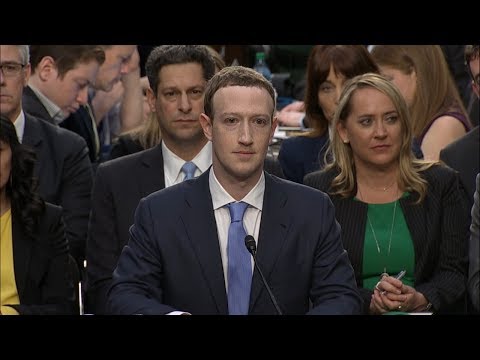
“Senator, yes. That's our that's our approach. If there is an imminent threat of harm, we're going to take a conservative position on that and make sure that we flag that and understand that more broadly. But overall, I wanna make sure that we provide people with the most voice possible. I I want the widest possible expression, and I don't want anyone at our company to make any decisions based on the the, political ideology of the content.”Congress hearing before the U.S. Senate, 2018 · 6:15:29
His starting point is that platforms should give people as much voice as possible
Zuckerberg’s baseline view is that social platforms exist to let people speak and share widely. He describes that as the core purpose of social media and says Meta has generally wanted to allow as much expression as possible.123
He treats this not just as a product choice but as a democratic and moral principle. In his view, broader expression helps ordinary people and marginalized groups gain power, and democracy depends on protecting the right to speak and be heard.456
He draws the line at clear harm, not at unpopular or disputed views
Zuckerberg says moderation is most justified when the harm is concrete and easier to identify. He points to cases like imminent threats, crime, bullying, exploitation, and other direct dangers as the kinds of things platforms should restrict more aggressively.78
That same logic appears in how he talks about AI moderation. He is comfortable blocking assistance for clearly harmful acts because the danger is the amplification of known harms, which is a different category from ordinary political disagreement or uncertain factual debate.108
Even when he accepts restrictions, he frames them as exceptions to a broader rule of openness. His view is that speech should stay up unless there is a strong reason tied to real-world harm.117
“Senator, yes. That's our that's our approach. If there is an imminent threat of harm, we're going to take a conservative position on that and make sure that we flag that and understand that more broadly. But overall, I wanna make sure that we provide people with the most voice possible. I I want the widest possible expression, and I don't want anyone at our company to make any decisions based on the the, political ideology of the content.”Congress hearing before the U.S. Senate, 2018 · full transcript →
He does not want tech companies to become the final judge of truth
A recurring concern for Zuckerberg is that platform leaders should not sit in the role of deciding what is true for everyone. He says he worried early on about becoming the person who determines truth, and he argues people should make credibility judgments themselves rather than handing that power to tech companies.1213
That leads him toward a moderation philosophy that is more permissive in disputed areas, especially politics and public debate. His instinct is that more speech is often the better answer, because open argument is safer than concentrated control over what can be said.146

“I was really worried from the beginning about basically becoming this sort of decider of what is true in the world…”Joe Rogan Experience #2255, 2025 · full transcript →
He thinks Meta was pushed too far toward censorship after 2016 and during COVID
Zuckerberg describes his own path as a movement from a strongly free-speech starting point into a period where Meta accepted more pressure to restrict content. He says that after the 2016 election he deferred too much to outside criticism about what the platform should do.15
On COVID, he says he initially accepted tighter limits because it looked like a genuine emergency where ordinary speech rules might temporarily narrow. But his broader takeaway is that crisis conditions can push platforms into overreach if they are not careful about how they define harm.11
So his later position is not that moderation is unnecessary. It is that moderation should stay anchored to concrete danger and should resist sliding into broad ideological censorship.11153
“Yeah. So, I mean, that's basically the journey that I've been on. Right? Started off very pro free free speech, free expression. You know? And then over the last ten years, there were the... Been these two big episodes. It was the Trump election and the aftermath where I feel like, in retrospect, I deferred too much to the kind of critique of the media on what we should do. Mhmm. And since then, I think, generally, trust in media has fallen off a cliff. Right? So I I don't think I'm alone in that journey.”Joe Rogan Experience #2255, 2025 · full transcript →
He pairs freer speech with more authenticity and stronger responsibility
Zuckerberg’s answer to many online harms is not simply deleting more speech but making participation more authentic. He argues that people can say controversial things, but they should increasingly have to stand behind them with real identity when they seek broad distribution or run political ads.17
He also links moderation to a broader duty of stewardship. In public testimony, he says Facebook failed to take a broad enough view of its responsibility and that connecting people by itself is not enough. That means his free-expression stance is paired with a willingness to accept accountability for harms the platform enables.
In practice, that produces a two-part model: maximize lawful expression, while investing more in authenticity, enforcement against fake accounts, and action against clearly harmful abuse.177
Zuckerberg on content moderation, in his own words
“I was really worried from the beginning about basically becoming this sort of decider of what is true in the world…”
“I think the more voice is the is the answer on this…”
“Senator, yes. That's our that's our approach. If there is an imminent threat of harm, we're going to take a conservative position on that and make sure that we flag that and understand that more broadly. But overall, I wanna make sure that we provide people with the most voice possible. I I want the widest possible expression, and I don't want anyone at our company to make any decisions based on the the, political ideology of the content.”
Where to watch
 Mark Zuckerberg on Free Expression: Voice, Safety, and Democracy2019 · 78 min · full transcriptBest single statement of his philosophy: free expression, democracy, and the case for limiting moderation to genuine harms.
 Mark Zuckerberg on Free Speech and Content Moderation: A Long Journey Back2025 · 171 min · full transcriptShows how he now interprets Meta’s shift after 2016 and COVID, and why he thinks the company drifted too far into censorship.
 Mark Zuckerberg on AI Moderation: Open Models, Safety, and Speech2023 · 167 min · full transcriptMost useful for seeing how he distinguishes clear harms from harder misinformation disputes in AI and platform moderation.
 Mark Zuckerberg on Data Privacy: Facebook's Duty to Protect Users2018 · 382 min · full transcriptAdds the accountability side of his view: more voice does not remove the platform’s responsibility for harms and governance failures.
Questions people ask
- What did Mark Zuckerberg say about Facebook's responsibility for privacy and misuse of data?
- What did Mark Zuckerberg say about censorship during COVID and the pressure from government?
- What did Mark Zuckerberg say about fake accounts and political ads?
- What did Mark Zuckerberg say about where free speech should stop?
- What did Mark Zuckerberg say about why he created Facebook and how he thinks about content moderation?
- What did Mark Zuckerberg say about political content moderation on Facebook?
Sources
Every quote above, word for word from the transcripts. Numbers match the text.
“…the whole point of social media is basically, you know, giving people the ability to share, what they want…”
“…we were trying to give people the ability to share as much as possible…”
“…we want to allow people to express as much as possible…”
“…giving more people a voice gives power to the powerless…”
“Democracy depends on the idea that we hold each other's right to express ourselves and be heard…”
“I believe that we must continue to stand for free expression…”
“Senator, yes. That's our that's our approach. If there is an imminent threat of harm, we're going to take a conservative position on that and make sure that we flag that and understand that more broadly. But overall, I wanna make sure that we provide people with the most voice possible. I I want the widest possible expression, and I don't want anyone at our company to make any decisions based on the the, political ideology of the content.”
“…you can't ask it to help you commit a crime…”
“…the danger is basically amplifying the kind of known set of harms…”
“Because you asked about Georgetown, is my stance fundamentally changed? And the the answer to that is no. My my my stance has not changed. It is fundamentally the same as when we were... When I when I was talking about George... Talking to Georgetown from a philosophical perspective. The challenge with free speech is that everyone agrees that there is a line where if you're actually about to do physical harm to people, that there should be restrictions. So, I mean, there's the famous, you know, supreme court historical example of, like, you can't yell fire in a crowded theater. The thing that everyone agrees... Disagrees on is what is the definition of real harm?”
“I was really worried from the beginning about basically becoming this sort of decider of what is true in the world…”
“…people should decide what is credible, not tech companies…”
“I think the more voice is the is the answer on this…”
“Yeah. So, I mean, that's basically the journey that I've been on. Right? Started off very pro free free speech, free expression. You know? And then over the last ten years, there were the... Been these two big episodes. It was the Trump election and the aftermath where I feel like, in retrospect, I deferred too much to the kind of critique of the media on what we should do. Mhmm. And since then, I think, generally, trust in media has fallen off a cliff. Right? So I I don't think I'm alone in that journey.”
“So the solution here is to verify the identities of anyone who's getting a wide amount of distribution and to get a lot better at identifying and taking down fake accounts. So we now require you to provide a government ID and to prove your location if you want to run political ads or if you're going to run a large page. You can still say controversial things if you want, but you have to stand behind them with your real identity and face accountability. Our AI systems have also gotten a lot more advanced at detecting clusters of fake accounts that aren't behaving the way that people would. So we now remove billions of fake accounts a year, mostly within minutes of signing up and before they really have a chance to…”
How this guide was made: drafted with AI from the full transcripts of the recordings cited, then checked: every quotation must match a transcript word for word and be the speaker's own words, and an independent review gates accuracy. Methodology and corrections.

