Trust and Responsibility
Building social infrastructure means accepting duties beyond product growth.
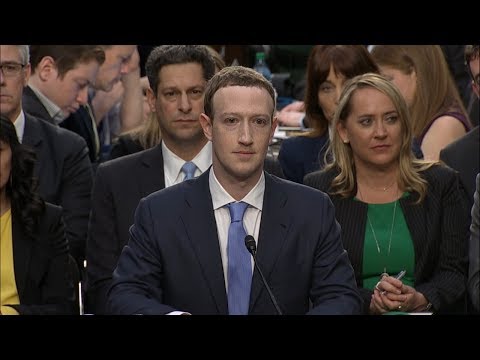
“We didn't take a broad enough view of our responsibility, and that was a big mistake.”Congress hearing before the U.S. Senate, 2018 · 1:51:07
The lesson
Zuckerberg’s account of trust starts with a failure of scope. His argument is not just that Facebook made isolated mistakes, but that it defined its job too narrowly: connecting people was not enough if the same tools could also enable privacy abuse, harmful content, or manipulation at scale. In his telling, trust requires taking a broader view of responsibility and accepting leadership accountability when that view was missing1234.
From there, responsibility becomes operational. In the privacy context, Zuckerberg points to concrete duties: explain clearly how information will be used, investigate developers that had broad access to user data, audit misuse, ban violators, and notify affected users. The underlying idea is that trust cannot rest on good intentions alone; it depends on systems for oversight, enforcement, and transparency about data use5.
He also frames trust as partly a question of user control. Zuckerberg argues that people should be able to decide who sees their content, how their information is used in ads, and whether to deactivate or fully delete their account. That matters because responsibility is not only about the company restraining itself; it is also about giving people understandable choices over their own participation and data6.
But user control does not remove the platform’s duty to govern harms. Across speech and AI moderation, Zuckerberg describes a balance: allow as much expression as possible, but intervene more aggressively when there are clear risks such as violence, exploitation, voter suppression, crime enablement, or coordinated abuse. His logic is that trust grows when boundaries are principled and legible: protect voice in contested areas, but act conservatively where harm is imminent or well-defined78910.
At scale, that balancing act gets harder because many disputes are not cleanly solvable by a central authority. Zuckerberg often leans toward authenticity, identity verification for broad distribution, and letting people judge credibility for themselves rather than having the company decide every contested truth claim. So maintaining trust at scale, in his view, means combining broad responsibility, strong safety enforcement on clearer harms, and restraint about becoming the final arbiter of all speech or belief11121314.
5 principles from Mark Zuckerberg
Take a broader view of responsibility
Do not define your job narrowly around product success or growth. Ask how your product can be misused, what harms it can amplify, and what obligations come with running it at scale.
“We didn't take a broad enough view of our responsibility, and that was a big mistake.”
Own failures personally and concretely
Accountability builds trust when leaders plainly accept responsibility and connect that admission to corrective action. In practice, that means naming the mistake, not hiding behind abstractions, and changing systems afterward.
“And it was my mistake, and I'm sorry.”
Make data use understandable and controllable
People trust systems more when they know how their information will be used and can make meaningful choices about retention and participation. Design controls that are clear enough for normal users, not just experts.
“I believe it's important to tell people exactly how the information that they share on Facebook is going to be used.”
Maximize voice, but draw hard lines around clear harm
Not every false or offensive statement should trigger removal, but threats like crime enablement, violence, or voter suppression require stronger intervention. Separate contested expression from well-defined harm so enforcement is more principled.
“…you can't ask it to help you commit a crime…”
Use authenticity to support trust at scale
When content gets broad reach, identity and account integrity matter more because anonymous amplification can distort public life. Verification and fake-account enforcement are ways to protect open expression without treating every debate as a censorship problem.
“So the solution here is to verify the identities of anyone who's getting a wide amount of distribution and to get a lot better at identifying and taking down fake accounts. So we now require you to provide a government ID and to prove your location if you want to run political ads or if you're going to run a large page. You can still say controversial things if you want, but you have to stand behind them with your real identity and face accountability. Our AI systems have also gotten a lot more advanced at detecting clusters of fake accounts that aren't behaving the way that people would. So we now remove billions of fake accounts a year, mostly within minutes of signing up and before they really have a chance to…”
In his own words
The quotes behind the lesson, word for word from the transcripts. Numbers match the lesson above.
“We didn't take a broad enough view of our responsibility, and that was a big mistake.”
“And it was my mistake, and I'm sorry.”
“It's not enough to just connect people.”
“But it's clear now that we didn't do enough to prevent these tools from being used for harm as well, and that goes for fake news, for foreign interference in elections and hate speech, as well as developers and data privacy. We didn't take a broad enough view of our responsibility, and that was a big mistake. And it was my mistake, and I'm sorry. I started Facebook. I run it, and I'm responsible for what happens here. So now we have to go through our... All of our relationship with people and make sure that we're taking a broad enough view of our responsibility.”
“I believe it's important to tell people exactly how the information that they share on Facebook is going to be used.”
“If they delete their account, the answer is no. That's why we actually offer two options. We offer deactivation, which allows you to shut down or suspend your account but not delete the information because actually a lot of people wanna, at least for some period of time... I mean, we hear students with exams coming up wanna not be on Facebook because they they wanna make sure that they can focus on the exam. So they deactivate their account temporarily, but then want the ability to turn it back on when they're ready. You can also delete your account, which is wiping everything. And if you do that, then you can't get it back.”
“I believe that we must continue to stand for free expression…”
“…you can't ask it to help you commit a crime…”
“…the danger is basically amplifying the kind of known set of harms…”
“Senator, yes. That's our that's our approach. If there is an imminent threat of harm, we're going to take a conservative position on that and make sure that we flag that and understand that more broadly. But overall, I wanna make sure that we provide people with the most voice possible. I I want the widest possible expression, and I don't want anyone at our company to make any decisions based on the the, political ideology of the content.”
“…people should decide what is credible, not tech companies…”
“So the solution here is to verify the identities of anyone who's getting a wide amount of distribution and to get a lot better at identifying and taking down fake accounts. So we now require you to provide a government ID and to prove your location if you want to run political ads or if you're going to run a large page. You can still say controversial things if you want, but you have to stand behind them with your real identity and face accountability. Our AI systems have also gotten a lot more advanced at detecting clusters of fake accounts that aren't behaving the way that people would. So we now remove billions of fake accounts a year, mostly within minutes of signing up and before they really have a chance to…”
“…we want to allow people to express as much as possible…”
“Democracy depends on the idea that we hold each other's right to express ourselves and be heard…”
Reflect
- Where in your work have you defined success too narrowly, the way a product team might focus on growth without fully accounting for downstream harms?
- What information do people rely on from you or your organization, and how could you make its use more understandable and more under their control?
- If you had to write one rule for maximizing openness while still preventing clear harm in your domain, what would it be?
Check your understanding
Go deeper
 Mark Zuckerberg on Data Privacy: Facebook's Duty to Protect Users2018 · 382 min · full transcript
 Mark Zuckerberg on Antitrust And Platform Power2020 · 399 min · full transcript
 Mark Zuckerberg on Free Expression: Voice, Safety, and Democracy2019 · 78 min · full transcript
 Mark Zuckerberg on AI Moderation: Open Models, Safety, and Speech2023 · 167 min · full transcript