Personal and Open AI
Zuckerberg’s AI vision is broad access, many agents, and systems people enjoy using.

“…our goal on this is not just to build something that's like... Oh, yeah. It's gonna be super smart.”This Past Weekend with Theo Von #579, 2025 · 1:34:57
The lesson
Zuckerberg’s AI strategy starts from a product belief: people will not adopt AI just because it is powerful. He says the goal is to build AI that is enjoyable and conversational, not only technically smart, and that a personal assistant should learn a person’s preferences, humor, and context over time123. In this view, the winning AI is not just a question-answering engine; it is something people want to return to because it feels useful in daily life.
That product vision connects to Meta’s push for broad access through open models. Zuckerberg argues that Meta’s ethos is to share inventions broadly, and he presents Llama and Meta AI as ways to put strong capabilities into more people’s hands, not keep them inside one closed system456. He also rejects the idea that the future should revolve around one giant AI, instead expecting an ecosystem of many specialized systems for different people and uses789.
A core part of that ecosystem is agency. Zuckerberg expects AI to move beyond single replies into multi-step work: systems that understand goals, reason across longer tasks, and interact with tools or customers in a more holistic way1011. That is why Meta emphasizes personal agents for users, creator AIs, and business AIs rather than only a generic chatbot. His claim is that AI becomes more valuable when it can keep working on your behalf, tailored to your intent and role1213.
He also frames this as an economic and creative strategy, not just a technical one. Zuckerberg says the main purpose of AI is invention more than automation, and he expects creators and businesses to use AI to extend themselves: creators can build agents around their voice or brand, and businesses can use agents for customer interaction14131215. The broader idea is that intelligence should be distributed widely enough that many people can create, serve customers, and solve problems with it.
On safety, Zuckerberg’s argument is not that openness removes risk, but that safety comes from a mix of restrictions on clearly harmful uses and a broad distribution of capability161715. He says systems should block help with crimes, while also warning against concentrating powerful AI in a few hands1718. So the chapter’s through-line is: make AI personal enough to be loved, open enough to spread, agentic enough to act, and governed enough to avoid obvious harm.
5 principles from Mark Zuckerberg
Build AI people enjoy using
Do not treat intelligence alone as the product. If you want adoption, design for conversation, familiarity, and repeated use by helping the system learn a person’s preferences and context over time.
“…our goal on this is not just to build something that's like... Oh, yeah. It's gonna be super smart.”
Prefer many specialized AIs over one universal one
Zuckerberg’s model is an ecosystem, not a single all-purpose assistant. Apply this by asking which distinct agents should exist for users, creators, and businesses instead of forcing every use case into one interface.
“…we don't have one app that we go to for everything. I don't think that we want one AI.”
Make AI agentic around goals, not just prompts
Useful AI should handle multi-step work and reason about what the person is really trying to achieve. Design systems that can pursue an outcome across several interactions, not merely answer the last message.
“…give every person in the world a very capable personal agent that can understand their goals…”
Distribute capability broadly
Meta’s open-model approach is based on the belief that sharing invention widely increases innovation and balances power. In practice, that means giving developers, businesses, and individuals enough access to adapt AI to their own needs.
“…our ethos is that we want to share what’s invented broadly…”
Constrain clear harms without centralizing everything
Zuckerberg draws a line between stopping obvious abuse and restricting access so heavily that only a few actors remain powerful. Build safety rules for concrete harmful actions while keeping the broader system open enough for wide use and scrutiny.
“…the best antidote to someone having an AI that could potentially hack into systems is having everyone have access to an AI…”
In his own words
The quotes behind the lesson, word for word from the transcripts. Numbers match the lesson above.
“…our goal on this is not just to build something that's like... Oh, yeah. It's gonna be super smart.”
“…it should, like, get to know you and, like, what you think is funny and, like, what you ate.”
“I do think this is this is a big a big focus for us. And we're building this Meta AI. It's our... We we call it personal AI. I mean, our goal on this is not just to build something that's like... Oh, yeah. It's gonna be super smart. Right? It's it's like, yeah. We're we're trying to solve full general intelligence and super intelligence and all that. But I think in order to build a product that people are gonna wanna use, you're gonna wanna build something that's fun to use. That means, like, you're not just gonna wanna, like, type to it. You wanna, like, have a conversation. Right? And and and it's not just about having it be, like, only able to answer hard questions. It should, like, get to know you and, like, what you think is funny and, like, what you ate. Right? So that way, you know, it can... Like... Or, you know, what your hobbies are. So that way it can kinda relate to you.”
“…our ethos is that we want to share what’s invented broadly…”
“…with Llama three, we now think that Meta AI is the most intelligent AI assistant that people can use that's freely available.”
“The the main thing that most people in the world are gonna see is the new version of Meta AI. Right? So it's... And, you know, the most important thing about what we're doing is the upgrade to the model. We're rolling out Llama three. We're doing it both as open source for dev community, and it is now going to be powering Meta AI. So there's a lot that I'm sure we'll go into around Llama three, but I think the bottom line on this is that with Llama three, we now think that Meta AI is the most intelligent AI assistant that people can use that's freely available. We're also integrating Google and Bing for real time knowledge. We're going to make it a lot more prominent across our apps.”
“…there shouldn't just be kind of one big AI that people interact with.”
“…we don't have one app that we go to for everything. I don't think that we want one AI.”
“I think it's progressive. And I don't think AGI is one thing.”
“Reasoning, I think, is another example. It's like, okay, yeah, maybe you want to chat with a creator or, you know, you're a business and you're trying to interact with a customer. You know, that interaction is not just like, okay, the person sends you a message and you just reply, right? It's like a multi step interaction where you're trying to think through how do I accomplish the person's goals. And, you know, a lot of times when a customer comes, they don't necessarily know exactly what they're looking for or how to ask their questions. So it's not really the job of the AI to just respond to the question. It's like you need to kind of think about it more holistically. It really becomes a reasoning problem. Right? So if someone else, you know, solves reasoning or makes good advances on reasoning and we're sitting here with a basic chatbot, then our product is lame compared to what other people are building.”
“…give every person in the world a very capable personal agent that can understand their goals…”
“We wanna empower all the people who use our products to basically create agents for themselves.”
“I think in the future, every business is gonna have an AI agent that interfaces with their customers.”
“…the primary purpose for AI is going to be invention of new things, not automation…”
“And that's based on three major principles that we have. One is that empowering people is the source of prosperity in the world, and it has been throughout history. Two is that the primary purpose for AI is going to be invention of new things, not automation. And then the third principle is that the foundation for safety for the future is basically establishing the right checks and balances and balance of power rather than restricting access.”
“…the danger is basically amplifying the kind of known set of harms…”
“…you can't ask it to help you commit a crime…”
“…the best antidote to someone having an AI that could potentially hack into systems is having everyone have access to an AI…”
Reflect
- Where in your work would a personal AI that knows your preferences be more useful than a generic chatbot?
- If you mapped your world into many specialized AIs instead of one, which three agents would matter most and what would each own?
- What are the clearly harmful actions an AI in your product or organization should refuse, and what should remain open for users to customize?
Check your understanding
Go deeper
 Mark Zuckerberg on AI and Personal Technology: Fun, Useful, Human2025 · 98 min · full transcript
 Mark Zuckerberg on AI Moderation: Open Models, Safety, and Speech2023 · 167 min · full transcript
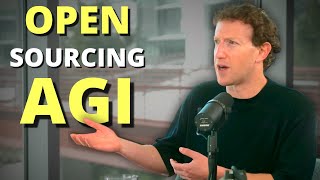 Mark Zuckerberg on Open Source AI: Llama 3, Scale, and Safety2024 · 79 min · full transcript
 Mark Zuckerberg on Meta AI Agents: Muse, Privacy, and Open Source2024 · 70 min · full transcript
 Mark Zuckerberg on Open Source AI: Why Every Business Needs an AI2024 · 59 min · full transcript
 Mark Zuckerberg on Mixed Reality And AI: Meta’s Next Platform2023 · 45 min · full transcript
 Mark Zuckerberg on Threads and Open Source AI: Building for Scale2024 · 69 min · full transcript