Demis Hassabis on Scientific Discovery
Demis Hassabis sees AI’s deepest purpose as a tool for discovery: first understand intelligence, then use it to accelerate science by finding patterns, generating hypotheses, and solving foundational problems humans struggle to solve alone.
- AI’s highest purpose is helping answer the biggest scientific questions, not just automate tasks.
- His strategy is: build general intelligence first, then apply it to science, medicine, and other hard problems.
- Games mattered because they let AI learn from first principles in clear, measurable environments before moving into science.
- Scientific discovery with AI works best where there are large search spaces, strong data, and objective ways to test progress.
- In biology especially, he thinks AI may become a natural language for describing complex systems and helping scientists form new hypotheses.
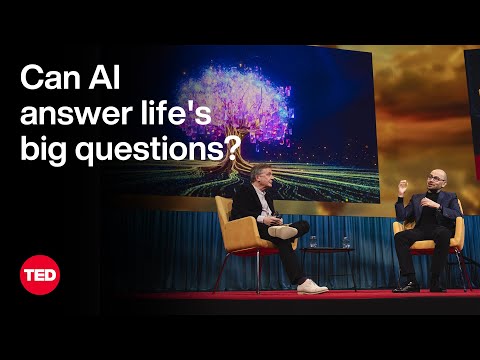
“I thought building AI would be the fastest route to answer some of those questions.”TED interview at SXSW, 2024 · 0:04
Scientific discovery is the real point of building AI
Hassabis’s interest in AI starts from a scientific ambition, not a consumer or software one. He presents AI as a route to answering fundamental questions about reality, mind, and nature, and he repeatedly frames that as the reason he wanted to build it in the first place.123
That is why he describes DeepMind’s mission in two steps: understand or build general intelligence, then use that capability to solve major problems across science and society. In his view, AGI matters because it could become a broad instrument for discovery rather than a narrow tool for one task.4567
“I thought building AI would be the fastest route to answer some of those questions.”TED interview at SXSW, 2024 · full transcript →
He thinks discovery needs systems that can learn, not just follow rules
A core part of Hassabis’s view is that the most valuable AI systems are not hand-coded expert systems but learning systems that can find solutions their designers did not explicitly specify. He points to this as the promise of AI in science: the system can reach answers or strategies humans did not already know.89
That matters for discovery because scientific frontiers are exactly where human knowledge is incomplete. He treats intelligence as something worth understanding in its own right, but also as the engine that could help push beyond current human limits in research.61011
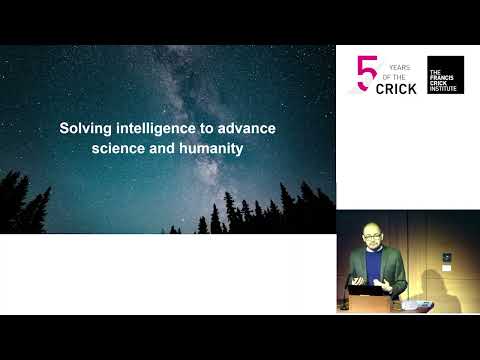
“The promise of these systems is that they will be able to solve things we, as the designers, do not know how to solve yet.”Crick Insight Lecture Series, 2021 · full transcript →
Games were a training ground for scientific discovery
Hassabis does not treat games as the end goal. He uses them as controlled environments where AI can learn through feedback, search, and self-play, making them ideal proving grounds for general methods.1213
The significance of AlphaGo, in his telling, was not just that it won. It showed that a learning system could produce genuinely novel and effective strategies, which convinced him the same kind of methods could be brought to science. That was the bridge from games to real discovery problems.14915
This is also why he emphasizes learning an evaluation function rather than encoding domain knowledge by hand. The broader lesson is that discovery comes from building systems that can explore and judge possibilities at scale.1617

“So I carried that around with me for, I guess, nearly 20 years until we did AlphaGo. And then, as you said, the day after AlphaGo, I felt we'd reached the pinnacle of games AI. That was always the holy grail, is like, can you build a system that's learning, that's general, to win at Go, the most complex game we've ever invented. And not only did it win, it also invented new strategies, new Go strategies that had never been seen before, even though we played Go for hundreds of years. And then that, to me, was the signal that we now have enough interesting algorithms we can apply it to science, which was always the real goal, right? And then protein folding as the first big problem we tackled. So going back to this conjecture then and taking again…”Institute for Advanced Study director's conversation, 2024 · full transcript →
Biology is a prime target because AI can capture complex patterns
Hassabis repeatedly singles out biology as especially suited to AI. His strongest claim is that AI may be an unusually good way to describe biological systems, much as mathematics has been for physics, because biology is full of high-dimensional patterns that are hard to capture with simple hand-built rules.181920
That view helps explain why AlphaFold was so important to him. Protein folding was a foundational problem with broad downstream value, and solving it suggested that AI could become a practical scientific instrument rather than just a benchmark-winning technology.212223
More generally, he believes AI is well suited to finding patterns and surfacing insights from huge datasets so scientists can interpret them and generate new hypotheses. In that sense, AI complements the scientific method rather than replacing it.2425

“AI may be potentially the perfect description language for biology…”Nobel Prize lecture, 2024 · full transcript →
The hardest frontier is not answers but hypotheses
Hassabis draws a distinction between domains like coding or mathematics, where outputs are easier to verify, and scientific discovery, where the bigger challenge is asking the right questions. For him, the frontier is not only solving known tasks but reaching the level of scientific creativity needed to form new hypotheses.26
That is why he cares about whether AI can invent something genuinely new, not merely optimize within existing frames. His test for progress is whether systems can move from pattern recognition and prediction toward deeper conceptual breakthroughs.278
The practical implication is that AI should increasingly handle search, modeling, and routine analysis, while helping scientists spend more time on interpretation, conjecture, and experimental direction. His model of discovery is human-AI collaboration aimed at expanding what science can see and test.2528

“…the highest level of scientific creativity…”AI1G debate, June 2024 · full transcript →
To accelerate science well, AI needs openness, rigor, and coordination
Hassabis’s optimism about AI for science comes with an institutional view. He favors a collaborative, scientific style of development and has argued for something closer to a shared international research effort as systems approach AGI.28
That follows from his belief that AI is a dual-use technology with enormous upside but real risk. If AI becomes a core engine of discovery, then the way it is governed will shape whether it enriches science and society or is distorted by unsafe competitive dynamics.3133
His broader outlook is hopeful: he expects AI to unlock a period of unusually rapid progress in science. But he does not think that future arrives automatically; it depends on building powerful systems and organizing their use responsibly.34
Hassabis on scientific discovery, in his own words
“I thought building AI would be the fastest route to answer some of those questions.”
“…step one, solve intelligence; step two, use it to solve everything else.”
“The promise of these systems is that they will be able to solve things we, as the designers, do not know how to solve yet.”
“AI may be potentially the perfect description language for biology…”
“…the highest level of scientific creativity…”
“I see AI as this tool that allows us, as scientists, to explore, potentially, the entire tree one day.”
Where to watch
 Demis Hassabis on AI in Science: A New Golden Age2024 · 80 min · full transcriptBest overview of his mature view that AI speeds discovery, spreads knowledge, and could create a new golden age for science.
 Demis Hassabis on AI for Science: AlphaFold and the Future of Biology2024 · 29 min · full transcriptBest single talk on why AlphaFold changed biology and why he thinks AI fits scientific discovery so well.
 Demis Hassabis on AI and Scientific Discovery: Knowledge, Risk, and Institutions2024 · 58 min · full transcriptBest for his criteria for where AI works in science: clear metrics, strong data, and massive search spaces.
 Demis Hassabis on Scientific Discovery with AI: From Games to Biology2024 · 64 min · full transcriptBest for the full arc from games as a proving ground to biology as a real scientific application.
 Demis Hassabis on World After AGI: Safety, Science, and Timelines2024 · 31 min · full transcriptBest for the frontier question: why true scientific creativity and hypothesis generation are still the hard part.
 Demis Hassabis on AI for Scientific Discovery: From Games to Science2016 · 84 min · full transcriptBest historical statement of his long-term mission to solve intelligence and use it for science.
Questions people ask
- How does Demis Hassabis think AI benefits should be distributed around the world?
- What did Demis Hassabis learn from AlphaGo and DQN?
- What did Demis Hassabis say AlphaFold's impact has been?
- What did Demis Hassabis say about why AlphaGo changed his thinking about science?
- What test does Demis Hassabis use to tell if AI can invent new science?
- How does Demis Hassabis think AI can help scientific discovery?
Sources
Every quote above, word for word from the transcripts. Numbers match the text.
“I thought building AI would be the fastest route to answer some of those questions.”
“I've always been obsessed and maybe troubled by the biggest questions…”
“…we don't know what time is. We don't know what consciousness is. We don't know how quantum mechanics works.”
“…step one, solve intelligence; step two, use it to solve everything else.”
“Step one, fundamentally solve intelligence, and then we feel if we were to do that then step two would naturally follow, use it to solve everything else.”
“What we mean by 'solve intelligence' is actually, to just unpack that slightly, to fundamentally understand this phenomenon of intelligence, what it is.”
“AGI could end up being the ultimate general-purpose tool…”
“The promise of these systems is that they will be able to solve things we, as the designers, do not know how to solve yet.”
“That was, for us, really our first big 'aha' moment, watershed moment, at DeepMind. This is now from four or five years ago. We realised we were onto something with these kinds of techniques. It was able to discover something new that even the programmers and the brilliant researchers of that system did not know how to do. We hadn't thought about that solution to the game. More recently, a couple of years ago, we started work on what is probably still our most famous program, a program called AlphaGo. AlphaGo was a system to play the ancient Chinese board game of Go. This is what Go looks like, for those who don't know, and this is what they play in China and Korea and Japan instead of chess. Go is actually a very simple game. There are only two rules, basically, and I could teach you it in five minutes, but it takes at least a lifetime, some would say many lifetimes, to master the game.”
“DeepMind started with the idea and still continues now as Google DeepMind with, we want to build AGI, right? That's the aim. This general system that can exhibit all the cognitive capabilities humans can, and that's important because of all the things we've just discussed. That's the only way, obviously, you would have massive economic value, but actually that's not the interesting thing about it from my perspective. It's more from a theoretical standpoint. That's when we would know we would have a fully general system, right? At least an approximation to it if it can do things the human mind can do because, as far as we know, you know, we're this generalized intelligence.”
“Fundamentally solve intelligence, and then step two, we think that it would naturally follow if you did step one that you could use that power of that technology to practically solve, help us as a society solve everything else. Now, that might seem a little bit fanciful and far-fetched, but I hope by towards the end of this talk I'll have convinced you that at least there's a plausible that this could happen.”
“Games are the perfect proving ground for AI systems.”
“…games are kind of microcosms of interesting parts of life…”
“So I carried that around with me for, I guess, nearly 20 years until we did AlphaGo. And then, as you said, the day after AlphaGo, I felt we'd reached the pinnacle of games AI. That was always the holy grail, is like, can you build a system that's learning, that's general, to win at Go, the most complex game we've ever invented. And not only did it win, it also invented new strategies, new Go strategies that had never been seen before, even though we played Go for hundreds of years. And then that, to me, was the signal that we now have enough interesting algorithms we can apply it to science, which was always the real goal, right? And then protein folding as the first big problem we tackled. So going back to this conjecture then and taking again…”
“The key thing about what AlphaGo did here is that it played this move, and the thing about Go is, in Asia, it's considered to be like an art form, but it's sort of objective art, because, you know, later on any one of us could come up with an original move. We could just play a random move, and it might be original, but the key thing is whether, did it make a difference and impact the game, the result of the game? That's what determines whether it's a beautiful and truly creative move. And in fact, move 37 did exactly that, because you'll see the two stones here that I've outlined in the bottom left, they're surrounded by white stones, so they're in big trouble, but later on, about 100 moves later on, the fighting that was going on in the bottom-left hand corner spilled out into the centre of the board, ran all the way across the board, and those two stones down the bottom left ended up joining up with that move 37 stone, and that move 37 stone was in exactly the right place to decide that whole battle, which ended up winning AlphaGo that game.”
“Let's let the AlphaGo system itself learn its own evaluation function.”
“I see AI as this tool that allows us, as scientists, to explore, potentially, the entire tree one day.”
“AI may be potentially the perfect description language for biology…”
“I think that AI is potentially the perfect description language for biology.”
“AI might be the right description language for biology, just the same way that math is the right description language for physics.”
“We call them kind of root note problems…”
“…step one, solve intelligence, step two, use it to solve everything else…”
“AlphaFold is not only very accurate, but it's also very fast, and we quickly realized that it was fast enough to actually practically be able to fold all proteins known to science—so roughly over 200 million proteins that we know the sequences for and would love to know the structures for. So, over the course of the next year, on our computers, we basically folded all the 200 million proteins, we open-sourced AlphaFold, and we built the AlphaFold database with our fantastic colleagues at EMBL-EBI, the European Bioinformatics Institute, and we provided them free and unrestricted access for everyone to use all these predicted.”
“Any pattern that can be generated or found in nature can be efficiently discovered and modeled by a classical learning algorithm…”
“And I think one of the uses of AI is to find patterns and insights in huge amounts of data and then surface that to the human scientists to make sense of and make new hypotheses and conjectures. So it seems to me very compatible with the scientific method.”
“…the highest level of scientific creativity…”
“Maybe we're missing one or two things. And then, the way we would test that is, you know, I sometimes call it my Einstein test, which is, you know, can you train a system with the knowledge cutoff of 1901, and then will it come up with, you know, what Einstein did in 1905, including special relativity, you know, his annus mirabilis? Can it do that, right? Uh, and then, I think we could run that test. Maybe we should just run that test and keep seeing if that's possible. And once that is, then I think we're on the verge of these systems being able to invent something new, truly novel.”
“I would advocate doing it in a sort of collaborative scientific way…”
“It's a dual purpose technology…”
“I think it will be, it will enrich our lives…”
“I think we're going to sort of live through a kind of golden age the next 10, 20 years.”
How this guide was made: drafted with AI from the full transcripts of the recordings cited, then checked: every quotation must match a transcript word for word and be the speaker's own words, and an independent review gates accuracy. Methodology and corrections.