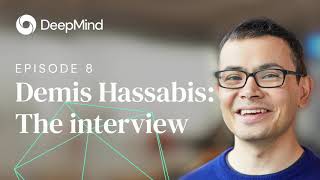
Demis Hassabis on Artificial Intelligence
Demis Hassabis sees AI as a general-purpose learning system that can become deeply useful by modeling the world, but only if it grows more reliable, grounded, and capable of reasoning and planning.
- AI should be built as a general learning system, not a collection of hand-coded tricks.
- Today’s models are surprisingly useful and can generalize, but they are still incomplete and uneven.
- The missing pieces include reliability, confidence, planning, memory, grounding, and world models.
- Scaling matters, but AGI will also require new breakthroughs and algorithmic innovation.
- The point of AI is not just chat; it is to help solve science, medicine, and other major human problems.

“…learning systems: systems that learn directly from their experience or from raw data…”RSA lecture, 2016 · 5:05
AI is, above all, a learning system
Hassabis’s basic idea is that artificial intelligence should learn from data and experience rather than rely on brittle, hand-built rules. He consistently contrasts learning systems with handcrafted systems and argues that the goal is a general-purpose system that can adapt across many problems instead of solving just one narrow task.123
That is why he has long framed the project in two steps: first build intelligence itself, then use that capability on the hardest problems in science and society. In his view, AI is best understood not as a single application but as a meta-technology that can transfer across domains.456
This also explains his attraction to AI as a scientific path. He sees building intelligence as a way to understand the mind, reality, and complex systems more broadly, not just as a way to automate tasks.7
“…learning systems: systems that learn directly from their experience or from raw data…”RSA lecture, 2016 · full transcript →
Current AI is powerful, useful, and still incomplete
Hassabis thinks recent AI systems have been surprisingly effective. He emphasizes that large models can learn abstractions and generalize from examples in ways that arrived earlier than many researchers expected, which is why these systems already feel useful in everyday work.910
At the same time, he does not treat current systems as finished intelligence. He says progress is real but only partial, describing the field as on the way rather than at the destination. The implication is that headline successes should not be confused with robust general intelligence.1112
He also stresses that usefulness is broader than chatbot conversation alone. Faster systems, collaboration with users, and deployment in practical settings matter, but more general use still depends on capabilities current systems do not yet reliably have.1314

“I think we're on the way, but maybe we're only 50% of the way there.”Google DeepMind: The Podcast, 2023 · full transcript →
What today’s models still lack is reliability, self-knowledge, and planning
A central limitation, in Hassabis’s view, is that models often do not know when they are uncertain. He links hallucinations to weak confidence calibration and incomplete introspection: systems can produce an answer even when they should withhold judgment.15
He also argues that AGI should mean more than broad benchmark performance. To be truly general, systems must be consistent and dependable across tasks, not brilliant in one setting and fragile in another. That is why he keeps returning to reliability as a core missing ingredient.1211
Another missing layer is explicit planning and search. Hassabis’s preferred direction is not language models alone, but large multimodal models combined with AlphaZero-like planning mechanisms that can turn knowledge into concrete action.161718
“Yeah, I think so. And I think we need that, actually. And I think that's one of the missing things. I think we're getting close. I think the better the models get, the more they know about what they know, if that makes sense. And I think the more reliable-- you could rely on them to actually introspect in some way or do more thinking and actually realize for themselves that they're uncertain, or there's uncertainty over this answer. And then we've got to work out how to train it in a way where it can output that as a reasonable answer. We're getting better at it. But it still sometimes-- it forces itself to answer when it probably shouldn't, and then that can lead to a hallucination. So I think a lot of the hallucinations are of that type, currently.”Google DeepMind: The Podcast, 2023 · full transcript →
World models and grounding are the route to deeper intelligence
Hassabis thinks advanced AI will need a model of how the world works: not just patterns in text, but causal understanding of objects, physics, and consequences. He describes world models as systems that capture the mechanics of the world, which he sees as essential for agents, assistants, and robotics.1920
He believes modern systems can infer some real structure even from passive observation, and that multimodal training strengthens this process. As models connect language with video, audio, and action, they become better grounded in the physical world and better able to pursue goals in it.92120
This fits a deeper conviction he has about AI itself: many important natural patterns are learnable. From games to proteins to video, he argues that learning systems can uncover hidden structure without brute-forcing every possibility.2223
“What we mean by world model is this sort of model that understands the causative and effect of the mechanics of the world…”Google DeepMind: The Podcast, 2023 · full transcript →
Scaling matters, but breakthroughs still matter too
Hassabis does not present the path to AGI as a simple matter of making current models bigger. He says progress requires a dual strategy: push scaling hard while also investing heavily in new ideas, with effort split between scale and innovation.2425
He explicitly says one or two more breakthroughs may be needed to get all the way to AGI. Large multimodal models are likely part of the final system, but he does not think they are sufficient on their own.1217
What kind of breakthroughs does he have in mind? Again and again, he points to reasoning, search, memory, grounding, and world modeling as the likely additions that transform broad pattern recognition into more complete intelligence.141821

“I think to get all the way to something like AGI may require one or two more new breakthroughs.”Google I/O conversation, 2024 · full transcript →
The real purpose of AI is discovery and broad human benefit
For Hassabis, the strongest case for AI is not novelty but impact. He sees AI as a tool for exploring hard scientific questions, generating hypotheses from huge datasets, and helping researchers understand systems too complex to analyze unaided.2627
That is why games mattered so much in his work: they were not the end goal, but a training ground for building general methods. Games offered clear objectives, measurable progress, and fast feedback, making them an efficient laboratory for intelligence before moving into science and the real world.282930
He also treats AI as a powerful technology with serious societal stakes. Because it is dual-use, he argues that safety, evaluation, governance, and careful deployment have to develop alongside capability.313233

“…step one, solve intelligence, step two, use it to solve everything else…”Stanford Graduate School of Business conversation at SXSW, 2024 · full transcript →
Hassabis on artificial intelligence, in his own words
“…learning systems: systems that learn directly from their experience or from raw data…”
“…we wanted to go sort of beyond this kind of narrow AI and work on this kind of general-purpose learning system…”
“…effectively, you can think of as 50% of our effort is on scaling, 50% of it is on innovation.”
“What we mean by world model is this sort of model that understands the causative and effect of the mechanics of the world…”
“My betting would be that the final AGI system will have these large multimodal models as part of the overall solution, but they probably won’t be enough on their own.”
“…step one, solve intelligence, step two, use it to solve everything else…”
Where to watch
 Demis Hassabis on Future of Intelligence: AGI, science, and world models2023 · 56 min · full transcriptBest single overview of how he balances optimism about current AI with the missing pieces he thinks AGI still needs.
 Demis Hassabis on Artificial Intelligence: Learning Systems and Discovery2016 · 48 min · full transcriptBest foundation for his core philosophy: learning systems, generality, and why games became the proving ground.
 Demis Hassabis on AGI Scaling and Alignment: Planning, Safety, Governance2024 · 62 min · full transcriptBest for his current picture of the AGI path: multimodal models plus planning, grounding, and safety.
 Demis Hassabis on Unreasonably Effective AI: Why It Works2023 · 52 min · full transcriptBest for why today’s models feel unexpectedly useful already, despite still being incomplete.
 Demis Hassabis on Artificial Intelligence: Nature as a Learnable Model2020 · 148 min · full transcriptBest for his deeper view that AI works by discovering learnable structure in nature and the physical world.
Questions people ask
- What did Demis Hassabis say AI still needs before it can become truly useful in everyday life?
- What did Demis Hassabis say about Veo, intuitive physics, and world models?
- What did Demis Hassabis say about hallucinations and confidence scores in AI?
- What did Demis Hassabis say about how LLMs might become AGI?
- What did Demis Hassabis say about grounding in AI systems?
- What did Demis Hassabis say about who should govern advanced AI?
Sources
Every quote above, word for word from the transcripts. Numbers match the text.
“…learning systems: systems that learn directly from their experience or from raw data…”
“…we wanted to go sort of beyond this kind of narrow AI and work on this kind of general-purpose learning system…”
“So, the first and probably most important one is the idea of learning systems: systems that learn directly from their experience or from raw data, versus handcrafted heuristic systems. So, systems where they've been specifically pre-programmed with a particular solution to a problem. So, there's learning versus handcrafted. The second dimension is the idea of generality versus a special casing or specific purpose. So, what many systems are is they're handcrafted and they're built for one particular purpose in mind. What we're interested in at DeepMind is the idea of generality: one system that, out of the box, can do a wide range of…”
“…step one, solve intelligence, step two, use it to solve everything else…”
“AI as a kind of meta solution to all these other issues…”
“Fundamentally solve intelligence, and then step two, we think that it would naturally follow if you did step one that you could use that power of that technology to practically solve, help us as a society solve everything else. Now, that might seem a little bit fanciful and far-fetched, but I hope by towards the end of this talk I'll have convinced you that at least there's a plausible that this could happen.”
“I thought building AI would be the fastest route to answer some of those questions.”
“…they do seem to learn this and generalize from those examples…”
“I think this year, with the way that agents are working and tool use, it started to become really useful…”
“I think we're on the way, but maybe we're only 50% of the way there.”
“I think to get all the way to something like AGI may require one or two more new breakthroughs.”
“I think models have many uses. One is obviously cost, but the speed can allow, you know, if you think about coding even or other things, you can iterate a lot faster. Also, especially if there's, if you're collaborating with the system. I think there's a lot of need for having fast systems that maybe are not quite frontier, like you said, like 95%, 90%, but that's plenty good enough and actually gain back more than the 10% on the iteration speed. So, and then the other big thing I think is running these things on the edge. Again, for efficiency reasons, but also for privacy.”
“I think that just shows we’re still at the beginning of this new era. I think there are some interesting use cases where you can use these chatbot systems to summarize stuff for you and do some simple writing, maybe more boilerplate-type writing. But that’s only a small part of what we all do every day. I think for more general use cases we still need new capabilities, things like planning and search but also things like personalization and episodic memory. That’s not just long context windows, but actually remembering what we spoke about 100 conversations ago. I’m really looking forward to things like recommendation systems that help me find better, more enriching material, whether that’s books or films or music and so on. I would use that type of system every day. So I think we’re just scratching the surface of what these AI assistants could actually do for us in our general, everyday lives and also in our work context as well.”
“Yeah, I think so. And I think we need that, actually. And I think that's one of the missing things. I think we're getting close. I think the better the models get, the more they know about what they know, if that makes sense. And I think the more reliable-- you could rely on them to actually introspect in some way or do more thinking and actually realize for themselves that they're uncertain, or there's uncertainty over this answer. And then we've got to work out how to train it in a way where it can output that as a reasonable answer. We're getting better at it. But it still sometimes-- it forces itself to answer when it probably shouldn't, and then that can lead to a hallucination. So I think a lot of the hallucinations are of that type, currently.”
“You can think of it as combining AlphaGo with Gemini.”
“My betting would be that the final AGI system will have these large multimodal models as part of the overall solution, but they probably won’t be enough on their own.”
“I think that’s a super promising direction. We’ve got to carry on improving the large models. We’ve got to carry on making them more and more accurate predictors of the world, making them more and more reliable world models. That’s clearly a necessary, but probably insufficient component of an AGI system. On top of that, we’re working on things like AlphaZero-like planning mechanisms on top that make use of that model in order to make concrete plans to achieve certain goals in the world.”
“What we mean by world model is this sort of model that understands the causative and effect of the mechanics of the world…”
“But it seems like you can understand it through passive observation, which is pretty surprising to me. And again, I think hints at something underlying about the nature of reality in my opinion, beyond just the, you know, the cool videos that it generates. And of course there's next stages is maybe even making those videos interactive so one can actually step into them and move around them, which would be really mind blowing, especially given my games background. So you can imagine. And then I think, you know, we're starting to get towards what I would call a world model, a model of how the world works, the mechanics of the world, the physics of the world, and the things in that world. And of course that's what you would need for a true AGI system.”
“I think if it’s not properly grounded, the system won’t be able to achieve those goals properly. In a sense, you have to have some grounding for a system to actually achieve goals in the real world. I do actually think that these systems, and things like Gemini, are becoming more multimodal. As we start ingesting things like video and audiovisual data as well as text data, then the system starts correlating those things together. I think that is a form of proper grounding. So I do think our systems are going to start to understand the physics of the real world better.”
“Any pattern that can be generated or found in nature can be efficiently discovered and modeled by a classical learning algorithm.”
“And of course AGI being built on a neural network system on top of a neural network system on top of a classical computer would be the ultimate expression of that.”
“…effectively, you can think of as 50% of our effort is on scaling, 50% of it is on innovation.”
“I've always said, if more innovations are needed, scientific ones, then I would back us to be the place to do it…”
“I see AI as this tool that allows us, as scientists, to explore, potentially, the entire tree one day.”
“And I think one of the uses of AI is to find patterns and insights in huge amounts of data and then surface that to the human scientists to make sense of and make new hypotheses and conjectures. So it seems to me very compatible with the scientific method.”
“…the goal is to maximize the score…”
“Games are a much more efficient way to test out the capabilities of your AI systems than, say, using something like real-world robotics, which are much slower and messier and more expensive to deal with. So we're very interested in robotics as an application, but we don't usually use it as a development platform; we use these virtual environments. And you can see why they'd be much more efficient, because you can obviously run millions of simulations at once in the cloud and train your algorithms on a much more fast iteration. So it gives us much quicker feedback as to whether these algorithms are working. Another important thing about games is that when you're on a very long-term mission like we are—you know, multidecade mission—then it's even more…”
“Everything else is learned completely from scratch, from first principles.”
“It's a dual purpose technology…”
“…my mission has always been to help the world steward AGI safely over the line for all of humanity.”
“I think it has to be a big collaboration with many stakeholders from civil society, academia, government, etc. The good news is that with the popularity of the recent chatbot systems, I think that has woken up many of these other parts of society to the fact that this is coming and what it will be like to interact with these systems. And that’s great. It’s opened up lots of doors for very good conversations. An example of that was the safety summit the UK hosted a few months ago, which I thought was a big success in getting this international dialogue going. I think the whole of society needs to be involved in deciding what we want to deploy these models for? How do we want to use them and what do we not want to use them for? I think we’ve got to try and get some international consensus around that and also make sure that these systems benefit everyone, for the good of society in general.”
How this guide was made: drafted with AI from the full transcripts of the recordings cited, then checked: every quotation must match a transcript word for word and be the speaker's own words, and an independent review gates accuracy. Methodology and corrections.