Demis Hassabis on AGI
Demis Hassabis sees AGI as a broadly capable, reliable, human-level cognitive system that will require both scaling today’s models and adding new ingredients like planning, memory, world models, and agents.
- AGI means matching the full range of human cognitive capabilities, not just chatting well.
- Today’s models are powerful but still too inconsistent, weak at long-horizon reasoning, and missing memory and continual learning.
- He thinks scaling still matters, but AGI will likely need additional breakthroughs.
- His favored path is multimodal models plus planning, search, world models, and active agents.
- He expects AGI to matter most as a tool for science and medicine, while requiring serious safety and governance work.

“You have to have an active system, uh, that can actively solve problems for you to get to AGI.”Y Combinator interview, 2023 · 0:00
AGI means broad human-level cognition, not a clever chatbot
Hassabis defines AGI in broad cognitive terms. For him, the target is a system that can do the full spectrum of human cognitive work, or at least approximate all the major capabilities of the human mind. He consistently frames intelligence as breadth and adaptability across many tasks rather than performance on one narrow benchmark.1234
That is why he does not treat fluent conversation as enough. Natural language matters, but it is only one signpost among many. He points to wider milestones such as natural conversation, abstract concept learning, and major original scientific discovery as markers that systems are becoming more generally intelligent.5
This also explains why he prefers operational tests of generality over simple pass-fail theater. A system should show competence across diverse domains and retain flexibility when tasks change, because that is what general intelligence looks like in practice.34
Current AI is impressive, but still missing core ingredients
Hassabis thinks current systems are clearly on the path to AGI, but still far from the finish line. He has said we may be only partway there, and he repeatedly stresses that today’s models remain uneven: brilliant at some tasks, unreliable at others.6
The missing pieces he emphasizes are consistency, better self-knowledge, long-term reasoning, memory, planning, search, and continual learning. He argues that hallucinations persist partly because systems do not yet reliably know when they are uncertain, and that better introspection and confidence estimation are necessary for more dependable intelligence.78
He also wants systems that remember and improve over time rather than acting like stateless prompt responders. In his view, AGI needs an architecture that can sustain long-range problem solving and accumulate useful experience, not just generate plausible next tokens.7
Scaling matters, but it will not be enough on its own
Hassabis does not think progress has hit a wall. He still sees value in scaling existing systems, and he describes the push toward AGI as split between scaling current methods and inventing new ones.910
At the same time, he is explicit that more breakthroughs are probably needed. He says getting all the way to AGI may require one or two major new ideas, and he expects the final system to include large multimodal models without being reducible to them.1112
This is where compute and science intersect in his view. Compute is not just fuel for bigger models; it is also the workbench for testing algorithmic ideas at meaningful scale. So the path forward depends on both resources and conceptual advances.1310
His likely AGI recipe is multimodal models plus planning, search, and world models
Hassabis’s picture of AGI is architectural, not just statistical. He expects large multimodal models to be part of the answer, but layered with planning and search mechanisms more like the systems that powered DeepMind’s game breakthroughs.1214
World models are central in this vision. He describes them as systems that capture cause and effect in the mechanics of the world, which matters if AI is going to reason physically, act in robotics, or become a genuinely useful assistant in open-ended environments.1516
He also puts special weight on agents. For him, AGI is not only about answering questions; it requires active systems that can pursue goals and solve problems autonomously. That is why he says agents are the path, and why planning, memory, and grounded action keep appearing in his account of what is still missing.171814
“You have to have an active system, uh, that can actively solve problems for you to get to AGI.”Y Combinator interview, 2023 · full transcript →
He judges real progress by creativity, science, and invention
Hassabis does not think AGI should be measured only by benchmark scores or consumer usefulness. He is looking for signs of true creativity and scientific insight, including systems that can generate important discoveries rather than merely summarize existing knowledge.519
That is why he returns to science so often. He sees scientific discovery as a harder frontier than coding or mathematics, because it requires forming the right hypotheses and asking the right questions in messy, partially understood domains.19
One of his clearest thought experiments is whether a system trained only on pre-1901 knowledge could rediscover Einstein’s breakthroughs from 1905. That kind of test captures what he cares about: not imitation, but genuinely novel inference and invention.20
“Maybe we're missing one or two things. And then, the way we would test that is, you know, I sometimes call it my Einstein test, which is, you know, can you train a system with the knowledge cutoff of 1901, and then will it come up with, you know, what Einstein did in 1905, including special relativity, you know, his annus mirabilis? Can it do that, right? Uh, and then, I think we could run that test. Maybe we should just run that test and keep seeing if that's possible. And once that is, then I think we're on the verge of these systems being able to invent something new, truly novel.”Y Combinator interview, 2023 · full transcript →
AGI’s upside is enormous, so safety and governance have to advance with it
Hassabis sees AGI as a general-purpose technology with outsized upside, especially for science and medicine. He has said it could become the ultimate tool for discovery and could help with problems that otherwise look politically or socially intractable.2122
But he does not separate capability from stewardship. He says his mission is to help society bring AGI safely into the world, and he highlights hard technical questions around goals, values, reliability, and control.2324
His safety approach is practical as well as philosophical: stronger evaluations, systems that expose uncertainty, controlled deployment boundaries, sandboxing, and wider public governance involving governments, academia, and civil society. He has also argued for more international coordination as systems get closer to AGI.8252627

“…my mission has always been to help the world steward AGI safely over the line for all of humanity.”Google DeepMind: The Podcast, 2023 · full transcript →
Hassabis on agi, in his own words
“AGI as basically a system that exhibits all the cognitive capabilities the human mind has.”
“You have to have an active system, uh, that can actively solve problems for you to get to AGI.”
“…my mission has always been to help the world steward AGI safely over the line for all of humanity.”
Where to watch
 Demis Hassabis on Agents and AGI: What’s Missing for General Intelligence2023 · 41 min · full transcriptBest single overview of what he thinks is missing from current models and why agents are central to AGI.
 Demis Hassabis on Future of Intelligence: AGI, science, and world models2023 · 56 min · full transcriptStrong explanation of the scaling-plus-innovation view, world models, and why current systems are still unreliable.
 Demis Hassabis on AGI Scaling and Alignment: Planning, Safety, Governance2024 · 62 min · full transcriptShows his likely AGI architecture: multimodal models combined with planning, search, grounding, and safety work.
 Demis Hassabis on AGI Bottlenecks: Compute, Learning, and Safety2025 · 32 min · full transcriptMost direct statement of his AGI definition, timeline view, and the role of compute as a bottleneck.
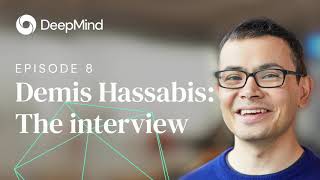 Demis Hassabis on Artificial General Intelligence: Building It Safely2019 · 37 min · full transcriptUseful for his longer-term purpose for AGI: scientific discovery, human-level cognition, and building it safely.
 Demis Hassabis on AGI and Intelligence: Games, Science, and Reality2020 · 131 min · full transcriptBest for understanding why he measures intelligence by broad generalization and cares about creativity beyond language.
Questions people ask
- How will Demis Hassabis know when AGI has been achieved?
- What did Demis Hassabis say AGI is?
- What did Demis Hassabis say AI still needs before it can become truly useful in everyday life?
- What did Demis Hassabis say about AGI safety and bad actors?
- What did Demis Hassabis say about how LLMs might become AGI?
- What test does Demis Hassabis use to tell if AI can invent new science?
Sources
Every quote above, word for word from the transcripts. Numbers match the text.
“AGI as basically a system that exhibits all the cognitive capabilities the human mind has.”
“Yeah, artificial - I mean there’s not an agreed definition of artificial general intelligence, but the way that Shane and I think about artificial general intelligence is a system that is capable of a wide range of tasks, and if we think about human level artificial general intelligence, then we’re talking about system that can pretty much do the full spectrum of cognitive tasks that humans can at least as good as humans are able to do, that’s you know one reasonable definition of artificial general intelligence.”
“…the ability to perform well across a wide range of tasks…”
“…the hallmark of this kind of AI is that it's flexible and adaptive…”
“Certainly for me I’m waiting to see a lot of key moments, for example I think a really big moment will be when an AI system comes up with a new scientific discovery that’s of Nobel prize-winning level, that to me would be a big watershed moment and I think ah an important step in the capabilities of these systems, so you know, capable of some kind of true creativity in some sense. I think other big points will be when it can use language and converse with us in a naturalistic way. It’s capable of learning abstract concepts - these are all things that I think are high-level cognitive abilities that we’re nowhere near yet - and I think will be big signposts on the way.”
“I think we're on the way, but maybe we're only 50% of the way there.”
“I think that just shows we’re still at the beginning of this new era. I think there are some interesting use cases where you can use these chatbot systems to summarize stuff for you and do some simple writing, maybe more boilerplate-type writing. But that’s only a small part of what we all do every day. I think for more general use cases we still need new capabilities, things like planning and search but also things like personalization and episodic memory. That’s not just long context windows, but actually remembering what we spoke about 100 conversations ago. I’m really looking forward to things like recommendation systems that help me find better, more enriching material, whether that’s books or films or music and so on. I would use that type of system every day. So I think we’re just scratching the surface of what these AI assistants could actually do for us in our general, everyday lives and also in our work context as well.”
“Yeah, I think so. And I think we need that, actually. And I think that's one of the missing things. I think we're getting close. I think the better the models get, the more they know about what they know, if that makes sense. And I think the more reliable-- you could rely on them to actually introspect in some way or do more thinking and actually realize for themselves that they're uncertain, or there's uncertainty over this answer. And then we've got to work out how to train it in a way where it can output that as a reasonable answer. We're getting better at it. But it still sometimes-- it forces itself to answer when it probably shouldn't, and then that can lead to a hallucination. So I think a lot of the hallucinations are of that type, currently.”
“…effectively, you can think of as 50% of our effort is on scaling, 50% of it is on innovation.”
“I think compute is the big one, not just for the obvious reason of scaling up your ideas and your systems as the scaling laws, as they're called, keeping on building bigger and bigger architectures with more and more parameters. And as you do that, you get more intelligent systems. But the other thing you need a lot of compute for is for doing experiments. The computers, the cloud is our workbench, basically. So if you have a new idea, a new algorithmic idea, but you wanna test it, you kind of gotta test it at a reasonable scale. Otherwise, it won't hold when you actually put it into the main system. So you need quite a lot of compute if you have a lot of researchers with lots of new ideas.”
“I think to get all the way to something like AGI may require one or two more new breakthroughs.”
“My betting would be that the final AGI system will have these large multimodal models as part of the overall solution, but they probably won’t be enough on their own.”
“I think compute is the big one.”
“I think that’s a super promising direction. We’ve got to carry on improving the large models. We’ve got to carry on making them more and more accurate predictors of the world, making them more and more reliable world models. That’s clearly a necessary, but probably insufficient component of an AGI system. On top of that, we’re working on things like AlphaZero-like planning mechanisms on top that make use of that model in order to make concrete plans to achieve certain goals in the world.”
“What we mean by world model is this sort of model that understands the causative and effect of the mechanics of the world…”
“I think if it’s not properly grounded, the system won’t be able to achieve those goals properly. In a sense, you have to have some grounding for a system to actually achieve goals in the real world. I do actually think that these systems, and things like Gemini, are becoming more multimodal. As we start ingesting things like video and audiovisual data as well as text data, then the system starts correlating those things together. I think that is a form of proper grounding. So I do think our systems are going to start to understand the physics of the real world better.”
“So, agents are that path, and I think we're just getting going.”
“You have to have an active system, uh, that can actively solve problems for you to get to AGI.”
“…the highest level of scientific creativity…”
“Maybe we're missing one or two things. And then, the way we would test that is, you know, I sometimes call it my Einstein test, which is, you know, can you train a system with the knowledge cutoff of 1901, and then will it come up with, you know, what Einstein did in 1905, including special relativity, you know, his annus mirabilis? Can it do that, right? Uh, and then, I think we could run that test. Maybe we should just run that test and keep seeing if that's possible. And once that is, then I think we're on the verge of these systems being able to invent something new, truly novel.”
“I think it will be the ultimate tool for science and medicine.”
“And I would be quite pessimistic about some of the problems we are facing as a society, like climate change and sustainability or inequality. I think these are going to get exacerbated in the next few years. And I’d be pessimistic about our ability to solve that if there wasn’t something like AI on the way, in the near future. I think in order to solve some of these big problems, challenges society has, we either need an exponential improvement in human behaviour, more cooperation, less selfishness, more collaboration, or we need an exponential improvement in technology, and unfortunately the way politics is going right now, I don't really see much evidence of the former and um you know we don’t seem to be able to get our act together globally to do something about climate anywhere near fast enough to deal with the problem and so I think we have to double down on a technical solution.”
“…my mission has always been to help the world steward AGI safely over the line for all of humanity.”
“We’re cognisant of some of the technical questions around AGI - making sure that they do exactly what we want, how do we programme in our values, how do we specify our goals? So these are all the theoretical and technical questions around AGI that people like Nick Bostrom are worried about, and so we and Shane leads our safety team that works on a lot of these questions from a research and technical perspective, and I think there’s a lot more work that needs to be done there. And I think that’s what we’re going to see over the next decade or two.”
“I think it has to be a big collaboration with many stakeholders from civil society, academia, government, etc. The good news is that with the popularity of the recent chatbot systems, I think that has woken up many of these other parts of society to the fact that this is coming and what it will be like to interact with these systems. And that’s great. It’s opened up lots of doors for very good conversations. An example of that was the safety summit the UK hosted a few months ago, which I thought was a big success in getting this international dialogue going. I think the whole of society needs to be involved in deciding what we want to deploy these models for? How do we want to use them and what do we not want to use them for? I think we’ve got to try and get some international consensus around that and also make sure that these systems benefit everyone, for the good of society in general.”
“There are also ideas of using AI, not general learning ones but maybe narrow AIs that are specialized for a domain, to help us as the human scientists to analyze and summarize what the more general system is doing. So there’s narrow AI tools. I think that there’s a lot of promise in creating hardened sandboxes or simulations that are hardened with cybersecurity arrangements around the simulation, both to keep the AI in and to keep hackers out. You could experiment a lot more freely within that sandbox domain. There’s many, many other ideas, including the analysis stuff we talked about earlier, where we can analyze and understand what the concepts are that this system is building and what the representations are.”
“I've always felt the best way to do this is that, um, as we got closer to AGI, sort of around now, you know, maybe what I would be advocating, what I have advocated for, is we create a kind of a CERN…”
How this guide was made: drafted with AI from the full transcripts of the recordings cited, then checked: every quotation must match a transcript word for word and be the speaker's own words, and an independent review gates accuracy. Methodology and corrections.